Interpreting the Fed minutes: Inflation dominates policy decisions, employment data has yet to provide a significant boost.
2026-07-09 17:59:38
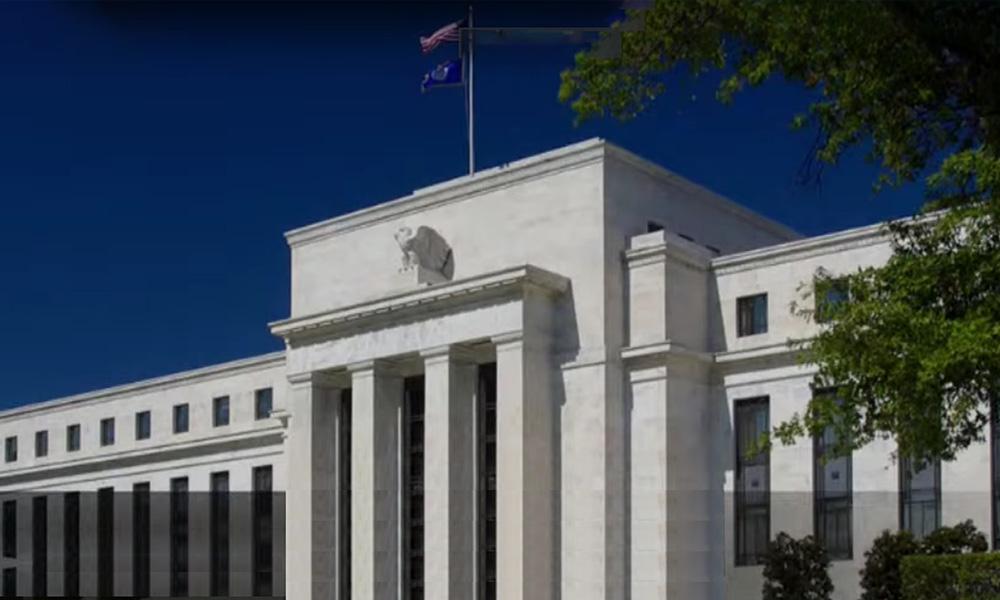
On Wednesday, the Federal Reserve released the full minutes of its June 16-17 policy meeting. This document is the first full meeting minutes since Kevin Warsh succeeded Jerome Powell as Fed Chairman.
The minutes show that the committee unanimously voted to keep the federal funds rate in the 3.5%-3.75% range. At the same time, the minutes mainly reflected the unprecedented division of opinions within the committee on interest rates and the inflation outlook. The positions of the 18 officials involved in policy forecasting were divided, with 9 advocating for at least one more rate hike this year, the other half believing that the rate should remain unchanged throughout the year, and only 1 member favoring a rate cut this year.
Warsh did not submit his personal interest rate dot plot forecast, arguing that fixed-point predictions would restrict the flexibility of monetary policy and hinder flexible adjustments when macroeconomic data changes.
Warsh was nominated by Trump. Trump had previously criticized Powell for his slow pace of interest rate cuts. In the post-meeting press conference, Warsh released a clear hawkish stance, reiterating that the Fed must push inflation back to its long-term target of 2%. Currently, US inflation has deviated significantly from the target range for five consecutive years, and Wall Street institutions and traders are pricing in prices accordingly. The Fed still has room to raise interest rates this year.
Powell will retain his seat on the Federal Reserve Board of Governors, with his term extending to January 2028.
Currently, the Federal Reserve officials' policy focus is mainly on inflation and they have not mentioned the labor market much. Therefore, this non-farm payroll data did not significantly affect the main theme of the meeting minutes, which was inflation concerns. The vast majority of members judged that the overall inflation outlook had greater upside risks. In May, the overall PCE inflation in the United States was 4.1%, the core PCE inflation was 3.4%, and the year-on-year CPI increase even surged to 4.2%, a three-year high.
The trigger for rising inflation stemmed from the global energy shock caused by the US-Iran military conflict at the end of February. The disruption to shipping in the Strait of Hormuz continued to raise the cost of crude oil and petrochemical raw materials. Coupled with the transmission of tariff costs to the entire downstream industrial chain, the prices of transportation, airfares, agricultural raw materials and other categories rose sharply in tandem, and the scope of price increases continued to spread.
The committee envisioned two drastically different policy paths: if energy and tariff disruptions gradually subside and price pressures ease, there is room for further interest rate cuts; however, if various supply-side and demand-side factors continue to push up inflation, the Federal Reserve will have no choice but to further tighten monetary policy.
The committee members were particularly wary of the risk of self-reinforcing inflation expectations. Once residents and businesses reach a consensus that prices will remain high for a long time, businesses will raise prices in advance to offset future costs, while workers will simultaneously demand wage increases to make up for living expenses, creating a vicious cycle that further pushes up overall inflation.
The latest survey by the Federal Reserve Bank of New York shows that the one-year inflation expectation of the American public has risen to 3.7% (a three-year high), while the three-year medium- to long-term inflation expectation has reached 3.3%, a four-year peak. However, most transactional officials pay more attention to the market pricing of inflation reflected in bonds and interest rate derivatives. Compared with the higher expectations of residents in the survey, the inflation expectations in the financial market are lower and more stable.
The most noteworthy change in this report is that the expansion of the artificial intelligence industry has been officially listed as a core variable driving up inflation in the long term, alongside Middle East energy disturbances and tariff transmission as one of the three major upward risks to inflation.
Major tech companies are ramping up their AI computing infrastructure investments, with massive capital expenditures driving up demand for chips, complete equipment, and electricity. Data centers, being high-energy-consuming and asset-heavy, are further amplifying the pressure of rising energy prices.
Strong demand for computing power has directly driven up the prices of upstream raw materials. Apple officially announced a price increase for its laptops, tablets and other terminal products last month, mainly due to the significant increase in the cost of storage chips.
The minutes clearly state that most committee members reached a consensus that the continued strong investment in AI computing power will have a long-term upward pull on technology products and electricity prices. Even if the impact of traditional energy on prices eases marginally, the rigid demand brought about by AI will hinder the rapid decline in inflation. This is also the key basis for many officials to insist on keeping the option of raising interest rates this year.
A thorough reading of the full meeting minutes reveals that the tightness of the labor market and wage growth were not listed as the main drivers of current inflation. At present, the core concern of all Federal Reserve officials is focused on various supply shocks and the demand for goods driven by AI. Wages and employment have not brought significant inflationary pressure, and the labor market is not a core variable affecting interest rate decisions at this time.
The market's current focus will be on the June core CPI data to be released next week, which will directly verify whether the decline in energy prices can lead to a temporary cooling of inflation.
If subsequent labor market indicators such as non-farm payrolls, unemployment rate, and wages continue to weaken, and the job market continues to cool down, then labor market data will gradually come into the focus of committee members' consideration.
If employment weakens significantly, it will offset the pressure of inflation to raise interest rates, slow the pace of the Fed's tightening, and may even open a window for subsequent rate cuts; conversely, if employment remains resilient and inflation remains high, the probability of a rate hike this year will increase significantly.
This meeting also saw adjustments to the Federal Reserve's external communication mechanisms. The committee removed statements from its policy statement that hinted at future interest rate cuts, and the final draft was reduced to one-third the length of the regular version, aiming to deliver more concise and clear policy signals to the outside world.
Warsh also proposed a reform plan, which includes setting up five special working groups to review the implementation of the Federal Reserve's monetary policy and the interpretation of its foreign policy.
The next FOMC meeting is scheduled for July 28-29. The market will combine next week's CPI and subsequent labor force data updates to further determine the Fed's interest rate adjustment path this year.
It is also worth mentioning that the minutes also mentioned that the U.S. Postal Service will raise the price of its perpetual stamps to 82 cents this week. This is an independent piece of information related to people's livelihoods and will not affect the monetary policy decision.
Overall, this set of minutes reveals a clear hawkish stance, with sticky inflation and demand from the AI industry being the core sources of disagreement among officials, while the labor market currently carries relatively little weight.
Short-term market movements will be primarily driven by next week's CPI data, while in the medium to long term, it will be necessary to continuously monitor geopolitical and energy fluctuations between the US and Iran, the intensity of AI capital expenditures, and the extent of subsequent cooling in the labor market. These three variables will jointly determine the Fed's final interest rate direction.
The minutes show that the committee unanimously voted to keep the federal funds rate in the 3.5%-3.75% range. At the same time, the minutes mainly reflected the unprecedented division of opinions within the committee on interest rates and the inflation outlook. The positions of the 18 officials involved in policy forecasting were divided, with 9 advocating for at least one more rate hike this year, the other half believing that the rate should remain unchanged throughout the year, and only 1 member favoring a rate cut this year.
Warsh did not submit his personal interest rate dot plot forecast, arguing that fixed-point predictions would restrict the flexibility of monetary policy and hinder flexible adjustments when macroeconomic data changes.
Warsh was nominated by Trump. Trump had previously criticized Powell for his slow pace of interest rate cuts. In the post-meeting press conference, Warsh released a clear hawkish stance, reiterating that the Fed must push inflation back to its long-term target of 2%. Currently, US inflation has deviated significantly from the target range for five consecutive years, and Wall Street institutions and traders are pricing in prices accordingly. The Fed still has room to raise interest rates this year.
Powell will retain his seat on the Federal Reserve Board of Governors, with his term extending to January 2028.
Overall inflation concerns have intensified across the board, with multiple risks suppressing price declines.
Currently, the Federal Reserve officials' policy focus is mainly on inflation and they have not mentioned the labor market much. Therefore, this non-farm payroll data did not significantly affect the main theme of the meeting minutes, which was inflation concerns. The vast majority of members judged that the overall inflation outlook had greater upside risks. In May, the overall PCE inflation in the United States was 4.1%, the core PCE inflation was 3.4%, and the year-on-year CPI increase even surged to 4.2%, a three-year high.
The trigger for rising inflation stemmed from the global energy shock caused by the US-Iran military conflict at the end of February. The disruption to shipping in the Strait of Hormuz continued to raise the cost of crude oil and petrochemical raw materials. Coupled with the transmission of tariff costs to the entire downstream industrial chain, the prices of transportation, airfares, agricultural raw materials and other categories rose sharply in tandem, and the scope of price increases continued to spread.
The committee envisioned two drastically different policy paths: if energy and tariff disruptions gradually subside and price pressures ease, there is room for further interest rate cuts; however, if various supply-side and demand-side factors continue to push up inflation, the Federal Reserve will have no choice but to further tighten monetary policy.
The committee members were particularly wary of the risk of self-reinforcing inflation expectations. Once residents and businesses reach a consensus that prices will remain high for a long time, businesses will raise prices in advance to offset future costs, while workers will simultaneously demand wage increases to make up for living expenses, creating a vicious cycle that further pushes up overall inflation.
The latest survey by the Federal Reserve Bank of New York shows that the one-year inflation expectation of the American public has risen to 3.7% (a three-year high), while the three-year medium- to long-term inflation expectation has reached 3.3%, a four-year peak. However, most transactional officials pay more attention to the market pricing of inflation reflected in bonds and interest rate derivatives. Compared with the higher expectations of residents in the survey, the inflation expectations in the financial market are lower and more stable.
The AI infrastructure boom has become a new inflationary concern, continuously locking in high prices.
The most noteworthy change in this report is that the expansion of the artificial intelligence industry has been officially listed as a core variable driving up inflation in the long term, alongside Middle East energy disturbances and tariff transmission as one of the three major upward risks to inflation.
Major tech companies are ramping up their AI computing infrastructure investments, with massive capital expenditures driving up demand for chips, complete equipment, and electricity. Data centers, being high-energy-consuming and asset-heavy, are further amplifying the pressure of rising energy prices.
Strong demand for computing power has directly driven up the prices of upstream raw materials. Apple officially announced a price increase for its laptops, tablets and other terminal products last month, mainly due to the significant increase in the cost of storage chips.
The minutes clearly state that most committee members reached a consensus that the continued strong investment in AI computing power will have a long-term upward pull on technology products and electricity prices. Even if the impact of traditional energy on prices eases marginally, the rigid demand brought about by AI will hinder the rapid decline in inflation. This is also the key basis for many officials to insist on keeping the option of raising interest rates this year.
The labor market is not currently a primary concern for officials; policy inclinations will only change once the situation cools down.
A thorough reading of the full meeting minutes reveals that the tightness of the labor market and wage growth were not listed as the main drivers of current inflation. At present, the core concern of all Federal Reserve officials is focused on various supply shocks and the demand for goods driven by AI. Wages and employment have not brought significant inflationary pressure, and the labor market is not a core variable affecting interest rate decisions at this time.
The market's current focus will be on the June core CPI data to be released next week, which will directly verify whether the decline in energy prices can lead to a temporary cooling of inflation.
If subsequent labor market indicators such as non-farm payrolls, unemployment rate, and wages continue to weaken, and the job market continues to cool down, then labor market data will gradually come into the focus of committee members' consideration.
If employment weakens significantly, it will offset the pressure of inflation to raise interest rates, slow the pace of the Fed's tightening, and may even open a window for subsequent rate cuts; conversely, if employment remains resilient and inflation remains high, the probability of a rate hike this year will increase significantly.
Supporting reforms and subsequent policy milestones for the meeting
This meeting also saw adjustments to the Federal Reserve's external communication mechanisms. The committee removed statements from its policy statement that hinted at future interest rate cuts, and the final draft was reduced to one-third the length of the regular version, aiming to deliver more concise and clear policy signals to the outside world.
Warsh also proposed a reform plan, which includes setting up five special working groups to review the implementation of the Federal Reserve's monetary policy and the interpretation of its foreign policy.
The next FOMC meeting is scheduled for July 28-29. The market will combine next week's CPI and subsequent labor force data updates to further determine the Fed's interest rate adjustment path this year.
It is also worth mentioning that the minutes also mentioned that the U.S. Postal Service will raise the price of its perpetual stamps to 82 cents this week. This is an independent piece of information related to people's livelihoods and will not affect the monetary policy decision.
Summarize:
Overall, this set of minutes reveals a clear hawkish stance, with sticky inflation and demand from the AI industry being the core sources of disagreement among officials, while the labor market currently carries relatively little weight.
Short-term market movements will be primarily driven by next week's CPI data, while in the medium to long term, it will be necessary to continuously monitor geopolitical and energy fluctuations between the US and Iran, the intensity of AI capital expenditures, and the extent of subsequent cooling in the labor market. These three variables will jointly determine the Fed's final interest rate direction.
- Risk Warning and Disclaimer
- The market involves risk, and trading may not be suitable for all investors. This article is for reference only and does not constitute personal investment advice, nor does it take into account certain users’ specific investment objectives, financial situation, or other needs. Any investment decisions made based on this information are at your own risk.