Euro strengthens: Interest rate hike expectations and multiple positive factors drive market rebound.
2026-07-09 19:51:20
With the market's prevailing trading expectation of a "Trump-Tac-To-Co" deal and the gradual easing of geopolitical tensions in the Middle East, the hawkish monetary policy signals from the Federal Reserve completely lost their stimulating effect, and the US dollar index continued to weaken under pressure. Meanwhile, international oil prices steadily rose, coupled with strong market expectations of a European Central Bank interest rate hike, jointly driving a temporary rebound in the euro/dollar exchange rate.
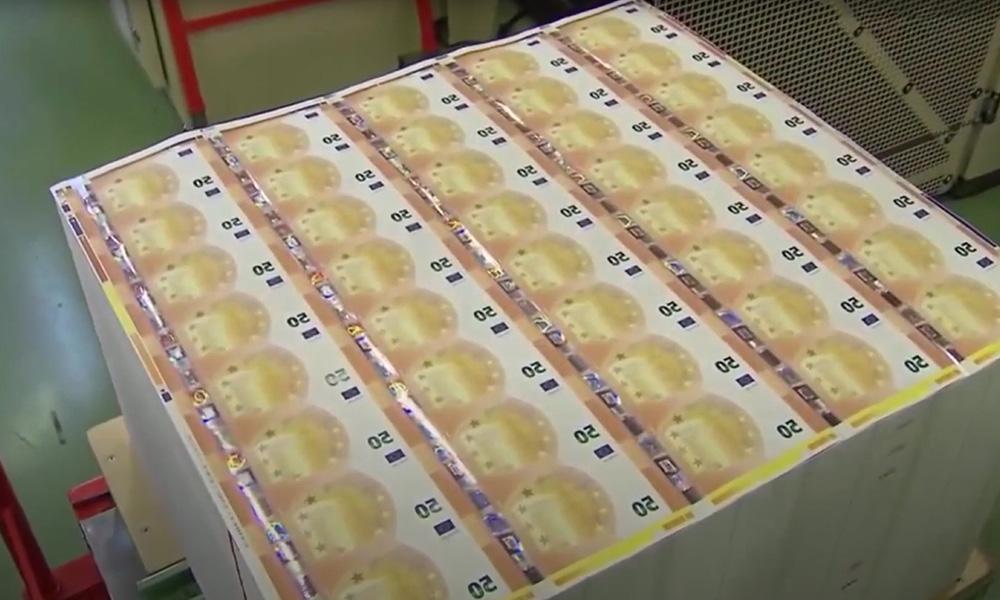
In the current global foreign exchange market, investors are again betting heavily on the European Central Bank (ECB) raising interest rates at its next monetary policy meeting, leading to a continued resurgence of bullish sentiment towards the euro. However, the core driver of this round of euro/dollar exchange rate appreciation is not ECB policy expectations, but rather the widely circulated TACO trading logic.
Despite the surge in Brent crude oil prices, reaching a two-week high, and repeated warnings from the Federal Reserve expressing concern about the entrenched high inflation risk within the US economy, the US dollar has failed to rebound despite these two positive factors. Market participants generally believe that Trump's tough move to terminate the Iran nuclear deal is not a substantive confrontational decision, but rather a typical negotiating tactic, a classic market logic known as TACO (Trump will eventually compromise), which has now regained dominance in financial market trends. Furthermore, optimistic expectations for a rapid de-escalation of armed conflicts in the Middle East continue to suppress the dollar's performance, driving the US Dollar Index (DXY) downward.
The minutes of the June Federal Open Market Committee (FOMC) meeting released by the Federal Reserve detailed the officials' core concerns: the U.S. Personal Consumption Expenditures (PCE) price index has been persistently above the 2% inflation target, and the risk of sticky inflation is increasing. Although the U.S. labor market is currently generally stable and not the core cause of this round of high inflation, the Fed remains highly vigilant, concerned that the implementation of tariff policies, sharp fluctuations in international oil prices, and demand expansion driven by the investment boom in the artificial intelligence industry could further push up inflation levels, making the high inflation situation difficult to reverse. The market had previously anticipated significant disagreements within the Fed regarding interest rate policy, but the latest economic and policy outlook disclosed by the officials shows a high degree of consensus within the FOMC, with very few disagreements.
Based on these meeting minutes, the market interpreted the Fed's statement as moderately hawkish, subsequently significantly increasing the probability of a rate hike: data shows that the market's expected probability of a Fed rate hike in 2026 has climbed to 84%, and the probability of two rate hikes this year has also risen to 45%. However, the hawkish policy expectations did not provide any support for the dollar. Even though market demand for hedging against the euro/dollar exchange rate increased, the dollar continued its weakness. Previously, during the escalation of geopolitical conflicts in the Middle East, the downside risk for the euro had significantly decreased, and short sellers' bets on euro depreciation cooled considerably. However, this positive trend did not last long, and the short sellers' optimism quickly dissipated.
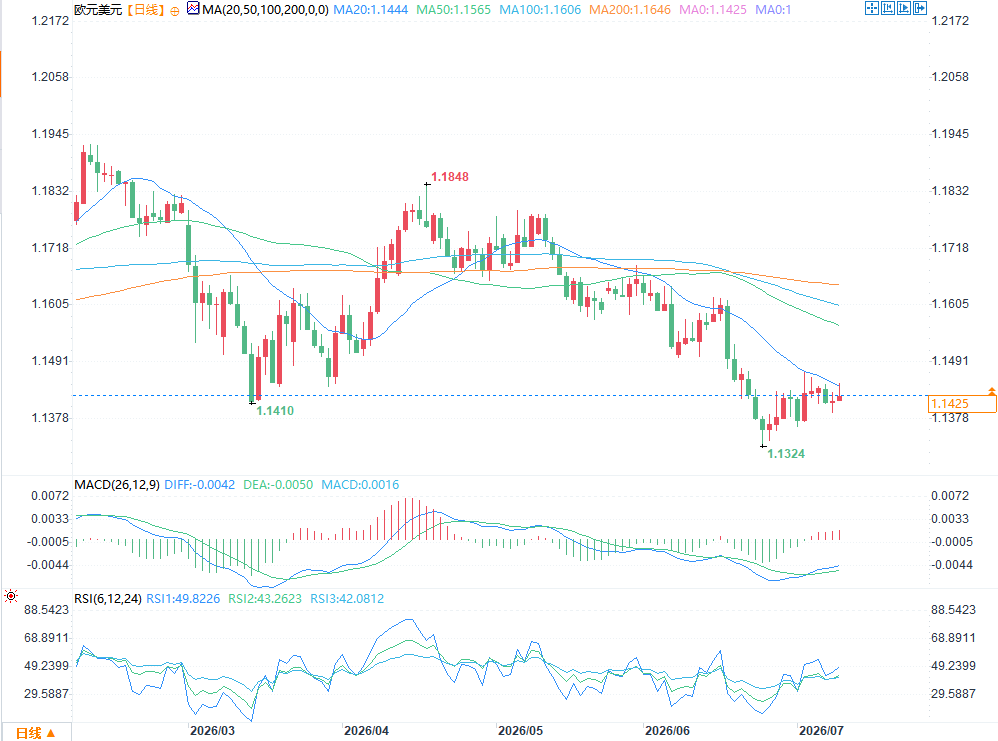
(EUR/USD daily chart source: FX678)
The persistently rising Brent crude oil prices pose a significant downward pressure on the Eurozone's economy, which is heavily reliant on energy imports. The International Monetary Fund (IMF), taking into account the sharp year-on-year increase in international oil prices this year, has lowered its economic growth forecast for the Eurozone, reducing its 2026 GDP growth prediction from 1.1% to 0.9%, highlighting the negative impact of high oil prices on the Eurozone economy. However, from the perspective of inflation and monetary policy, the sharp rise in North Sea crude oil prices has renewed inflationary pressures in the Eurozone, leading to a new market consensus: the European Central Bank's subsequent interest rate hikes are likely to exceed those of the Federal Reserve. This market expectation is directly reflected in the bond market, with German bond yields continuing to outpace US Treasury yields, and the interest rate differential between Europe and the US providing strong support for the euro.
In summary, the recent rapid rebound and strong recovery of the EUR/USD exchange rate were primarily supported by two key factors: the return of the TACO trading logic and investors' strong expectation of a rapid easing of the Middle East conflict. Subsequent stable shipping data through the Strait of Hormuz and a slight decline in oil prices further solidified the euro's rebound, completely reversing its previous weakness. Statistics from global shipping data analysis agency Kpler show that 36 oil tankers successfully passed through the Strait of Hormuz on July 6th, and 41 tankers passed through on July 7th. These two-day passage volumes are roughly in line with the normal weekly average of 40 tankers, indicating that the Middle East oil transport route was not affected by the situation, and market supply concerns have been significantly alleviated.
In the current global foreign exchange market, investors are again betting heavily on the European Central Bank (ECB) raising interest rates at its next monetary policy meeting, leading to a continued resurgence of bullish sentiment towards the euro. However, the core driver of this round of euro/dollar exchange rate appreciation is not ECB policy expectations, but rather the widely circulated TACO trading logic.
Despite the surge in Brent crude oil prices, reaching a two-week high, and repeated warnings from the Federal Reserve expressing concern about the entrenched high inflation risk within the US economy, the US dollar has failed to rebound despite these two positive factors. Market participants generally believe that Trump's tough move to terminate the Iran nuclear deal is not a substantive confrontational decision, but rather a typical negotiating tactic, a classic market logic known as TACO (Trump will eventually compromise), which has now regained dominance in financial market trends. Furthermore, optimistic expectations for a rapid de-escalation of armed conflicts in the Middle East continue to suppress the dollar's performance, driving the US Dollar Index (DXY) downward.
The minutes of the June Federal Open Market Committee (FOMC) meeting released by the Federal Reserve detailed the officials' core concerns: the U.S. Personal Consumption Expenditures (PCE) price index has been persistently above the 2% inflation target, and the risk of sticky inflation is increasing. Although the U.S. labor market is currently generally stable and not the core cause of this round of high inflation, the Fed remains highly vigilant, concerned that the implementation of tariff policies, sharp fluctuations in international oil prices, and demand expansion driven by the investment boom in the artificial intelligence industry could further push up inflation levels, making the high inflation situation difficult to reverse. The market had previously anticipated significant disagreements within the Fed regarding interest rate policy, but the latest economic and policy outlook disclosed by the officials shows a high degree of consensus within the FOMC, with very few disagreements.
Based on these meeting minutes, the market interpreted the Fed's statement as moderately hawkish, subsequently significantly increasing the probability of a rate hike: data shows that the market's expected probability of a Fed rate hike in 2026 has climbed to 84%, and the probability of two rate hikes this year has also risen to 45%. However, the hawkish policy expectations did not provide any support for the dollar. Even though market demand for hedging against the euro/dollar exchange rate increased, the dollar continued its weakness. Previously, during the escalation of geopolitical conflicts in the Middle East, the downside risk for the euro had significantly decreased, and short sellers' bets on euro depreciation cooled considerably. However, this positive trend did not last long, and the short sellers' optimism quickly dissipated.
(EUR/USD daily chart source: FX678)
The persistently rising Brent crude oil prices pose a significant downward pressure on the Eurozone's economy, which is heavily reliant on energy imports. The International Monetary Fund (IMF), taking into account the sharp year-on-year increase in international oil prices this year, has lowered its economic growth forecast for the Eurozone, reducing its 2026 GDP growth prediction from 1.1% to 0.9%, highlighting the negative impact of high oil prices on the Eurozone economy. However, from the perspective of inflation and monetary policy, the sharp rise in North Sea crude oil prices has renewed inflationary pressures in the Eurozone, leading to a new market consensus: the European Central Bank's subsequent interest rate hikes are likely to exceed those of the Federal Reserve. This market expectation is directly reflected in the bond market, with German bond yields continuing to outpace US Treasury yields, and the interest rate differential between Europe and the US providing strong support for the euro.
In summary, the recent rapid rebound and strong recovery of the EUR/USD exchange rate were primarily supported by two key factors: the return of the TACO trading logic and investors' strong expectation of a rapid easing of the Middle East conflict. Subsequent stable shipping data through the Strait of Hormuz and a slight decline in oil prices further solidified the euro's rebound, completely reversing its previous weakness. Statistics from global shipping data analysis agency Kpler show that 36 oil tankers successfully passed through the Strait of Hormuz on July 6th, and 41 tankers passed through on July 7th. These two-day passage volumes are roughly in line with the normal weekly average of 40 tankers, indicating that the Middle East oil transport route was not affected by the situation, and market supply concerns have been significantly alleviated.
- Risk Warning and Disclaimer
- The market involves risk, and trading may not be suitable for all investors. This article is for reference only and does not constitute personal investment advice, nor does it take into account certain users’ specific investment objectives, financial situation, or other needs. Any investment decisions made based on this information are at your own risk.