The US-Iran airstrikes triggered a stalemate in the Strait of Hormuz, nearly halting global oil tanker operations and prompting shipping insurance companies to issue their highest alerts.
2026-07-10 09:06:36
This week, the Strait of Hormuz—the "world's oil valve" carrying about one-fifth of global seaborne oil trade—is experiencing its most dangerous moment since the start of the full-scale war between the US and Iran. With the US launching another airstrike on Iranian soil, Tehran swiftly responded by striking US military bases in neighboring Gulf states, shattering the fragile three-week ceasefire agreement. Shipping data shows that tanker traffic in the strait has plummeted to near zero, insurance companies are urgently advising shipping companies to withdraw their services, high-value liquefied natural gas (LNG) vessels have been damaged in attacks, and land-based railway bridges between China, Iran, and Russia have been destroyed. Meanwhile, Qatar, Pakistan, and other countries have urgently intervened to mediate, attempting to bring the escalating situation back to the diplomatic negotiating table. However, with core differences such as the nuclear issue, sanctions, and control of the strait remaining unresolved, even a slight military adventurism by either side could ignite a wider conflict.
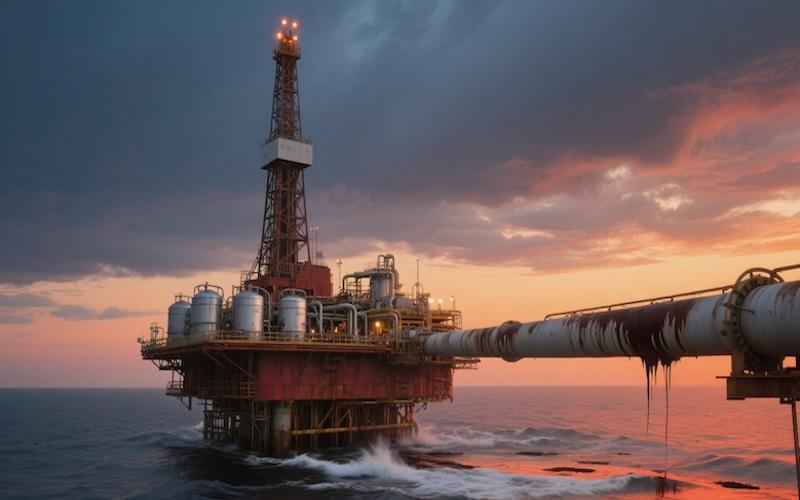
Traffic data plummeted, and shipowners turned a blind eye to protect themselves.
According to the latest data collected by ship tracking agency Kpler in the early hours of July 9, only two oil tankers ventured through the Strait of Hormuz that day. One was the supertanker "Berg 1," which had loaded crude oil off Harq Island in Iran and is already on the US sanctions list; the other was the chemical tanker "Well Sail," flying the Marshall Islands flag of convenience, which had previously completed loading operations near Sharjah, UAE. The passage of these two ships seemed more like a symbolic test than a resumption of normal commercial operations.
More worryingly, shipping industry sources revealed that an increasing number of vessels navigating the waters surrounding the Strait of Hormuz are choosing to proactively disable their publicly displayed AIS (Automatic Identification System) transponders. While this "radio silence" avoids detection or targeting by the enemy, it also makes it virtually impossible for outsiders to monitor the precise location and movements of transiting vessels in real time, further exacerbating market uncertainty regarding navigation safety. Leon, head of geopolitical analysis at energy consultancy Rystad Energy, commented that tanker transport through the Strait of Hormuz has essentially come to a standstill. This real-world reaction from the shipping industry is far more accurate in reflecting the current market's assessment of the risk of war than any official statements from Washington or Tehran.
The ceasefire agreement has become a dead letter, with the US and Iran accusing each other of disrupting air traffic.
The immediate trigger for this sharp escalation can be traced back to the series of attacks on three oil tankers in the Strait of Hormuz earlier this week. The United States quickly blamed the attacks on the Iranian Revolutionary Guard, while Iran insisted that the United States had initiated airstrikes against Iran's southern coast and eastern provinces, forcing the Revolutionary Guard to retaliate. On July 9, Iranian armed forces directly attacked U.S. military facilities in neighboring Gulf states, effectively rendering the ceasefire, which had been barely maintained for about three weeks, meaningless.
In a subsequent statement, the Iranian Revolutionary Guard Navy emphasized that the US attack and its intervention in the Strait of Hormuz's shipping lane adjustments were severely disrupting the existing process of gradually restoring navigation in this strategic waterway. According to Iran, in the past two weeks, the strait's navigation capacity under Iranian supervision has recovered to approximately 50% of pre-war levels, but this recovery is conditional—only vessels with official Iranian permission and using Iranian-designated routes can receive further passage guarantees. The Revolutionary Guard also issued a stern warning to the US that any further intervention would provoke a "devastating retaliation." Iranian Foreign Minister Araqchi, in a phone call with the Pakistani Army Chief of Staff, condemned the US attack on Iran as a violation of the Islamabad Memorandum of Understanding and explicitly warned the US against any further military "adventurism."
The attack on the LNG carrier serves as a wake-up call, with the threat to high-value cargoes weighing heavily on the global energy sector.
One of the most symbolic events of this conflict was the attack on the Qatari LNG carrier "Al Rekayyat," flying the Marshall Islands flag, in the Strait of Hormuz. According to shipbroker Clarkson, the ship was hit by a projectile on the night of July 7th, causing a fire in the engine room. It remains stranded in waters off Oman, awaiting rescue and salvage operations. Although initial assessments by industry insiders suggest that there is no immediate risk of leakage or explosion of the LNG cargo on board, the incident itself is enough to put the global LNG market on edge—after all, Qatar is one of the world's largest LNG exporters, and the Strait of Hormuz is a crucial choke point for its LNG shipments to Europe, America, and Asia.
The Marshall Islands Registry has confirmed to Reuters that the incident caused no injuries and no pollution to the marine environment. However, an anonymous marine war risk insurer admitted that the recent series of attacks clearly demonstrates the significant potential loss risk involving high-value vessels. For a modern LNG carrier fully loaded, the combined value of the vessel and its cargo often reaches hundreds of millions of dollars; in the event of total loss or prolonged grounding, the insurance payouts would be staggering.
Insurance underwriters have slammed on the brakes, casting a further shadow over the prospects for the resumption of air traffic.
Faced with the rapidly deteriorating security situation, some insurance underwriters providing war risk insurance have proactively advised shipping companies to suspend any voyages through the Strait of Hormuz. Meanwhile, more insurance companies are reviewing existing policy terms, assessing whether significant adjustments are needed to surcharges, deductibles, and coverage. This "passive defense" measure from the financial and insurance sectors is often more market-driven than military confrontation itself—because even if shipowners intend to risk passage, banks and charterers will not allow them to sail without adequate insurance coverage.
In its latest analysis report, shipbroker Clarkson points out that the escalation of the current situation has made the prospect of restoring normal navigation in the Strait of Hormuz more fragile and unpredictable. Before the joint US-Israel attack on Iran on February 28th, marking the start of a full-scale war, the daily number of oil tankers passing through the strait was stable at 125 to 140 vessels. Now, even during the so-called "recovery period" of the past two weeks, the daily average has only been around 40 vessels, far below normal levels. With the renewed conflict between the US and Iran, this already low number is likely to decline further.
The land supply line was also affected, with the Iraqi-Russian railway bridge being destroyed.
The impact of the war is not limited to the sea. According to Iran's Fars News Agency on July 9, the US military precisely struck the Aktagay Khan railway bridge in Golestan province, northern Iran, in an overnight airstrike. This railway line, where the bridge is located, is a vital land trade route connecting Iran with Russia, a major Asian power, passing through Turkmenistan and Kazakhstan. It has long been considered a strategic lifeline for Iran to circumvent a US maritime blockade. Since the end of 2025, Russia has also been using this route to supply Iran with various goods. Although Iran stated that bridge repairs are expected to be completed soon, the signal sent by this attack is extremely clear—the US not only aims to contain Iran at sea but also systematically cuts off all of its external trade and military supply routes.
Amid escalating tensions from the military conflict, multinational mediation efforts are attempting to de-escalate the situation. According to two regional sources involved in the mediation and a US official, officials from Qatar, Pakistan, Turkey, Egypt, and Saudi Arabia held intensive talks with both the US and Iran on July 8-9. The core objective was to stabilize the current volatile situation and create the necessary diplomatic space for the resumption of nuclear negotiations. One mediator stated that the primary task for all parties is to urge both sides to move away from the tit-for-tat military confrontation and to finalize a timetable for the next round of formal technical negotiations once the situation has calmed down.
However, reality is far more complex than diplomatic rhetoric. While a US official told the media that the Trump administration remains "committed to finding a solution" and that technical consultations are continuing, the US president himself has publicly declared that the US-Iran ceasefire agreement "is over." More intractable is the fact that fundamental differences remain between the two sides on core issues such as restrictions on Iran's nuclear activities, the scope and steps of lifting US sanctions, and navigation control in the Strait of Hormuz. Analysts point out that whether this round of multinational mediation can truly achieve a breakthrough depends not only on Iran's limits of tolerance for military pressure and the strength of its political backlash, but also on whether the US is willing to make substantial compromises and adjustments on key demands. In any case, the fate of shipping in the Strait of Hormuz is currently hanging on the line between war and peace.
Question 1: Why did the number of oil tankers passing through the Strait of Hormuz plummet from over a hundred per day before the war to almost zero? Was this driven by military threats or insurance factors?
A: The two reinforce each other, creating a vicious cycle. The direct military threat is obvious—mutual airstrikes between the US and Iran, attacks on three oil tankers, and an LNG carrier being hit and catching fire—shipowners and charterers are naturally unwilling to put assets worth hundreds of millions of dollars into the "front lines." But deeper constraints come from the insurance and financial sectors: once war insurance underwriters issue a "suspension of voyage" recommendation, the vessel will not receive adequate insurance coverage, banks will refuse to provide financing for the voyage, and the "war clauses" in charter contracts allow the charterer to unilaterally cancel the voyage. Therefore, even if a ship is willing to take the risk, it lacks commercial viability. The market votes with "suspension of voyage," which is more effective than any verbal warning.
Question 2: Iran claims that the passage capacity of the Strait of Hormuz under its supervision has been restored to 50% of the pre-war level, but international data shows that only two ships are passing through. Why is there such a large discrepancy in the statistical methods?
A: The key here lies in the limiting condition of "under Iranian supervision." Iran's stated 50% recovery rate specifically refers to vessels that follow routes designated by the Iranian Revolutionary Guard, apply for and obtain Iranian permits, and this statistic may include small product tankers or Iranian vessels. International organizations (such as Kpler) track the passage records of commercial tankers globally under publicly available AIS signals; the sample scopes are completely different. In reality, the vast majority of international shipowners, fearing US sanctions or military retaliation, do not apply for permits from Iran at all. Therefore, the internationally statistical passage volume is far lower than the data unilaterally claimed by Iran.
Question 3: Trump has declared the ceasefire agreement "over," so why are some US officials simultaneously stating that they are "still committed to finding a solution"? Is this a contradiction?
A: This reflects a dual strategy within and publicly presented by the US government. On the one hand, the president's public declaration of the ceasefire's termination is intended to exert maximum political pressure on Iran and appease domestic hawks and allies (especially Israel); on the other hand, technical and diplomatic staff are still maintaining contact with mediating countries, leaving room for "crisis management." This "fighting while negotiating" model is not uncommon in Middle Eastern conflicts, but the key lies in whether military action exceeds a controllable threshold. Once US airstrikes touch Iranian nuclear facilities or the safety of the Supreme Leader, diplomatic channels may be completely shut down.
Question 4: Why did the attack on the LNG carrier "Al Rekayyat" cause more market panic than attacks on ordinary oil tankers?
A: The unique nature of LNG carriers lies in the extremely high value of their cargo (a single vessel can be worth $100-200 million), and the fact that the cargo must be stored in a liquid state at a temperature of -162 degrees Celsius. If the hull is damaged or the temperature drops, the evaporation or leakage of the cargo will not only cause huge economic losses but may also trigger explosive fires, making rescue efforts far more difficult than those for oil spills. Furthermore, Qatar is a core pillar of global LNG supply; frequent attacks on its fleet would directly impact natural gas import expectations in Europe and Asia, thereby driving up global gas prices. Therefore, this incident is interpreted by the market as a new phase in the "attack on high-value targets."
Question 5: The mediation efforts of multiple countries have mentioned the possibility of restarting "nuclear negotiations," but what exactly are the core differences between the US and Iran that make the negotiations so difficult?
A: There are at least three irreconcilable differences. First is the nuclear issue—Iran demands the complete lifting of restrictions on its uranium enrichment levels and the number of centrifuges, while the US insists that Iran's nuclear activities must be reduced to a "civilian level" and subject to 24/7 inspections by the International Atomic Energy Agency. Second is the sanctions issue—Iran demands that the US lift all sanctions imposed since 2018 at once, while the US is only willing to lift some sanctions "in stages and reversibly," retaining the "snapback" mechanism. Third is jurisdiction over the Strait of Hormuz—Iran considers the strait its "backyard" and claims the right to approve and regulate ships passing through, while the US insists on the principle of freedom of navigation in international waters. These three issues are interconnected; any compromise on any single issue could be seen as a complete collapse. Therefore, the mediators can only pursue "temporary de-escalation" rather than "complete reconciliation" at present.
Cross-strait shipping is almost "frozen," and the market is voting with its feet.
Traffic data plummeted, and shipowners turned a blind eye to protect themselves.
According to the latest data collected by ship tracking agency Kpler in the early hours of July 9, only two oil tankers ventured through the Strait of Hormuz that day. One was the supertanker "Berg 1," which had loaded crude oil off Harq Island in Iran and is already on the US sanctions list; the other was the chemical tanker "Well Sail," flying the Marshall Islands flag of convenience, which had previously completed loading operations near Sharjah, UAE. The passage of these two ships seemed more like a symbolic test than a resumption of normal commercial operations.
More worryingly, shipping industry sources revealed that an increasing number of vessels navigating the waters surrounding the Strait of Hormuz are choosing to proactively disable their publicly displayed AIS (Automatic Identification System) transponders. While this "radio silence" avoids detection or targeting by the enemy, it also makes it virtually impossible for outsiders to monitor the precise location and movements of transiting vessels in real time, further exacerbating market uncertainty regarding navigation safety. Leon, head of geopolitical analysis at energy consultancy Rystad Energy, commented that tanker transport through the Strait of Hormuz has essentially come to a standstill. This real-world reaction from the shipping industry is far more accurate in reflecting the current market's assessment of the risk of war than any official statements from Washington or Tehran.
The ceasefire agreement has become a dead letter, with the US and Iran accusing each other of disrupting air traffic.
The immediate trigger for this sharp escalation can be traced back to the series of attacks on three oil tankers in the Strait of Hormuz earlier this week. The United States quickly blamed the attacks on the Iranian Revolutionary Guard, while Iran insisted that the United States had initiated airstrikes against Iran's southern coast and eastern provinces, forcing the Revolutionary Guard to retaliate. On July 9, Iranian armed forces directly attacked U.S. military facilities in neighboring Gulf states, effectively rendering the ceasefire, which had been barely maintained for about three weeks, meaningless.
In a subsequent statement, the Iranian Revolutionary Guard Navy emphasized that the US attack and its intervention in the Strait of Hormuz's shipping lane adjustments were severely disrupting the existing process of gradually restoring navigation in this strategic waterway. According to Iran, in the past two weeks, the strait's navigation capacity under Iranian supervision has recovered to approximately 50% of pre-war levels, but this recovery is conditional—only vessels with official Iranian permission and using Iranian-designated routes can receive further passage guarantees. The Revolutionary Guard also issued a stern warning to the US that any further intervention would provoke a "devastating retaliation." Iranian Foreign Minister Araqchi, in a phone call with the Pakistani Army Chief of Staff, condemned the US attack on Iran as a violation of the Islamabad Memorandum of Understanding and explicitly warned the US against any further military "adventurism."
The attack on the LNG carrier serves as a wake-up call, with the threat to high-value cargoes weighing heavily on the global energy sector.
One of the most symbolic events of this conflict was the attack on the Qatari LNG carrier "Al Rekayyat," flying the Marshall Islands flag, in the Strait of Hormuz. According to shipbroker Clarkson, the ship was hit by a projectile on the night of July 7th, causing a fire in the engine room. It remains stranded in waters off Oman, awaiting rescue and salvage operations. Although initial assessments by industry insiders suggest that there is no immediate risk of leakage or explosion of the LNG cargo on board, the incident itself is enough to put the global LNG market on edge—after all, Qatar is one of the world's largest LNG exporters, and the Strait of Hormuz is a crucial choke point for its LNG shipments to Europe, America, and Asia.
The Marshall Islands Registry has confirmed to Reuters that the incident caused no injuries and no pollution to the marine environment. However, an anonymous marine war risk insurer admitted that the recent series of attacks clearly demonstrates the significant potential loss risk involving high-value vessels. For a modern LNG carrier fully loaded, the combined value of the vessel and its cargo often reaches hundreds of millions of dollars; in the event of total loss or prolonged grounding, the insurance payouts would be staggering.
Insurance underwriters have slammed on the brakes, casting a further shadow over the prospects for the resumption of air traffic.
Faced with the rapidly deteriorating security situation, some insurance underwriters providing war risk insurance have proactively advised shipping companies to suspend any voyages through the Strait of Hormuz. Meanwhile, more insurance companies are reviewing existing policy terms, assessing whether significant adjustments are needed to surcharges, deductibles, and coverage. This "passive defense" measure from the financial and insurance sectors is often more market-driven than military confrontation itself—because even if shipowners intend to risk passage, banks and charterers will not allow them to sail without adequate insurance coverage.
In its latest analysis report, shipbroker Clarkson points out that the escalation of the current situation has made the prospect of restoring normal navigation in the Strait of Hormuz more fragile and unpredictable. Before the joint US-Israel attack on Iran on February 28th, marking the start of a full-scale war, the daily number of oil tankers passing through the strait was stable at 125 to 140 vessels. Now, even during the so-called "recovery period" of the past two weeks, the daily average has only been around 40 vessels, far below normal levels. With the renewed conflict between the US and Iran, this already low number is likely to decline further.
The land supply line was also affected, with the Iraqi-Russian railway bridge being destroyed.
The impact of the war is not limited to the sea. According to Iran's Fars News Agency on July 9, the US military precisely struck the Aktagay Khan railway bridge in Golestan province, northern Iran, in an overnight airstrike. This railway line, where the bridge is located, is a vital land trade route connecting Iran with Russia, a major Asian power, passing through Turkmenistan and Kazakhstan. It has long been considered a strategic lifeline for Iran to circumvent a US maritime blockade. Since the end of 2025, Russia has also been using this route to supply Iran with various goods. Although Iran stated that bridge repairs are expected to be completed soon, the signal sent by this attack is extremely clear—the US not only aims to contain Iran at sea but also systematically cuts off all of its external trade and military supply routes.
Diplomatic mediation has been launched with difficulty, and a huge gap remains in the resumption of nuclear negotiations.
Amid escalating tensions from the military conflict, multinational mediation efforts are attempting to de-escalate the situation. According to two regional sources involved in the mediation and a US official, officials from Qatar, Pakistan, Turkey, Egypt, and Saudi Arabia held intensive talks with both the US and Iran on July 8-9. The core objective was to stabilize the current volatile situation and create the necessary diplomatic space for the resumption of nuclear negotiations. One mediator stated that the primary task for all parties is to urge both sides to move away from the tit-for-tat military confrontation and to finalize a timetable for the next round of formal technical negotiations once the situation has calmed down.
However, reality is far more complex than diplomatic rhetoric. While a US official told the media that the Trump administration remains "committed to finding a solution" and that technical consultations are continuing, the US president himself has publicly declared that the US-Iran ceasefire agreement "is over." More intractable is the fact that fundamental differences remain between the two sides on core issues such as restrictions on Iran's nuclear activities, the scope and steps of lifting US sanctions, and navigation control in the Strait of Hormuz. Analysts point out that whether this round of multinational mediation can truly achieve a breakthrough depends not only on Iran's limits of tolerance for military pressure and the strength of its political backlash, but also on whether the US is willing to make substantial compromises and adjustments on key demands. In any case, the fate of shipping in the Strait of Hormuz is currently hanging on the line between war and peace.
Frequently Asked Questions (FAQ)
Question 1: Why did the number of oil tankers passing through the Strait of Hormuz plummet from over a hundred per day before the war to almost zero? Was this driven by military threats or insurance factors?
A: The two reinforce each other, creating a vicious cycle. The direct military threat is obvious—mutual airstrikes between the US and Iran, attacks on three oil tankers, and an LNG carrier being hit and catching fire—shipowners and charterers are naturally unwilling to put assets worth hundreds of millions of dollars into the "front lines." But deeper constraints come from the insurance and financial sectors: once war insurance underwriters issue a "suspension of voyage" recommendation, the vessel will not receive adequate insurance coverage, banks will refuse to provide financing for the voyage, and the "war clauses" in charter contracts allow the charterer to unilaterally cancel the voyage. Therefore, even if a ship is willing to take the risk, it lacks commercial viability. The market votes with "suspension of voyage," which is more effective than any verbal warning.
Question 2: Iran claims that the passage capacity of the Strait of Hormuz under its supervision has been restored to 50% of the pre-war level, but international data shows that only two ships are passing through. Why is there such a large discrepancy in the statistical methods?
A: The key here lies in the limiting condition of "under Iranian supervision." Iran's stated 50% recovery rate specifically refers to vessels that follow routes designated by the Iranian Revolutionary Guard, apply for and obtain Iranian permits, and this statistic may include small product tankers or Iranian vessels. International organizations (such as Kpler) track the passage records of commercial tankers globally under publicly available AIS signals; the sample scopes are completely different. In reality, the vast majority of international shipowners, fearing US sanctions or military retaliation, do not apply for permits from Iran at all. Therefore, the internationally statistical passage volume is far lower than the data unilaterally claimed by Iran.
Question 3: Trump has declared the ceasefire agreement "over," so why are some US officials simultaneously stating that they are "still committed to finding a solution"? Is this a contradiction?
A: This reflects a dual strategy within and publicly presented by the US government. On the one hand, the president's public declaration of the ceasefire's termination is intended to exert maximum political pressure on Iran and appease domestic hawks and allies (especially Israel); on the other hand, technical and diplomatic staff are still maintaining contact with mediating countries, leaving room for "crisis management." This "fighting while negotiating" model is not uncommon in Middle Eastern conflicts, but the key lies in whether military action exceeds a controllable threshold. Once US airstrikes touch Iranian nuclear facilities or the safety of the Supreme Leader, diplomatic channels may be completely shut down.
Question 4: Why did the attack on the LNG carrier "Al Rekayyat" cause more market panic than attacks on ordinary oil tankers?
A: The unique nature of LNG carriers lies in the extremely high value of their cargo (a single vessel can be worth $100-200 million), and the fact that the cargo must be stored in a liquid state at a temperature of -162 degrees Celsius. If the hull is damaged or the temperature drops, the evaporation or leakage of the cargo will not only cause huge economic losses but may also trigger explosive fires, making rescue efforts far more difficult than those for oil spills. Furthermore, Qatar is a core pillar of global LNG supply; frequent attacks on its fleet would directly impact natural gas import expectations in Europe and Asia, thereby driving up global gas prices. Therefore, this incident is interpreted by the market as a new phase in the "attack on high-value targets."
Question 5: The mediation efforts of multiple countries have mentioned the possibility of restarting "nuclear negotiations," but what exactly are the core differences between the US and Iran that make the negotiations so difficult?
A: There are at least three irreconcilable differences. First is the nuclear issue—Iran demands the complete lifting of restrictions on its uranium enrichment levels and the number of centrifuges, while the US insists that Iran's nuclear activities must be reduced to a "civilian level" and subject to 24/7 inspections by the International Atomic Energy Agency. Second is the sanctions issue—Iran demands that the US lift all sanctions imposed since 2018 at once, while the US is only willing to lift some sanctions "in stages and reversibly," retaining the "snapback" mechanism. Third is jurisdiction over the Strait of Hormuz—Iran considers the strait its "backyard" and claims the right to approve and regulate ships passing through, while the US insists on the principle of freedom of navigation in international waters. These three issues are interconnected; any compromise on any single issue could be seen as a complete collapse. Therefore, the mediators can only pursue "temporary de-escalation" rather than "complete reconciliation" at present.
- Risk Warning and Disclaimer
- The market involves risk, and trading may not be suitable for all investors. This article is for reference only and does not constitute personal investment advice, nor does it take into account certain users’ specific investment objectives, financial situation, or other needs. Any investment decisions made based on this information are at your own risk.