The Federal Reserve adopted a "scenario-based" approach to maintaining stability; Warsh's first report unusually named AI as a driver of inflation; the yen closely monitored intervention limits; and the Reserve Bank of New Zealand raised interest rates for the first time in three years.
2026-07-11 08:52:13
Although the US dollar index closed higher this week, its overall trend was weak, ultimately settling at 100.95. The Fed meeting minutes this week clearly demonstrated the equal division among policymakers regarding the interest rate path.

Half of the officials favored keeping interest rates unchanged, while the other half believed a rate hike was appropriate. The core innovation of the minutes lay in its use of a scenario-based decision-making framework, rather than traditional risk management terminology.
Most participants agreed that in an unfavorable scenario of persistently high inflation, they were prepared to respond by raising interest rates; while in a favorable scenario of declining inflation, they would be happy to keep interest rates unchanged or even cut them.
New York Fed President Williams interpreted this as a manifestation of a "collective reaction function." EY Chief Economist Daco pointed out that this marks a shift in the Fed's communication strategy under Warsh's leadership, aiming to make it clear to the market that further policy tightening remains a realistic possibility.
Compared to the April minutes, the June minutes removed the statement that "the vast majority" believed that inflation would take longer to return to the target, and the proportion of participants who believed that long-term inflation expectations were stable rose from "the majority" to "the majority," which some analysts interpreted as a dovish signal.
However, JPMorgan Chase's Feroli summarized the stance as "lukewarm": cut interest rates if inflation falls, raise rates if inflation remains stubborn. The minutes also emphasized that the CPI and PPI data to be released next week, especially the trend of energy prices against the backdrop of escalating tensions in the Middle East, will play a key role in subsequent policy decisions.
In its semi-annual report to Congress on July 10, the Federal Reserve, in unusually direct language, acknowledged that inflation "exacerbated further this spring." The report pointed out that the continued impact of tariffs, energy costs driven up by the Middle East conflict, and the rapid development of artificial intelligence technology have collectively created new upward pressure on prices.
As of May, the Federal Reserve's preferred indicator—the Personal Consumption Expenditures (PCE) price index—had risen by approximately twice the 2% target. This report, the first monetary policy document since new Chairman Kevin Warsh took office, is particularly noteworthy for explicitly listing artificial intelligence (AI) as one of the short-term inflation drivers. While Warsh previously argued that AI's increased productivity could curb inflation, he recently acknowledged that the timing of cost pressures from the surge in demand for electricity, chips, and materials related to AI infrastructure remains uncertain.
In contrast, the report judged the labor market to be "stabilizing," with the unemployment rate remaining low at 4.2% in June. However, declining immigration and an aging population are causing labor supply growth to slow. The Federal Reserve has kept interest rates unchanged since December, but inflation concerns have led investors to expect a rate hike this year. Warsh will testify before Congress next week, and his remarks will be the focus of the market.
Rapid depreciation was a key trigger for yen intervention.
The dollar fell 0.38% against the yen on Friday, closing at 161.73, marking its biggest one-day drop in over a week. This volatility was directly triggered by a public statement from Japanese Finance Minister Satsuki Katayama: the government plans to guide the world's largest pension fund, the Government Pension Investment Fund of Japan (GPIF), to "significantly" increase its allocation to domestic financial assets. The market interprets this move as potentially triggering a large-scale repatriation of funds from overseas to Japan, thereby directly boosting demand for the yen.
However, Eugene Epstein, head of trading at Moneycorp, pointed out that this is currently only an "urging" rather than an informal instruction, and the fluctuation range is only about 1 yen. It is worth noting that this round of yen appreciation is widespread, with the euro/yen and pound/yen both falling by about 0.5%. Previously, the yen had been hovering near 40-year lows, and traders were highly wary of the risk of intervention.
Goldman Sachs analysts believe that while macroeconomic factors continue to pressure the yen to weaken, capital inflows are one of the most credible paths to help the yen escape its severely undervalued state.
Regarding the highly anticipated possibility of Japanese authorities intervening in the foreign exchange market, Carmignac fixed income fund manager Mari-Anne Allier outlined a clear operational framework: the speed of the yen's depreciation is more crucial than its absolute exchange rate level. She pointed out that after the yen hit a 40-year low of 162.83 on July 1st, speculation about intervention intensified, but because the current depreciation is gradual, the authorities lack a sense of urgency to act immediately. The market had previously widely expected 160 to be a warning line for intervention, but Allier believes that an unsuccessful intervention would lead to further yen weakness, causing significant financial losses and damaging the government's credibility; therefore, any intervention must be "large-scale and completely unexpected" to be effective.
She also analyzed the details of the intervention's funding operations: if implemented, Japan might finance the move by selling short-term US Treasury bonds instead of long-term bonds to mitigate the long-term impact on the US Treasury market. A more critical risk lies in the cross-market ripple effect: as a low-cost funding currency, a sudden appreciation of the yen would force investors to quickly unwind arbitrage positions (such as borrowing yen to invest in high-yield assets like the Mexican peso), potentially leading to sharp fluctuations in completely unrelated asset classes. She anticipates that if the Bank of Japan raises interest rates in September, this alone could be sufficient to stabilize the foreign exchange market, thus eliminating the need for direct intervention.
Bank of Japan raises economic growth forecast, but remains wary of inflation.
According to three sources familiar with the Bank of Japan's thinking, the central bank may raise its fiscal year 2026 economic growth forecast to above 0.5% in its quarterly outlook report on July 31, primarily driven by strong AI-related demand and lower fuel costs. Meanwhile, given the sharp drop in oil prices following the preliminary peace agreement between the US and Iran in June, the central bank may slightly lower its core inflation forecast for the current fiscal year from 2.8% in April.
However, sources emphasized that even with the downward revision of forecasts, it does not signify a shift in the Bank of Japan's focus on inflation risks. Instead, the central bank will continue to emphasize the persistent inflationary pressures from the weak yen, steadily rising wages, and the energy shock caused by the war. The lagged effects of high import costs continue to drive prices. It is expected that at its July meeting, the central bank will maintain its short-term policy rate at 1%, but will retain a cautious stance on inflation risks in its report and broadly maintain its policy guidance of continuing rate hikes. However, given the uncertainty surrounding summer price trends, the central bank may still avoid giving a clear signal on the timing of the next rate hike; investors will need to glean clues from subtle changes in wording.
Reserve Bank of New Zealand raises interest rates for the first time in three years
The New Zealand dollar rose more than 1% against the US dollar this week, hitting a three-week high of 0.5792. The Reserve Bank of New Zealand raised interest rates by 25 basis points to 2.5% this week for the first time in three years, and traders increased their expectations for further rate hikes this year.
In its statement, the Reserve Bank of New Zealand said that further reductions in monetary stimulus may be necessary as inflation remains above target and economic activity is expected to strengthen. Future official cash rate decisions will depend on how new data, price-setting behavior, and the strength of economic activity affect medium-term inflationary pressures.
The Reserve Bank of New Zealand indicated that it may raise interest rates further at its upcoming meeting. Most economists expect one or two more rate hikes this year, bringing the official cash rate closer to 3%.
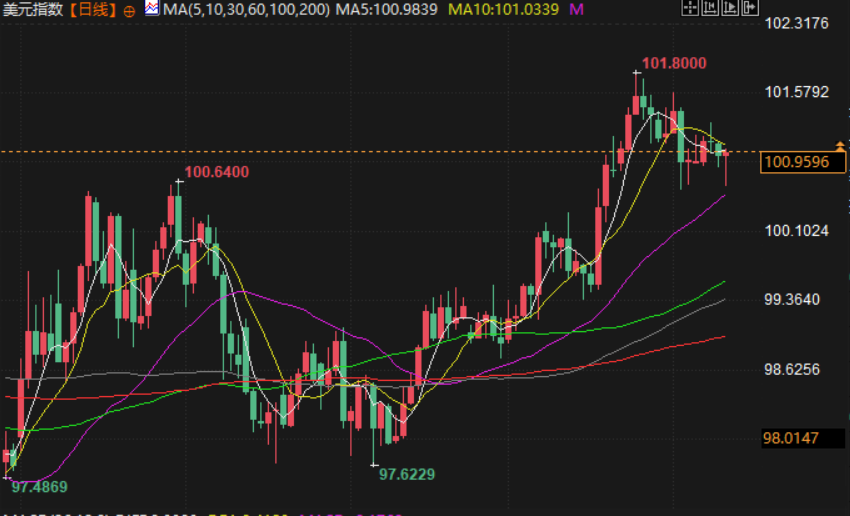
Half of the officials favored keeping interest rates unchanged, while the other half believed a rate hike was appropriate. The core innovation of the minutes lay in its use of a scenario-based decision-making framework, rather than traditional risk management terminology.
Most participants agreed that in an unfavorable scenario of persistently high inflation, they were prepared to respond by raising interest rates; while in a favorable scenario of declining inflation, they would be happy to keep interest rates unchanged or even cut them.
New York Fed President Williams interpreted this as a manifestation of a "collective reaction function." EY Chief Economist Daco pointed out that this marks a shift in the Fed's communication strategy under Warsh's leadership, aiming to make it clear to the market that further policy tightening remains a realistic possibility.
Compared to the April minutes, the June minutes removed the statement that "the vast majority" believed that inflation would take longer to return to the target, and the proportion of participants who believed that long-term inflation expectations were stable rose from "the majority" to "the majority," which some analysts interpreted as a dovish signal.
However, JPMorgan Chase's Feroli summarized the stance as "lukewarm": cut interest rates if inflation falls, raise rates if inflation remains stubborn. The minutes also emphasized that the CPI and PPI data to be released next week, especially the trend of energy prices against the backdrop of escalating tensions in the Middle East, will play a key role in subsequent policy decisions.
In its semi-annual report to Congress on July 10, the Federal Reserve, in unusually direct language, acknowledged that inflation "exacerbated further this spring." The report pointed out that the continued impact of tariffs, energy costs driven up by the Middle East conflict, and the rapid development of artificial intelligence technology have collectively created new upward pressure on prices.
As of May, the Federal Reserve's preferred indicator—the Personal Consumption Expenditures (PCE) price index—had risen by approximately twice the 2% target. This report, the first monetary policy document since new Chairman Kevin Warsh took office, is particularly noteworthy for explicitly listing artificial intelligence (AI) as one of the short-term inflation drivers. While Warsh previously argued that AI's increased productivity could curb inflation, he recently acknowledged that the timing of cost pressures from the surge in demand for electricity, chips, and materials related to AI infrastructure remains uncertain.
In contrast, the report judged the labor market to be "stabilizing," with the unemployment rate remaining low at 4.2% in June. However, declining immigration and an aging population are causing labor supply growth to slow. The Federal Reserve has kept interest rates unchanged since December, but inflation concerns have led investors to expect a rate hike this year. Warsh will testify before Congress next week, and his remarks will be the focus of the market.
Rapid depreciation was a key trigger for yen intervention.
The dollar fell 0.38% against the yen on Friday, closing at 161.73, marking its biggest one-day drop in over a week. This volatility was directly triggered by a public statement from Japanese Finance Minister Satsuki Katayama: the government plans to guide the world's largest pension fund, the Government Pension Investment Fund of Japan (GPIF), to "significantly" increase its allocation to domestic financial assets. The market interprets this move as potentially triggering a large-scale repatriation of funds from overseas to Japan, thereby directly boosting demand for the yen.
However, Eugene Epstein, head of trading at Moneycorp, pointed out that this is currently only an "urging" rather than an informal instruction, and the fluctuation range is only about 1 yen. It is worth noting that this round of yen appreciation is widespread, with the euro/yen and pound/yen both falling by about 0.5%. Previously, the yen had been hovering near 40-year lows, and traders were highly wary of the risk of intervention.
Goldman Sachs analysts believe that while macroeconomic factors continue to pressure the yen to weaken, capital inflows are one of the most credible paths to help the yen escape its severely undervalued state.
Regarding the highly anticipated possibility of Japanese authorities intervening in the foreign exchange market, Carmignac fixed income fund manager Mari-Anne Allier outlined a clear operational framework: the speed of the yen's depreciation is more crucial than its absolute exchange rate level. She pointed out that after the yen hit a 40-year low of 162.83 on July 1st, speculation about intervention intensified, but because the current depreciation is gradual, the authorities lack a sense of urgency to act immediately. The market had previously widely expected 160 to be a warning line for intervention, but Allier believes that an unsuccessful intervention would lead to further yen weakness, causing significant financial losses and damaging the government's credibility; therefore, any intervention must be "large-scale and completely unexpected" to be effective.
She also analyzed the details of the intervention's funding operations: if implemented, Japan might finance the move by selling short-term US Treasury bonds instead of long-term bonds to mitigate the long-term impact on the US Treasury market. A more critical risk lies in the cross-market ripple effect: as a low-cost funding currency, a sudden appreciation of the yen would force investors to quickly unwind arbitrage positions (such as borrowing yen to invest in high-yield assets like the Mexican peso), potentially leading to sharp fluctuations in completely unrelated asset classes. She anticipates that if the Bank of Japan raises interest rates in September, this alone could be sufficient to stabilize the foreign exchange market, thus eliminating the need for direct intervention.
Bank of Japan raises economic growth forecast, but remains wary of inflation.
According to three sources familiar with the Bank of Japan's thinking, the central bank may raise its fiscal year 2026 economic growth forecast to above 0.5% in its quarterly outlook report on July 31, primarily driven by strong AI-related demand and lower fuel costs. Meanwhile, given the sharp drop in oil prices following the preliminary peace agreement between the US and Iran in June, the central bank may slightly lower its core inflation forecast for the current fiscal year from 2.8% in April.
However, sources emphasized that even with the downward revision of forecasts, it does not signify a shift in the Bank of Japan's focus on inflation risks. Instead, the central bank will continue to emphasize the persistent inflationary pressures from the weak yen, steadily rising wages, and the energy shock caused by the war. The lagged effects of high import costs continue to drive prices. It is expected that at its July meeting, the central bank will maintain its short-term policy rate at 1%, but will retain a cautious stance on inflation risks in its report and broadly maintain its policy guidance of continuing rate hikes. However, given the uncertainty surrounding summer price trends, the central bank may still avoid giving a clear signal on the timing of the next rate hike; investors will need to glean clues from subtle changes in wording.
Reserve Bank of New Zealand raises interest rates for the first time in three years
The New Zealand dollar rose more than 1% against the US dollar this week, hitting a three-week high of 0.5792. The Reserve Bank of New Zealand raised interest rates by 25 basis points to 2.5% this week for the first time in three years, and traders increased their expectations for further rate hikes this year.
In its statement, the Reserve Bank of New Zealand said that further reductions in monetary stimulus may be necessary as inflation remains above target and economic activity is expected to strengthen. Future official cash rate decisions will depend on how new data, price-setting behavior, and the strength of economic activity affect medium-term inflationary pressures.
The Reserve Bank of New Zealand indicated that it may raise interest rates further at its upcoming meeting. Most economists expect one or two more rate hikes this year, bringing the official cash rate closer to 3%.
- Risk Warning and Disclaimer
- The market involves risk, and trading may not be suitable for all investors. This article is for reference only and does not constitute personal investment advice, nor does it take into account certain users’ specific investment objectives, financial situation, or other needs. Any investment decisions made based on this information are at your own risk.