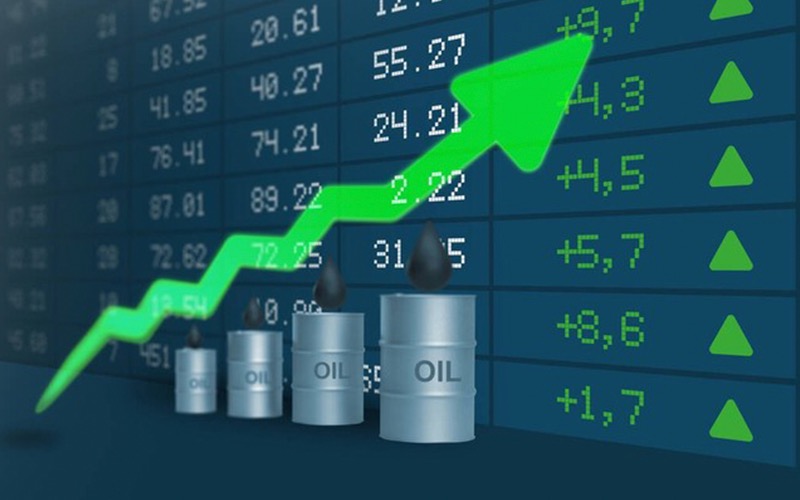
Oil prices surged over 5% this week! Tehran denies seeking talks, focus shifts to US-Iran negotiations to resume next week.
2026-07-11 09:20:41
Oil prices rose sharply this week, with Brent crude up 5.65% to settle at $75.99 a barrel and WTI crude up nearly 4%, despite a slight decline on Friday to settle at $71.51 a barrel. This pattern of "Friday pullback followed by a weekly surge" clearly reflects the market's repeated tug-of-war between geopolitical risk premiums and short-term easing signals.
Friday's decline was immediately triggered by rising expectations of the Strait of Hormuz reopening – Qatari negotiators arrived in Iran and the US and Iran announced that talks would resume next week, leading some traders to bet that the blockade was about to be lifted.
But Price Futures Group analyst Phil Flynn pointed out that what really surprised the market was that oil prices only rose to around $76 before falling back, even with the Strait "effectively blocked again," indicating that investors generally believe that the US military strength will not allow for a prolonged blockade, which in turn limited panic buying.
A deeper interpretation lies in the fact that current oil prices have already fully priced in the assumption that the conflict will not spread to energy infrastructure. ANZ strategist Haines explicitly pointed out that the Trump administration's avoidance of targeting Iranian energy facilities has provided a placebo effect to the market. Meanwhile, Again Capital partner Kildav stated that "the market is prepared to react positively to good news," suggesting that once the situation stops deteriorating, the previously accumulated bullish sentiment could be quickly released. However, UBS analyst Stanovo cautioned that while the lack of new attacks by the US overnight put pressure on oil prices, the fact that daily shipping traffic in the Strait of Hormuz is slowing down provides support—this mixed state of bullish and bearish sentiment is a typical characteristic of oil prices during geopolitical crises.
Escalation of US-Iran conflict and failure of ceasefire
The trigger for this round of conflict was the US and Israel's strikes against Iran on February 28, followed by Iranian armed forces attacking US military bases in the Gulf states and attacking three Qatari and Saudi commercial oil tankers. This prompted US airstrikes on Iran's southern coast and eastern provinces, even affecting the Bushehr region, which houses a nuclear power plant. However, the most crucial turning point came on Friday: Trump explicitly declared that the ceasefire agreement reached last month was "no longer valid," while simultaneously stating that the US and Iran had agreed to continue talks—this contradictory stance of "fighting while negotiating" is essentially a strategic oscillation by the US between maximum pressure and crisis management.
Trump stated on Truth Social that "Iran has asked us to continue talks," but Iranian Foreign Ministry spokesman Bagheei quickly denied this, emphasizing that Tehran "did not seek negotiations" and only accepted visits from Qatari mediators. This discrepancy in statements exposes a gap in the two sides' understanding of the legitimacy of the negotiations: the US is attempting to create a narrative of "Iran yielding to talks," while Iran maintains a hardline stance of "not initiating peace talks."
Iran's chief negotiator, Qalibaf, went further on Telegram, stating that the war would not end with Tehran's surrender and that Iran was prepared for "full defense."
More noteworthy is that Iranian Foreign Minister Araqchi will visit Oman to discuss the Straits issue, with a Qatari mediator also present. This indicates that multilateral mediation channels have not been interrupted, but the legal basis for the ceasefire has been unilaterally abolished by the US, and any future diplomatic achievements will be built on a more fragile temporary arrangement. The IEA has warned that an escalation of hostility between the US and Iran could overturn its forecast of a significant global oil oversupply next year—in other words, the failure of the ceasefire not only changes the rules of geopolitics but also rewrites the long-term script of global energy supply and demand.
Strategic impact of the Strait of Hormuz
The Strait of Hormuz, carrying approximately 20% of the world's daily oil and gas supply, is a vital chokepoint for global energy transportation. Before the conflict, the strait was open to navigation; however, following the attacks launched by the United States and Israel on February 28, it has been effectively closed—although LNG carriers have recently passed through, the overall daily ship traffic has slowed significantly. Market hopes for a "resumption of navigation" stem primarily from the mediation efforts of Qatari negotiators and Trump's statement that "the war will not reignite."
However, the issue of navigation in the Taiwan Strait has escalated from maritime security to a core point of contention between sovereignty and deterrence. Iran, through attacks on merchant ships and US military bases, is attempting to demonstrate its asymmetric denial capabilities; while the US retaliatory airstrikes are intended to show its military superiority and its unwillingness to tolerate a prolonged blockade. The explosion in Bushehr (the location of the nuclear power plant), reported by Iranian media, further links the Strait crisis to the safety of nuclear facilities, greatly increasing the risk of miscalculation.
Ship tracking data revealed a crucial detail: while traffic slowed, it didn't completely drop to zero. This suggests that Iran is employing a selective deterrence strategy—neither completely cutting off supplies and triggering a global catastrophe, nor completely allowing the US to easily regain the initiative.
The International Energy Agency's revised forecasts have exacerbated tensions from the demand side: if the strait remains blocked, the expected supply glut next year will reverse, oil prices could break through the $100 mark, pushing up global inflation and forcing central banks to tighten monetary policy again. Therefore, whether or not the strait remains open to navigation is no longer just a geopolitical issue, but a core variable in the macroeconomy.
International Sanctions and Financial Networks
The United States announced a new round of sanctions against Iran on Friday, focusing on Ali Ansari, an Iranian banker based in Dubai. He has been described as a “key financier” of Iran’s new leader, Mojtaba Khamenei, for allegedly transferring public wealth to overseas real estate and commercial assets to feed government elites and the Islamic Revolutionary Guard Corps. At the same time, the U.S. Treasury Department’s Office of Foreign Assets Control expanded the sanctions to major Iranian money exchange institutions, which transfer billions of dollars annually on behalf of sanctioned banks and use multiple layers of shell companies to conceal illicit financial activities.
The timing of these sanctions is intriguing: with the ceasefire broken and tensions escalating, the US has opted not for military escalation, but rather to utilize its financial extraterritorial jurisdiction. This suggests that Washington's strategy is shifting from a "hard strike" to a protracted war of "cutting off the financial chain." Ansari had already been sanctioned by the UK; this follow-up action by the US aims to block his access to Dubai as an offshore safe haven, while simultaneously deterring other Gulf businessmen who provide financing to the Iranian Revolutionary Guard.
A deeper impact lies in the fact that sanctions combine the physical blockade of the Strait of Hormuz with a targeted blockade of the international financial system, creating a dual pressure. With currency exchange institutions cut off, Iran's settlement channels for oil exports will become even narrower, and even if navigation resumes in the strait, its crude oil exports may not rebound quickly due to payment barriers. However, this also carries the risk that excessive sanctions could force Iran to take more extreme retaliatory measures, such as expanding attacks to Saudi or UAE energy facilities, thereby triggering a larger-scale regional conflict.
The Russian Factor and the Global Energy Landscape
The IEA announced on Friday that it had lowered its forecast for Russian oil production due to ongoing attacks on Russian energy infrastructure by Ukraine. Two industry sources and Reuters calculations indicate that Russian gasoline production has fallen to only about 65% of seasonal average consumption following the shutdown of major refineries caused by Ukrainian drone attacks. This data, occurring almost simultaneously with the US-Iran conflict, paints a picture of a global energy landscape characterized by a "two-pronged supply shock."
Kremlin spokesman Dmitry Peskov responded that Putin remains willing to achieve his goals through diplomacy, but Ukraine's escalating actions are prompting Moscow to expand its buffer zone within Ukraine.
According to sources close to the Kremlin, Ukraine's drone attacks on Russian oil refineries and ports are further reinforcing Putin's resolve to continue the fight. This means that Russia will not back down due to damage to energy facilities, and may instead increase its military involvement, thereby prolonging the disruption to global oil and gas supplies caused by the war in Ukraine.
Considering the combined US-Iran conflict and the Russia-Ukraine war, the global oil market is facing a double geopolitical premium: on one hand, the risk of passage through the Strait of Hormuz, and on the other hand, the continued decline in Russian refining capacity. The IEA's previous prediction of a "significant oversupply" is likely to be completely overturned, replaced by tighter supply or even shortages. Trump's prediction this week that "the war will end soon" seems overly optimistic given the reality of Russia expanding its buffer zone and Iran's full-scale defense.
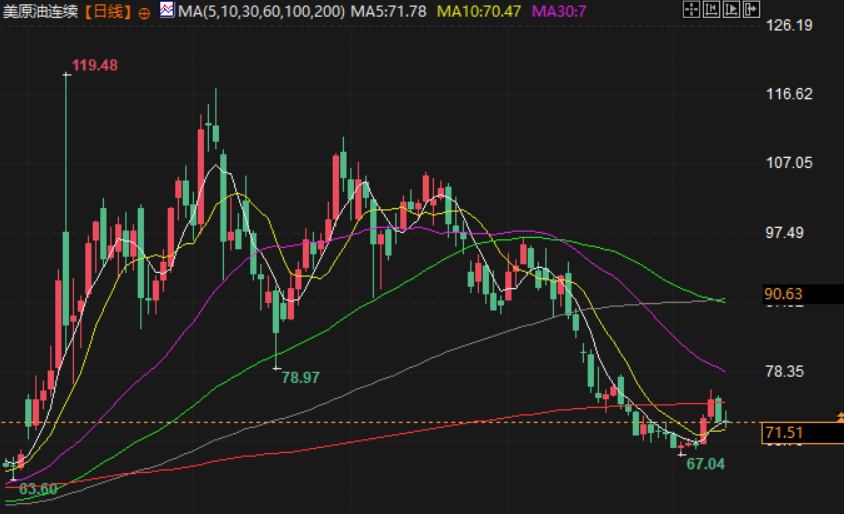
Friday's decline was immediately triggered by rising expectations of the Strait of Hormuz reopening – Qatari negotiators arrived in Iran and the US and Iran announced that talks would resume next week, leading some traders to bet that the blockade was about to be lifted.
But Price Futures Group analyst Phil Flynn pointed out that what really surprised the market was that oil prices only rose to around $76 before falling back, even with the Strait "effectively blocked again," indicating that investors generally believe that the US military strength will not allow for a prolonged blockade, which in turn limited panic buying.
A deeper interpretation lies in the fact that current oil prices have already fully priced in the assumption that the conflict will not spread to energy infrastructure. ANZ strategist Haines explicitly pointed out that the Trump administration's avoidance of targeting Iranian energy facilities has provided a placebo effect to the market. Meanwhile, Again Capital partner Kildav stated that "the market is prepared to react positively to good news," suggesting that once the situation stops deteriorating, the previously accumulated bullish sentiment could be quickly released. However, UBS analyst Stanovo cautioned that while the lack of new attacks by the US overnight put pressure on oil prices, the fact that daily shipping traffic in the Strait of Hormuz is slowing down provides support—this mixed state of bullish and bearish sentiment is a typical characteristic of oil prices during geopolitical crises.
Escalation of US-Iran conflict and failure of ceasefire
The trigger for this round of conflict was the US and Israel's strikes against Iran on February 28, followed by Iranian armed forces attacking US military bases in the Gulf states and attacking three Qatari and Saudi commercial oil tankers. This prompted US airstrikes on Iran's southern coast and eastern provinces, even affecting the Bushehr region, which houses a nuclear power plant. However, the most crucial turning point came on Friday: Trump explicitly declared that the ceasefire agreement reached last month was "no longer valid," while simultaneously stating that the US and Iran had agreed to continue talks—this contradictory stance of "fighting while negotiating" is essentially a strategic oscillation by the US between maximum pressure and crisis management.
Trump stated on Truth Social that "Iran has asked us to continue talks," but Iranian Foreign Ministry spokesman Bagheei quickly denied this, emphasizing that Tehran "did not seek negotiations" and only accepted visits from Qatari mediators. This discrepancy in statements exposes a gap in the two sides' understanding of the legitimacy of the negotiations: the US is attempting to create a narrative of "Iran yielding to talks," while Iran maintains a hardline stance of "not initiating peace talks."
Iran's chief negotiator, Qalibaf, went further on Telegram, stating that the war would not end with Tehran's surrender and that Iran was prepared for "full defense."
More noteworthy is that Iranian Foreign Minister Araqchi will visit Oman to discuss the Straits issue, with a Qatari mediator also present. This indicates that multilateral mediation channels have not been interrupted, but the legal basis for the ceasefire has been unilaterally abolished by the US, and any future diplomatic achievements will be built on a more fragile temporary arrangement. The IEA has warned that an escalation of hostility between the US and Iran could overturn its forecast of a significant global oil oversupply next year—in other words, the failure of the ceasefire not only changes the rules of geopolitics but also rewrites the long-term script of global energy supply and demand.
Strategic impact of the Strait of Hormuz
The Strait of Hormuz, carrying approximately 20% of the world's daily oil and gas supply, is a vital chokepoint for global energy transportation. Before the conflict, the strait was open to navigation; however, following the attacks launched by the United States and Israel on February 28, it has been effectively closed—although LNG carriers have recently passed through, the overall daily ship traffic has slowed significantly. Market hopes for a "resumption of navigation" stem primarily from the mediation efforts of Qatari negotiators and Trump's statement that "the war will not reignite."
However, the issue of navigation in the Taiwan Strait has escalated from maritime security to a core point of contention between sovereignty and deterrence. Iran, through attacks on merchant ships and US military bases, is attempting to demonstrate its asymmetric denial capabilities; while the US retaliatory airstrikes are intended to show its military superiority and its unwillingness to tolerate a prolonged blockade. The explosion in Bushehr (the location of the nuclear power plant), reported by Iranian media, further links the Strait crisis to the safety of nuclear facilities, greatly increasing the risk of miscalculation.
Ship tracking data revealed a crucial detail: while traffic slowed, it didn't completely drop to zero. This suggests that Iran is employing a selective deterrence strategy—neither completely cutting off supplies and triggering a global catastrophe, nor completely allowing the US to easily regain the initiative.
The International Energy Agency's revised forecasts have exacerbated tensions from the demand side: if the strait remains blocked, the expected supply glut next year will reverse, oil prices could break through the $100 mark, pushing up global inflation and forcing central banks to tighten monetary policy again. Therefore, whether or not the strait remains open to navigation is no longer just a geopolitical issue, but a core variable in the macroeconomy.
International Sanctions and Financial Networks
The United States announced a new round of sanctions against Iran on Friday, focusing on Ali Ansari, an Iranian banker based in Dubai. He has been described as a “key financier” of Iran’s new leader, Mojtaba Khamenei, for allegedly transferring public wealth to overseas real estate and commercial assets to feed government elites and the Islamic Revolutionary Guard Corps. At the same time, the U.S. Treasury Department’s Office of Foreign Assets Control expanded the sanctions to major Iranian money exchange institutions, which transfer billions of dollars annually on behalf of sanctioned banks and use multiple layers of shell companies to conceal illicit financial activities.
The timing of these sanctions is intriguing: with the ceasefire broken and tensions escalating, the US has opted not for military escalation, but rather to utilize its financial extraterritorial jurisdiction. This suggests that Washington's strategy is shifting from a "hard strike" to a protracted war of "cutting off the financial chain." Ansari had already been sanctioned by the UK; this follow-up action by the US aims to block his access to Dubai as an offshore safe haven, while simultaneously deterring other Gulf businessmen who provide financing to the Iranian Revolutionary Guard.
A deeper impact lies in the fact that sanctions combine the physical blockade of the Strait of Hormuz with a targeted blockade of the international financial system, creating a dual pressure. With currency exchange institutions cut off, Iran's settlement channels for oil exports will become even narrower, and even if navigation resumes in the strait, its crude oil exports may not rebound quickly due to payment barriers. However, this also carries the risk that excessive sanctions could force Iran to take more extreme retaliatory measures, such as expanding attacks to Saudi or UAE energy facilities, thereby triggering a larger-scale regional conflict.
The Russian Factor and the Global Energy Landscape
The IEA announced on Friday that it had lowered its forecast for Russian oil production due to ongoing attacks on Russian energy infrastructure by Ukraine. Two industry sources and Reuters calculations indicate that Russian gasoline production has fallen to only about 65% of seasonal average consumption following the shutdown of major refineries caused by Ukrainian drone attacks. This data, occurring almost simultaneously with the US-Iran conflict, paints a picture of a global energy landscape characterized by a "two-pronged supply shock."
Kremlin spokesman Dmitry Peskov responded that Putin remains willing to achieve his goals through diplomacy, but Ukraine's escalating actions are prompting Moscow to expand its buffer zone within Ukraine.
According to sources close to the Kremlin, Ukraine's drone attacks on Russian oil refineries and ports are further reinforcing Putin's resolve to continue the fight. This means that Russia will not back down due to damage to energy facilities, and may instead increase its military involvement, thereby prolonging the disruption to global oil and gas supplies caused by the war in Ukraine.
Considering the combined US-Iran conflict and the Russia-Ukraine war, the global oil market is facing a double geopolitical premium: on one hand, the risk of passage through the Strait of Hormuz, and on the other hand, the continued decline in Russian refining capacity. The IEA's previous prediction of a "significant oversupply" is likely to be completely overturned, replaced by tighter supply or even shortages. Trump's prediction this week that "the war will end soon" seems overly optimistic given the reality of Russia expanding its buffer zone and Iran's full-scale defense.
- Risk Warning and Disclaimer
- The market involves risk, and trading may not be suitable for all investors. This article is for reference only and does not constitute personal investment advice, nor does it take into account certain users’ specific investment objectives, financial situation, or other needs. Any investment decisions made based on this information are at your own risk.