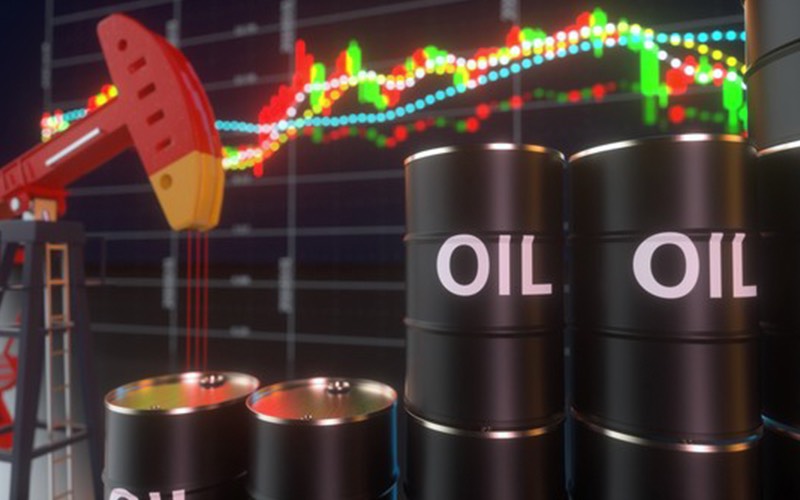
Trump's dramatic 24-hour reversal: just announced a 20% toll on the Strait of Hormuz, then changed his tune from asking for money to "wanting investment," while oil prices hit a one-month high.
2026-07-15 09:20:11
The Strait of Hormuz, a vital waterway supplying over 20% of the world's oil, is engulfed in conflict. The US has reinstated its naval blockade of Iran and launched a series of airstrikes, while Iran retaliates with missiles and drones, and the conflict has spread to Bahrain, Kuwait, and Jordan. Trump initially proposed a shocking plan to impose a 20% toll on the strait, but due to pressure from international law and allies, he abruptly shifted to an "investment for passage" policy within 24 hours. On Tuesday, Brent crude oil prices surged past $87, and navigation through the strait was nearly shut down. Where will this power struggle lead the global economy and energy security? 
I. A Dramatic Policy Shift: From Imposing a 20% Toll to Promoting Investment in the US
US President Trump executed a major policy reversal within just 24 hours. On July 13, local time, Trump posted on social media that the US would reinstate the naval blockade against Iran and impose a 20% "compensation fee" on all goods transported through the Strait of Hormuz to recoup the costs the US incurs in securing this highly dangerous global waterway. He declared that the US would become the "guardian of the Strait of Hormuz," and that the fee collection process would "begin immediately." However, this plan immediately met with strong opposition from the international community. The International Maritime Organization clearly stated that there is no legal basis for imposing fees on straits used for international navigation and strongly opposed such practices. The United Nations shipping agency emphasized that, according to international law, passage through the Strait of Hormuz should continue to be toll-free. Brazilian President Lula went even further, stating that this move would turn the US into a "pirate nation." On July 14, Trump posted on Truth Social, stating that based on "productive dialogue" with Middle Eastern leaders, he had decided to replace the 20% US compensation fee with trade and investment agreements between the Gulf states and the US. Trump described the investments as "enormous in scale," adding that "factories, facilities, and equipment will flood into the United States on an unprecedented scale, creating millions of high-paying jobs." However, he did not specify which investment commitments the Gulf states had made.II. Military conflict continues to escalate, with the US military striking Iranian targets for several consecutive days.
Behind this policy shift lies the continued escalation of the US-Iran military conflict. Since the US military launched strikes against Iran on July 7th, citing an attack on merchant ships, the two sides have been exchanging attacks for a week. According to US Central Command, the US military has struck more than 170 targets in Iran since July 7th, a significant increase in intensity compared to the end of June, with the scale of the strikes being approximately four to five times larger. On July 14th, US Central Command announced the completion of a new round of strikes lasting five hours, targeting multiple Iranian military facilities including Bushehr, Chabahar, Jask, Konarak, Abu Musa Island, and Bandar Abbas. The US military stated that this move was aimed at "continuing to weaken Iran's ability to attack commercial shipping in the Strait of Hormuz." Simultaneously, the US reinstated its naval blockade against Iran. Iran, in turn, has continued to retaliate. According to the tenth statement released by the Iranian Islamic Revolutionary Guard Corps on July 14 as part of "Operation Nasr 2," its naval and air forces destroyed multiple weapons depots and ship components at the Sheikh Issa base in Bahrain in a joint missile and drone strike, and attacked the US MQ-9 drone landing pad at the Ali Salim base in Kuwait. The Iranian military issued a statement early on July 15 stating that it continued drone strikes against US bases in the region, including F-18 fighter jet deployment sites and large equipment warehouses at the US base in Azraq, Jordan. Iranian media reported multiple explosions in Sirik district of Hormozgan province, possibly related to firefights in nearby waters. The Iranian parliament has declared the previously reached memorandum of understanding invalid.III. Energy markets suffer severe blows: soaring oil prices, sharp declines in traffic, and skyrocketing insurance costs.
The Strait of Hormuz is the world's most important energy chokepoint, with approximately 20% of global oil supplies transported through it before the war. The current conflict has severely impacted the global energy market. Regarding oil prices, on July 13th, international oil prices rose by over 9%, with Brent crude futures closing up 9.59%, settling at $83.30 per barrel. On July 14th, oil prices continued to rise, with Brent crude futures briefly exceeding $87 per barrel, reaching a one-month high of $87.53 per barrel, before closing at $85.30 per barrel; WTI crude futures briefly broke through $81 per barrel, settling at $79.34 per barrel. International oil prices have cumulatively risen by over $15 per barrel from their early July lows. Regarding strait traffic, data from shipping agency Kpler shows that only 14 vessels passed through the Strait of Hormuz on July 12th (Sunday), including 4 crude oil tankers, a sharp decrease of approximately 60% compared to the 37 vessels transiting the same period last week. Before the US-Israel conflict with Iran on February 28, more than 100 ships passed through the Strait of Hormuz daily. Windward, a maritime news agency, stated that traffic in the southern shipping lanes protected by the US military had "virtually ground to a halt." In the insurance market, war risk premiums have become the most sensitive market indicator to the security situation in the Strait of Hormuz. Before the conflict, hull war risk premiums typically accounted for only about 0.25% of the ship's value; after the escalation of the conflict, they soared to as high as about 10%. After the US and Iran reached a memorandum of understanding in June, the rate briefly dropped to around 2%, but rose again after the renewed conflict on July 8, and is now up to about 5% of the ship's value. Regarding supply and demand fundamentals, OPEC has lowered its 2026 global oil demand growth forecast to 780,000 barrels per day (previously 970,000 barrels per day). The International Energy Agency predicts that global oil consumption will decline by 1 million barrels per day this year due to the impact of the war. Meanwhile, OECD inventories have fallen to their lowest level since 2003, US inventories to their lowest level since 2014, and strategic reserves to their lowest level in nearly 40 years. In a low-inventory environment, any supply disruption will be significantly amplified.IV. Regional Situation Spreads: Multiple Countries Involved in Conflict
The impact of the conflict extends beyond the US and Iran. The UAE reported that two very large crude carriers (VLCCs) were attacked by Iranian cruise missiles while transiting the southern channel of the Strait of Hormuz, resulting in the death of one Indian crew member and injuries to eight others. Jordan stated that it had shot down four ballistic missiles. Explosions were heard in Manama, the capital of Bahrain, and the Kuwaiti Armed Forces announced a response to "hostile" aerial targets and sounded air raid sirens. A Kuwaiti offshore drilling platform was damaged in the attack, marking the first direct hit on an energy facility in weeks. Analysts believe that the conflict remains under control, with both sides vying for leverage in a future peace agreement, but the risk of escalation remains. On July 14, Trump stated that strikes against Iran would continue "until I say 'enough'," and that strikes on Iranian energy facilities would be reserved for last. He also revealed that the US held talks with Iran that day, urging Iran to reach an agreement.Editor's Summary
The Strait of Hormuz dispute has evolved from a regional military standoff into a major geopolitical risk event impacting global energy markets, shipping insurance, and international trade. Trump's dramatic reversal within 24 hours—from announcing a 20% transit fee to pushing for an investment agreement—reflects the dilemma facing the US government on the Strait issue: maintaining military pressure on Iran while being unable to withstand the backlash from a prolonged disruption of the Strait on global oil prices and the US economy. Currently, Brent crude oil has surpassed $87 per barrel, daily traffic through the Strait is only one-seventh of pre-war levels, and war risk premiums have soared to 20 times pre-crisis levels—these market indicators all point to one reality: the fragility of the global energy supply chain is being ruthlessly amplified by geopolitical conflict. Against the backdrop of low inventory and high risk, any escalation could trigger further spirals in oil prices. The core variables for the future market lie in whether the US and Iran can return to the negotiating table and whether the Gulf states' investment commitments to the US can translate into concrete actions to ease tensions.Frequently Asked Questions
Q: Does the US have a legal basis for imposing a 20% toll on the Strait of Hormuz? A: No. The International Maritime Organization (IMO) has clearly stated that there is no legal basis for imposing tolls on straits used for international navigation. According to international law, including the IMO Convention, passage through the Strait of Hormuz should continue to be toll-free. Trump's toll proposal has been widely opposed by the international community, with Brazilian President Lula even stating that this move would turn the US into a "pirate nation." Q: How much impact will the closure of the Strait of Hormuz have on global oil prices? A: The impact will be extremely significant. Before the war, approximately 20% of the world's oil supply was transported through this strait. On July 13, international oil prices rose by more than 9% in a single day, with Brent crude breaking through $87 per barrel. Analysts warn that if the situation does not ease, oil prices could be pushed up to $90 per barrel. Current global oil inventories are at historically low levels, and any supply disruption will be amplified by the market. Q: Why did Trump abandon the toll plan within 24 hours? A: The main driving factors are threefold: First, strong opposition from the international community, with the International Maritime Organization and many countries explicitly opposing the toll; second, pressure from Gulf allies, which prompted Trump to change his stance; and third, concerns that the toll would further drive up oil prices, exacerbate global inflation, and ultimately harm the US economy. Q: Can the Gulf countries' investment agreement with the US truly replace the toll? A: There is considerable uncertainty at present. Trump did not mention any specific investment arrangements or committed amounts in his post. Analysts point out that this shift is more like a strategic adjustment by Trump in the face of internal and external pressures. It remains to be seen how much investment the Gulf countries are willing to make in the US in exchange for guaranteed navigation in the Strait of Hormuz. Q: What are the long-term impacts of the current US-Iran conflict on global energy supply? A: In the short term, obstruction of navigation in the Strait of Hormuz will directly reduce global crude oil supply and push up energy prices. In the long term, this conflict is reshaping the global energy trade landscape—Asian countries are forced to turn to more distant production areas such as the US to purchase crude oil, leading to a significant increase in transportation costs. OPEC has lowered its 2026 global oil demand growth forecast to 780,000 barrels per day, while the IEA predicts that global oil consumption will decline by 1 million barrels per day this year due to the impact of war. As of 09:14 Beijing time, Brent crude oil is trading at $85.46 per barrel.- Risk Warning and Disclaimer
- The market involves risk, and trading may not be suitable for all investors. This article is for reference only and does not constitute personal investment advice, nor does it take into account certain users’ specific investment objectives, financial situation, or other needs. Any investment decisions made based on this information are at your own risk.