The US president's speech on Thursday, coupled with the midterm elections locking up policy space, and the looming threat of high interest rates on US Treasury bonds, further fuels concerns.
2026-07-15 21:42:13
The current core issue in the US can be summarized as follows: the November midterm elections have completely locked down Trump's policy options, ultimately creating a dual stalemate of "not daring to fight a war and not being able to raise interest rates." This situation directly dominates the recent trends of major asset classes such as the US dollar, energy, and US Treasury bonds, and is also the core pricing logic of the current global financial markets. Trump's recent frequent pre-election national speeches during prime time on Thursdays, focusing on domestic issues such as election security and voting system reform, are essentially a propaganda campaign ahead of the midterm elections. This also indirectly confirms that his policy focus has shifted entirely inward, leaving him in a passive and constrained state regarding foreign geopolitical games and monetary and fiscal controls. 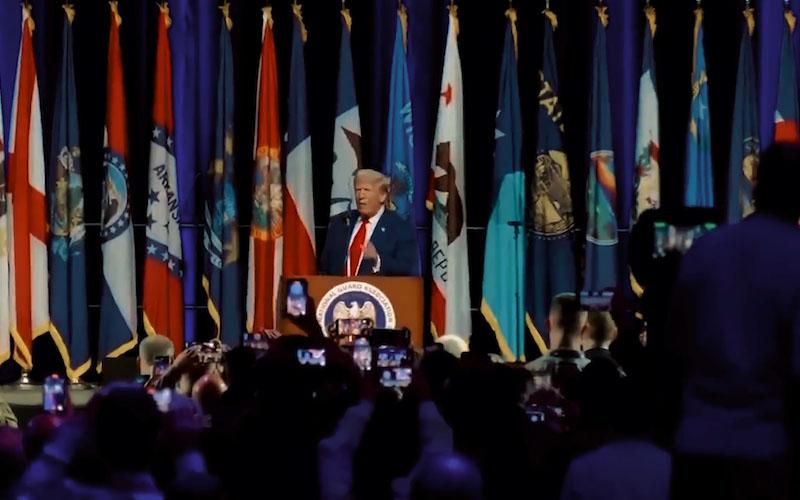
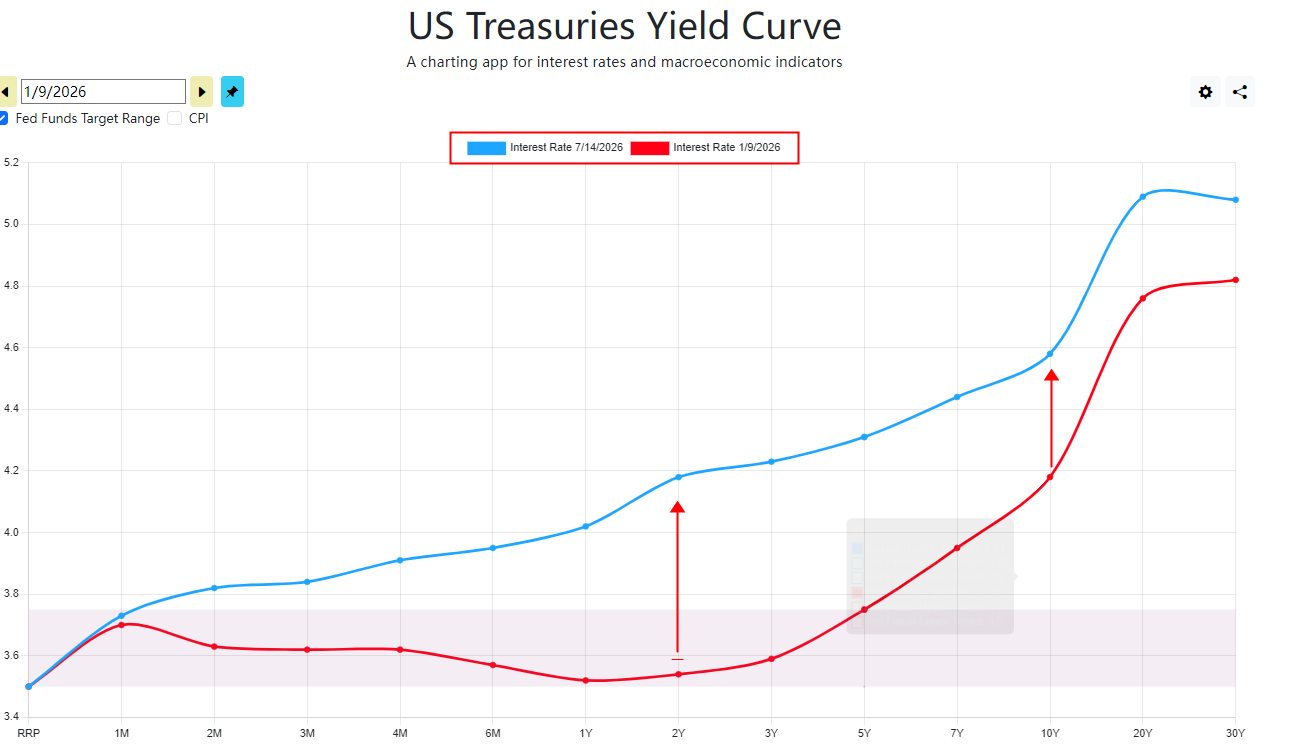 (The US Treasury futures-spot premium indicates that it is currently in a bear flat state, which is unfavorable for long-term assets such as gold and equities.) At the same time, the growth rate of 2-year Treasury bonds is slower than that of 10-year and 30-year bonds, which means that large funds may be withdrawing from US Treasuries. They believe that US interest rates will remain high for a longer period of time, which will suppress gold prices and equity markets. Traders need to pay attention to this risk.
 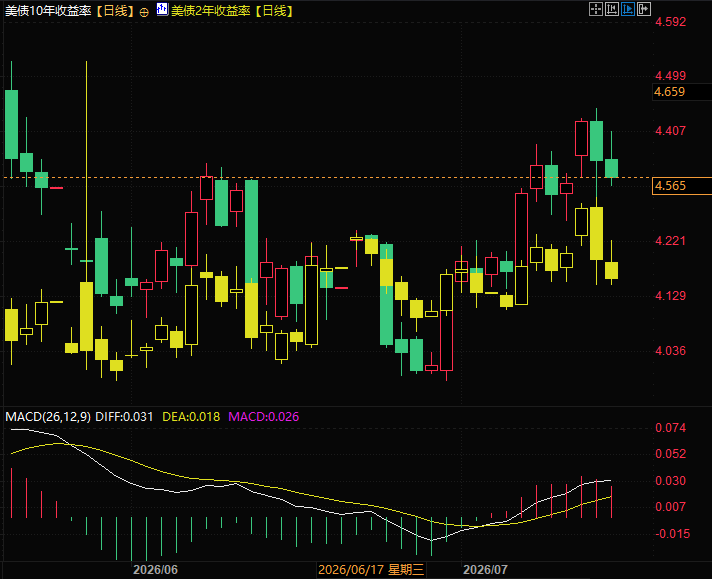 (The trend of 2-year and 10-year US Treasury yields, source: EasyForex)
Elections became a rigid constraint, and policies completely abandoned radical approaches.
The midterm elections have become a rigid constraint on all of Trump's policies, creating a dilemma for his governance. From a fundamental governing perspective, the US midterm elections have historically been a stress test for the incumbent president, with the ruling party generally exhibiting a natural tendency to lose ground. Currently, the Republican Party holds only a slim majority in Congress; if it loses these seats, Trump will be completely trapped in a lame-duck state of "official-congress conflict and policy gridlock." To retain Republican congressional seats and maintain his governing influence, Trump is currently prioritizing public opinion in all his decisions, completely abandoning radical and risky policy approaches, which directly eliminates the possibility of an escalation of the US-Iran conflict.Geopolitical dilemma: wanting to fight would drive up inflation, while a ceasefire would damage political achievements.
At the geopolitical level, Trump is caught in an extreme dilemma: wanting to fight but not daring to, wanting to stop but unwilling to. Escalating the US-Iran military conflict would inevitably drive up global oil prices, reignite domestic inflationary pressures in the US, directly impact voters' interests, and significantly lower his own and the Republican Party's approval ratings—an absolutely taboo move before the midterm elections.Election campaign rhetoric is heavily focused on domestic affairs, lacking any substantial market-driven positive factors.
In terms of domestic election campaigning, Trump has recently been relentlessly promoting the narrative of 2020 election fraud, pushing for mandatory voter ID verification, tightening rules on mail-in ballots, and even launching government investigations into the elections in California and Georgia. While seemingly fixated on past election controversies, this is actually a precise political maneuvering ahead of the midterm elections. His core objective is to solidify his base of support by improving election rules and emphasizing election security, thus paving the way for the Republican Party in the congressional elections. This purely domestic political rhetoric offers no substantial policy updates; it will neither incite geopolitical conflicts nor deliver fiscal stimulus. It only causes short-term market sentiment disturbances and cannot alter the overall trend of asset classes.Election pressures monetary policy; no-interest-rate stance severely impacts US Treasury yields.
The core logic behind this remains the constraint of the midterm elections: the current US economy has limited robustness, and employment and inflation are fragile. To avoid economic volatility and maintain voter confidence, the Trump team will not allow the Federal Reserve to take tightening measures such as raising interest rates. The resulting economic slowdown and increased financing costs from rate hikes would directly become a major negative variable in the midterm elections. Therefore, market expectations for rate hikes have completely failed to materialize, and the "no war, no rate hikes" scenario has fully materialized. In the US Treasury market, the current midterm elections locking in easing expectations, geopolitical stalemate suppressing risk premiums, and the peaking and declining inflation are all factors that have directly driven down US Treasury yields. However, it is worth noting that before today's overall decline in US Treasury yields, the term premium for US Treasuries had been steepening continuously, indicating a clear bond bear market. (The US Treasury futures-spot premium indicates that it is currently in a bear flat state, which is unfavorable for long-term assets such as gold and equities.) At the same time, the growth rate of 2-year Treasury bonds is slower than that of 10-year and 30-year bonds, which means that large funds may be withdrawing from US Treasuries. They believe that US interest rates will remain high for a longer period of time, which will suppress gold prices and equity markets. Traders need to pay attention to this risk. (The trend of 2-year and 10-year US Treasury yields, source: EasyForex)
- Risk Warning and Disclaimer
- The market involves risk, and trading may not be suitable for all investors. This article is for reference only and does not constitute personal investment advice, nor does it take into account certain users’ specific investment objectives, financial situation, or other needs. Any investment decisions made based on this information are at your own risk.