Five ships attacked, only six ships transiting the area in a single day, a five-week low: the US Hormuz escort plan is being collectively abandoned by the shipping industry.
2026-07-16 09:08:13
Since the outbreak of the Iran-Iraq War on February 28, 2026, the Strait of Hormuz, one of the world's most important energy transport routes, has been mired in continuous turmoil. Seven maritime security and shipping industry sources revealed on July 15 that, following a series of Iranian attacks on ships that raised significant security concerns, several shipping companies are avoiding using the US military-guided navigation methods through the Strait of Hormuz. This trend signifies a severe crisis of confidence in the US-led efforts to ensure the strait's passage. 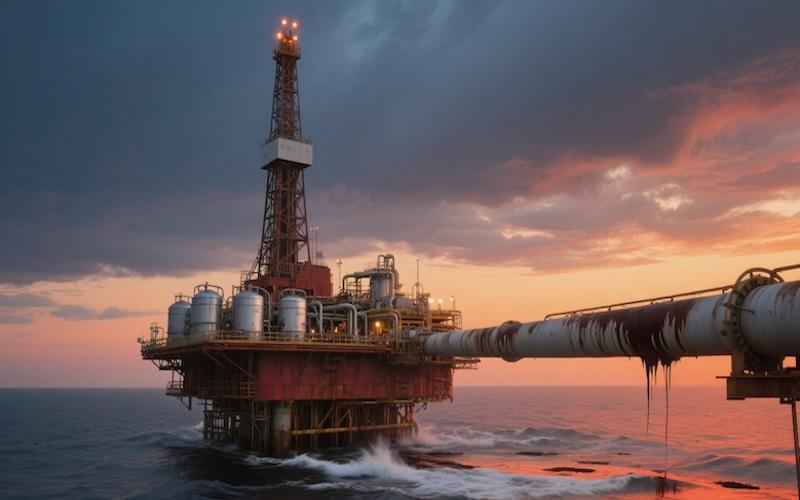
A wave of attacks swept through Omani waters, severely damaging five ships.
Since July 7, the security situation in the Strait of Hormuz has deteriorated sharply. According to an analysis of incidents by the United Nations shipping agency, five vessels have been attacked in Omani waters covered by the US-led plan—including three very large crude oil tankers, one liquefied natural gas carrier, and one container ship. On the evening of July 6, the Iranian Islamic Revolutionary Guard Corps (IRGC) fired at least two missiles at merchant ships transiting the Strait of Hormuz, hitting and severely damaging two vessels. On July 7, the UK's Office for Maritime Trade Operations reported that another merchant ship had been attacked and caught fire in the Gulf of Oman. On July 14, the situation escalated further. Two UAE state-owned oil tankers were attacked by two cruise missiles fired from Iran in the southern channel of the Strait of Hormuz, resulting in one death and eight injuries. The IRGC subsequently issued a statement on social media claiming that the two giant oil tankers were "maliciously manipulated" by the US, shutting down their navigation systems, ignoring repeated Iranian warnings, and choosing to cross a minefield, ultimately being hit and losing power. In addition, since July 7, two other oil tankers have been attacked in international waters outside the Strait of Hormuz. These attacks have severely damaged the shipping industry's confidence in the U.S.'s ability to provide escort services. One shipping industry source bluntly stated, "The U.S. seems unable to control the situation." His company has decided to suspend sailings through the Strait of Hormuz due to concerns about crew safety and the deteriorating security situation.How effective are the US escort missions? The contradiction between coordinating hundreds of ships and deploying only six ships a day.
In response to Iran's continued attacks, the US military has emphasized the effectiveness of its escort operations. An anonymous US defense official stated that over 100 ships, in direct coordination with the US military, have passed through the Strait of Hormuz in the past seven days, with another 300 ships transiting the area. This indicates that, although shipping volumes remain below pre-war levels, the US-led escort measures are working. However, this data differs significantly from statistics from third-party organizations. Data previously released by the US-led Joint Maritime Information Center showed that in the 72 hours from July 2nd to 4th, only 70 merchant ships were escorted through the Strait of Hormuz by the US, far below the pre-conflict average of 138 ships per day. Daily transit volumes continued to decline, with 33 ships on July 2nd, 29 on July 3rd, and 18 on July 4th. Statistics from shipping data company Kpler show that only 6 ships passed through the Strait of Hormuz on July 12th, the lowest level in five weeks. The day before, on July 11, 24 commercial vessels passed through the Strait of Hormuz; on July 10, 20 vessels passed through. Even at the peak after the US-Iran memorandum of understanding was reached—on June 24—the daily passage was only 76 vessels. What is even more unsettling for the industry is that the attack occurred within the area escorted by US forces. Reports indicate that two UAE oil tankers, escorted by two US warships, were attacked by Iran while transiting the Strait of Hormuz, with one tanker sinking. This incident has directly raised fundamental questions within the shipping industry about the effectiveness of US escorts.Inaccurate security assessments lead industry to reject the "open access" argument.
Discontent with the U.S. security assessment is building in the shipping industry. Five sources indicated that the U.S. military failed to adequately explain the risks faced by ships navigating the Oman route. A maritime security source stated that the U.S. claim that the Strait of Hormuz is "not closed" and still open to navigation has left ship owners and operators uneasy and confused. "While all parties need to assess the risks themselves, the current situation is clearly not safe, so why declare the strait still open?" the source questioned. Torbjorn Solvedt, chief Middle East analyst at risk intelligence firm Verisk Maplecroft, noted, "Iran's continued ability to strike ships navigating the Oman route means that the solutions proposed by the Trump administration to maintain unimpeded shipping are unlikely to be effective." Greek maritime security company Diaplous issued a notice on July 14th stating that the current threat level remains high and advising shipping companies to suspend operations until July 18th. Another Greek maritime security company, MARISKS, also issued a separate notice stating, "There is currently no guarantee that ships can pass through the Strait of Hormuz with an acceptable level of safety." Greek ship owners are in a particularly difficult situation. Sources say that about nine LNG carriers operated by Greek shipowners entered the Persian Gulf through the Strait of Hormuz in the past week to prepare for loading, but are currently stuck in the strait due to security concerns.Iran expands its front, Bab el-Mandeb Strait becomes a new threat
Iran threatened on Wednesday to cut off more regional energy exports after the US reimposed a naval blockade on Iranian ports. Tehran also hinted at potentially using its Houthi allies in Yemen to block the Bab el-Mandeb Strait, which connects to the Red Sea, thus opening a new front against Washington and simultaneously putting two of the world's most important shipping lanes at risk. Analysts believe Iran is expanding the scope of the conflict, seeking to increase pressure on Washington by extending threats to global trade and energy supplies beyond the Persian Gulf. Houthi leaders have warned that if the situation continues to deteriorate, the Bab el-Mandeb Strait will be closed along with the Strait of Hormuz, potentially causing oil prices to surge to $200 per barrel. Jedges, a Middle East expert at the London School of Economics, stated that Tehran is demonstrating to Washington its ability to threaten two vital chokepoints simultaneously, transforming the conflict from a bilateral confrontation into a challenge to the maritime routes supporting global energy trade. This strategic escalation means that the uncertainty facing the global energy supply chain is expanding from a single strait to two major waterways.[Editor's Summary]
The passage crisis in the Strait of Hormuz has evolved from a simple military confrontation into a crisis of confidence. Despite the significant naval assets deployed by the US military—including two carrier strike groups and over 20 warships—and its claims of coordinating the passage of hundreds of vessels, the fact that five ships were attacked in the waters covered by the US plan has severely shaken the shipping industry's confidence in the US's security capabilities. Significant discrepancies between third-party shipping data and the US narrative have further exacerbated market concerns. More worryingly, Iran is expanding its threat from the Strait of Hormuz to the Bab el-Mandeb Strait, simultaneously putting pressure on two major global energy arteries and posing an upward risk to energy prices. In the current geopolitical environment, the shipping industry's risk aversion is unlikely to subside in the short term, and the road to restoring navigation in the Strait of Hormuz remains long.Frequently Asked Questions
Q1: Why is the Strait of Hormuz so important? The Strait of Hormuz is one of the world's most critical energy transport chokepoints. Nearly one-third of the world's seaborne oil trade passes through it daily. Since the establishment of the "separation of lanes" by the UN shipping agency in 1968, ships entering and leaving the Persian Gulf have been navigating the safe channel in the center of the strait. If the strait were blocked or passage obstructed, the global energy supply chain would be severely impacted, and international oil prices could surge. This is the core reason why the United States has invested significant military resources to maintain the strait's openness. Q2: What are the specific details of the US military escort plan? The US military escort plan is a military operation involving aerial and surface drones and helicopters guiding oil tankers. This plan, coupled with dozens of covert ship-to-ship crude oil transfer operations, aims to maintain energy exports from the Gulf region. The US-led Joint Maritime Information Center coordinates merchant ships through the southern route near Oman. It is estimated that this plan has helped export tens of millions of barrels of crude oil, mitigating to some extent the impact of oil and gas supply disruptions on energy prices. Q3: Why are shipping companies starting to avoid the US military escort plan? The core reason lies in the collapse of security trust. Since July 7, five ships have been attacked in Omani waters covered by the US military's plan. On July 14, two UAE oil tankers, escorted by the US military, were still attacked by Iranian cruise missiles, resulting in casualties. These incidents demonstrate that the US military is unable to effectively guarantee the safety of ships sailing through this route. Shipping companies face concerns about crew safety and a deteriorating security situation, and some companies have decided to suspend navigation through the Strait of Hormuz. Question 4: What is the current navigation status of the Strait of Hormuz? Traffic volume has shrunk significantly. Before the conflict, an average of about 138 ships passed through the strait daily, while Kpler data on July 12 showed only 6 ships passing through, the lowest level in five weeks. The US claims that more than 100 ships have coordinated with the US military for passage in the past seven days, but this figure differs significantly from third-party statistics. It is worth noting that Iran has laid mines in the Strait of Hormuz, forcing ships to take temporary routes closer to the Iranian or Omani coasts, further increasing navigation risks. Question 5: Why is Iran capable of continuously threatening shipping in the strait? Iran possesses multiple advantages in controlling the Strait of Hormuz. First, Iran has approximately 6,000 sea mines, combined with 28 submarines of various types, forming a blockade network covering the entire strait. Sea mines are Iran's most effective weapon—easy to deploy and extremely difficult to clear. Second, Iran also possesses shore-based anti-ship missiles, cruise missiles, ballistic missiles, as well as a large number of small fast boats and unmanned equipment. Furthermore, Iran is using its Houthi allies in Yemen to threaten to simultaneously block the Bab el-Mandeb Strait, opening a new front against the United States. These factors give Iran the ability to exert pressure on multiple fronts simultaneously. Question 6: What impact will this have on international oil prices? The obstruction of passage through the Strait of Hormuz is continuously pushing up oil prices. After the July 7th attack, Brent crude oil climbed from around $70, briefly surging above $87 on July 14th, with a cumulative increase of over 12% this week. The core driving force is the sharply increased risk of supply disruption—before the attack, an average of about 130 ships passed through daily, while on July 12th only 6 ships passed through, threatening to cut off approximately one-fifth of the world's seaborne oil supply. Analysts say that if Iran simultaneously blocks the Bab el-Mandeb Strait, the closure of two major energy arteries could push oil prices above $150 per barrel. As of 09:05 Beijing time, Brent crude was trading at $85.29 per barrel.- Risk Warning and Disclaimer
- The market involves risk, and trading may not be suitable for all investors. This article is for reference only and does not constitute personal investment advice, nor does it take into account certain users’ specific investment objectives, financial situation, or other needs. Any investment decisions made based on this information are at your own risk.