Scenario: What would happen to crude oil if both energy straits were closed tomorrow?
2026-07-16 21:02:16
On Thursday (July 16), geopolitical risks escalated rapidly as Iran reportedly ordered the Houthi rebels to stand by and block the Bab el-Mandeb Strait. Coupled with severe disruptions to the Strait of Hormuz, this brought the world's two most vital energy chokepoints to the brink of simultaneous paralysis for the first time. US crude oil prices fluctuated wildly throughout the day before closing up more than 1%, breaking through the $80 mark. Market sentiment was tense, with traders forced to price in the tail risk of a "double strait disruption."  If both the Bab el-Mandeb Strait and the Strait of Hormuz were closed simultaneously, nearly 20 million barrels of Middle Eastern oil would be cut off daily by sea. This is the hypothetical scenario the market must currently face. Latest intelligence indicates that the situation in the Bab el-Mandeb Strait is also escalating. This article, based on publicly available information, extrapolates and translates all dynamics into the sentiments, risks, and potential paths that traders care about most, helping you understand the logic behind this wave of impulsive fluctuations.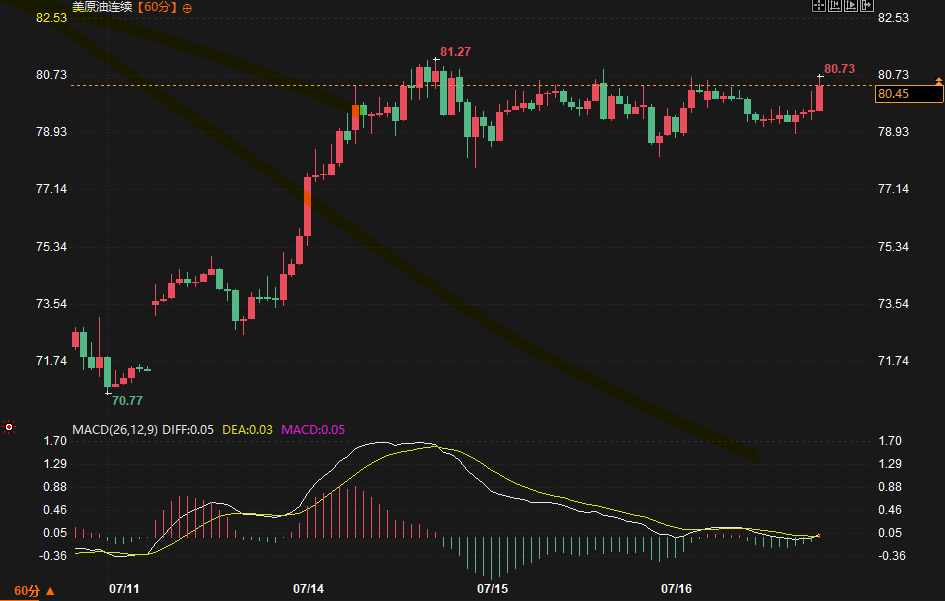
If both the Bab el-Mandeb Strait and the Strait of Hormuz were closed simultaneously, nearly 20 million barrels of Middle Eastern oil would be cut off daily by sea. This is the hypothetical scenario the market must currently face. Latest intelligence indicates that the situation in the Bab el-Mandeb Strait is also escalating. This article, based on publicly available information, extrapolates and translates all dynamics into the sentiments, risks, and potential paths that traders care about most, helping you understand the logic behind this wave of impulsive fluctuations.Scenario simulation: Supply disruptions (both supply and demand) are no longer tail risks
Market sources indicate that Iran has instructed the Houthi rebels to immediately block the Bab el-Mandeb Strait should the US attack its power grid. The Houthis have deployed numerous missiles and drones on relevant high ground, awaiting orders from representatives of the Iranian Revolutionary Guard. Simultaneously, Iran has declared the Strait of Hormuz a non-negotiable "red line," and the US has reinstated its maritime blockade against Iran, with daily vessel traffic plummeting to single digits. If the Bab el-Mandeb Strait closes, approximately 7.4 million barrels of crude oil and refined petroleum products per day (about 7% of global supply) will be cut off. The simultaneous blockage of these two vital waterways means a near-total halt to Middle Eastern oil exports, and the supply chain will suffer an unprecedented level of disruption.Sentiment Transmission: Oil Price Volatility Surges, Safe-Haven Assets Gain Popularity
Driven by news, US crude oil prices fluctuated by as much as 2.29% intraday, with active buying ultimately prevailing, resulting in a gain of over 1%. This tug-of-war reflects the market's extreme sensitivity to sentiment. A senior market strategist pointed out that disruptions to both the Taiwan Straits would significantly amplify supply chain pressures, sharply pushing up tanker insurance premiums, and oil prices might attempt to challenge the $90-$95 range. Panic quickly spread across assets: safe-haven funds flowed into US Treasuries, pushing down yields, while gold received strong support; the US dollar remained strong, boosted by both safe-haven demand and rising energy costs, while Gulf currencies faced depreciation pressure.Geopolitical rifts widen: Saudi ceasefire breaks down and turmoil in the Black Sea
The Houthi rebels have broken the four-year ceasefire with Saudi Arabia, launching missiles into the country. Saudi Arabia is extremely wary of coordinated actions between Iran and the Houthis in the Red Sea; if the fighting spreads to export facilities, the last major alternative shipping route will be in jeopardy. Furthermore, reports of attacks on oil tankers in the Black Sea related to the Russia-Ukraine conflict have further disrupted the already fragile global maritime supply chain. The simultaneous emergence of multiple geopolitical vulnerabilities makes it difficult for the risk premium for crude oil to subside in the short term.Technical Analysis: Short-term bulls have the upper hand, but resistance is just around the corner.
The 60-minute chart shows that US crude oil rebounded after finding support in the 78.91 area. The MACD remains bullish with a moderate red histogram, and the price has risen above the $80 mark. However, if the short-term resistance at 80.73 cannot be effectively overcome, the rebound could weaken at any time. The market should pay attention to the following: if geopolitical news helps the price break through this resistance, it may trigger algorithmic buying; if it encounters resistance and falls back, and there are any signs of easing tensions, be wary of a sharp reversal caused by a large number of long positions being liquidated.Trend Outlook
In the short term, geopolitical headlines will completely dominate price movements. If the order to close the Bab el-Mandeb Strait is implemented or materializes, oil prices could quickly break upwards, with volatility further amplified; conversely, if there are positive signals of diplomatic mediation, the currently accumulated risk premium will be squeezed out very quickly. From a long-term perspective, scenario analysis from a well-known economic research institution shows that even if the strait only maintains low-frequency passage, intermittent supply panics are enough to keep the central price of crude oil above $80 for the next few quarters. The fragile balance of the global oil market has been broken, and traders need to remain flexible, closely monitoring the actual situation of passage through the Red Sea and the next signals of the US-Iran rivalry.Frequently Asked Questions
How much impact will the closure of the Bab el-Mandeb Strait have on oil prices? Approximately 7.4 million barrels of crude oil and refined products pass through this strait daily. If it were blocked simultaneously with the Strait of Hormuz, it would cut off most of the Middle East's maritime exports, triggering severe supply panic and potentially driving oil prices sharply higher. Is the Strait of Hormuz still passable? The US has reimposed a naval blockade on Iran, drastically reducing the number of ships passing through and severely shrinking actual shipping capacity. Any miscalculation could completely paralyze the strait. Why is the technical outlook bullish, yet the market remains uneasy? Technical indicators reflect existing supply concerns, and the market is currently entirely driven by news. Once the geopolitical situation changes, technical patterns may instantly become invalid, leading to highly tense trader sentiment. If the US-Iran situation suddenly eases, will oil prices plummet? Yes. Current prices include a significant risk premium. If there are signals of a ceasefire or lifting of the blockade, oil prices could quickly correct downwards, erasing all geopolitical premiums. Which signals deserve close attention? Closely monitor reports of attacks or disruptions to ship traffic near the Bab el-Mandeb Strait; negotiations or de-escalation statements between the US and Iran; whether clashes between Saudi Arabia and the Houthis have spread to the exit terminal; and daily changes in the number of ships passing through the Strait of Hormuz.- Risk Warning and Disclaimer
- The market involves risk, and trading may not be suitable for all investors. This article is for reference only and does not constitute personal investment advice, nor does it take into account certain users’ specific investment objectives, financial situation, or other needs. Any investment decisions made based on this information are at your own risk.