Gold Trading Alert: A turning point has emerged in the Strait of Hormuz, leading to a slight rebound in gold prices. Can the employment data propel prices to new heights?
2026-08-05 07:50:51
On Tuesday (August 4), spot gold prices closed up 0.5% at $4,077.21 per ounce, after rising as much as 1.2% to $4,106.24 during the session; US gold futures also rose 1.5% to $4,152.60. Meanwhile, platinum and palladium both rose by more than 7%. This surge was not an isolated event, but rather the result of a confluence of factors including a sharp decline in oil prices, rising expectations of easing geopolitical tensions, easing inflation concerns, and the repricing of the Federal Reserve's policy path. The market is holding its breath awaiting the release of US employment data this week, which will further influence the short-term fate of gold. On Wednesday (August 5) in early Asian trading, spot gold weakened slightly, currently trading around $4,070 per ounce. 
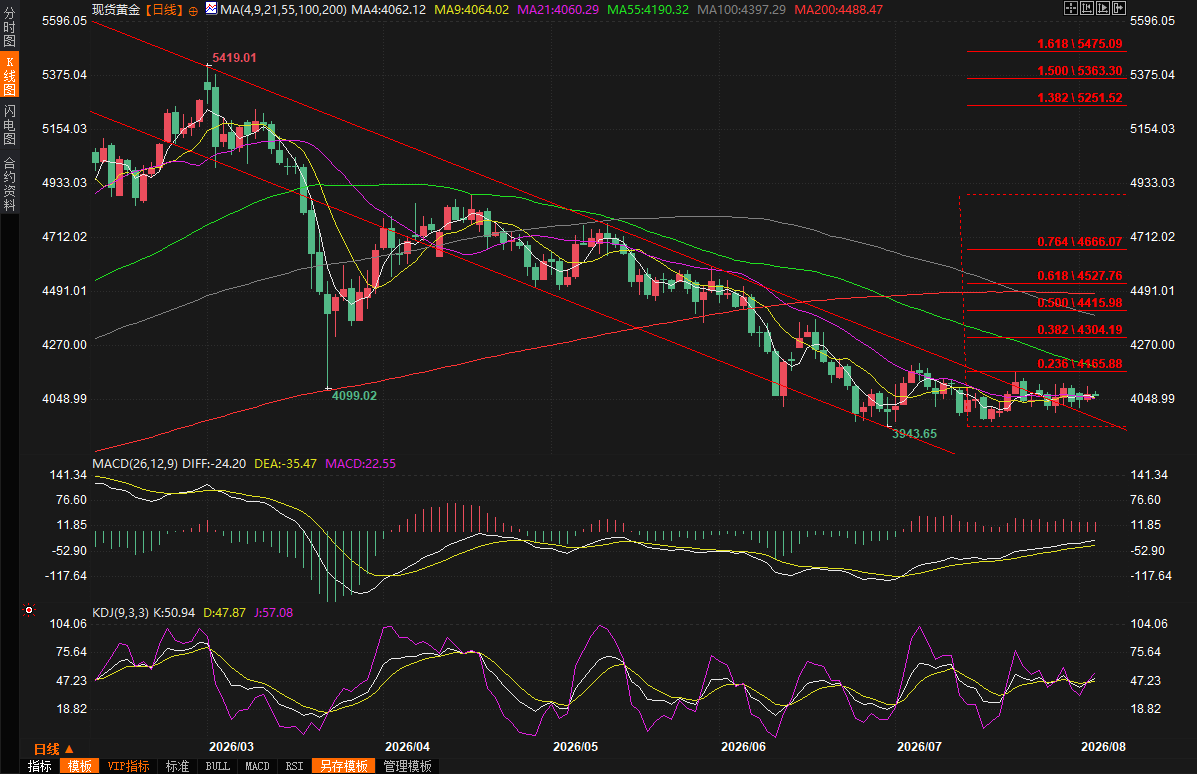 (Spot gold daily chart, source: FX678) At 07:46 Beijing time, spot gold is currently trading at $4069.59 per ounce.
The sharp drop in oil prices became the most direct catalyst for gold prices.
The relationship between gold and crude oil has always been complex and sensitive. High energy prices often intensify market concerns about persistent inflation, leading to increased expectations that the Federal Reserve will maintain high interest rates or even raise them further, which puts downward pressure on gold, which does not generate interest. However, on Tuesday, Brent crude futures fell more than 5%, hitting a three-week low, instantly reversing this logic. The key factor triggering the oil price plunge was the positive signals released by Qatari and US officials. Qatar stated that the mediators had made progress in their efforts to end the US-Iran conflict; the US Treasury Secretary and Secretary of State also indicated that discussions surrounding the reopening of the Strait of Hormuz had progressed. The Strait of Hormuz typically handles about one-fifth of global oil and liquefied natural gas transport; once the situation eases and the shipping lanes reopen, the global energy supply shortage is expected to be significantly alleviated. Oil prices fell in response, directly reducing market concerns about imported inflation. Bart Melek, global head of commodities strategy at TD Securities, pointed out that lower oil prices may be one of the driving factors supporting gold prices. At a deeper level, the decline in oil prices has had a ripple effect on the interest rate outlook, with short-term interest rates falling slightly. The US dollar index also weakened slightly on Tuesday, closing at 99.85, a drop of about 0.1%, further providing additional support for dollar-denominated gold. The easing of energy cost pressures has temporarily removed gold from the logic of being an "inflation-hedging asset," allowing it to benefit from lower interest rate expectations instead.Geopolitical easing expectations are reshaping market risk appetite and interest rate pricing.
More than five months after the start of the US-Iran conflict, market hopes have been rekindled for a diplomatic end to the war. The office of the Emir of Qatar disclosed that Trump spoke with the Emir of Qatar by phone to discuss efforts to narrow the differences between Washington and Tehran and increase the likelihood of a lasting solution. The Emir of Qatar emphasized the importance of dialogue and adherence to previously reached memorandums of understanding. Although Iran denied that it had begun negotiations with the US and emphasized that talks with Oman on the Hormuz waterway were ongoing, the optimistic statements from senior US officials were enough to trigger a reaction in oil and bond markets. US Treasury yields generally declined on Tuesday. The yield on the interest rate-sensitive two-year Treasury note fell to a two-week low of 4.194%, having touched 4.1897% earlier in the session. The yield on the ten-year Treasury note also fell to 4.627%. Federal funds rate futures showed that the market expects the probability of a rate hike by the Federal Reserve at its September meeting to drop from 68% on Monday to 59%. This repricing directly benefits gold—the decline in real interest rates reduces the opportunity cost of holding gold. Of course, the market has not completely let its guard down. Some traders have likened the current situation to "Groundhog Day," reminding investors of previous instances of "false breakouts." Shipping risks remain, with reports of attacks on ships continuing near the Strait of Hormuz. Concerns about dwindling US missile stocks have also resurfaced, indicating that the long-term costs of conflict are accumulating. These uncertainties mean that if diplomatic efforts falter, oil prices could rebound rapidly, and the upward momentum for gold will be tested.The Dual Game Between Labor Market Data and Federal Reserve Policy
The medium-term trend for gold will ultimately be anchored to US economic data and the Federal Reserve's policy choices. This week, market focus is heavily on employment data: Wednesday's ADP employment report and Friday's non-farm payrolls data. Surveys show analysts predict that non-farm payrolls will increase by approximately 80,000 in July, with the unemployment rate remaining around 4.2%. Tuesday's June job openings data provided some clues. Job openings decreased by 178,000 to 7.359 million, mainly dragged down by a sharp decline in the healthcare and social assistance sectors. At the same time, hiring increased, the layoff rate remained low, and the number of voluntary resignations rose slightly. Overall, the labor market remains in a stable pattern of "slower hiring, slower layoffs." This helps limit wage growth pressures and reinforces the view that the labor market is not the primary source of current inflation. However, most economists still expect the Federal Reserve to take action this year to address inflationary pressures from the Middle East conflict. The Fed kept interest rates at 3.50%-3.75% last week, but three officials have already voted to raise rates. Strong employment data this week could reignite expectations of interest rate hikes, putting downward pressure on gold. Weak data, on the other hand, would further solidify the speculation that interest rates have peaked or even reversed, providing stronger support for gold prices. Trade data is also worth noting. The trade deficit narrowed to $73.3 billion in June, with the decline in imports mainly due to reduced imports of capital goods, particularly computers. Trade has already dragged down GDP growth by a full percentage point in the second quarter. These data collectively paint a complex picture of the US economy amid high oil prices, high inflation expectations, and disruptions to global supply chains.Gold Outlook: Short-term driven by events, medium- to long-term focus remains on real interest rates.
In summary, the recent gold price surge is a result of a combination of factors: a direct boost from softening oil prices, reduced inflation premiums due to easing geopolitical tensions, and declining US Treasury yields. The significant increases in platinum and palladium also reflect the spillover of optimism in industrial metals following lower energy costs. Looking ahead, gold will likely continue to oscillate between "event-driven" and "fundamental-anchored" factors. In the short term, any substantial breakthroughs or setbacks in US-Iran diplomacy will quickly transmit to gold prices via oil prices; this week's employment data could be the next major catalyst. If the data points to a continued cooling of the labor market, market bets on a Fed rate hike will further decline, and gold is expected to continue its upward trend; conversely, strong data may temporarily suppress gold prices. Looking at a longer timeframe, the core drivers for gold remain real interest rates and the dollar's performance. As long as the situation in the Middle East remains unclear, fluctuations in energy prices will continue to disrupt inflation expectations and monetary policy paths, and gold's appeal as a hedging tool will not easily diminish. While paying attention to short-term price fluctuations, investors should also closely monitor the trajectory of real interest rate changes and subtle shifts in global risk appetite. (Spot gold daily chart, source: FX678) At 07:46 Beijing time, spot gold is currently trading at $4069.59 per ounce.
- Risk Warning and Disclaimer
- The market involves risk, and trading may not be suitable for all investors. This article is for reference only and does not constitute personal investment advice, nor does it take into account certain users’ specific investment objectives, financial situation, or other needs. Any investment decisions made based on this information are at your own risk.