The situation in the Middle East poses a risk of pushing up oil prices, and major central banks around the world are caught in a policy dilemma between inflation and growth.
2026-08-17 10:28:59
While inflation in developed economies is generally trending downwards, the risk of rising oil prices due to the situation in the Middle East has put major central banks around the world in a policy dilemma. Faced with potential inflationary pressures, the Federal Reserve, the Bank of England, and the European Central Bank are hesitant to raise interest rates. Balancing the need to combat inflation with constraints such as economic growth and government debt, economists at various institutions are rethinking the existing monetary policy framework, and the traditional central bank control model is facing a real test. 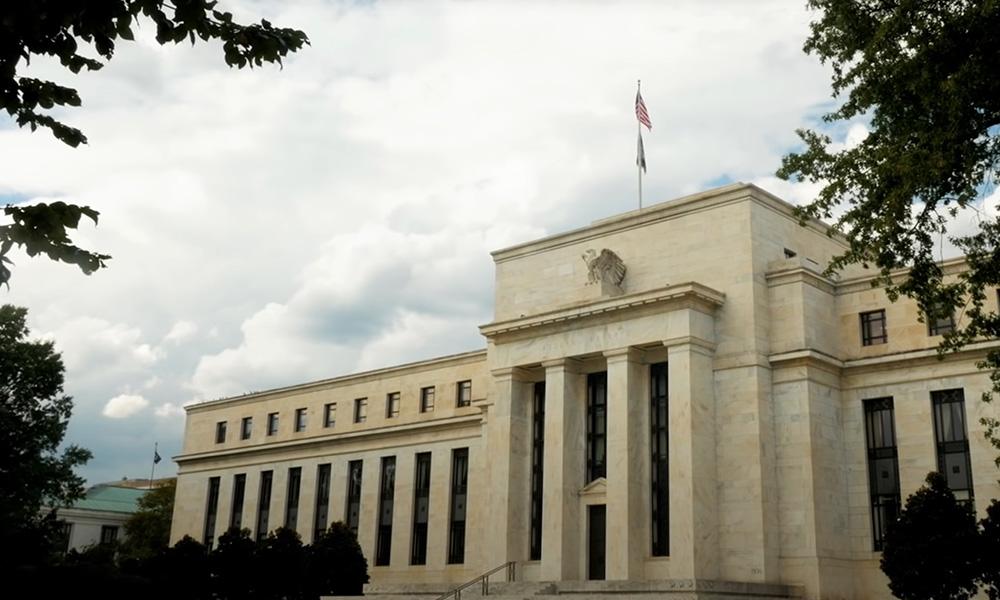
 The European Central Bank (ECB) is the only major developed economy central bank to raise interest rates this year, but the move has been highly controversial. Affected by rising oil prices due to the Middle East conflict, Eurozone inflation rebounded slightly, prompting the ECB to raise interest rates in June. Schilling stated that the Eurozone's economic fundamentals are already weak, and high oil prices would suppress demand; raising rates at this time would only exacerbate the situation, and market expectations for a further rate hike in September are significantly overestimated.
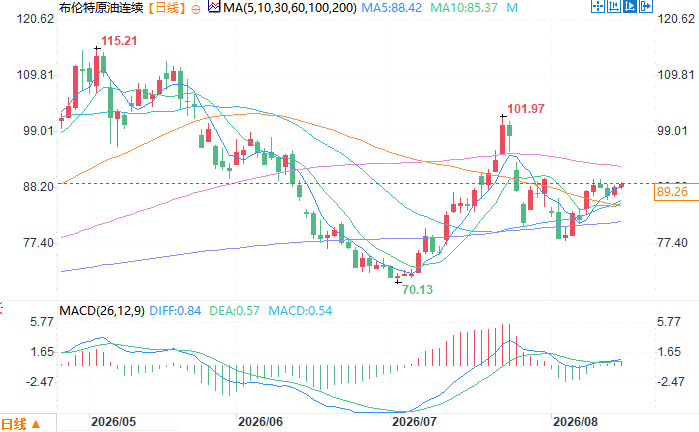 Brent crude oil daily chart source: EasyTrade. At 10:26 AM Beijing time on August 17th, Brent crude oil was trading at $89.20 per barrel.
The Federal Reserve's sweeping reforms have cast doubt on its existing policy framework.
US inflation fell to 3.4% in July, mainly due to lower gasoline prices. However, after the data was compiled, Brent crude oil rebounded to around $90 per barrel, raising concerns about a potential resurgence in US energy and transportation costs in the second half of the year. Federal Reserve officials are beginning to worry that inflation will approach 4% again. Fed Chairman Kevin Warsh launched a comprehensive internal review, inviting fifteen top external experts to participate in discussions. Mohamed El-Erian of Wharton Business School stated that Warsh understands that many of the inherent logics of past monetary policy have become ineffective, and pushing for reform is crucial to the Fed's credibility. Warsh has abandoned forward guidance and will no longer publish interest rate dot plots. Former Bank of England Governor Lord Mervyn King believes that over-reliance on economic models for forecasting is inherently flawed, and the emotional reactions of people in the economy cannot be ignored. Charlie Bean, Professor at the London School of Economics and former Deputy Governor of the Bank of England, stated that the market currently sees neither guidance on interest rate paths nor a clear logic for the Fed's response to economic changes, resulting in ambiguous policy signals. The market expects the Federal Reserve to keep interest rates unchanged in September, with one or two rate hikes possible before the middle of next year, but the final outcome remains highly uncertain.The Bank of England and the European Central Bank each face their own challenges, with debt and weak economic conditions limiting their policy space.
UK inflation data has fluctuated, with markets predicting that the July CPI data, to be released at 14:00 Beijing time on Wednesday (August 19), may rebound to 2.9% or even 3%. Most members of the Bank of England's Monetary Policy Committee are cautious about raising interest rates, believing that such increases are unlikely to change international oil prices and would further dampen the already weak economy while increasing the pressure on government debt payments. Neil Shearing, chief economist at Capital Economics, stated that as long as Western governments' debt spending remains unconstrained, central banks will find it difficult to strictly adhere to the 2% inflation target. Even so, the market still bets that the Bank of England will begin raising interest rates this year. The European Central Bank (ECB) is the only major developed economy central bank to raise interest rates this year, but the move has been highly controversial. Affected by rising oil prices due to the Middle East conflict, Eurozone inflation rebounded slightly, prompting the ECB to raise interest rates in June. Schilling stated that the Eurozone's economic fundamentals are already weak, and high oil prices would suppress demand; raising rates at this time would only exacerbate the situation, and market expectations for a further rate hike in September are significantly overestimated.Conclusion
In summary, geopolitical factors in the Middle East and the resulting oil price volatility have disrupted the policy pacing of major central banks. The Federal Reserve is restructuring its policy framework, the Bank of England is hampered by high debt and a weak economy, and the European Central Bank is facing scrutiny for raising interest rates too early. Future oil price trends will be a key variable influencing inflation levels and monetary policy in Europe and the United States. Brent crude oil daily chart source: EasyTrade. At 10:26 AM Beijing time on August 17th, Brent crude oil was trading at $89.20 per barrel.
- Risk Warning and Disclaimer
- The market involves risk, and trading may not be suitable for all investors. This article is for reference only and does not constitute personal investment advice, nor does it take into account certain users’ specific investment objectives, financial situation, or other needs. Any investment decisions made based on this information are at your own risk.