A weakening dollar coupled with waning expectations of a Federal Reserve rate hike caused the dollar to fall more rapidly against the Canadian dollar.
2026-08-20 16:31:02
The US dollar extended its losses against the Canadian dollar in Asian trading on Thursday, declining for the second consecutive session, with the pair trading around 1.3770. The Canadian dollar has recently received significant support from commodity markets, primarily due to rising oil prices improving the outlook for Canadian energy exports. Meanwhile, marginally cooling US economic data and reduced market bets on a near-term Federal Reserve rate hike put pressure on the US dollar itself, further pushing the USD/CAD pair lower. 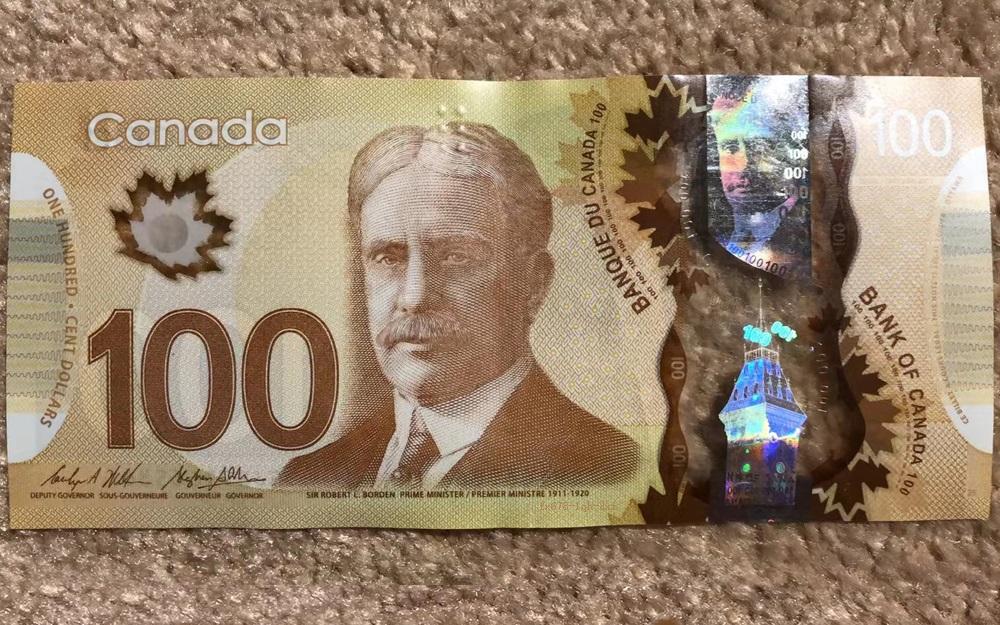 The crude oil market has recently been driven again by geopolitical risks. Limited progress in negotiations between the US and Iran has fueled concerns about the stability of Middle Eastern supply chains, making the Strait of Hormuz a key area of focus for the energy market. Although the US has stated that crude oil shipments are still passing through this route, the market still needs to price in the risk of future disruptions. For Canada, rising crude oil prices typically improve energy export revenues and strengthen market expectations for the Canadian economy and trade conditions, thus the Canadian dollar often receives direct support from rising oil prices. The current high oil prices mean a relatively improved cash flow outlook for Canada's energy export sector, a significant reason for the recent strength of the Canadian dollar against the US dollar. TD Securities believes that Middle Eastern geopolitical tensions remain the core driver of the crude oil market. With rising regional risks and an increased possibility of supply disruptions, the risk premium for Brent crude is expected to remain high. If this trend continues, the commodity currency Canadian dollar may continue to receive some support, thus limiting the upside potential of the USD/CAD exchange rate. However, the Canadian dollar's performance is not solely dependent on oil prices. The declining interest rate advantage of the US dollar itself is also a significant factor driving the USD/CAD exchange rate down. The minutes of the Federal Reserve's July meeting revealed that several policymakers believed the Fed might need to raise interest rates soon if inflation failed to cool further. The Fed maintained its target range for the federal funds rate at 3.50% to 3.75% at that time. However, subsequent economic data weakened market confidence in a near-term rate hike. Recent monthly inflation data in the US has been generally moderate. Although major inflation indicators remain above the Fed's 2% policy target, the marginal easing of price pressures suggests the Fed lacks the urgency to immediately tighten policy again. Current market pricing indicates a 32.7% probability of a rate hike at the Fed's next policy meeting, a significant decrease from approximately 47% a month ago. This decline in rate hike expectations directly weakens the dollar's interest rate advantage, putting additional downward pressure on the USD/CAD pair. If US inflation continues to slow while the job market shows more signs of weakness, the dollar may face further pressure, pushing the USD/CAD pair further down to find support. However, the risk of a Fed policy reversal remains. US inflation is currently still above target, and if energy prices continue to rise due to the Middle East situation, it could push US inflation expectations higher again. In this scenario, the market might increase its bets on a Fed rate hike, potentially leading to a rebound in the dollar. Rising oil prices are simultaneously benefiting the Canadian dollar, potentially leading to a complex two-way impact on the USD/CAD exchange rate. From a global market perspective, the USD/CAD is currently influenced by two main factors: rising oil prices are strengthening the Canadian dollar, and declining US interest rate expectations are weakening the US dollar. As long as these two factors continue, the USD/CAD is likely to maintain a downward trend. Conversely, if the oil risk premium falls rapidly while US economic data strengthens again, the US dollar and the USD/CAD interest rate differential could provide renewed support for the USD/CAD. Future focus should be on US economic data, speeches by Federal Reserve officials, oil prices, and developments in the Middle East. In particular, whether the oil market can maintain its high levels will directly affect the relative strength of the Canadian dollar. If oil prices continue to rise and break through key technical resistance, the Canadian dollar may receive further support; if geopolitical risks ease and oil prices fall, the USD/CAD may rebound. From a daily chart perspective, the USD/CAD has weakened for two consecutive trading days, currently trading around 1.3770, with a short-term bearish bias. Rising oil prices and a weakening dollar are creating dual pressure, keeping the exchange rate under continuous selling pressure. The first support level to watch is around 1.3730; a break below this level could lead to a further test of the 1.3700 psychological level. Stronger support lies around 1.3600. On the upside, key resistance is around 1.3850, followed by 1.3900 and the psychological level of 1.4000. A break above 1.4000 could significantly alleviate the current bearish bias. Looking at the 4-hour chart, USD/CAD maintains a downward trend, trading below the recent rebound range, with bears currently in control. 1.3730 is a crucial psychological level; a sustained break below this area could extend the downside in the short term. If support is found around 1.3730 and a rebound occurs, the first resistance level to watch is around 1.3850. Only a decisive recovery above 1.3900 could shift the short-term trend from a downtrend to a sideways rebound. Overall, the 4-hour chart still shows a weak trend, but if oil prices fall from their highs or the US dollar experiences a technical rebound, the USD/CAD pair may quickly recover some of its losses.
 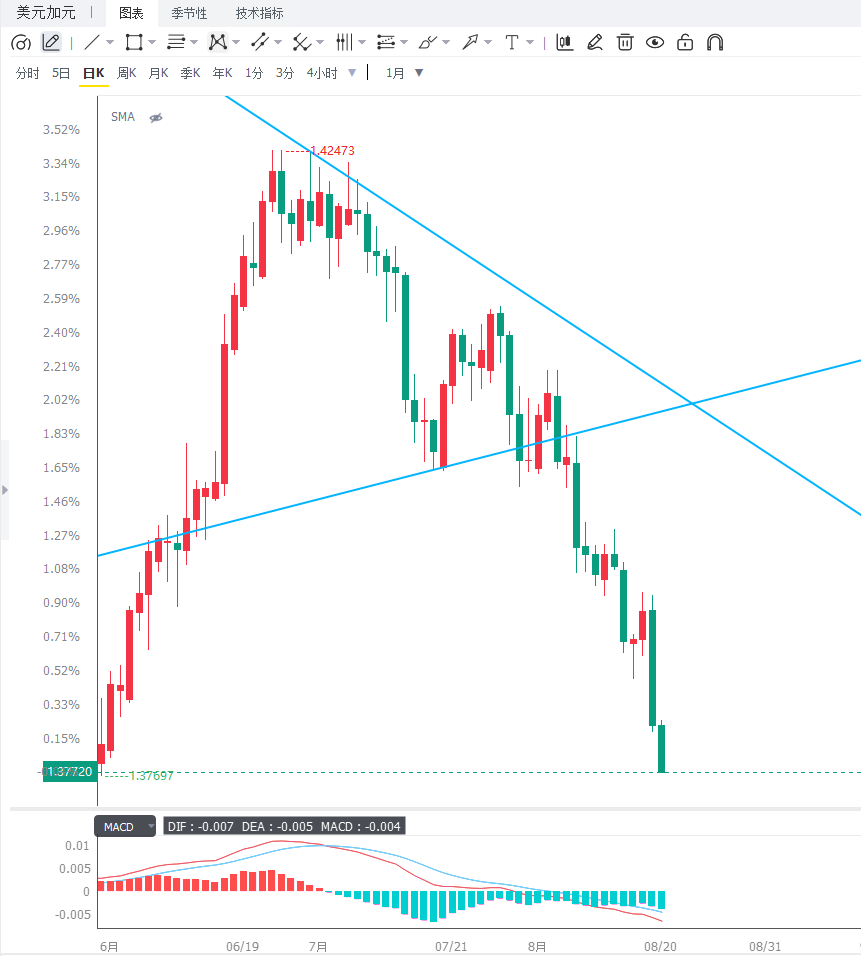 Editor's Summary: The recent decline in the USD/CAD pair reflects combined pressure from both oil prices and the US dollar. Middle East risks have driven up oil prices, providing commodity currency support for the Canadian dollar; simultaneously, the probability of a Fed rate hike has fallen to 32.7%, significantly weakening the dollar's interest rate advantage. In the short term, as long as oil prices remain strong and US economic data does not show a significant rebound, the USD/CAD pair remains biased towards a downward trend. 1.3730 is a key support level in the near term; a break below this level could lead to a further test of 1.3700. On the upside, 1.3850 to 1.3900 represent a significant resistance zone for any rebound. Future oil price movements, Fed policy expectations, and the situation in the Middle East will determine whether the USD/CAD pair can maintain its current weakness.
The crude oil market has recently been driven again by geopolitical risks. Limited progress in negotiations between the US and Iran has fueled concerns about the stability of Middle Eastern supply chains, making the Strait of Hormuz a key area of focus for the energy market. Although the US has stated that crude oil shipments are still passing through this route, the market still needs to price in the risk of future disruptions. For Canada, rising crude oil prices typically improve energy export revenues and strengthen market expectations for the Canadian economy and trade conditions, thus the Canadian dollar often receives direct support from rising oil prices. The current high oil prices mean a relatively improved cash flow outlook for Canada's energy export sector, a significant reason for the recent strength of the Canadian dollar against the US dollar. TD Securities believes that Middle Eastern geopolitical tensions remain the core driver of the crude oil market. With rising regional risks and an increased possibility of supply disruptions, the risk premium for Brent crude is expected to remain high. If this trend continues, the commodity currency Canadian dollar may continue to receive some support, thus limiting the upside potential of the USD/CAD exchange rate. However, the Canadian dollar's performance is not solely dependent on oil prices. The declining interest rate advantage of the US dollar itself is also a significant factor driving the USD/CAD exchange rate down. The minutes of the Federal Reserve's July meeting revealed that several policymakers believed the Fed might need to raise interest rates soon if inflation failed to cool further. The Fed maintained its target range for the federal funds rate at 3.50% to 3.75% at that time. However, subsequent economic data weakened market confidence in a near-term rate hike. Recent monthly inflation data in the US has been generally moderate. Although major inflation indicators remain above the Fed's 2% policy target, the marginal easing of price pressures suggests the Fed lacks the urgency to immediately tighten policy again. Current market pricing indicates a 32.7% probability of a rate hike at the Fed's next policy meeting, a significant decrease from approximately 47% a month ago. This decline in rate hike expectations directly weakens the dollar's interest rate advantage, putting additional downward pressure on the USD/CAD pair. If US inflation continues to slow while the job market shows more signs of weakness, the dollar may face further pressure, pushing the USD/CAD pair further down to find support. However, the risk of a Fed policy reversal remains. US inflation is currently still above target, and if energy prices continue to rise due to the Middle East situation, it could push US inflation expectations higher again. In this scenario, the market might increase its bets on a Fed rate hike, potentially leading to a rebound in the dollar. Rising oil prices are simultaneously benefiting the Canadian dollar, potentially leading to a complex two-way impact on the USD/CAD exchange rate. From a global market perspective, the USD/CAD is currently influenced by two main factors: rising oil prices are strengthening the Canadian dollar, and declining US interest rate expectations are weakening the US dollar. As long as these two factors continue, the USD/CAD is likely to maintain a downward trend. Conversely, if the oil risk premium falls rapidly while US economic data strengthens again, the US dollar and the USD/CAD interest rate differential could provide renewed support for the USD/CAD. Future focus should be on US economic data, speeches by Federal Reserve officials, oil prices, and developments in the Middle East. In particular, whether the oil market can maintain its high levels will directly affect the relative strength of the Canadian dollar. If oil prices continue to rise and break through key technical resistance, the Canadian dollar may receive further support; if geopolitical risks ease and oil prices fall, the USD/CAD may rebound. From a daily chart perspective, the USD/CAD has weakened for two consecutive trading days, currently trading around 1.3770, with a short-term bearish bias. Rising oil prices and a weakening dollar are creating dual pressure, keeping the exchange rate under continuous selling pressure. The first support level to watch is around 1.3730; a break below this level could lead to a further test of the 1.3700 psychological level. Stronger support lies around 1.3600. On the upside, key resistance is around 1.3850, followed by 1.3900 and the psychological level of 1.4000. A break above 1.4000 could significantly alleviate the current bearish bias. Looking at the 4-hour chart, USD/CAD maintains a downward trend, trading below the recent rebound range, with bears currently in control. 1.3730 is a crucial psychological level; a sustained break below this area could extend the downside in the short term. If support is found around 1.3730 and a rebound occurs, the first resistance level to watch is around 1.3850. Only a decisive recovery above 1.3900 could shift the short-term trend from a downtrend to a sideways rebound. Overall, the 4-hour chart still shows a weak trend, but if oil prices fall from their highs or the US dollar experiences a technical rebound, the USD/CAD pair may quickly recover some of its losses. Editor's Summary: The recent decline in the USD/CAD pair reflects combined pressure from both oil prices and the US dollar. Middle East risks have driven up oil prices, providing commodity currency support for the Canadian dollar; simultaneously, the probability of a Fed rate hike has fallen to 32.7%, significantly weakening the dollar's interest rate advantage. In the short term, as long as oil prices remain strong and US economic data does not show a significant rebound, the USD/CAD pair remains biased towards a downward trend. 1.3730 is a key support level in the near term; a break below this level could lead to a further test of 1.3700. On the upside, 1.3850 to 1.3900 represent a significant resistance zone for any rebound. Future oil price movements, Fed policy expectations, and the situation in the Middle East will determine whether the USD/CAD pair can maintain its current weakness.
- Risk Warning and Disclaimer
- The market involves risk, and trading may not be suitable for all investors. This article is for reference only and does not constitute personal investment advice, nor does it take into account certain users’ specific investment objectives, financial situation, or other needs. Any investment decisions made based on this information are at your own risk.