The yield on 30-year UK gilts is approaching 6%, and the Bank of England faces a decision on raising interest rates.
2026-09-17 14:08:15
Amidst factors such as expanding government debt and persistently high inflation, the global bond market experienced a massive sell-off, putting significant pressure on the Bank of England to raise interest rates at its policy meeting on Thursday (September 17). Investors are signaling to the Bank of England that it must curb price increases before the energy shock triggered by the Iranian conflict spreads to the overall economy; hesitation could erode market confidence. This week, the world's four major central banks announced their interest rate decisions, and soaring oil prices further exacerbated market concerns about inflation, leading to a sell-off in both US and UK government bonds, with UK bonds leading the decline among major developed economies.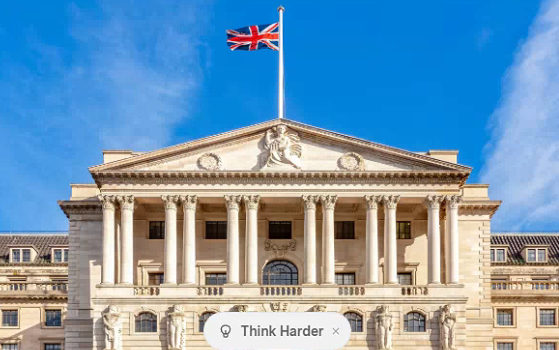
A sharp sell-off hit global bond markets, with UK government bonds facing particularly heavy pressure.
As a benchmark asset in the global debt market, the yield on the 10-year US Treasury bond recently broke through 5%, reaching a new high since 2007, fully reflecting investors' concerns about long-term inflation trends. Meanwhile, the sell-off in UK government bonds far exceeded that of other major economies, with traders focusing on selling both long-term and short-term bonds. On Tuesday, the yield on the 30-year UK government bond approached 6%, reaching its highest level since 1997; the price movement of short-term UK government bonds reflects market expectations that the Bank of England will raise interest rates up to four times in the next 12 months. Anthony Brinkman, high-yield portfolio manager at Principal Asset Management, said that the recent movements in the UK government bond market seem to be sending a signal to central banks that time is running out, and the market is awaiting policy action. He added that if the Bank of England chooses not to raise interest rates and cannot clearly and credibly articulate its long-term policy path, investors will continue to raise their risk pricing for holding UK government debt.Soaring energy prices fuel fears of a new round of interest rate hikes.
Earlier this week, a drone attack on a key Saudi oil pipeline leading to the Red Sea forced its shutdown, escalating tensions in the Middle East and reigniting concerns about global oil supply. On Monday, Brent crude oil prices surpassed $109 per barrel, reaching their highest level since May; European natural gas prices also returned to the high levels seen at the beginning of the Russia-Ukraine conflict. The surge in energy prices has raised concerns that companies will pass on the increased costs to consumers, pushing up overall prices, even though there is still some slack in the UK labor market. Continued inflation will erode the real returns for bond investors, diminishing the attractiveness of government bonds. Andrew Wishart, senior UK economist at Berenberg Bank, warned the Bank of England that if the Iranian conflict continues to push up energy costs, the central bank must honor its previous promise to raise interest rates, or it will lose credibility and trigger a sell-off in the pound. He said, "The cost of raising the policy rate by 25 basis points is actually very small compared to the risk of damaging the Bank of England's credibility by delaying rate hikes." However, market opinions are not entirely unified. Some institutions believe that despite the volatile bond market, the Bank of England's Monetary Policy Committee should maintain the current interest rate at this meeting, marking the sixth consecutive time it has held steady. James Carter, co-head of fixed income at W1M, said the Bank of England cannot increase gas supply to Europe. He said, "The central bank's responsibility is to prevent energy shocks from turning into a sustained spiral of rising wages and prices, and there is currently limited evidence to suggest that this risk is escalating."Global central banks have simultaneously begun tightening cycles, intensifying policy competition.
Prior to the Bank of England's decision, the European Central Bank had already completed its second monetary policy tightening since 2023 and warned that the inflationary impact of the Middle East conflict would last longer than previously expected. This week, the Federal Reserve followed suit with an interest rate hike, and major central banks worldwide are expected to enter a phase of policy tightening simultaneously. Globally, high government debt coupled with energy shocks is creating dual pressures. On the one hand, governments are continuously expanding fiscal deficits, increasing debt supply and pushing up bond yields; on the other hand, the ongoing geopolitical conflict in the Middle East continues to disrupt energy prices, adding new upward risks to inflation and forcing central banks to tighten monetary policy. Central banks need to find a difficult balance between curbing inflation, maintaining their credibility, and avoiding excessive interest rate hikes that could drag down economic growth.Conclusion
The global bond market is experiencing a historic sell-off, with UK government bonds facing the most significant pressure. The Bank of England's interest rate decision on Thursday is drawing global market attention. The Middle East situation has pushed up oil and natural gas prices, raising inflation risks again. The market is divided into two camps: one group of investors strongly calls for interest rate hikes to stabilize prices and the central bank's credibility, while the other believes that interest rates should be maintained and a wait-and-see approach adopted. Coupled with the European Central Bank and the Federal Reserve's rate hikes, and the global environment of synchronized central bank tightening, the Bank of England's policy choices will directly impact the short-term trends of the pound, UK government bonds, and other major European asset classes.- Risk Warning and Disclaimer
- The market involves risk, and trading may not be suitable for all investors. This article is for reference only and does not constitute personal investment advice, nor does it take into account certain users’ specific investment objectives, financial situation, or other needs. Any investment decisions made based on this information are at your own risk.