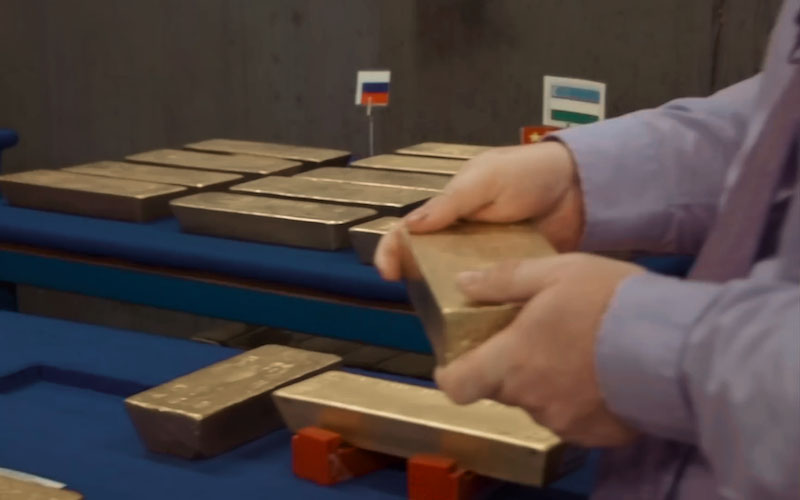
October 6th Financial Breakfast: Gold's support weakened by interest rate hike expectations; increased Middle East exports and G7 reserve releases exerted pressure; US oil fell below the $90 mark.
2026-10-06 07:26:18
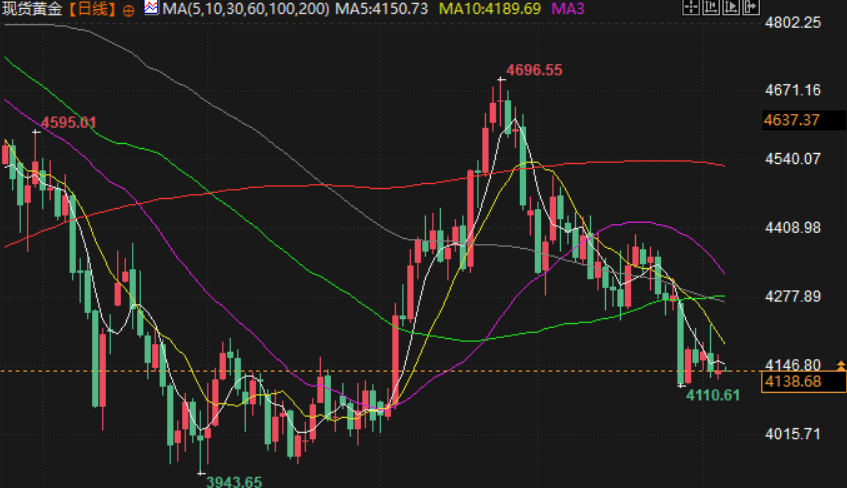
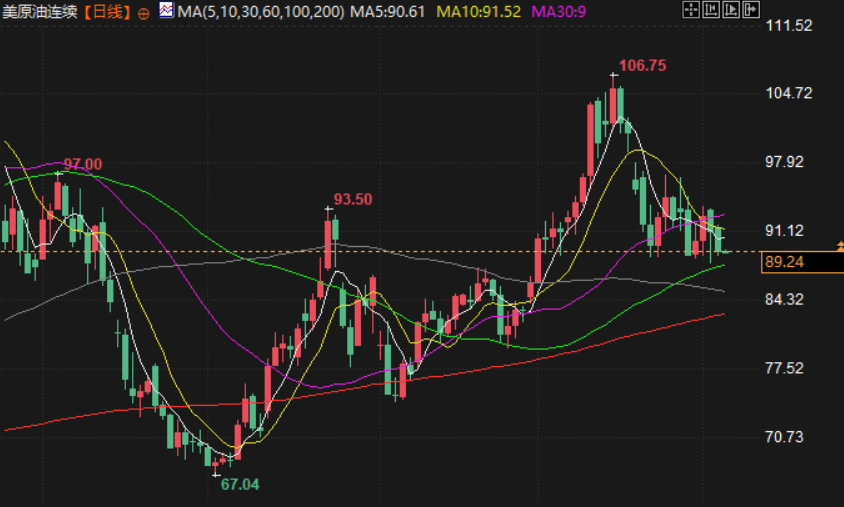
On Tuesday (October 6, Beijing time) in early Asian trading, spot gold was trading around $4,138.65 per ounce. Gold prices held steady on Monday, with pressure from a stronger dollar and high US Treasury yields offset by weakening market expectations for a Fed rate hike this month. Oil prices fell more than 2% on Monday due to increased Middle Eastern crude exports and a G7 pledge to increase supply, but persistent concerns about supply disruptions caused by the Iranian conflict limited the decline. US crude is currently trading around $89.17 per barrel. 
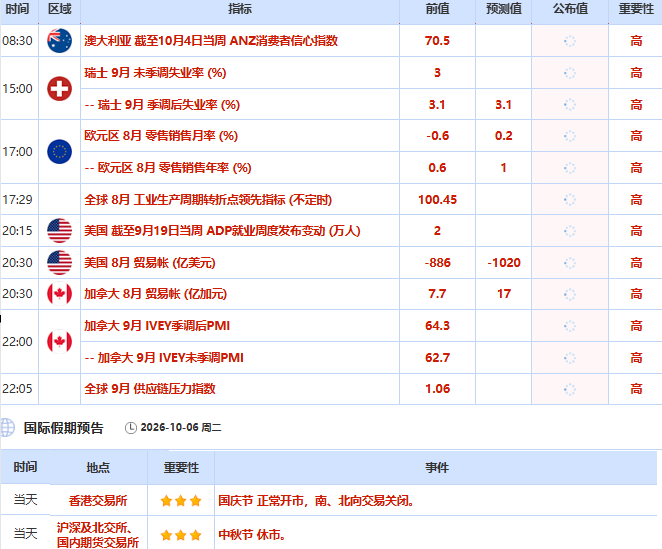
 Last Friday's data showed a larger-than-expected slowdown in US job growth in September and downward revisions to non-farm payrolls for the first two months, subsequently weakening market expectations for a Fed tightening this month. CME Group's FedWatch tool showed traders now expect a 22% probability of an October rate hike, down from about 70% last week, but still expect an 84% probability of a December rate hike. Investors are awaiting the release of the minutes from the Fed's September FOMC meeting later this week. Precious metals consultancy Metals Focus predicts gold prices will reach a record high in 2027, averaging $5,330 per ounce, as investors seek alternatives to traditional dollar-denominated assets.
 Shipping data shows that despite attacks on ships transiting the Strait of Hormuz, Middle Eastern crude oil exports exceeded pre-war levels for four days in the last week of September. Andrew Lipow, president of Lipow Oil Associates, stated that while tankers still face risks, there is hope that more crude oil will eventually enter the market. Meanwhile, following pressure from US President Trump, the G7 agreed last Friday to release 100 million barrels of diesel and crude oil from its emergency reserves and pledged not to impose energy export restrictions. However, Raymond James analyst Pavel Molchanov stated that it is unclear how much of this 100 million barrels comes from the remaining portion of the 400 million barrels emergency release plan coordinated by the IEA in March, thus the market remains skeptical. IEA Executive Director Birol stated last week that member states had completed approximately two-thirds of the previously agreed-upon 400 million barrels of oil release. Tamas Varga, an analyst at PVM Oil Associates, stated that a ceasefire in the Middle East remains a distant prospect, and the renewed hostilities between Saudi Arabia and the Iranian-backed Houthi rebels will continue attacks on energy infrastructure and ships, keeping geopolitical risk premiums high. Saudi Aramco CEO Nasser expects crude oil and refined product supplies to remain tight, and that global inventories could take up to two years to replenish after the emergency release of reserves. Data from the U.S. Department of Energy on Monday showed that U.S. strategic petroleum reserves fell to 283 million barrels last week, the lowest level since October 1982. Separately, Saudi Aramco unexpectedly lowered its November crude oil price for Asia to its lowest level in six years on Monday.
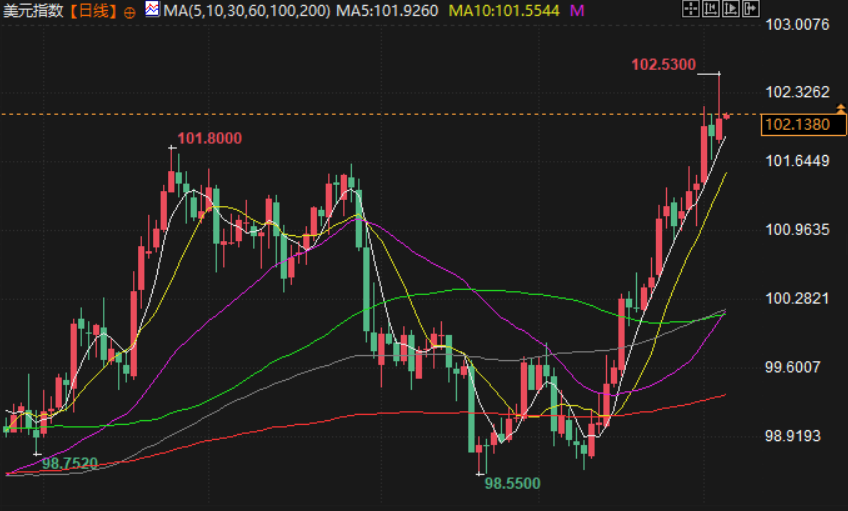 The ISM non-manufacturing PMI fell slightly to 54.9 in September from 55.4, below expectations but still above the 50-point mark separating expansion from contraction. The prices paid index jumped to 74.0 from 72.6. CME Group's FedWatch tool showed a 23.8% probability of a Fed rate hike of at least 25 basis points in October, down from 70.9% a week earlier, but an 88.1% probability of a December rate hike. The euro fell 0.25% against the dollar, closing at 1.122, after briefly falling to a 17-month low of 1.116 during the session. Market concerns weighed on France's ability to control its budget deficit, and last week's sharp sell-off in the bond market exacerbated fears of a potential sovereign debt crisis in the eurozone. Meanwhile, US economic data reflected persistent inflationary pressures. French government bonds received some respite at the start of the week. The spread between French and German bond yields, which hit a near 160 basis point spread on Friday—the widest since 2011—has narrowed by about 2 basis points to 136 basis points. Erik Bregar of Silver Gold Bull stated that the market seems to disapprove of the 2027 budget, and the French situation may be the most significant theme in the foreign exchange market this week. Spanish Prime Minister Sánchez announced a snap election on November 29, further exacerbating regional political turmoil. The US dollar held steady against the Japanese yen, closing at 157.89. Japanese Prime Minister Sanae Takaichi pledged to "control" bond issuance and respond swiftly to market turmoil to reassure investors. Japan's service sector expansion slowed in September.
Key Focus Today
stock market
U.S. stocks rose on Monday, with the S&P 500 gaining 0.66% to 7773.95, about 0.3% below its August 13 closing record; the Nasdaq rose 1.05% to 27477.31; and the Dow Jones Industrial Average rose 0.18% to 51267.90. Investors focused on falling oil prices and awaited quarterly earnings reports. Weaker-than-expected jobs data released last Friday dampened market expectations for a Federal Reserve rate hike this month. Nvidia rose 2.1% to a record closing high, pushing its market capitalization to $5.76 trillion; Microsoft rose 1.5%, while Meta and Tesla both rose about 2%. Oil prices fell as Middle Eastern oil exports increased and the G7 pledged to increase supply. Art Hogan, chief market strategist at B. Riley Wealth, said that with a light economic data schedule and earnings season approaching, investors are looking for positive news, clearly focusing on falling energy prices. The third-quarter earnings season kicks off next week with large banks, and S&P 500 earnings are expected to grow by more than 30% year-over-year, mainly driven by AI-related stocks. CME Group's FedWatch tool shows traders expect a 24% probability of a Federal Reserve rate hike in October, down from 70% a week earlier. PTC shares surged 33% after Schneider Electric agreed to acquire software company PTC in an all-cash deal for $22.6 billion. Ten of the eleven sectors in the S&P 500 rose, with materials leading the gains at 1.22% and communication services up 1.14%. Despite rising U.S. Treasury yields and oil prices driven by the Iran war, optimism surrounding strong corporate earnings continued to support U.S. stocks.Gold Market
Spot gold held steady on Monday, closing at $4,140.62 per ounce. Pressure from a stronger dollar and high U.S. Treasury yields was offset by weakening market expectations for a Federal Reserve rate hike this month. With the U.S. 10-year Treasury yield near a 20-year high, Forex analyst Fawad Razaqzada said gold prices may fall in the short term before buyers enter the market in large numbers, due to the continued rise of the dollar and persistently high yields. Last Friday's data showed a larger-than-expected slowdown in US job growth in September and downward revisions to non-farm payrolls for the first two months, subsequently weakening market expectations for a Fed tightening this month. CME Group's FedWatch tool showed traders now expect a 22% probability of an October rate hike, down from about 70% last week, but still expect an 84% probability of a December rate hike. Investors are awaiting the release of the minutes from the Fed's September FOMC meeting later this week. Precious metals consultancy Metals Focus predicts gold prices will reach a record high in 2027, averaging $5,330 per ounce, as investors seek alternatives to traditional dollar-denominated assets.oil market
Oil prices fell on Monday, with WTI crude down 2.15% to settle at $89.30 a barrel and Brent crude down 2.35% to settle at $100.29 a barrel, as increased Middle Eastern oil exports and a G7 pledge to increase supply were offset by lingering concerns about supply disruptions stemming from the war in Iran, which limited the decline in oil prices. Shipping data shows that despite attacks on ships transiting the Strait of Hormuz, Middle Eastern crude oil exports exceeded pre-war levels for four days in the last week of September. Andrew Lipow, president of Lipow Oil Associates, stated that while tankers still face risks, there is hope that more crude oil will eventually enter the market. Meanwhile, following pressure from US President Trump, the G7 agreed last Friday to release 100 million barrels of diesel and crude oil from its emergency reserves and pledged not to impose energy export restrictions. However, Raymond James analyst Pavel Molchanov stated that it is unclear how much of this 100 million barrels comes from the remaining portion of the 400 million barrels emergency release plan coordinated by the IEA in March, thus the market remains skeptical. IEA Executive Director Birol stated last week that member states had completed approximately two-thirds of the previously agreed-upon 400 million barrels of oil release. Tamas Varga, an analyst at PVM Oil Associates, stated that a ceasefire in the Middle East remains a distant prospect, and the renewed hostilities between Saudi Arabia and the Iranian-backed Houthi rebels will continue attacks on energy infrastructure and ships, keeping geopolitical risk premiums high. Saudi Aramco CEO Nasser expects crude oil and refined product supplies to remain tight, and that global inventories could take up to two years to replenish after the emergency release of reserves. Data from the U.S. Department of Energy on Monday showed that U.S. strategic petroleum reserves fell to 283 million barrels last week, the lowest level since October 1982. Separately, Saudi Aramco unexpectedly lowered its November crude oil price for Asia to its lowest level in six years on Monday.Foreign exchange market
The dollar index rose 0.17% on Monday to close at 102.09, after hitting a high of 102.53, its highest level since April 2025, during the session. Despite a significant cooling of market expectations for a Fed rate hike at the end of the month, concerns about Eurozone debt and US data showing sticky inflation boosted the dollar. The ISM non-manufacturing PMI fell slightly to 54.9 in September from 55.4, below expectations but still above the 50-point mark separating expansion from contraction. The prices paid index jumped to 74.0 from 72.6. CME Group's FedWatch tool showed a 23.8% probability of a Fed rate hike of at least 25 basis points in October, down from 70.9% a week earlier, but an 88.1% probability of a December rate hike. The euro fell 0.25% against the dollar, closing at 1.122, after briefly falling to a 17-month low of 1.116 during the session. Market concerns weighed on France's ability to control its budget deficit, and last week's sharp sell-off in the bond market exacerbated fears of a potential sovereign debt crisis in the eurozone. Meanwhile, US economic data reflected persistent inflationary pressures. French government bonds received some respite at the start of the week. The spread between French and German bond yields, which hit a near 160 basis point spread on Friday—the widest since 2011—has narrowed by about 2 basis points to 136 basis points. Erik Bregar of Silver Gold Bull stated that the market seems to disapprove of the 2027 budget, and the French situation may be the most significant theme in the foreign exchange market this week. Spanish Prime Minister Sánchez announced a snap election on November 29, further exacerbating regional political turmoil. The US dollar held steady against the Japanese yen, closing at 157.89. Japanese Prime Minister Sanae Takaichi pledged to "control" bond issuance and respond swiftly to market turmoil to reassure investors. Japan's service sector expansion slowed in September.International News
The probability of the Federal Reserve keeping interest rates unchanged in October is 77.3%, according to CME's "FedWatch". The probability of the Fed keeping rates unchanged by October is 77.3%, with a 22.7% probability of a cumulative 25 basis point rate hike. The probability of the Fed keeping rates unchanged by December is 13.4%, with a 67.8% probability of a cumulative 25 basis point rate hike and an 18.8% probability of a cumulative 50 basis point rate hike. The cost of credit default protection for French bank bonds exceeds that of other major European banks. As concerns about the fiscal and political situation in France spread to the credit market, the cost of default protection for French bank bonds has exceeded that of other European bank bonds. Bloomberg data shows that on Monday, the annual cost of a €10 million ($11.2 million) 5-year default protection contract for Société Générale senior bonds reached €103,000, about €16,500 higher than the default protection cost of similar bonds issued by Deutsche Bank. At the end of August, the costs were exactly the same. Data shows that the credit default swap (CDS) spreads of BNP Paribas and Crédit Agricole are also significantly higher than those of major banks in the UK, Germany, Switzerland, and Spain. Yemeni Government Forces Claim Recapture of Red Sea Port City Muha The Yemeni government forces announced on the 5th that, after fierce fighting, they had recaptured the Red Sea port city of Muha in Taiz province from the Houthi rebels. (Xinhua) Yemeni Government Forces: Regain Control of the Bab el-Mandeb Strait The Yemeni government forces announced on the 5th that, shortly after the Yemeni Presidential Leadership Council announced the launch of Operation Yemen Dawn, they had gained control of the Bab el-Mandeb Strait, a vital international shipping route. Yemeni government spokesman Majid Nuzairi issued a statement that day saying that government forces had successfully controlled the Bab el-Mandeb Strait and Zubab Airport in Taiz province by implementing flanking maneuvers against Houthi strongholds. The statement said that government forces had cut off the road connecting Zubab and the port city of Muha. Hundreds of Houthi fighters are trapped in the Zubab area. The statement said that Operation Yemen Dawn is still ongoing. (Xinhua) Trump Plans to Ease Restrictions on Tax-Free Diesel Use US President Donald Trump is preparing to ease restrictions on the use of a category of tax-free diesel. This is the latest move by the White House to reduce the cost of this key fuel ahead of the November midterm elections. Sources revealed that the Trump administration plans to announce this plan for red-dyed diesel on Monday, with the information being released before the official announcement. Full details of the policy have not yet been released. Russian Finance Ministry to Significantly Increase Foreign Exchange and Gold Purchases On October 5th local time, the Russian Finance Ministry announced that it will increase the country's foreign exchange and gold purchases to five times the level in September from October 7th to November 6th, allocating 279.42 billion rubles for this purpose, with an average daily purchase of approximately 12.7 billion rubles. This purchase is conducted in accordance with budgetary rules and aims to include the additional oil and gas revenue into the National Welfare Fund. (CCTV News) Netanyahu Says Iranian Regime Will Eventually Disappear On October 5th, Israel began holding ceremonies to commemorate the third anniversary of the new round of Israeli-Palestinian conflict that will begin on October 7th, 2023. Israeli Prime Minister Benjamin Netanyahu delivered a speech reiterating Israel's tough military stance on the Gaza Strip and Lebanon, and directly threatening Iran. Netanyahu stated that Hamas will not be able to regain control of the Gaza Strip, and Israel will continue to "purge" those involved in attacks and hostage-taking; the Israeli military will also continue its military strikes against Hezbollah in Lebanon. In his speech, Netanyahu also reiterated his accusations that Iran "threatens Israel's security" through its regional armed network and missile program. He again declared that the Iranian regime is currently in its "weakest period" and will "eventually disappear from the world." (CCTV International News) Intercontinental Exchange to Launch Tanker Derivatives Contracts Avoiding the Strait of Hormuz The Intercontinental Exchange (ICE) announced the launch of tanker derivatives contracts based on routes outside the Strait of Hormuz. The oil shipping industry's main benchmarks continue to be impacted by the war with Iran. The exchange announced two new forward freight agreements on Monday, covering shipping routes from the Gulf of Oman and West Africa. The ongoing conflict in the Persian Gulf and the prolonged disruption to crude oil shipping through the Strait of Hormuz, coupled with recent disturbances in the Red Sea shipping lanes, have forced shipowners to adjust tanker routes and buyers to seek alternative supply sources. The market needs to reassess pricing risks.Domestic News
Good news from China's largest desert oilfield: On the 5th, it was learned from China National Petroleum Corporation (CNPC) that the Hade-Fuman oilfield, China's largest desert oilfield, has extracted over 26 million tons of oil and gas from depths of 6,000 meters. Recently, the seismic exploration well 1, located on the northern edge of the Taklamakan Desert, successfully extracted rock cores from a depth of 8,080 meters. These cores had been dormant underground for approximately 500 million years. This is the first time in China that rock cores have been extracted from depths exceeding 8,000 meters on the northwestern edge of the Tarim Basin. Xu Yanan, director of CNPC's Tarim Oilfield project department, stated that with these valuable rocks, we can analyze and evaluate the oil and gas generation capacity at depths of 8,000 meters, the thickness of the oil and gas layer, and its maturity. (CCTV Finance) China's commodity price index rose 4.1% month-on-month in September : The China Federation of Logistics and Purchasing released the September China Commodity Price Index on the 5th. Judging from the index performance, with the arrival of the traditional peak season for production and construction, the accelerated implementation of major projects, and the continued improvement in manufacturing production and market demand, the commodity market has further improved its prosperity, laying a solid foundation for stable economic operation in the fourth quarter. In September, China's commodity price index was 137.6 points, up 4.1% month-on-month and 22.9% year-on-year. Among the 50 key commodities monitored by the China Federation of Logistics and Purchasing, 38 commodities saw month-on-month price increases in September. Methanol, ethylene glycol, and coking coal saw the largest increases, rising 39.5%, 24.8%, and 20.4% month-on-month, respectively. By industry, influenced by rising international crude oil prices, tight supply of some products, and rising production costs, the energy and chemical price indices rose sharply, increasing by 14.8% and 13.7% month-on-month, respectively. With the arrival of the traditional peak season for production and construction, accelerated industrial transformation and upgrading, and improved demand in manufacturing and construction, the price indices for non-ferrous metals, ferrous metals, and minerals all increased month-on-month. (CCTV)- Risk Warning and Disclaimer
- The market involves risk, and trading may not be suitable for all investors. This article is for reference only and does not constitute personal investment advice, nor does it take into account certain users’ specific investment objectives, financial situation, or other needs. Any investment decisions made based on this information are at your own risk.