Iran's offshore oil "buffer" is wiped out: US blockade wipes out $25 billion in revenue, Tehran faces a hard landing.
2026-10-22 14:10:23
In mid-October 2026, Iran's "shadow tanker" floating reserves, maintained for months in Asian waters, were depleted. According to energy data agency Kpler, these floating inventories, which once held nearly 90 million barrels, were completely empty, depriving Tehran of its last buffer for continued discounted crude oil deliveries to refineries in major Asian countries. On October 16, U.S. Central Command Commander Brad Cooper stated that the maritime blockade had cost Iran at least $25 billion in oil revenue and had "inflicted devastating damage on Iranian security agencies." This months-long economic pressure is transitioning from a phase of "slow attrition" to one of "structural exposure." 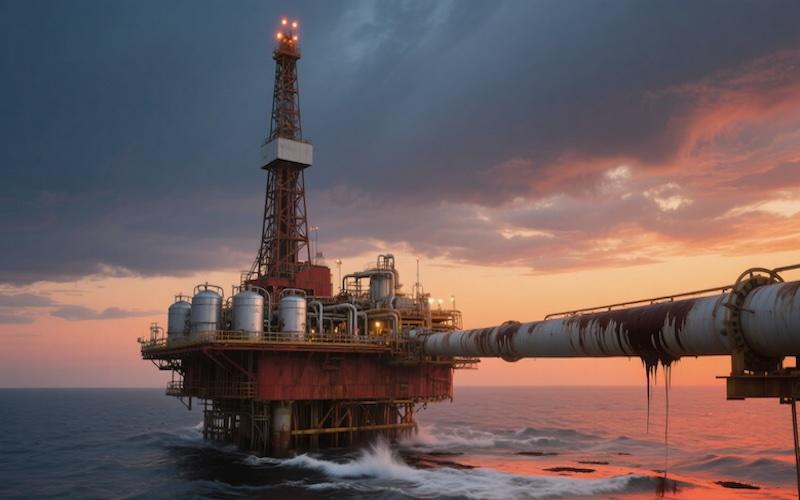
Buffer depletion: From 135 million barrels to zero
Before the outbreak of war, Iran stored approximately 135 million barrels of crude oil overseas, mostly anchored off the coasts of Malaysia and Singapore. This crude oil served as both a delivery route under sanctions and a cash reserve for Iran during periods of export disruption. After the US first imposed a blockade on Iranian oil shipments in April, Tehran continuously shipped oil from its maritime storage to maintain sales to major Asian countries. In mid-June, the blockade was briefly lifted due to peace negotiations, and Iran accelerated its replenishment, with reserves rising to nearly 90 million barrels at one point. However, after the blockade was reinstated in mid-July, the reserves entered an irreversible depletion phase. Kpler data shows that by October 5, reserves had fallen to less than 1 million barrels, and by mid-October, they had completely disappeared. Independent tracking by Vortexa and the anti-Iran nuclear weapons coalition also points in the same direction: Iranian oil reserves off the coast of Singapore are almost depleted, and Iranian crude oil loadings were close to zero in August and September.Why can't the shadow fleet "fill the gap"?
Iran has long relied on a ship-to-ship transshipment network: linked tankers first transport crude oil to the waters near Malaysia and Singapore, then transfer it to other vessels bound for major Asian countries, increasing the difficulty for the United States to track and enforce the law. This system maintained exports under sanctions, but its vulnerability lies in its need for a continuous influx of new cargoes to "feed" it. Once a maritime blockade cuts off loading from Iranian ports, the floating inventory becomes stagnant—every barrel sold is one less, and replenishment from the source is impossible. Homayoun Falakshahi, head of crude oil analysis at Kpler, succinctly summarized this predicament: "There is no more oil to deliver to China."Economic Transmission: The Triple Squeeze of the Rial, Inflation, and Fiscal Policy
Oil sales account for approximately 30% to 40% of the Iranian government's revenue and are the country's largest source of foreign exchange. The revenue shortfall quickly spread to the currency and prices. In October 2026, the US dollar broke through 2.7 million rials in the open market, and the annual urban inflation rate rose to 89.8% in September, meaning prices nearly doubled in 12 months. The rial's depreciation and the foreign exchange shortage reinforced each other: importers struggled to obtain dollars, pushing up the local currency costs of raw materials needed for production, while the central bank's ability to intervene in the foreign exchange market was significantly reduced due to dual constraints such as banking restrictions and delayed export revenue. While Iranian Central Bank Governor Hemmati insisted at an IMF meeting that "economic collapse is an illusion," the signals from currency and price data were far more somber.A “Divergent Recovery” in Oil Flows: Non-Iranian Supplies Exceed Pre-War Levels
A contrast that is easily overlooked is that while the overall resilience of Middle Eastern oil exports is recovering, Iran is excluded from this recovery. Kpler data shows that in the week ending October 18, Gulf oil-producing countries excluding Iran exported an average of 24.6 million barrels per day, higher than the pre-war level of 23.3 million barrels per day; however, the flow in the Strait of Hormuz itself is still more than one-third lower than before the war, with the recovery mainly coming from alternative pipeline routes and diversion through Red Sea ports. In other words, the US maritime protection mechanism and the route adjustments made by countries like Saudi Arabia have allowed non-Iranian crude oil to continue entering the global market, while Iran's shadow fleet network continues to shrink under the blockade. Independent refineries in major Asian countries are turning to Brazilian and West African crude, but these alternatives come with a premium, and the cost advantage previously brought by discounted Iranian crude oil has disappeared.Physical upper limit of alternative paths
Tehran has not been without attempts to find alternative routes. Land-based truck transport and abandoned oil tank storage have been utilized, but capacity is severely limited. Analysis shows that even transferring 100,000 barrels of oil daily via Iraq would require approximately 5,000 trucks, replacing only 5% to 7% of previous seaborne exports. Pipelines and Caspian ports also cannot fill the seaborne gap in the short term. This means that until the maritime blockade is lifted or a new circumvention mechanism is found, the "zero-load" status of Iranian oil exports is unlikely to be substantially alleviated by land routes.The Test of Negotiation Impasses and the Logic of Pressure
The US pressure strategy rests on two assumptions: economic pain will force Iran to make concessions on its nuclear program, or trigger internal pressure that could destabilize the regime. Six months later, the first assumption has yet to materialize. Iranian President Peshichiyan stated clearly on October 20 that the US must lift sanctions, as this is a prerequisite for any negotiations. Iranian Foreign Minister Araqchi also emphasized that the Strait of Hormuz will remain closed until the US accepts Iran's conditions. Iman Nasseri, an analyst at FGE NexantECA who previously worked at the Iranian Ministry of Petroleum's research institute, offered a cautious assessment: "Did it work? Yes, it worked. But the regime has shown resilience in the past. Let's wait another year and see if this system can hold on." The elimination of its maritime reserves removes Iran's most flexible tool for short-term revenue adjustment, but the timeline and path for translating economic pressure into political outcomes remain highly uncertain.Editor's Summary
The depletion of Iran's shadow tanker fleet marks the final stage of the US maritime blockade, moving from "limiting incremental growth" to "consuming existing stock." The $25 billion in lost revenue and the elimination of floating inventories have deprived Tehran of a crucial tool for maintaining deliveries to China and smoothing cash flow during the export disruption. The devaluation of the rial and soaring inflation constitute quantifiable economic costs. However, the blockade's effectiveness exhibits a clear asymmetry: non-Iranian Gulf crude oil exports have recovered to pre-war levels through alternative routes, and global oil flows have not experienced a systemic shortage due to Iran's isolation. The real uncertainty lies at the other end of the pressure logic—whether and how quickly the economic pain can translate into a change in Iran's behavior on the nuclear issue. The physical limitations of alternative transport routes and the gap in preconditions between the negotiating parties mean that the probability of a breakthrough in the short term remains low, and the "resilience" of the Iranian economy is shifting from a buffer to a capacity to operate at a lower level.Frequently Asked Questions
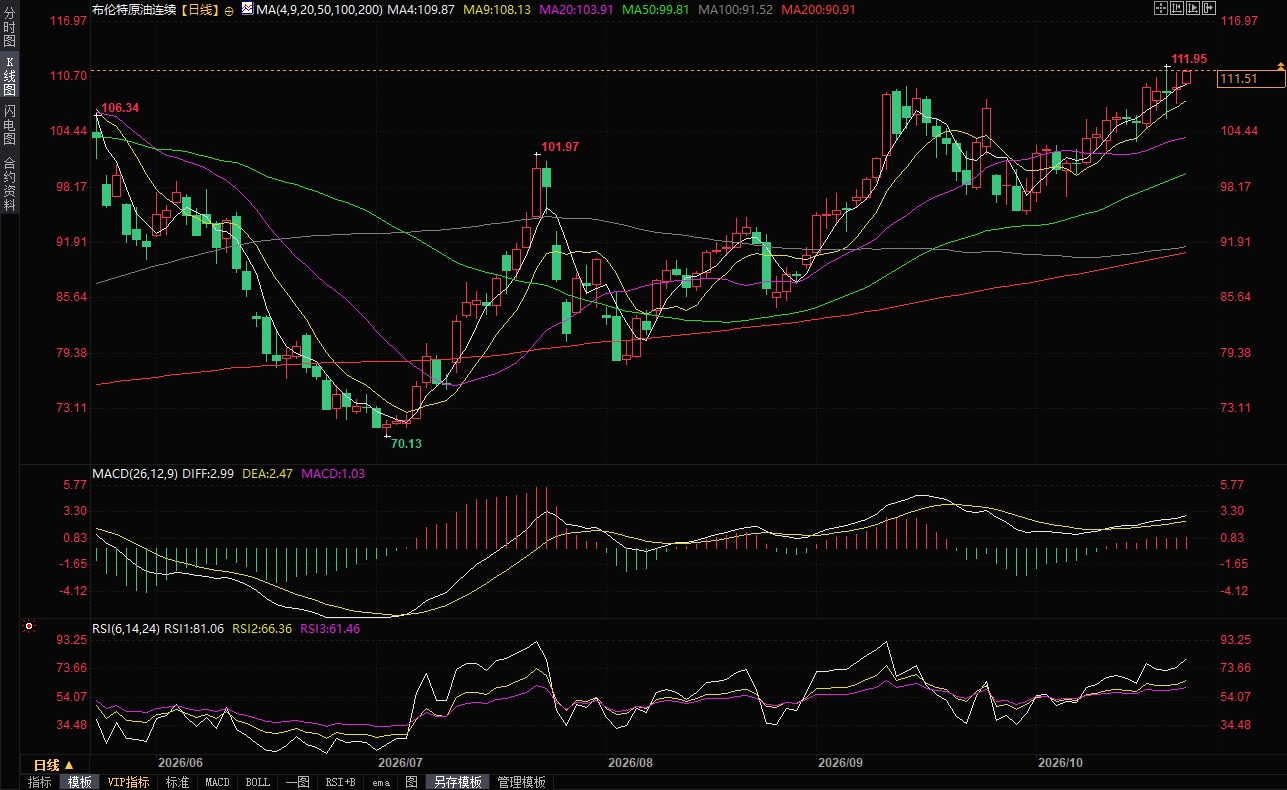
Question 1: Why did Iran's offshore oil reserves "run out"? Couldn't they be continuously replenished from ports? The key lies in the blockade cutting off the "replenishment" link. The operation of the floating storage system relies on the ability of associated tankers to continuously load crude oil from Iranian ports and then transport it to the waters near Malaysia and Singapore for ship-to-ship transshipment. The US naval blockade reduced new loading at Iranian ports to near zero, turning the offshore storage into a one-way depletion of reserves—every delivery to refineries in major Asian countries reduced the total by one shipment, without any new cargo being injected. Inventories had already begun to decline during the initial blockade in April, and after a brief easing of the blockade in June, Iran replenished its reserves to nearly 90 million barrels. However, the replenishment window closed after the blockade was reinstated in July, and over the next three months, inventories plummeted from their peak to zero. This system was designed to circumvent tracking and sanctions, not to be self-sustaining when loading is physically cut off. Question 2: How was the $25 billion revenue loss calculated? What does this figure mean? The $25 billion figure is the U.S. Central Command's estimate of the "value of blocked crude oil exports," covering the value of crude oil that Iran could have sold abroad but was unable to due to naval interception since the blockade was implemented. This figure needs to be understood within the context of Iran's fiscal structure: oil sales account for approximately 30% to 40% of government revenue and are the largest source of foreign exchange. The loss is not entirely reflected in an equivalent reduction in fiscal revenue, as some of it corresponds to production that has not yet been extracted or entered the export stage, but the contraction in foreign exchange inflows is direct and concentrated. For the Iranian economy, already facing high inflation and currency devaluation, this means a significant reduction in external resources available for stabilizing the exchange rate, paying for imports, and maintaining fiscal expenditures. Thirdly, how significant is the impact on refineries in major Asian countries losing discounted Iranian crude oil? Can they find alternatives? The most directly affected are independent private refiners, represented by the "teapot" refineries in Shandong and other regions, who have long purchased Iranian crude oil at significant discounts and processed it into refined oil products for the domestic market. After the disruption of Iranian supplies, these refineries are turning to Brazilian and West African crude oil, while state-owned refineries such as Sinopec have also indicated they will increase diversified procurement from non-Gulf regions. While alternatives are physically feasible, they are not economically equivalent: Brazilian and West African oils differ in quality and have higher freight/premium costs, squeezing refining profit margins previously benefited by discounted Iranian crude. China's overall crude oil import sources are highly diversified, thus limiting the impact on national supply security, but independent refineries will face more direct pressure on their cost structures and operating rates. Fourth: Can't Iran bypass the Strait of Hormuz by truck or pipeline? Yes, but the capacity is far from sufficient. The physical efficiency of truck transport means it can only serve as a marginal supplement: transferring 50,000 to 100,000 barrels of oil per day requires thousands of trucks, equivalent to only 5% to 7% of previous seaborne exports. Regarding pipelines, Iran lacks alternative routes that can significantly increase capacity in the short term, and the capacity of ports on the Caspian Sea and transit routes through neighboring countries is also limited. Before the blockade, Iran exported approximately 1.38 million barrels per day to China; this level of seaborne shortfall cannot be bridged within months by land or pipeline. The significance of alternative routes lies in maintaining minimum exports and domestic refinery operations, not in restoring pre-blockade revenue levels. Fifth: After reserves reach zero, what are the most noteworthy variables going forward? Two variables are crucial. First, can the preconditions for negotiations be relaxed? Iran insists the US lift sanctions first, while the US makes nuclear concessions a condition for lifting the blockade; there is currently no visible overlap between their publicly stated positions. Second, the speed at which the Iranian economy adjusts to lower oil revenue levels: the rial's depreciation, inflation, and foreign exchange shortages are already self-reinforcing, but there is no predetermined timetable for whether and when the regime will translate economic pressure into negotiating flexibility. Meanwhile, the recovery of non-Iranian Middle Eastern oil supplies suggests a higher "tolerance" for US blockade actions in the global market, reducing the urgency for Washington to adjust its strategy prematurely due to oil price pressures. These two variables combined point to a baseline scenario of "continued high pressure, delayed outcome." At 14:07 Beijing time, Brent crude oil was trading at $111.48 per barrel.- Risk Warning and Disclaimer
- The market involves risk, and trading may not be suitable for all investors. This article is for reference only and does not constitute personal investment advice, nor does it take into account certain users’ specific investment objectives, financial situation, or other needs. Any investment decisions made based on this information are at your own risk.