November 2nd Financial Breakfast: Tech stocks plunge, triggering margin calls; gold hits a one-year low; US oil falls due to new recommendations from mediators regarding US-Iran tensions.
2026-11-02 07:18:26
On Monday (November 2nd, Beijing time) in early Asian trading, spot gold was trading around $3892.20 per ounce. Gold prices fell to a one-year low of $3869.97 per ounce on Friday, driven by a sharp decline in tech stocks and investor concerns that AI spending might not generate sufficient returns, triggering forced liquidations and margin calls on safe-haven assets such as gold. US crude oil fell nearly 2%, trading around $102.33 per barrel. US crude oil had reached a one-and-a-half-month high of $104.99 per barrel on Friday, but opened lower on Monday due to ongoing negotiations between Iranian and Qatari mediators regarding the US-Iran situation. The mediators have held multiple consultations and proposed suggestions that are more feasible and workable than the "seven-day plan." 
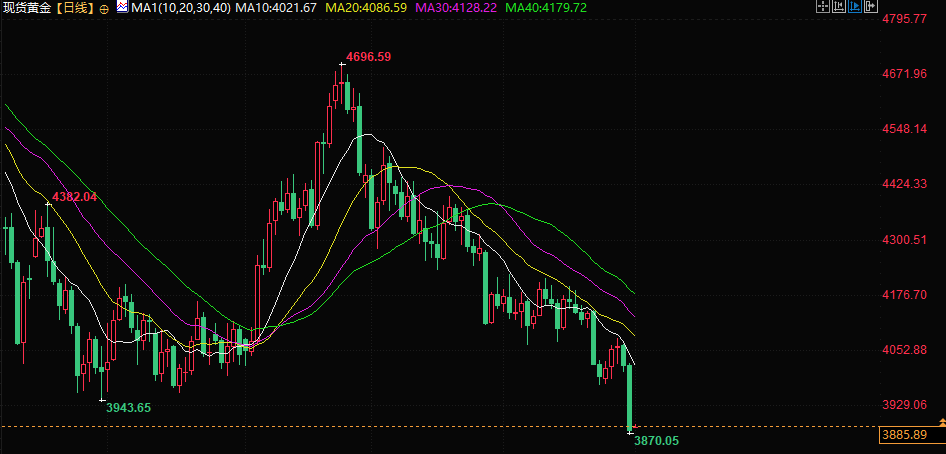 Spot silver fell 5.83% to $49.10 per ounce, breaking below $50 for the first time in 11 months. Palladium fell below $1,000, while platinum and palladium hit 13-month and 17-month lows, respectively. Platinum closed down 4.2% at $1,425.02 and palladium down 3% at $976.08. Independent precious metals trader Tai Wong said precious metals could not escape the pull of the stock market correction, and the pillar of AI-driven market performance—corporate earnings—has shown cracks. Commerzbank stated that the decline in tech stocks could trigger forced liquidations and margin calls on safe-haven assets such as gold, but expects precious metal prices to rebound in the future. Gold prices have fallen 30% from their record high of $5,595 per ounce in January, also pressured by weak Asian demand. However, analysts say that central bank gold purchases tend to increase when prices fall below $4,000. The RSI for silver, platinum, and palladium has entered oversold territory for the first time in three years, with Tai Wong stating that the slow and sustained decline in white metals is particularly worrying. HSBC forecasts an average silver price of $64 in 2027, down from its forecast of $71 this year. The gold-silver ratio has now risen to 79, the highest in 11 months. Silver's record high in January was 46, and the average for 2020-2025 is 82. Palladium has fallen due to concerns about demand from the automotive industry, and the gold-platinum ratio has risen to 2.7, the highest since mid-2025.
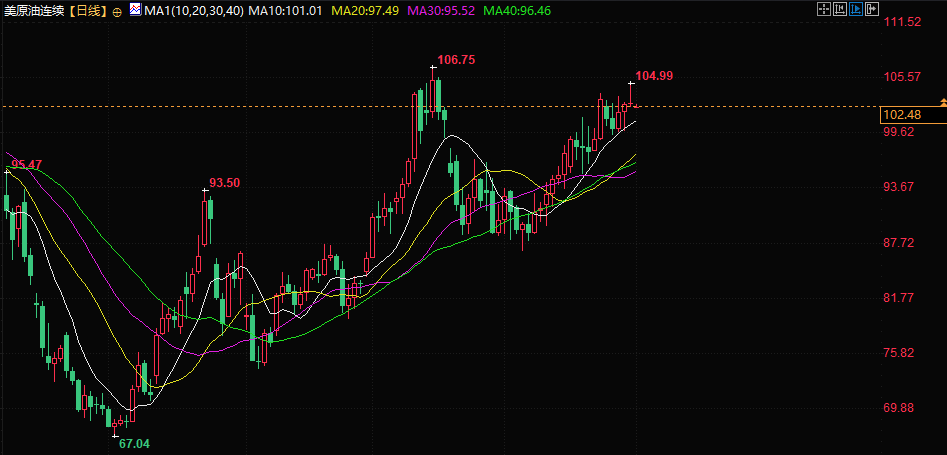 The UK's Maritime Trade Operations Office stated that an oil tanker was attacked by an explosive device placed by a small boat in the Strait of Hormuz. It is unclear who carried out the attack. Maritime sources say this is the first known successful attack using absorbent mines in the strait since the start of the US-Israel war against Iran in February. The US Embassy in Riyadh stated that, due to security risks, the US has ordered non-essential government employees and their families to evacuate Saudi Arabia starting October 23, citing Houthi attacks on civilian airports and other critical infrastructure. The Houthi rebels in Yemen claimed responsibility for attacks on the Rastanura and Rabigh refineries and Saudi Aramco's Abu Qayq production facilities. The Saudi-led coalition claimed to have intercepted a cruise missile launched towards western Saudi Arabia. A Qatari mediation delegation returned to Tehran last Friday. Dennis Kissler of BOK Financial stated that traders will continue to monitor Middle Eastern oil outflows and potential escalation by the US and its allies. Saxo Bank stated that oil price volatility may intensify in the coming weeks due to the Israeli election and the US midterm elections on November 3. Even after the conflict ends, crude oil is expected to fluctuate in the higher range of $70 to $90 per barrel, compared to $60 to $70 before the war. Two ship tracking companies stated that despite the attacks, Saudi Arabia's crude oil exports in October increased compared to September.
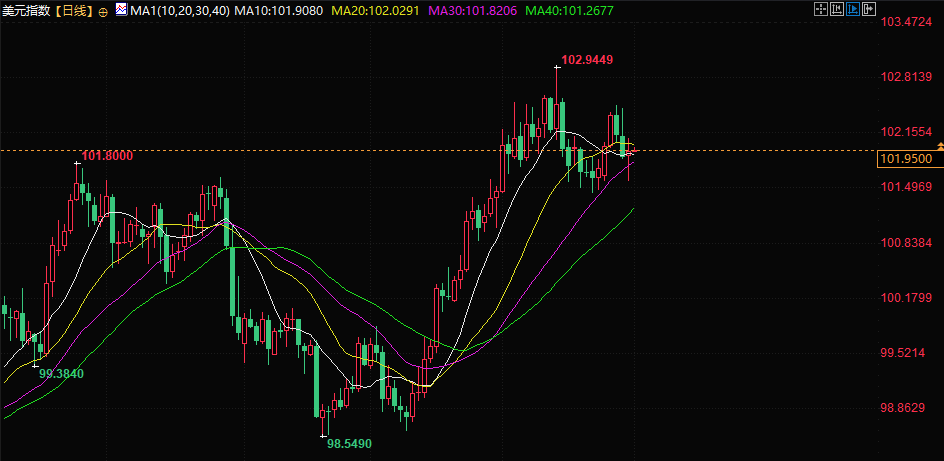 The euro fell 0.12% to $1.1166, marking its second consecutive monthly decline. It had fallen to its lowest level since May 2025 after the European Central Bank kept interest rates unchanged on Thursday and noted that rising bond yields had tightened financial conditions. Barclays FX strategist Lefteris Farmakis said the euro received some support from pressure on the dollar due to AI concerns, but this strength could soon fade given the eurozone's economic growth lagging behind the US. The dollar fell 0.11% to 157.52 against the yen on Friday, marking its third consecutive day of decline, but still closing higher for the month. This followed the Bank of Japan's (BOJ) decision to keep its benchmark interest rate unchanged at 1.25%, as expected, but raising its inflation forecast and emphasizing a more hawkish policy stance, suggesting potential rate hikes every few months. FXStreet analyst Joseph Trevisani said the market was slightly disappointed with the BOJ, and the Fed's policy bias was still offsetting the BOJ's actions. TS Lombard analyst Rory Green expects the BOJ to raise rates to 2% in December, March, and July next year before pausing to assess the tightening effects. This week, the market is focused on the Bank of England and Reserve Bank of Australia decisions.
Key Focus Today
stock market
U.S. stocks closed sharply lower on Friday, with the Dow Jones Industrial Average falling 1.09% to 51,770.31 points, the S&P 500 down 1.82% to 7,580.07 points, and the Nasdaq Composite plunging 2.86% to 25,437.00 points, marking its biggest one-day percentage drop since June 5. The Nasdaq is now down 7.8% from its record closing high on October 6. Disappointing quarterly results from Intel and Amazon exacerbated market concerns about the return on massive investments in AI-related companies. Intel plunged 28.6%, while Amazon narrowed its losses during the session. Nvidia fell 4.2%, AMD plummeted 10.9%, the Philadelphia Semiconductor Index fell 7.2%, and its monthly decline exceeded 15%. Dell and HP fell 10.8% and 9.6%, respectively. All three major stock indexes closed lower last week. In October, the S&P 500 and Nasdaq fell, while the Dow rose. The S&P 500 technology sector suffered its biggest monthly drop since March 2025, and the communication services sector saw its largest monthly decline since April 2022. With the earnings season halfway through, 299 S&P 500 companies have reported results, with 82% exceeding expectations. Analysts expect third-quarter earnings to increase by 31.6% year-over-year. Exxon Mobil and Chevron rose 2.2% and 2.8% respectively, driven by energy supply disruptions boosting profit margins, while Starbucks fell 1.8%.Gold Market
Spot gold plunged 3.62% on Friday, closing at $3,875.70 per ounce, after falling to a one-year low of $3,869.97 per ounce at one point during the session, affected by a sharp decline in tech stocks and investor concerns that AI spending would not generate sufficient returns. Spot silver fell 5.83% to $49.10 per ounce, breaking below $50 for the first time in 11 months. Palladium fell below $1,000, while platinum and palladium hit 13-month and 17-month lows, respectively. Platinum closed down 4.2% at $1,425.02 and palladium down 3% at $976.08. Independent precious metals trader Tai Wong said precious metals could not escape the pull of the stock market correction, and the pillar of AI-driven market performance—corporate earnings—has shown cracks. Commerzbank stated that the decline in tech stocks could trigger forced liquidations and margin calls on safe-haven assets such as gold, but expects precious metal prices to rebound in the future. Gold prices have fallen 30% from their record high of $5,595 per ounce in January, also pressured by weak Asian demand. However, analysts say that central bank gold purchases tend to increase when prices fall below $4,000. The RSI for silver, platinum, and palladium has entered oversold territory for the first time in three years, with Tai Wong stating that the slow and sustained decline in white metals is particularly worrying. HSBC forecasts an average silver price of $64 in 2027, down from its forecast of $71 this year. The gold-silver ratio has now risen to 79, the highest in 11 months. Silver's record high in January was 46, and the average for 2020-2025 is 82. Palladium has fallen due to concerns about demand from the automotive industry, and the gold-platinum ratio has risen to 2.7, the highest since mid-2025.oil market
Oil prices rose on Friday, with WTI crude closing up 0.0% at $102.95 a barrel, after hitting a one-and-a-half-month high of $104.99 a barrel during the session; Brent crude rose 0.73% to close at $112.35 a barrel, influenced by escalating concerns over the situation in Iran and supply risks highlighted by an attack on an oil tanker in the Strait of Hormuz. The UK's Maritime Trade Operations Office stated that an oil tanker was attacked by an explosive device placed by a small boat in the Strait of Hormuz. It is unclear who carried out the attack. Maritime sources say this is the first known successful attack using absorbent mines in the strait since the start of the US-Israel war against Iran in February. The US Embassy in Riyadh stated that, due to security risks, the US has ordered non-essential government employees and their families to evacuate Saudi Arabia starting October 23, citing Houthi attacks on civilian airports and other critical infrastructure. The Houthi rebels in Yemen claimed responsibility for attacks on the Rastanura and Rabigh refineries and Saudi Aramco's Abu Qayq production facilities. The Saudi-led coalition claimed to have intercepted a cruise missile launched towards western Saudi Arabia. A Qatari mediation delegation returned to Tehran last Friday. Dennis Kissler of BOK Financial stated that traders will continue to monitor Middle Eastern oil outflows and potential escalation by the US and its allies. Saxo Bank stated that oil price volatility may intensify in the coming weeks due to the Israeli election and the US midterm elections on November 3. Even after the conflict ends, crude oil is expected to fluctuate in the higher range of $70 to $90 per barrel, compared to $60 to $70 before the war. Two ship tracking companies stated that despite the attacks, Saudi Arabia's crude oil exports in October increased compared to September.Foreign exchange market
The dollar index rose 0.08% on Friday to close at 101.95, marking its second consecutive monthly gain. The dollar typically benefits when investors seek safe havens, but the decline in US Treasury yields on Friday had a more significant drag on the index. Earnings reports from Alphabet, Amazon, and Intel last week reignited concerns about AI spending and triggered a sell-off in tech stocks. The euro fell 0.12% to $1.1166, marking its second consecutive monthly decline. It had fallen to its lowest level since May 2025 after the European Central Bank kept interest rates unchanged on Thursday and noted that rising bond yields had tightened financial conditions. Barclays FX strategist Lefteris Farmakis said the euro received some support from pressure on the dollar due to AI concerns, but this strength could soon fade given the eurozone's economic growth lagging behind the US. The dollar fell 0.11% to 157.52 against the yen on Friday, marking its third consecutive day of decline, but still closing higher for the month. This followed the Bank of Japan's (BOJ) decision to keep its benchmark interest rate unchanged at 1.25%, as expected, but raising its inflation forecast and emphasizing a more hawkish policy stance, suggesting potential rate hikes every few months. FXStreet analyst Joseph Trevisani said the market was slightly disappointed with the BOJ, and the Fed's policy bias was still offsetting the BOJ's actions. TS Lombard analyst Rory Green expects the BOJ to raise rates to 2% in December, March, and July next year before pausing to assess the tightening effects. This week, the market is focused on the Bank of England and Reserve Bank of Australia decisions.International News
OPEC+ Representatives: Major Oil Producers Plan to Maintain Production Quotas in December Two OPEC+ representatives stated that major OPEC+ countries plan to maintain their oil production quotas in December, as the ongoing conflict in the Middle East continues to impact the organization's output. Speaking ahead of a video conference on Sunday, the two representatives said the G7, led by Saudi Arabia and Russia, had reached an agreement in principle on maintaining current quota targets, which is expected to be finalized at the meeting. This aligns with the roadmap established earlier this year. OPEC+ previously indicated it would suspend quota increases until the end of the year; it had previously agreed to a series of small production increases over the six months leading up to August. These increases are largely symbolic, as the war in Iran has impacted oil production in the Persian Gulf region; however, theoretically, these increases could offset the cuts made in 2023. OPEC+'s next major decision is whether to reinstate another portion of production suspended in 2022, a complex process whose outcome will likely depend on the results of ongoing member country capacity audits. Next year's policy will be finalized at the plenary ministerial meeting on November 29. US Officials: Trump May Be More Inclined to Launch Another Military Action Against Iran if Republicans Suffer a Crushing Defeat in the Midterm Elections According to US sources on October 31, US officials stated that if the Republican Party suffers a crushing defeat in the midterm elections, President Trump might be more inclined to order a large-scale military operation against Iran. Some US officials indicated that now is the best time for Iran to reach an agreement. (CCTV News) Iranian Foreign Minister Proposes Negotiation Prerequisites: Lift Oil Export Restrictions and Unfreeze All Frozen Funds Iranian Foreign Minister Araqchi stated on Saturday that Iran demands the lifting of oil export restrictions and the unfreezing of all frozen Iranian funds, including funds held in Qatari accounts. He listed a series of conditions, stating that only if these conditions are met can negotiations begin. In an interview with Al Jazeera, Araqchi said the conditions include: lifting sanctions imposed after the signing of the Islamabad Memorandum, reducing the US troop presence in the region, lifting oil export restrictions again, and unfreezing all frozen funds, including those held in Qatari accounts. He also stated that Tehran demands recognition of the Strait of Hormuz, jointly designated by Iranian and Omani authorities, as the only permitted passage route, and calls for "an end to all wars in the region," including the conflict in Lebanon. Two Records Broken in the Final Sprint of the US Midterm Election On October 31st, local time, with only three days left until the US midterm elections, the competition between the two parties for control of Congress entered its final sprint. According to the latest data released that day, this election has already set two noteworthy new records: early voting nationwide has exceeded 51 million, breaking all previous midterm election records; total federal election spending is projected to reach $11.9 billion, also a new midterm election record. Meanwhile, legal disputes surrounding voter eligibility, candidate participation, and results verification continue to escalate, with several cases seeing new developments on the eve of the election. Record-breaking voter participation, massive campaign spending, and a surge in legal disputes not only reflect the fierce competition in this election but also highlight the changes taking place in American society and politics. (CCTV News) The Russian government has extended the diesel export ban to the end of January 2027, while making exceptions for some suppliers. According to the Russian government, the government has extended the diesel export ban for diesel producers to the end of January 2027. A relevant resolution has been signed, extending the ban on direct producers exporting diesel, marine fuel, and gas oil from Russia until January 31, 2027 (inclusive). The report indicates that this decision aims to maintain the stability of the domestic fuel market. Meanwhile, Russian Deputy Prime Minister Novak stated on October 30 that while extending the overall diesel export ban, Russia is making exceptions for some suppliers, allowing them to supply the international market; such easing measures were implemented in October, and related easing arrangements are planned for November. The probability of the Federal Reserve raising interest rates in December is 72%, and the probability of a rate hike of at least 25 basis points by January is 80.7%. According to CME's "FedWatch," the probability of the Federal Reserve keeping interest rates unchanged in December is 28%, and the probability of a 25 basis point rate hike is 72%. The probability of the Federal Reserve maintaining interest rates unchanged until January next year is 19.3%, the probability of a cumulative rate hike of 25 basis points is 58.4%, and the probability of a cumulative rate hike of 50 basis points is 22.3%. Iranian Foreign Minister Reveals "Two-Day Plan": US to Fulfill Commitments First, Strait of Hormuz to Open the Next Day On November 1st local time, Iranian Foreign Minister Araqchi stated that the Iranian delegation's visit to Qatar was a continuation of ongoing communication between Iran and mediators such as Qatar and Pakistan. The current proposal on the table is basically the same as the "seven-day plan" previously proposed by Iran. The mediators have held multiple consultations and put forward suggestions that are more feasible and workable than the "seven-day plan." Araqchi stated that one of Qatar's suggestions is to shorten the seven-day period to five days or even less. Iran has currently agreed to a "two-day plan": On the first day, the US will take a series of compliance measures; on the second day, the Strait of Hormuz will open, and traffic will return to its previous state. He stated that as long as the US adheres to this two-day plan, it will pave the way for peace and restore normalcy to the Strait of Hormuz. Only after the US fulfills its relevant commitments and the Strait opens will the path for Iran and the US to resume negotiations open. Iran's proposed conditions for US compliance include: establishing a new shipping route through the Strait of Hormuz, unfreezing Iranian funds, ending regional wars including in Lebanon, lifting the maritime blockade, granting waivers for Iranian oil exports, and lifting new US sanctions imposed after the Islamabad Memorandum of Understanding. (CCTV)Domestic News
Net Profits of Shanghai and Shenzhen Listed Companies Exceed 5 Trillion Yuan, a Four-Year High According to the China Securities Regulatory Commission (CSRC), in the first three quarters of this year, listed companies on the Shanghai and Shenzhen stock exchanges achieved a net profit of 5.1 trillion yuan, a new high since 2022. As of October 31, 5,224 listed companies on the Shanghai and Shenzhen stock exchanges disclosed their Q3 2026 financial reports, with 73% of them reporting profits. In the first three quarters, listed companies on the Shanghai and Shenzhen stock exchanges achieved operating revenue of 56.6 trillion yuan and net profit of 5.1 trillion yuan, representing year-on-year increases of 5.8% and 8.5% respectively, both the scale and growth rate reaching new highs since 2022. (CCTV) National Bureau of Statistics: Large Enterprises Continue to Expand On October 31, 2026 , the Service Industry Survey Center of the National Bureau of Statistics and the China Federation of Logistics and Purchasing released the China Purchasing Managers' Index (PMI). Huo Lihui, Chief Statistician of the Service Industry Survey Center of the National Bureau of Statistics, provided an interpretation. Large enterprises continue to expand. The PMI for large manufacturing enterprises was 50.2%, down 0.4 percentage points from the previous month, but still within the expansion range; the PMIs for medium-sized and small enterprises were 48.4% and 47.5% respectively, down 1.3 and 1.4 percentage points from the previous month, indicating a decline in the level of business activity.- Risk Warning and Disclaimer
- The market involves risk, and trading may not be suitable for all investors. This article is for reference only and does not constitute personal investment advice, nor does it take into account certain users’ specific investment objectives, financial situation, or other needs. Any investment decisions made based on this information are at your own risk.