US CPI Outlook: The first inflation report since the government reopened may determine the Fed's interest rate cut process in 2026.
2025-12-18 11:35:44
The first major inflation report since the U.S. government resumed operations will be released at 9:30 p.m. on Thursday (December 18), and could influence the Federal Reserve's decision on further interest rate cuts. Americans are frustrated by rising inflation and the cost of living.
This week, investors learned that the U.S. job market isn't as hot as expected, but inflation is hotter than anyone anticipated. The November Consumer Price Index (CPI) will give Wall Street and the Federal Reserve a glimpse into the latest inflation trends before the end of the year.
According to CPI data, inflation cooled significantly to 2.3% in April, the lowest level in nearly four years. However, President Donald Trump raised tariffs to their highest level in decades this spring, pushing up prices.
Although tariffs did not cause prices to surge as the market had predicted, inflation had rebounded to 3% by September. This puts prices at a rate significantly faster than the Federal Reserve's 2% target.
The key question is whether prices will continue to rise or begin to fall as widely expected by senior Federal Reserve officials and economists.
The November CPI data, which was delayed due to the government shutdown (the October report was cancelled), will help answer this question.
Assuming inflation is nearing its peak levels following the imposition of tariffs, the Federal Reserve has cut interest rates three times since September in an attempt to support the fragile labor market.
The combined non-farm payrolls report for October and November, which was delayed due to the prolonged government shutdown, was released on Tuesday, showing that the increase in new jobs was negligible.
The unemployment rate also rose to 4.6%, the highest level in four years, although the government shutdown may have had some impact. Some economists say the unemployment rate may fall in December. In any case, hiring activity is unlikely to pick up in the short term.
However, whether the Federal Reserve will cut interest rates further to support the labor market will depend on whether inflation is about to subside.
Both the overall CPI and core CPI are expected to rise by 0.3% in November. Over the 12 months ending in November, the consumer price index may rise slightly from 3.0% to 3.1%, which may be the peak level reached due to the impact of tariffs.
The annual increase in core CPI is expected to remain stable at 3%. This core indicator excludes volatile food and energy prices and can more accurately predict future inflation trends.
Key factors to watch include commodity prices and housing costs—the biggest drivers of inflation in recent years.
Commodity prices had been declining before the pandemic, but are now rising at a rate of 1.5% per year.
Service costs rose 3.5% in the 12 months ending in September, but this is the smallest increase since the pandemic began. If service prices continue to slow, it could signal that inflation is about to begin to decline. However, for this to happen, commodity prices also need to fall in the short term.
This remains to be seen. Recent surveys of businesses indicate that commodity prices are still rising, and consumers expect prices to climb further.
This CPI report will undoubtedly be the starting gun for the short-term direction of the US dollar. Higher-than-expected data will support the dollar, as it means the Federal Reserve's hand on interest rate cuts will be restrained for longer; while lower-than-expected data will weaken the dollar, as it paves the way for more aggressive rate cuts. The dollar index fluctuated around 98.40 on Thursday, awaiting directional guidance from tonight's CPI report.
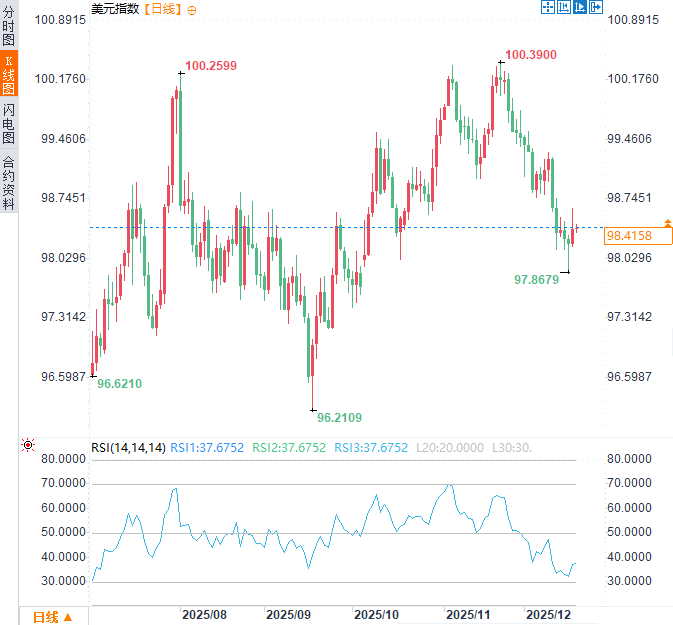
(US Dollar Index Daily Chart, Source: FX678)
At 11:35 Beijing time, the US dollar index is currently at 98.41.
This week, investors learned that the U.S. job market isn't as hot as expected, but inflation is hotter than anyone anticipated. The November Consumer Price Index (CPI) will give Wall Street and the Federal Reserve a glimpse into the latest inflation trends before the end of the year.
Inflation Trends: From Cooling to Rebound
According to CPI data, inflation cooled significantly to 2.3% in April, the lowest level in nearly four years. However, President Donald Trump raised tariffs to their highest level in decades this spring, pushing up prices.
Although tariffs did not cause prices to surge as the market had predicted, inflation had rebounded to 3% by September. This puts prices at a rate significantly faster than the Federal Reserve's 2% target.
The key question is whether prices will continue to rise or begin to fall as widely expected by senior Federal Reserve officials and economists.
The November CPI data, which was delayed due to the government shutdown (the October report was cancelled), will help answer this question.
Policy Background: Interest Rate Cuts and a Weak Job Market
Assuming inflation is nearing its peak levels following the imposition of tariffs, the Federal Reserve has cut interest rates three times since September in an attempt to support the fragile labor market.
The combined non-farm payrolls report for October and November, which was delayed due to the prolonged government shutdown, was released on Tuesday, showing that the increase in new jobs was negligible.
The unemployment rate also rose to 4.6%, the highest level in four years, although the government shutdown may have had some impact. Some economists say the unemployment rate may fall in December. In any case, hiring activity is unlikely to pick up in the short term.
However, whether the Federal Reserve will cut interest rates further to support the labor market will depend on whether inflation is about to subside.
Market Expectations: Data Preview and Key Takeaways
Both the overall CPI and core CPI are expected to rise by 0.3% in November. Over the 12 months ending in November, the consumer price index may rise slightly from 3.0% to 3.1%, which may be the peak level reached due to the impact of tariffs.
The annual increase in core CPI is expected to remain stable at 3%. This core indicator excludes volatile food and energy prices and can more accurately predict future inflation trends.
Key factors to watch include commodity prices and housing costs—the biggest drivers of inflation in recent years.
Commodity prices had been declining before the pandemic, but are now rising at a rate of 1.5% per year.
Service costs rose 3.5% in the 12 months ending in September, but this is the smallest increase since the pandemic began. If service prices continue to slow, it could signal that inflation is about to begin to decline. However, for this to happen, commodity prices also need to fall in the short term.
This remains to be seen. Recent surveys of businesses indicate that commodity prices are still rising, and consumers expect prices to climb further.
The US dollar is fluctuating, awaiting guidance from the CPI.
This CPI report will undoubtedly be the starting gun for the short-term direction of the US dollar. Higher-than-expected data will support the dollar, as it means the Federal Reserve's hand on interest rate cuts will be restrained for longer; while lower-than-expected data will weaken the dollar, as it paves the way for more aggressive rate cuts. The dollar index fluctuated around 98.40 on Thursday, awaiting directional guidance from tonight's CPI report.
(US Dollar Index Daily Chart, Source: FX678)
At 11:35 Beijing time, the US dollar index is currently at 98.41.
- Risk Warning and Disclaimer
- The market involves risk, and trading may not be suitable for all investors. This article is for reference only and does not constitute personal investment advice, nor does it take into account certain users’ specific investment objectives, financial situation, or other needs. Any investment decisions made based on this information are at your own risk.