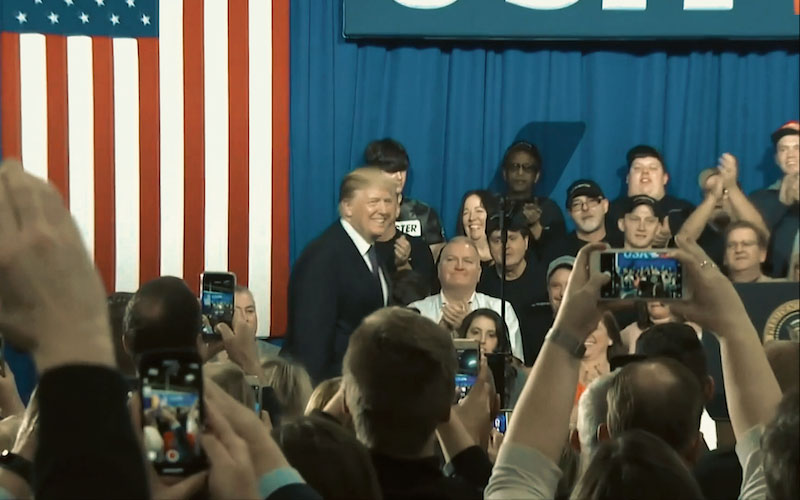
The US captures Venezuelan president: Can this geopolitical shock save oil prices?
2026-01-05 18:41:20
The U.S. arrest of Venezuelan President Nicolás Maduro is a rare and highly symbolic event. Its significance lies not only in Maduro's current status as head of state, but also in Venezuela's possession of the world's largest crude oil reserves and its membership in the Organization of the Petroleum Exporting Countries (OPEC).

However, judging from the current oil price performance, the market is skeptical about the actual impact of this event.
How will the events in Venezuela affect the crude oil market?
In theory, political turmoil in Venezuela, a major crude oil exporter, should trigger market concerns about supply disruptions, thus supporting oil prices. However, the situation in Venezuela is more complex.
Venezuela's crude oil production has shrunk dramatically in recent years due to a combination of factors, including underinvestment, aging infrastructure, and sanctions. Currently, its production accounts for only about 1% of global supply, insufficient to trigger an immediate supply crisis. Therefore, market reactions have been more psychological and geopolitical than stemming from genuine panic about a potential oil shortage.
In short, if the fundamental supply and demand situation does not change substantially, political turmoil will at most cause short-term fluctuations in oil prices and will be difficult to reverse the overall trend.
Key drivers this week: US dollar and US economic data
If news related to Venezuela was the trigger for market sentiment, then the real fuel driving oil prices this week was the US dollar exchange rate and US economic data.
Crude oil trade is priced in US dollars. A strong dollar will increase the cost of crude oil imports for other countries, thereby suppressing demand; conversely, a weaker dollar will help oil prices rebound in the short term.
This week, traders will focus on three key data categories:
Crude oil inventory data (American Petroleum Institute (API) and U.S. Energy Information Administration (EIA)) – January 7 (Wednesday)
American Petroleum Institute Weekly Statistical Report
US crude oil inventories
US gasoline inventories
US distillate fuel inventories
The market expects crude oil inventories to decline, but gasoline and distillate fuel inventories are likely to rise sharply. This combination of data reflects weak end-consumer demand, with the refined product market performing particularly poorly. Typically, this type of data will initially push oil prices higher in the short term, but selling pressure will subsequently return.
US employment data – January 9 (Friday)
US ADP Private Sector Employment Change
Changes in US non-farm payrolls (NFP)
Average hourly wage in the United States
US unemployment rate
Slower job growth could lead to a short-term weakening of the dollar. However, wage growth is a key indicator: if wages continue to rise, the probability of the Federal Reserve implementing easing policies in the short term will decrease, thus supporting the dollar and putting pressure on oil prices.
US consumer confidence and service sector data
The Institute for Supply Management (ISM) Services Purchasing Managers' Index (PMI) and the Job Openings and Labor Mobility Survey (JOLTS) – Wednesday, January 7.
Preliminary reading of the University of Michigan Consumer Sentiment Index – January 9 (Friday)
These indicators reflect the overall health of the US economy, encompassing both consumer and service sector activity. If the economy continues to overheat and inflation remains high, the Federal Reserve may maintain its high-interest-rate policy. This is generally unfavorable for oil prices, as high interest rates may continue to limit consumer demand, coupled with continued uncertainty surrounding the global demand outlook.
Technical Analysis: What Signals Does the Trend Send?
Weekly chart level
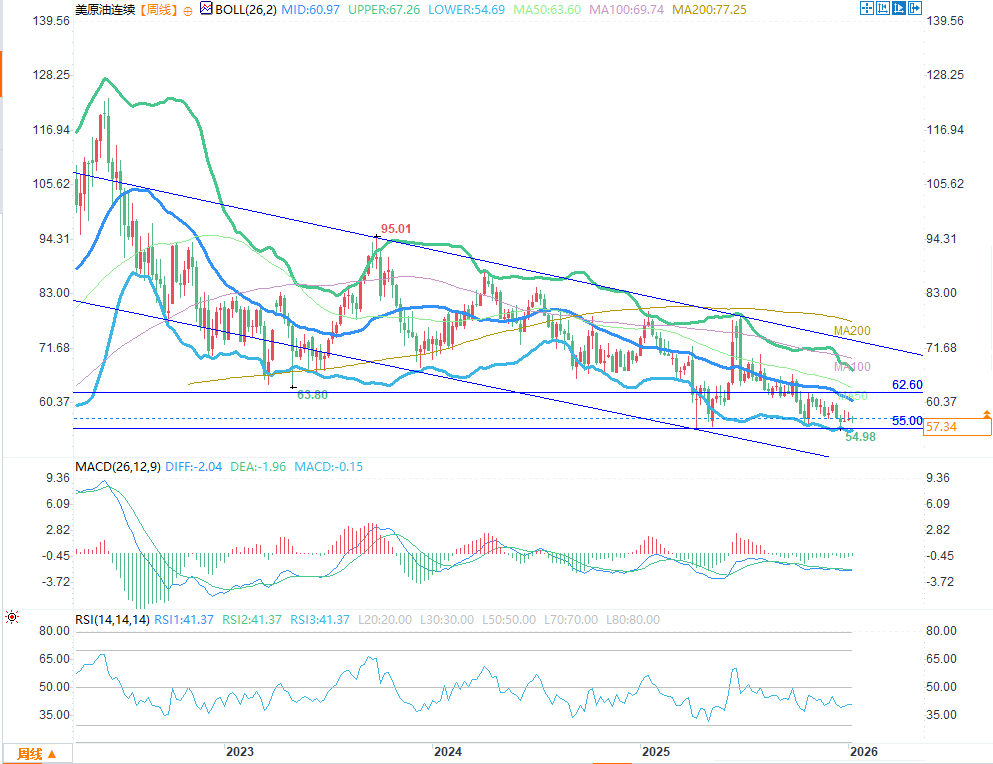
US crude oil is showing signs of easing selling pressure. Prices are no longer making new lows, and the recent pullback has seen a slight increase in lows around $55. However, oil price highs remain capped by the medium-term moving average and the upper Bollinger Band. While the Relative Strength Index (RSI) is below 50, it has not made a new low, exhibiting a slight bullish divergence, a signal that suggests a potential medium-term bottom may have begun to emerge.
Daily chart
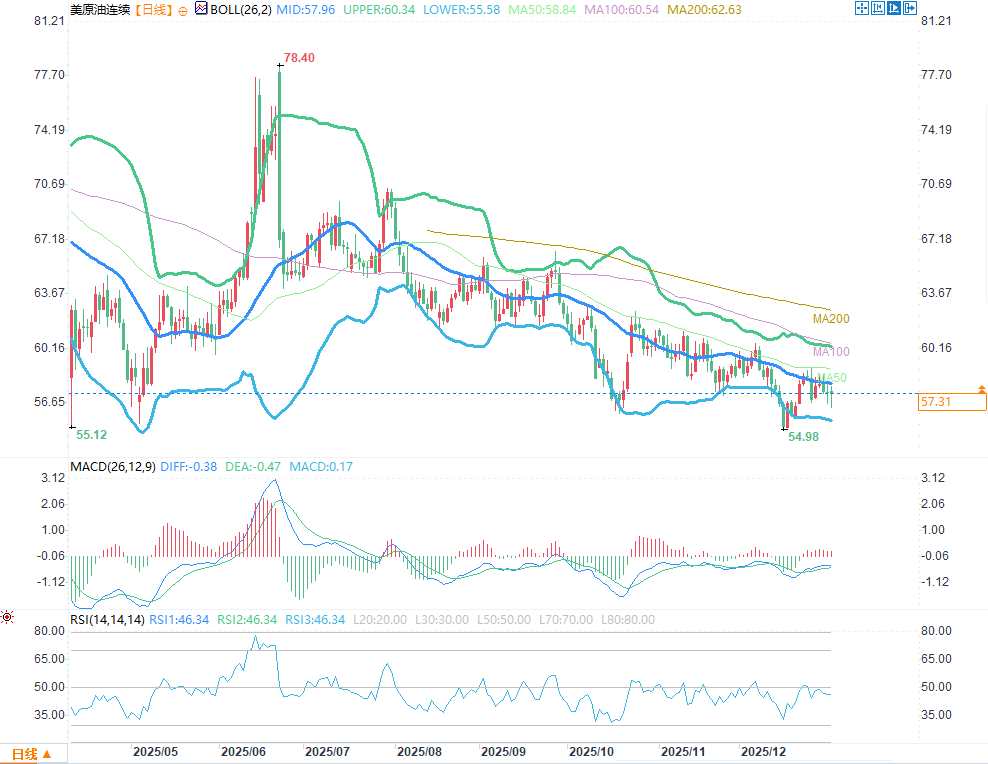
US crude oil remains in a medium-term downtrend. Prices are hovering below the Bollinger Band's middle line, indicating that selling pressure has not completely subsided, although market volatility is gradually narrowing. The Relative Strength Index (RSI) is in neutral territory below 50, meaning the market is not yet oversold and upward momentum is weak. While the Moving Average Convergence Divergence (MACD) has slightly crossed above the zero line, showing emerging buying pressure, it is not yet sufficient to reverse the overall downtrend.
Overall judgment
US crude oil is currently in a transitional phase: selling pressure has eased somewhat, buying power is beginning to emerge, and the possibility of a medium-term bottoming out is increasing, but the technical indicators have not yet shown signals confirming a new upward trend. This aligns with market opinion—the geopolitical shock of Venezuela alone is insufficient to change the medium- to long-term trend of oil prices.
Summary of key points
While the US arrest of President Maduro was a significant geopolitical event, its symbolic significance outweighed its practical impact, with a very limited short-term effect on oil supply. Market sentiment has become cautious, with attention shifting towards the US dollar exchange rate and US economic data.
Technical analysis indicates that US crude oil remains in a downtrend, and any rebound is more likely a technical correction. Traders should focus on price movements within the current trend framework rather than reacting emotionally to single political events.
The key to successful trading lies in following market-trending news and adhering to rational trading rather than emotional decision-making. Currently, the main theme of the crude oil market is very clear: caution, a battle between bulls and bears, and the conditions for a clear reversal are not yet present.
However, judging from the current oil price performance, the market is skeptical about the actual impact of this event.
How will the events in Venezuela affect the crude oil market?
In theory, political turmoil in Venezuela, a major crude oil exporter, should trigger market concerns about supply disruptions, thus supporting oil prices. However, the situation in Venezuela is more complex.
Venezuela's crude oil production has shrunk dramatically in recent years due to a combination of factors, including underinvestment, aging infrastructure, and sanctions. Currently, its production accounts for only about 1% of global supply, insufficient to trigger an immediate supply crisis. Therefore, market reactions have been more psychological and geopolitical than stemming from genuine panic about a potential oil shortage.
In short, if the fundamental supply and demand situation does not change substantially, political turmoil will at most cause short-term fluctuations in oil prices and will be difficult to reverse the overall trend.
Key drivers this week: US dollar and US economic data
If news related to Venezuela was the trigger for market sentiment, then the real fuel driving oil prices this week was the US dollar exchange rate and US economic data.
Crude oil trade is priced in US dollars. A strong dollar will increase the cost of crude oil imports for other countries, thereby suppressing demand; conversely, a weaker dollar will help oil prices rebound in the short term.
This week, traders will focus on three key data categories:
Crude oil inventory data (American Petroleum Institute (API) and U.S. Energy Information Administration (EIA)) – January 7 (Wednesday)
American Petroleum Institute Weekly Statistical Report
US crude oil inventories
US gasoline inventories
US distillate fuel inventories
The market expects crude oil inventories to decline, but gasoline and distillate fuel inventories are likely to rise sharply. This combination of data reflects weak end-consumer demand, with the refined product market performing particularly poorly. Typically, this type of data will initially push oil prices higher in the short term, but selling pressure will subsequently return.
US employment data – January 9 (Friday)
US ADP Private Sector Employment Change
Changes in US non-farm payrolls (NFP)
Average hourly wage in the United States
US unemployment rate
Slower job growth could lead to a short-term weakening of the dollar. However, wage growth is a key indicator: if wages continue to rise, the probability of the Federal Reserve implementing easing policies in the short term will decrease, thus supporting the dollar and putting pressure on oil prices.
US consumer confidence and service sector data
The Institute for Supply Management (ISM) Services Purchasing Managers' Index (PMI) and the Job Openings and Labor Mobility Survey (JOLTS) – Wednesday, January 7.
Preliminary reading of the University of Michigan Consumer Sentiment Index – January 9 (Friday)
These indicators reflect the overall health of the US economy, encompassing both consumer and service sector activity. If the economy continues to overheat and inflation remains high, the Federal Reserve may maintain its high-interest-rate policy. This is generally unfavorable for oil prices, as high interest rates may continue to limit consumer demand, coupled with continued uncertainty surrounding the global demand outlook.
Technical Analysis: What Signals Does the Trend Send?
Weekly chart level
US crude oil is showing signs of easing selling pressure. Prices are no longer making new lows, and the recent pullback has seen a slight increase in lows around $55. However, oil price highs remain capped by the medium-term moving average and the upper Bollinger Band. While the Relative Strength Index (RSI) is below 50, it has not made a new low, exhibiting a slight bullish divergence, a signal that suggests a potential medium-term bottom may have begun to emerge.
Daily chart
US crude oil remains in a medium-term downtrend. Prices are hovering below the Bollinger Band's middle line, indicating that selling pressure has not completely subsided, although market volatility is gradually narrowing. The Relative Strength Index (RSI) is in neutral territory below 50, meaning the market is not yet oversold and upward momentum is weak. While the Moving Average Convergence Divergence (MACD) has slightly crossed above the zero line, showing emerging buying pressure, it is not yet sufficient to reverse the overall downtrend.
Overall judgment
US crude oil is currently in a transitional phase: selling pressure has eased somewhat, buying power is beginning to emerge, and the possibility of a medium-term bottoming out is increasing, but the technical indicators have not yet shown signals confirming a new upward trend. This aligns with market opinion—the geopolitical shock of Venezuela alone is insufficient to change the medium- to long-term trend of oil prices.
Summary of key points
While the US arrest of President Maduro was a significant geopolitical event, its symbolic significance outweighed its practical impact, with a very limited short-term effect on oil supply. Market sentiment has become cautious, with attention shifting towards the US dollar exchange rate and US economic data.
Technical analysis indicates that US crude oil remains in a downtrend, and any rebound is more likely a technical correction. Traders should focus on price movements within the current trend framework rather than reacting emotionally to single political events.
The key to successful trading lies in following market-trending news and adhering to rational trading rather than emotional decision-making. Currently, the main theme of the crude oil market is very clear: caution, a battle between bulls and bears, and the conditions for a clear reversal are not yet present.
- Risk Warning and Disclaimer
- The market involves risk, and trading may not be suitable for all investors. This article is for reference only and does not constitute personal investment advice, nor does it take into account certain users’ specific investment objectives, financial situation, or other needs. Any investment decisions made based on this information are at your own risk.