Market assessment of the impact of the situation in Venezuela: short-term shock or long-term risk?
2026-01-05 19:15:17
In an interview, Yoon Jung-in, CEO of Fibonacci Asset Management, said that the key point to observe in the current market volatility is whether the market is engaging in moderate hedging operations or experiencing a surge in large-scale risk-averse buying after this event.
The market is currently weighing its options and waiting to see: Will the Venezuelan crisis become a turning point in the adjustment of political risk weighting in asset pricing, or will it simply become another news-related disturbance that fades quickly and does not significantly alter the logic of portfolio allocation?
It can be seen that the related news headlines were unsettling and began to ferment. As of now, the market has gone from being clearly restrained to reacting in all aspects, and the current market volatility is reflected in the shift from moderate hedging operations to increasing the scale of safe-haven buying.
Investors are closely watching a series of key signals, trying to distinguish between short-term news shocks and substantial economic transmission effects through price signals of investment products.

To determine whether the situation in Venezuela will have a systemic impact on the market, the primary criterion is not the current spot price of crude oil, but rather the overall term structure of the oil market.
Billy Liang, senior investment strategist at a global exchange-traded fund company, pointed out that "the key issue is whether the supply in the oil market will tighten. As long as Brent crude oil prices remain around $60 per barrel and the forward curve remains at a contango, it means that the market is signaling ample supply, while also indicating that investors have limited concerns about the risk of supply disruptions caused by the situation in Venezuela."
"Once the forward curve shifts to a discount structure, it indicates that the supply problem has evolved from a simple news event into a substantial risk. However, this has not yet happened."
When a crisis truly threatens crude oil supply, buyers typically rush to purchase spot crude oil, pushing near-term contract prices higher than far-term contract prices, thus forming a market structure known as backwardation. This is a typical signal of supply shortages or market panic.
Currently, WTI crude oil is in a backwardation phase, which existed before the event. Brent crude oil is also in a backwardation structure, and both show a premium for February and March contracts and a discount for longer-term contracts. This indicates that the overall term structure of crude oil has indeed been affected by Venezuela, but the impact currently appears to be only 1-3 months.
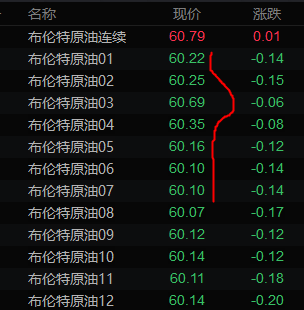
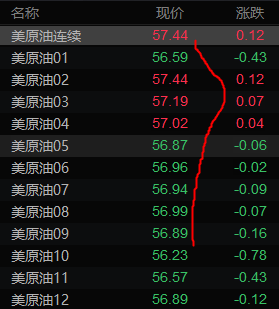
(Both Brent crude and WTI crude oil exhibited a backwardation structure with near-term premiums and far-term discounts, and only the near-term 1-3 month premium was present.)
Investors generally believe that the situation in Venezuela will not pose a threat to the global energy system, unless there are further signs of a tightening oil curve.
This view is also widely accepted by people in the energy sector. Venezuela's daily crude oil production is about 1 million barrels, accounting for only about 1% of the global supply.
Furthermore, the country's core energy infrastructure remains operational. Other energy experts point out that OPEC and its allies have suspended production increases, global crude oil inventories are at ample levels, and the oversupply situation remains the core factor dominating oil price trends.
As Norbert Rücker, head of economics and next-generation research at Julius Baer, said: "We believe that these events have a negligible impact on the risk to short-term crude oil supply, so the possibility of a sharp rebound in oil prices is extremely low... The oversupply in the oil market is expected to continue."
Another significant signal of complacency in market sentiment is reflected in volatility indicators—more precisely, the continued low volatility.
The fear index, which measures the expected volatility of the U.S. stock market over the next 30 days, currently reads at only 14.5.
Billy Leung points out that this figure is far lower than when the market was under pressure, and even further from the level when the fear index soared to over 50 during last year's tariff shock.
The fear index is a forward-looking indicator that measures market panic and uncertainty. A higher index means increased market uncertainty and pressure, while a lower index indicates that market sentiment is stabilizing.
Billy Liang said, "This data clearly shows that despite the constant stream of geopolitical news, the market is not willing to pay higher costs to hedge risks."
Ed Yedini, president of Yedini Research, holds a similar view, noting that the market is currently in a state of "waiting for the next development," hence the initial reaction is relatively mild.
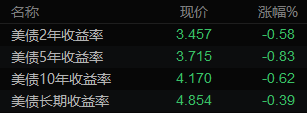
Market observers point out that if the situation in Venezuela does indeed trigger a comprehensive reassessment of risks in the market, then US Treasury yields will decline and inflation expectations will rise.
To date, US real yields have indeed begun to decline, although they remain high overall, partly due to the heavy debt burden in the US; inflation expectations have also remained stable, meaning that market expectations for economic growth and inflation have not changed substantially.
Investors are also closely watching developments in the credit market, which often provides early warnings of risk pressures than the stock market.
Billy Liang stated that "the credit market prices risk stress earlier and more accurately than the stock market. The spread between high-yield bonds and emerging market sovereign bonds is a key indicator that investors need to focus on. As for Venezuelan bonds, their reference value is very limited because these bonds are already deeply mired in default and their impact on global risk pricing is negligible."
Following a series of new highs in 2025, spot gold has become a major beneficiary of the situation in Venezuela.
Similarly, silver prices rose by more than 4%, climbing to $76.15 per ounce.
Standard Chartered's Global Chief Investment Officer, Steve Bryce, said, "This trend suggests that geopolitical risk premiums are rising instinctively." The firm expects gold prices to reach $4,800 per ounce this year.
He added, "In any case, the current situation could accelerate the upward trend in gold prices."
Adrian Ash, head of research at GoldVault, stated that gold typically experiences independent price increases when other assets underperform, but its strongest performance comes only when "people lose confidence in the existing global order." He added that Trump's return to the White House has completely shattered the underlying structure, alliances, and rules upon which Western businesses and capital previously relied.
The long-term risk facing the market is not the situation in Venezuela itself, but whether this event will change the logic and behavior patterns of political games in other parts of the world.
The outbreak of the situation in Venezuela adds another member to an already crowded list of geopolitical conflict hotspots, which already includes tensions in the Middle East and the Russia-Ukraine conflict.
Ed Yedini noted that "despite the emergence of these risk factors, they have so far not stopped the global stock market bull run," adding that these risks have indeed provided sustained momentum for the rise in precious metal prices.
Billy Leung believes that a more alarming long-term risk is whether the Venezuelan situation will set a precedent that influences game-playing behavior in other regions.
In other words, "the market's focus will gradually shift from political rhetoric to actual actions, and will be used to assess whether this event will change the decision-making logic and action patterns of other major powers."
Currently, most investors believe that the situation in Venezuela is only a tactical market shock, rather than a structural change that could overturn the logic of market operation.
Yoon Jung-in of Fibonacci Asset Management also stated, "Judging from the current price trend, this is only a temporary increase in the geopolitical risk premium, rather than a structural shift in the market pricing logic."
The market is currently weighing its options and waiting to see: Will the Venezuelan crisis become a turning point in the adjustment of political risk weighting in asset pricing, or will it simply become another news-related disturbance that fades quickly and does not significantly alter the logic of portfolio allocation?
It can be seen that the related news headlines were unsettling and began to ferment. As of now, the market has gone from being clearly restrained to reacting in all aspects, and the current market volatility is reflected in the shift from moderate hedging operations to increasing the scale of safe-haven buying.
Investors are closely watching a series of key signals, trying to distinguish between short-term news shocks and substantial economic transmission effects through price signals of investment products.
Focus on oil market structure, rather than spot prices
To determine whether the situation in Venezuela will have a systemic impact on the market, the primary criterion is not the current spot price of crude oil, but rather the overall term structure of the oil market.
Billy Liang, senior investment strategist at a global exchange-traded fund company, pointed out that "the key issue is whether the supply in the oil market will tighten. As long as Brent crude oil prices remain around $60 per barrel and the forward curve remains at a contango, it means that the market is signaling ample supply, while also indicating that investors have limited concerns about the risk of supply disruptions caused by the situation in Venezuela."
"Once the forward curve shifts to a discount structure, it indicates that the supply problem has evolved from a simple news event into a substantial risk. However, this has not yet happened."
When a crisis truly threatens crude oil supply, buyers typically rush to purchase spot crude oil, pushing near-term contract prices higher than far-term contract prices, thus forming a market structure known as backwardation. This is a typical signal of supply shortages or market panic.
Currently, WTI crude oil is in a backwardation phase, which existed before the event. Brent crude oil is also in a backwardation structure, and both show a premium for February and March contracts and a discount for longer-term contracts. This indicates that the overall term structure of crude oil has indeed been affected by Venezuela, but the impact currently appears to be only 1-3 months.
(Both Brent crude and WTI crude oil exhibited a backwardation structure with near-term premiums and far-term discounts, and only the near-term 1-3 month premium was present.)
Investors generally believe that the situation in Venezuela will not pose a threat to the global energy system, unless there are further signs of a tightening oil curve.
This view is also widely accepted by people in the energy sector. Venezuela's daily crude oil production is about 1 million barrels, accounting for only about 1% of the global supply.
Furthermore, the country's core energy infrastructure remains operational. Other energy experts point out that OPEC and its allies have suspended production increases, global crude oil inventories are at ample levels, and the oversupply situation remains the core factor dominating oil price trends.
As Norbert Rücker, head of economics and next-generation research at Julius Baer, said: "We believe that these events have a negligible impact on the risk to short-term crude oil supply, so the possibility of a sharp rebound in oil prices is extremely low... The oversupply in the oil market is expected to continue."
Volatility pricing signals
Another significant signal of complacency in market sentiment is reflected in volatility indicators—more precisely, the continued low volatility.
The fear index, which measures the expected volatility of the U.S. stock market over the next 30 days, currently reads at only 14.5.
Billy Leung points out that this figure is far lower than when the market was under pressure, and even further from the level when the fear index soared to over 50 during last year's tariff shock.
The fear index is a forward-looking indicator that measures market panic and uncertainty. A higher index means increased market uncertainty and pressure, while a lower index indicates that market sentiment is stabilizing.
Billy Liang said, "This data clearly shows that despite the constant stream of geopolitical news, the market is not willing to pay higher costs to hedge risks."
Ed Yedini, president of Yedini Research, holds a similar view, noting that the market is currently in a state of "waiting for the next development," hence the initial reaction is relatively mild.
US real yield and credit spread
Market observers point out that if the situation in Venezuela does indeed trigger a comprehensive reassessment of risks in the market, then US Treasury yields will decline and inflation expectations will rise.
To date, US real yields have indeed begun to decline, although they remain high overall, partly due to the heavy debt burden in the US; inflation expectations have also remained stable, meaning that market expectations for economic growth and inflation have not changed substantially.
Investors are also closely watching developments in the credit market, which often provides early warnings of risk pressures than the stock market.
Billy Liang stated that "the credit market prices risk stress earlier and more accurately than the stock market. The spread between high-yield bonds and emerging market sovereign bonds is a key indicator that investors need to focus on. As for Venezuelan bonds, their reference value is very limited because these bonds are already deeply mired in default and their impact on global risk pricing is negligible."
Performance of other safe-haven assets
Following a series of new highs in 2025, spot gold has become a major beneficiary of the situation in Venezuela.
Similarly, silver prices rose by more than 4%, climbing to $76.15 per ounce.
Standard Chartered's Global Chief Investment Officer, Steve Bryce, said, "This trend suggests that geopolitical risk premiums are rising instinctively." The firm expects gold prices to reach $4,800 per ounce this year.
He added, "In any case, the current situation could accelerate the upward trend in gold prices."
Adrian Ash, head of research at GoldVault, stated that gold typically experiences independent price increases when other assets underperform, but its strongest performance comes only when "people lose confidence in the existing global order." He added that Trump's return to the White House has completely shattered the underlying structure, alliances, and rules upon which Western businesses and capital previously relied.
The risk of spreading to other geopolitical conflict hotspots
The long-term risk facing the market is not the situation in Venezuela itself, but whether this event will change the logic and behavior patterns of political games in other parts of the world.
The outbreak of the situation in Venezuela adds another member to an already crowded list of geopolitical conflict hotspots, which already includes tensions in the Middle East and the Russia-Ukraine conflict.
Ed Yedini noted that "despite the emergence of these risk factors, they have so far not stopped the global stock market bull run," adding that these risks have indeed provided sustained momentum for the rise in precious metal prices.
Billy Leung believes that a more alarming long-term risk is whether the Venezuelan situation will set a precedent that influences game-playing behavior in other regions.
In other words, "the market's focus will gradually shift from political rhetoric to actual actions, and will be used to assess whether this event will change the decision-making logic and action patterns of other major powers."
Currently, most investors believe that the situation in Venezuela is only a tactical market shock, rather than a structural change that could overturn the logic of market operation.
Yoon Jung-in of Fibonacci Asset Management also stated, "Judging from the current price trend, this is only a temporary increase in the geopolitical risk premium, rather than a structural shift in the market pricing logic."
- Risk Warning and Disclaimer
- The market involves risk, and trading may not be suitable for all investors. This article is for reference only and does not constitute personal investment advice, nor does it take into account certain users’ specific investment objectives, financial situation, or other needs. Any investment decisions made based on this information are at your own risk.