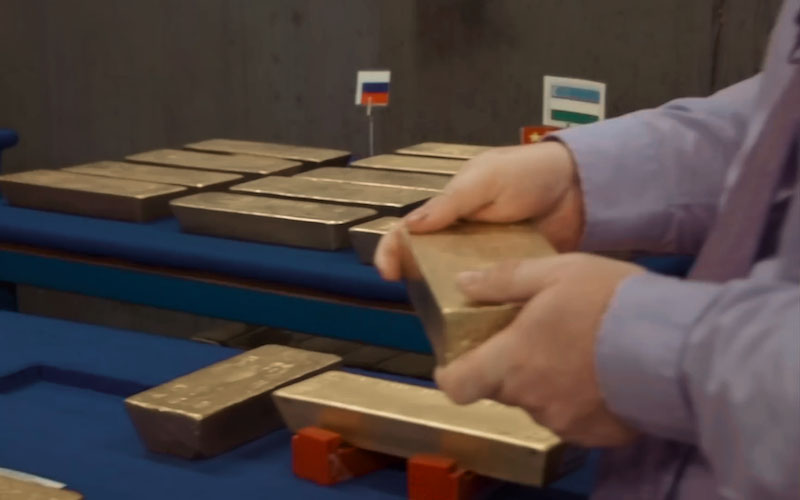
Gold and silver prices fell in tandem after hitting new highs, but a mysterious force turned the tide.
2026-01-15 18:04:01
On Thursday (January 15), during the Asian and European sessions, spot gold opened higher, then fell sharply before rebounding. At one point during the session, it formed a bearish engulfing pattern, opening higher but then falling below the previous day's closing price.
The sharp drop in silver prices and the correction in Asian stock markets have dampened risk appetite for investing in precious metals, suppressing gold prices. However, the People's Bank of China's signals of easing by lowering the discount rate and the continued recurring global geopolitical tensions have kept international spot gold (XAU/USD) prices holding steady around $4,600 per ounce.
However, the market showed a clear volatile trend – gold prices had just hit a record high of $4,643 in the previous trading day, but then fell back due to profit-taking, highlighting the intensity of the short-term battle between bulls and bears. This article summarizes some information that has recently affected gold prices.
From a trading perspective, gold, as a typical non-interest-bearing asset, is highly correlated with real interest rate trends, the Federal Reserve's interest rate policy expectations, and the US neutral interest rate.
However, the current US data does not show a clear trend, and multiple sets of data even show contradictory and conflicting results, pending further data releases.
US non-farm payroll data showed a mixed picture: the October and November figures were revised significantly downwards, while December's non-farm payrolls increased by only 50,000, lower than the expected 60,000 and the revised 56,000 in November. The relatively low increase in non-farm payrolls indicates a severe contraction in the job market. However, the unemployment rate slightly decreased from 4.6% to 4.4%, showing fewer hirings and fewer layoffs, indicating a slowdown in the contraction of the job market. The decline in the unemployment rate reduces the employment gap, which may push the neutral interest rate upwards and delay the timing of the Federal Reserve's rate cut, thus being bearish for gold.
Regarding inflation data, the US core consumer price index (CPI, excluding food and energy) rose 0.2% month-on-month in December 2025, lower than expected, and remained at a four-year low of 2.6% year-on-year, providing a clear signal of easing inflation. At the same time, the overall CPI rose 0.3% month-on-month and remained at 2.7% year-on-year, both in line with market expectations. This data cleared a major obstacle to interest rate cuts, but the decline in inflation expectations is beneficial to the rise in real interest rates and negative for gold.
The US November Producer Price Index (PPI) and retail sales data both exceeded market expectations. Retail sales rose to $735.9 billion, a 0.6% increase month-over-month, reversing the contraction in October. The PPI growth of 3%, exceeding the market expectation of 2.7%, is beneficial to the continued rebound of the US dollar index. However, the better-than-expected PPI and the CPI meeting expectations suggest that inflation may be rising, which contradicts the conclusion drawn from the CPI alone.
Trump stated that reports indicate a gradual decrease in incidents related to the Iranian crackdown, a statement that has somewhat eased previously escalated geopolitical tensions.
As a traditional safe-haven asset, gold's safe-haven demand has weakened, further exacerbating downward pressure on prices. However, Trump's emphasis on not ruling out the possibility of US military action has left room for a rebound in geopolitical risks and limited the downside potential of gold prices.
Other geopolitical developments also need to be monitored: HRANA, a US-based organization, reported that the number of people seriously involved in the Iranian protests has reached 2,571. Trump called on the Iranian people to continue their protests and promised aid. At the same time, Trump announced a 25% tariff on goods from countries that trade with Iran. Although this has not triggered an escalation of the geopolitical situation in the short term, it still lays the groundwork for long-term demand for gold as a safe haven.
The market also needs to pay attention to the potential risks posed by the Federal Reserve's independence, which may become a new support point for the safe-haven demand for gold.
Federal Reserve Chairman Jerome Powell publicly criticized the Trump administration's decision to subpoena him, calling it essentially a coercion of the Fed into implementing loose monetary policy. Trump responded on Wednesday, saying that while the Justice Department is conducting a criminal investigation into Powell, there are currently no plans to fire him, but a final decision is "too early."
If market concerns about the independence of the Federal Reserve's policies continue to intensify, safe-haven demand for precious metals, including gold, is expected to rise further, providing support for gold prices.
The dollar's performance is also a key variable affecting gold trading. The dollar index (DXY), which measures the dollar against six major currencies, resumed its upward trend after a slight pullback in the previous trading day, and was trading around 99.17 at the time of writing.
Since gold is priced in US dollars, a stronger dollar directly weakens the purchasing power of holders of non-US dollar currencies, suppresses foreign exchange demand for gold, and puts significant downward pressure on gold prices.
The Federal Reserve's Beige Book showed that economic activity in most parts of the United States has been recovering at a "moderate to moderate pace" since mid-November, an improvement from the weak performance reported in the previous three reports, which is also conducive to the continued rebound of the US dollar index.
Yesterday's article already warned of the synchronized decline in gold, silver, and equity markets, and today precious metals indeed began to correct.
Morgan Stanley analysts postponed their expectations for a Federal Reserve rate cut from January and April to June and September, following Friday's non-farm payrolls report. Minneapolis Fed President Neal Kashkari stated that the U.S. economy is performing robustly, the tariff transmission effect is lower than expected, and while inflation remains high, it is trending downwards. The Fed's Beige Book showed that economic activity in most parts of the U.S. has been recovering at a "moderate to moderate pace" since mid-November, an improvement from the weak performance in the previous three reports.
The positive fundamentals of the US economy are expected to delay the Fed's rate cut, while the decline in silver and Asian stock markets has affected the continued rise of gold. However, geopolitical uncertainties and concerns about the Fed's independence, coupled with the easing policies introduced by the People's Bank of China, will likely keep gold strong in the near term.
Going forward, we should pay attention to the correlation between geopolitical developments and the surge in industrial use and the equity market. If the equity market experiences a collective rebound, gold and silver are still highly likely to reach new highs.
From a technical perspective, spot gold rebounded after testing the 5-day moving average and the upward channel. As long as these two support levels are not broken, it is expected to continue rising along the upward channel and moving averages.
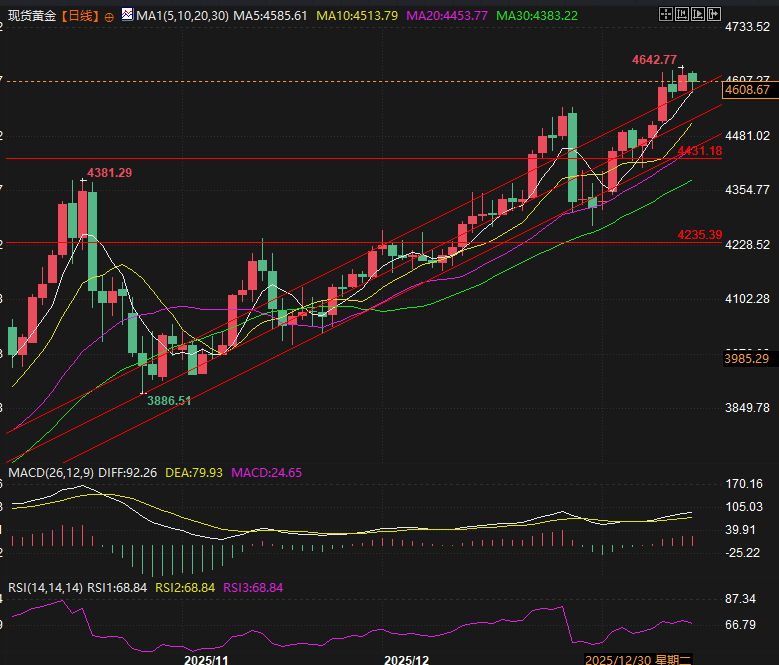
(Spot gold daily chart)
In the intraday chart, gold is oscillating around two trading ranges.
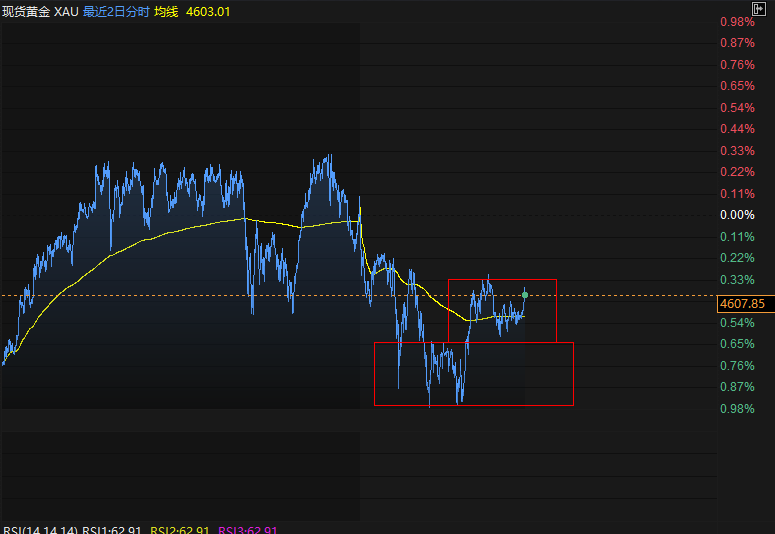
(Spot gold intraday chart, source: EasyForex)
At 18:01 Beijing time, spot gold was trading at $4612.73 per ounce.
The sharp drop in silver prices and the correction in Asian stock markets have dampened risk appetite for investing in precious metals, suppressing gold prices. However, the People's Bank of China's signals of easing by lowering the discount rate and the continued recurring global geopolitical tensions have kept international spot gold (XAU/USD) prices holding steady around $4,600 per ounce.
However, the market showed a clear volatile trend – gold prices had just hit a record high of $4,643 in the previous trading day, but then fell back due to profit-taking, highlighting the intensity of the short-term battle between bulls and bears. This article summarizes some information that has recently affected gold prices.
Mixed US economic data and a slight bearish factor for gold: Extended interest rate cuts slightly negative for gold.
From a trading perspective, gold, as a typical non-interest-bearing asset, is highly correlated with real interest rate trends, the Federal Reserve's interest rate policy expectations, and the US neutral interest rate.
However, the current US data does not show a clear trend, and multiple sets of data even show contradictory and conflicting results, pending further data releases.
US non-farm payroll data showed a mixed picture: the October and November figures were revised significantly downwards, while December's non-farm payrolls increased by only 50,000, lower than the expected 60,000 and the revised 56,000 in November. The relatively low increase in non-farm payrolls indicates a severe contraction in the job market. However, the unemployment rate slightly decreased from 4.6% to 4.4%, showing fewer hirings and fewer layoffs, indicating a slowdown in the contraction of the job market. The decline in the unemployment rate reduces the employment gap, which may push the neutral interest rate upwards and delay the timing of the Federal Reserve's rate cut, thus being bearish for gold.
Regarding inflation data, the US core consumer price index (CPI, excluding food and energy) rose 0.2% month-on-month in December 2025, lower than expected, and remained at a four-year low of 2.6% year-on-year, providing a clear signal of easing inflation. At the same time, the overall CPI rose 0.3% month-on-month and remained at 2.7% year-on-year, both in line with market expectations. This data cleared a major obstacle to interest rate cuts, but the decline in inflation expectations is beneficial to the rise in real interest rates and negative for gold.
The US November Producer Price Index (PPI) and retail sales data both exceeded market expectations. Retail sales rose to $735.9 billion, a 0.6% increase month-over-month, reversing the contraction in October. The PPI growth of 3%, exceeding the market expectation of 2.7%, is beneficial to the continued rebound of the US dollar index. However, the better-than-expected PPI and the CPI meeting expectations suggest that inflation may be rising, which contradicts the conclusion drawn from the CPI alone.
De-escalating geopolitical tensions reduce demand for safe-haven assets, limiting downside risks associated with military action.
Trump stated that reports indicate a gradual decrease in incidents related to the Iranian crackdown, a statement that has somewhat eased previously escalated geopolitical tensions.
As a traditional safe-haven asset, gold's safe-haven demand has weakened, further exacerbating downward pressure on prices. However, Trump's emphasis on not ruling out the possibility of US military action has left room for a rebound in geopolitical risks and limited the downside potential of gold prices.
Other geopolitical developments also need to be monitored: HRANA, a US-based organization, reported that the number of people seriously involved in the Iranian protests has reached 2,571. Trump called on the Iranian people to continue their protests and promised aid. At the same time, Trump announced a 25% tariff on goods from countries that trade with Iran. Although this has not triggered an escalation of the geopolitical situation in the short term, it still lays the groundwork for long-term demand for gold as a safe haven.
The escalating controversy surrounding the Federal Reserve's independence may become a new safe-haven asset for gold.
The market also needs to pay attention to the potential risks posed by the Federal Reserve's independence, which may become a new support point for the safe-haven demand for gold.
Federal Reserve Chairman Jerome Powell publicly criticized the Trump administration's decision to subpoena him, calling it essentially a coercion of the Fed into implementing loose monetary policy. Trump responded on Wednesday, saying that while the Justice Department is conducting a criminal investigation into Powell, there are currently no plans to fire him, but a final decision is "too early."
If market concerns about the independence of the Federal Reserve's policies continue to intensify, safe-haven demand for precious metals, including gold, is expected to rise further, providing support for gold prices.
The US dollar index resumed its upward trend, suppressing demand for dollar-denominated gold.
The dollar's performance is also a key variable affecting gold trading. The dollar index (DXY), which measures the dollar against six major currencies, resumed its upward trend after a slight pullback in the previous trading day, and was trading around 99.17 at the time of writing.
Since gold is priced in US dollars, a stronger dollar directly weakens the purchasing power of holders of non-US dollar currencies, suppresses foreign exchange demand for gold, and puts significant downward pressure on gold prices.
The Federal Reserve's Beige Book showed that economic activity in most parts of the United States has been recovering at a "moderate to moderate pace" since mid-November, an improvement from the weak performance reported in the previous three reports, which is also conducive to the continued rebound of the US dollar index.
Summary and Technical Analysis:
Yesterday's article already warned of the synchronized decline in gold, silver, and equity markets, and today precious metals indeed began to correct.
Morgan Stanley analysts postponed their expectations for a Federal Reserve rate cut from January and April to June and September, following Friday's non-farm payrolls report. Minneapolis Fed President Neal Kashkari stated that the U.S. economy is performing robustly, the tariff transmission effect is lower than expected, and while inflation remains high, it is trending downwards. The Fed's Beige Book showed that economic activity in most parts of the U.S. has been recovering at a "moderate to moderate pace" since mid-November, an improvement from the weak performance in the previous three reports.
The positive fundamentals of the US economy are expected to delay the Fed's rate cut, while the decline in silver and Asian stock markets has affected the continued rise of gold. However, geopolitical uncertainties and concerns about the Fed's independence, coupled with the easing policies introduced by the People's Bank of China, will likely keep gold strong in the near term.
Going forward, we should pay attention to the correlation between geopolitical developments and the surge in industrial use and the equity market. If the equity market experiences a collective rebound, gold and silver are still highly likely to reach new highs.
From a technical perspective, spot gold rebounded after testing the 5-day moving average and the upward channel. As long as these two support levels are not broken, it is expected to continue rising along the upward channel and moving averages.
(Spot gold daily chart)
In the intraday chart, gold is oscillating around two trading ranges.
(Spot gold intraday chart, source: EasyForex)
At 18:01 Beijing time, spot gold was trading at $4612.73 per ounce.
- Risk Warning and Disclaimer
- The market involves risk, and trading may not be suitable for all investors. This article is for reference only and does not constitute personal investment advice, nor does it take into account certain users’ specific investment objectives, financial situation, or other needs. Any investment decisions made based on this information are at your own risk.