Is silver about to face its "most brutal week"?
2026-02-09 19:58:33
On Monday, February 9th, spot silver traded around $79.50 during the European session. After a rapid decline from its previous high of $121.487, market sentiment gradually shifted from panic to a wait-and-see approach, and prices entered a narrow trading range. However, this apparent calm does not mean the risks have passed; rather, it resembles the calm before the storm. The current price action reflects a significant divergence between bulls and bears, with funds failing to reach a clear consensus. Although silver has paused its sharp decline, neither the technical nor fundamental aspects have yet released reversal signals. Analysts believe that the consolidation is essentially the market awaiting a new pricing basis, and this opportunity is likely to erupt in the coming week.
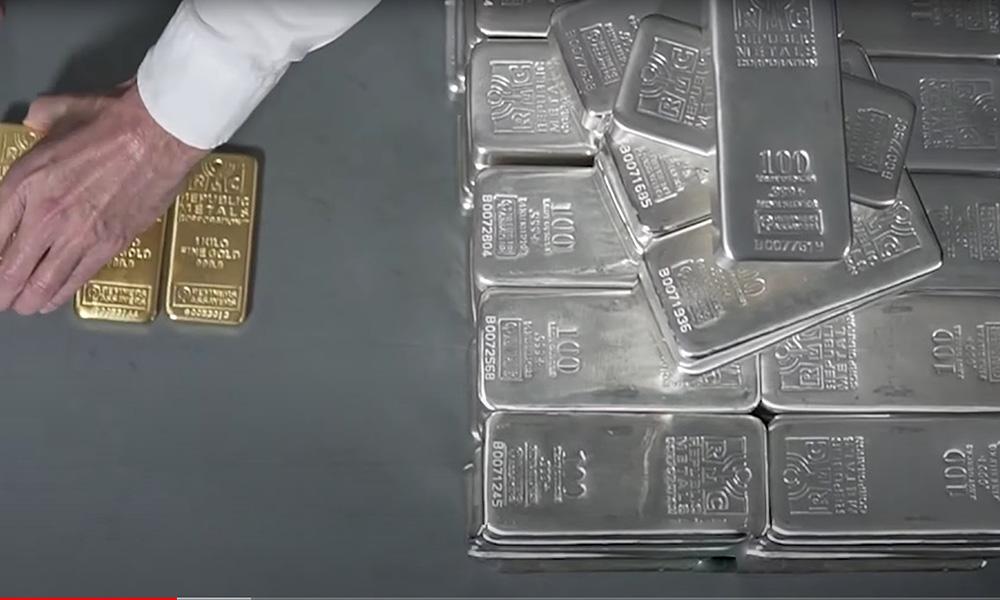
Unlike other commodities, silver, as a precious metal, possesses both safe-haven attributes and is highly sensitive to changes in real interest rates. Due to its relatively small market size, capital inflows and outflows are more likely to trigger sharp fluctuations, resulting in more rapid price increases and deeper price drops than gold. Currently, the market widely expects the Federal Reserve to begin a rate-cutting cycle this year, with current pricing in a cumulative rate cut of 54 basis points. This expectation itself supports silver, as lower interest rates reduce real yields and increase the attractiveness of holding precious metals. However, this expectation is not insurmountable. If economic data is strong, the market may quickly shift to a hawkish stance, significantly weakening the rate-cutting expectation and triggering a new round of silver selling.
This week will see a flurry of US macroeconomic data releases, with the non-farm payrolls report and the Consumer Price Index (CPI) being the most closely watched. These two data points will collectively shape market expectations regarding the Federal Reserve's monetary policy path and will be a crucial turning point for whether silver can stabilize. If the non-farm payrolls data shows a continued strong job market, indicating economic resilience, the Fed will not need to rush to cut interest rates in the short term. This will push up expectations for the US dollar and US Treasury yields, significantly suppressing silver prices. In this scenario, the market may continue its "sell on rallies" strategy, with prices potentially retesting previous lows, and volatility also increasing.
Conversely, weak non-farm payroll data, coupled with CPI figures indicating further cooling of inflation, could strengthen market expectations for the Federal Reserve to cut interest rates earlier or faster. Some Fed officials have recently expressed concerns about labor market stability; if data confirms this trend, precious metals may benefit from a "macro tailwind." Silver, due to its higher elasticity, is expected to be the first to initiate a recovery and attempt to break through the 94.000 level, a key resistance zone. At that point, the upper limit of the current trading range may become a new starting point for an upward move, initiating a new round of valuation repair.
In addition, other data this week should not be overlooked. The US December retail sales data, to be released tomorrow, reflects the strength of consumer demand. If consumption remains robust, it will alleviate recession concerns and reduce the need for rapid easing. Meanwhile, the employment cost index is closely related to the stickiness of service inflation. If wage growth remains high, the path of inflation decline will be more tortuous, putting continued valuation pressure on precious metals. Thursday's initial jobless claims data can serve as high-frequency evidence for the non-farm payrolls report. If it aligns with the main data, it will further accelerate the market's adjustment of interest rate expectations.
From a technical chart perspective, spot silver has been fluctuating around $79 since its pullback from its highs, indicating some support in this area. The $94.00 level, however, is a clear resistance zone, where multiple rebounds have been met with resistance. Only when the price can effectively hold above this level and continue to rise can a true recovery be confirmed.
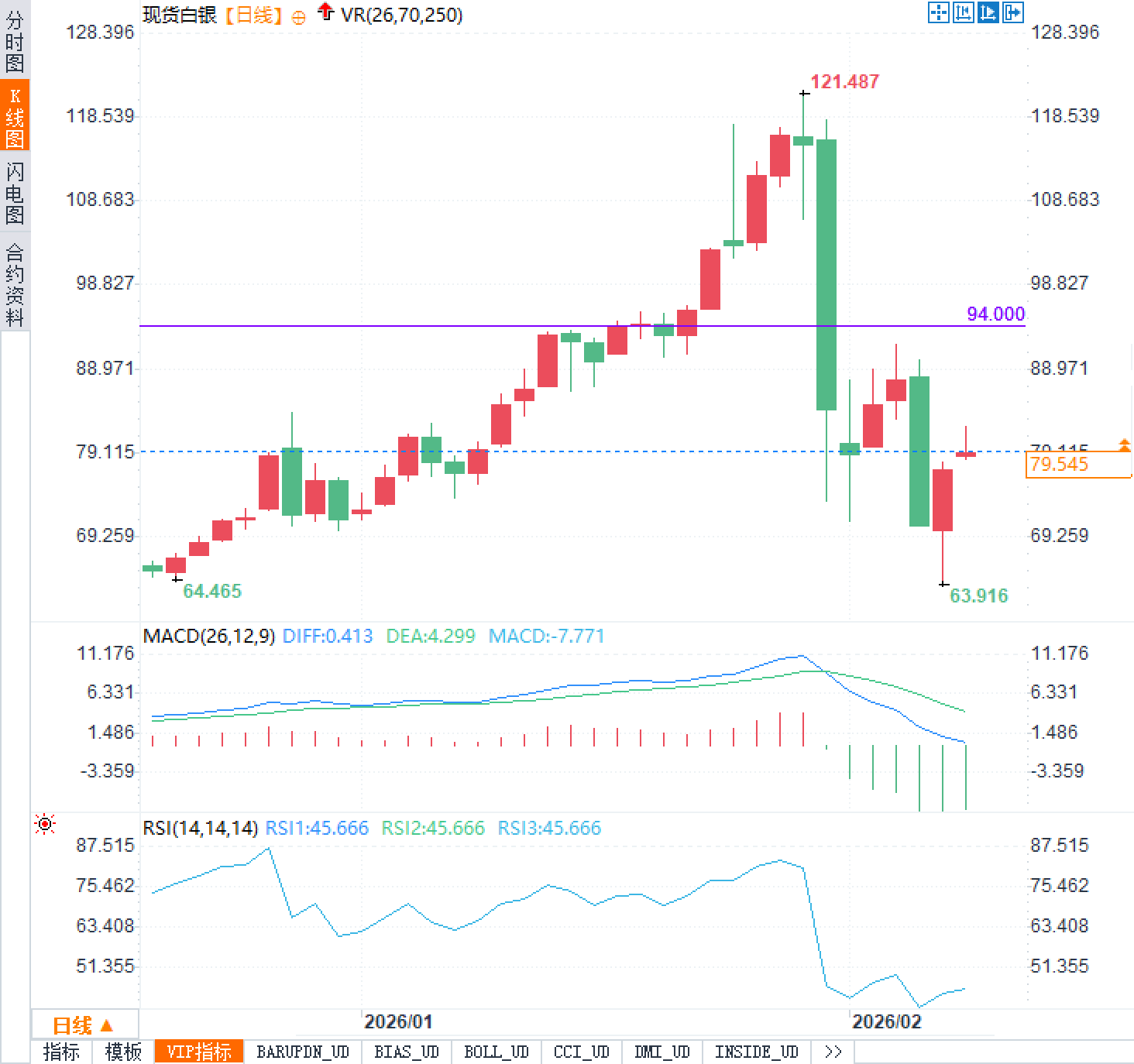
Current technical indicators also suggest hesitation. The MACD remains weak, with momentum yet to fully recover; the RSI hovers around 45.666, close to the neutral-to-weak range, indicating a lack of clear trend momentum in the market. This means that a reversal cannot be achieved simply by time digesting the situation; an external catalyst is needed to break the deadlock—and that catalyst is the upcoming core economic data. Once the data significantly shifts interest rate expectations, whether towards a dovish or hawkish stance, it could trigger volatility and force prices to choose a direction.
In conclusion, judging whether "the worst is over" should not be based solely on emotions or intuition, but rather on the market's repricing process regarding the Fed's policy path. The current expectation of a 54 basis point rate cut remains highly uncertain. If subsequent employment and inflation data both strengthen, this expectation is likely to be significantly reversed, and silver may face a new round of concentrated pullback. Conversely, if the data combination is weak and dovish, the prospect of further easing will be more credible, and silver has the opportunity to transform its current consolidation into a substantial rebound.
Unlike other commodities, silver, as a precious metal, possesses both safe-haven attributes and is highly sensitive to changes in real interest rates. Due to its relatively small market size, capital inflows and outflows are more likely to trigger sharp fluctuations, resulting in more rapid price increases and deeper price drops than gold. Currently, the market widely expects the Federal Reserve to begin a rate-cutting cycle this year, with current pricing in a cumulative rate cut of 54 basis points. This expectation itself supports silver, as lower interest rates reduce real yields and increase the attractiveness of holding precious metals. However, this expectation is not insurmountable. If economic data is strong, the market may quickly shift to a hawkish stance, significantly weakening the rate-cutting expectation and triggering a new round of silver selling.
Non-farm payrolls vs. CPI: A data war that will determine the fate of silver
This week will see a flurry of US macroeconomic data releases, with the non-farm payrolls report and the Consumer Price Index (CPI) being the most closely watched. These two data points will collectively shape market expectations regarding the Federal Reserve's monetary policy path and will be a crucial turning point for whether silver can stabilize. If the non-farm payrolls data shows a continued strong job market, indicating economic resilience, the Fed will not need to rush to cut interest rates in the short term. This will push up expectations for the US dollar and US Treasury yields, significantly suppressing silver prices. In this scenario, the market may continue its "sell on rallies" strategy, with prices potentially retesting previous lows, and volatility also increasing.
Conversely, weak non-farm payroll data, coupled with CPI figures indicating further cooling of inflation, could strengthen market expectations for the Federal Reserve to cut interest rates earlier or faster. Some Fed officials have recently expressed concerns about labor market stability; if data confirms this trend, precious metals may benefit from a "macro tailwind." Silver, due to its higher elasticity, is expected to be the first to initiate a recovery and attempt to break through the 94.000 level, a key resistance zone. At that point, the upper limit of the current trading range may become a new starting point for an upward move, initiating a new round of valuation repair.
In addition, other data this week should not be overlooked. The US December retail sales data, to be released tomorrow, reflects the strength of consumer demand. If consumption remains robust, it will alleviate recession concerns and reduce the need for rapid easing. Meanwhile, the employment cost index is closely related to the stickiness of service inflation. If wage growth remains high, the path of inflation decline will be more tortuous, putting continued valuation pressure on precious metals. Thursday's initial jobless claims data can serve as high-frequency evidence for the non-farm payrolls report. If it aligns with the main data, it will further accelerate the market's adjustment of interest rate expectations.
The technological structure needs a breakthrough: the choice of direction is just one step away.
From a technical chart perspective, spot silver has been fluctuating around $79 since its pullback from its highs, indicating some support in this area. The $94.00 level, however, is a clear resistance zone, where multiple rebounds have been met with resistance. Only when the price can effectively hold above this level and continue to rise can a true recovery be confirmed.
Current technical indicators also suggest hesitation. The MACD remains weak, with momentum yet to fully recover; the RSI hovers around 45.666, close to the neutral-to-weak range, indicating a lack of clear trend momentum in the market. This means that a reversal cannot be achieved simply by time digesting the situation; an external catalyst is needed to break the deadlock—and that catalyst is the upcoming core economic data. Once the data significantly shifts interest rate expectations, whether towards a dovish or hawkish stance, it could trigger volatility and force prices to choose a direction.
In conclusion, judging whether "the worst is over" should not be based solely on emotions or intuition, but rather on the market's repricing process regarding the Fed's policy path. The current expectation of a 54 basis point rate cut remains highly uncertain. If subsequent employment and inflation data both strengthen, this expectation is likely to be significantly reversed, and silver may face a new round of concentrated pullback. Conversely, if the data combination is weak and dovish, the prospect of further easing will be more credible, and silver has the opportunity to transform its current consolidation into a substantial rebound.
- Risk Warning and Disclaimer
- The market involves risk, and trading may not be suitable for all investors. This article is for reference only and does not constitute personal investment advice, nor does it take into account certain users’ specific investment objectives, financial situation, or other needs. Any investment decisions made based on this information are at your own risk.