The Bank of Canada has issued a warning! The threat to the Federal Reserve's independence has become a core variable in global turmoil.
2026-02-12 11:10:18
In its summary of the Governance Committee's deliberations prior to the January 28 monetary policy decision, released Wednesday (February 11), the Bank of Canada unusually and explicitly listed the threat to the Federal Reserve's independence as one of the core factors exacerbating global economic turmoil and uncertainty. This statement is not only one of the Bank of Canada's most direct comments on external risks in recent years, but also reflects the structural challenges facing the current international monetary policy environment.
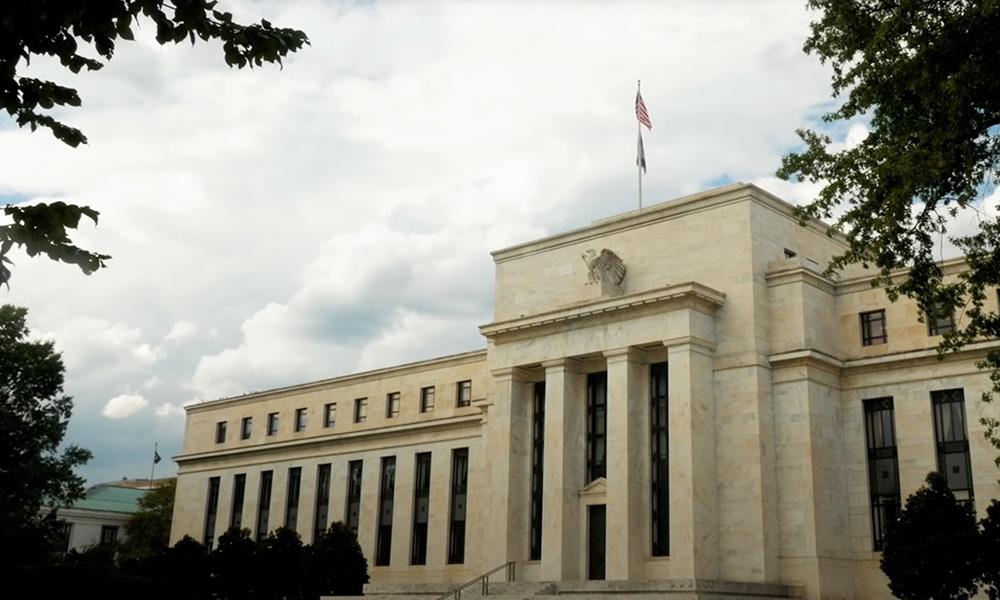
As the issuer of the global reserve currency and the anchor of the financial system, the Federal Reserve's independence has long been considered the cornerstone of modern central bank institutions. It ensures that monetary policy is based on economic data rather than short-term political pressure, thereby maintaining low and stable inflation expectations and market confidence. However, recent political developments in the United States have significantly altered this landscape:
US President Trump has repeatedly criticized current Federal Reserve Chairman Jerome Powell publicly and has continued to pressure him to cut interest rates significantly. The Trump administration has even launched an investigation into Powell and other Fed officials through the Department of Justice, raising serious concerns in the market about "political interference in the central bank."
On January 30, 2026, Trump officially nominated former Federal Reserve Governor Kevin Warsh to succeed Jerome Powell, whose term was set to end in May. While Warsh has extensive experience in financial markets, some observers have viewed his past stances as indicating a preference for aligning with the administration's accommodative policy approach.
These events, combined, have shaken international confidence in the Federal Reserve's tradition of "depoliticization." The Bank of Canada's Governance Committee stated bluntly in its minutes: " Recent geopolitical events (including developments in Venezuela, Iran, and Greenland), coupled with various threats to the Federal Reserve's independence, have significantly increased global volatility and triggered a new wave of uncertainty. "
This assessment is not isolated. Threatening the independence of the Federal Reserve could have multiple ripple effects:
Risk of inflation expectations becoming unanchored : If the market believes that the Fed's future decisions will be more driven by the political cycle than by data, long-term inflation expectations may rise, pushing up real interest rates and borrowing costs.
Dollar credit and disruptions to global capital flows : Damage to the Federal Reserve's credibility could weaken the dollar's status as a safe-haven asset, triggering capital outflows or reallocations that could impact emerging markets and trading partners.
The transmission of cross-border monetary policy is becoming more complicated : other central banks (such as the Bank of Canada and the European Central Bank) need to take into account the "spillover of uncertainty in the Fed's policies" when formulating policies, which in itself increases the difficulty of decision-making.
The Bank of Canada emphasized that U.S. trade policy is increasingly serving geopolitical objectives rather than purely economic logic . This "weaponization" trend makes the policy path more unpredictable.
Global supply chains face repeated disruptions, potentially leading to both supply shocks (pushing up inflation) and shrinking demand (dragging down growth). The upcoming USMCA review is seen as a significant downside risk to Canadian economic growth. If the US pushes for broader tariffs or other restrictions, it will directly impact Canada's export-oriented economy.
Given this "unprecedented uncertainty," the governance committee believes that the risk portfolio lacks historical comparability, making it difficult to assign clear probability weights. They unanimously agree that the timing and direction of the next round of policy rate adjustments are difficult to predict .
On January 28, the Bank of Canada decided to keep its overnight target rate at 2.25% (on the accommodative side of the neutral rate range), marking the first time it has remained unchanged for several months.
The minutes explicitly stated: "The committee members agreed that sufficient flexibility should be maintained when formulating monetary policy." This means that the central bank is unwilling to lock in the path too early, but rather retains the space to react quickly based on new information.
Bank of Canada Governor Tiff Macklem publicly welcomed Warsh's nomination after it was announced, stating that he had "a profound understanding of financial markets and the international monetary system." However, this statement was more of a diplomatic courtesy; the substantive tone of the minutes revealed a genuine concern about the risks to the Federal Reserve's independence.
This Bank of Canada memo marks a shift in concerns about the Federal Reserve's independence from market rumors to a significant risk factor in the official assessments of major central banks. It serves as a reminder to the world that in a highly interconnected financial system, the institutional stability of a central bank is no longer its "domestic affair," but rather a public good affecting global monetary conditions and economic stability .
In the current environment, the Bank of Canada is adopting a "wait-and-see" approach—maintaining stable interest rates while preserving maximum room for maneuver—to address potential shocks. This strategy helps avoid policy miscalculations in the short term, but it also means that if uncertainties surrounding the Federal Reserve continue to escalate, or if there are significant negative developments in the USMCA negotiations, Canada's monetary policy path may face greater volatility. Global investors and businesses need to pay close attention to the dynamic evolution of this "Federal Reserve risk spillover."
This Bank of Canada memo is not a critique of the Federal Reserve's policies, but rather a farewell tribute to the institutional foundations of the dollar era. With the Fed's independence faltering, the dollar's premium is no longer a given.
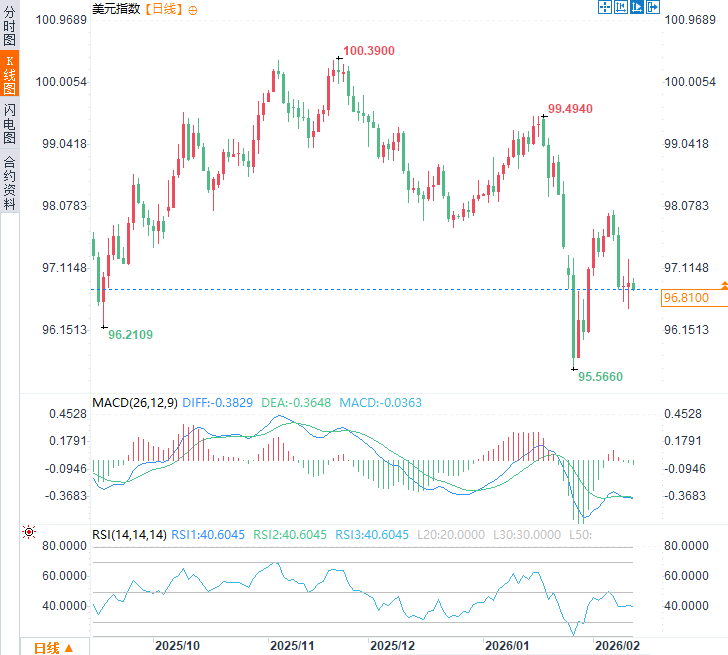
(US Dollar Index Daily Chart, Source: FX678)
At 11:10 Beijing time, the US dollar index is currently at 96.80.
The specific background and global spillover effects of the threat to the independence of the Federal Reserve
As the issuer of the global reserve currency and the anchor of the financial system, the Federal Reserve's independence has long been considered the cornerstone of modern central bank institutions. It ensures that monetary policy is based on economic data rather than short-term political pressure, thereby maintaining low and stable inflation expectations and market confidence. However, recent political developments in the United States have significantly altered this landscape:
US President Trump has repeatedly criticized current Federal Reserve Chairman Jerome Powell publicly and has continued to pressure him to cut interest rates significantly. The Trump administration has even launched an investigation into Powell and other Fed officials through the Department of Justice, raising serious concerns in the market about "political interference in the central bank."
On January 30, 2026, Trump officially nominated former Federal Reserve Governor Kevin Warsh to succeed Jerome Powell, whose term was set to end in May. While Warsh has extensive experience in financial markets, some observers have viewed his past stances as indicating a preference for aligning with the administration's accommodative policy approach.
These events, combined, have shaken international confidence in the Federal Reserve's tradition of "depoliticization." The Bank of Canada's Governance Committee stated bluntly in its minutes: " Recent geopolitical events (including developments in Venezuela, Iran, and Greenland), coupled with various threats to the Federal Reserve's independence, have significantly increased global volatility and triggered a new wave of uncertainty. "
This assessment is not isolated. Threatening the independence of the Federal Reserve could have multiple ripple effects:
Risk of inflation expectations becoming unanchored : If the market believes that the Fed's future decisions will be more driven by the political cycle than by data, long-term inflation expectations may rise, pushing up real interest rates and borrowing costs.
Dollar credit and disruptions to global capital flows : Damage to the Federal Reserve's credibility could weaken the dollar's status as a safe-haven asset, triggering capital outflows or reallocations that could impact emerging markets and trading partners.
The transmission of cross-border monetary policy is becoming more complicated : other central banks (such as the Bank of Canada and the European Central Bank) need to take into account the "spillover of uncertainty in the Fed's policies" when formulating policies, which in itself increases the difficulty of decision-making.
The geopoliticization of US trade policy amplifies uncertainty.
The Bank of Canada emphasized that U.S. trade policy is increasingly serving geopolitical objectives rather than purely economic logic . This "weaponization" trend makes the policy path more unpredictable.
Global supply chains face repeated disruptions, potentially leading to both supply shocks (pushing up inflation) and shrinking demand (dragging down growth). The upcoming USMCA review is seen as a significant downside risk to Canadian economic growth. If the US pushes for broader tariffs or other restrictions, it will directly impact Canada's export-oriented economy.
Given this "unprecedented uncertainty," the governance committee believes that the risk portfolio lacks historical comparability, making it difficult to assign clear probability weights. They unanimously agree that the timing and direction of the next round of policy rate adjustments are difficult to predict .
The Bank of Canada's response: maintaining an option-oriented approach and a cautious wait-and-see attitude.
On January 28, the Bank of Canada decided to keep its overnight target rate at 2.25% (on the accommodative side of the neutral rate range), marking the first time it has remained unchanged for several months.
The minutes explicitly stated: "The committee members agreed that sufficient flexibility should be maintained when formulating monetary policy." This means that the central bank is unwilling to lock in the path too early, but rather retains the space to react quickly based on new information.
Bank of Canada Governor Tiff Macklem publicly welcomed Warsh's nomination after it was announced, stating that he had "a profound understanding of financial markets and the international monetary system." However, this statement was more of a diplomatic courtesy; the substantive tone of the minutes revealed a genuine concern about the risks to the Federal Reserve's independence.
The independence of the Federal Reserve has become a common risk for central banks around the world.
This Bank of Canada memo marks a shift in concerns about the Federal Reserve's independence from market rumors to a significant risk factor in the official assessments of major central banks. It serves as a reminder to the world that in a highly interconnected financial system, the institutional stability of a central bank is no longer its "domestic affair," but rather a public good affecting global monetary conditions and economic stability .
In the current environment, the Bank of Canada is adopting a "wait-and-see" approach—maintaining stable interest rates while preserving maximum room for maneuver—to address potential shocks. This strategy helps avoid policy miscalculations in the short term, but it also means that if uncertainties surrounding the Federal Reserve continue to escalate, or if there are significant negative developments in the USMCA negotiations, Canada's monetary policy path may face greater volatility. Global investors and businesses need to pay close attention to the dynamic evolution of this "Federal Reserve risk spillover."
This Bank of Canada memo is not a critique of the Federal Reserve's policies, but rather a farewell tribute to the institutional foundations of the dollar era. With the Fed's independence faltering, the dollar's premium is no longer a given.
(US Dollar Index Daily Chart, Source: FX678)
At 11:10 Beijing time, the US dollar index is currently at 96.80.
- Risk Warning and Disclaimer
- The market involves risk, and trading may not be suitable for all investors. This article is for reference only and does not constitute personal investment advice, nor does it take into account certain users’ specific investment objectives, financial situation, or other needs. Any investment decisions made based on this information are at your own risk.