Foreign Exchange Market Analysis: Fed Policy Dominates, Dollar, Euro, and Yen Show Divergent Trends
2026-02-17 20:56:09
The global foreign exchange market is currently in a state of fluctuation and observation, with the core logic revolving around the Federal Reserve's monetary policy path, the performance of major economic data, and market risk appetite. While the US dollar faces pressure from rising expectations of interest rate cuts, it remains strong in the short term; the euro is consolidating within a narrow range, supported by multiple positive factors in the medium to long term; the Japanese yen has shown a trend of initial decline followed by appreciation, with concerns about intervention and central bank independence being key influencing factors. The core characteristics and future outlook for the three major currencies are as follows:
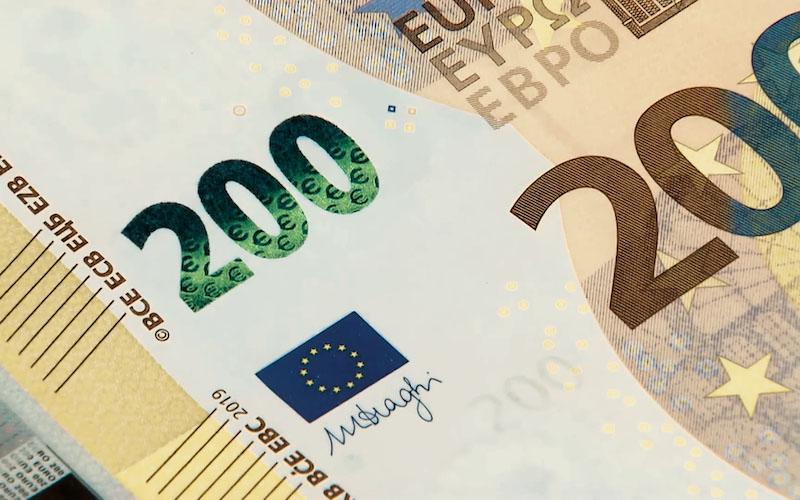
I. The US Dollar Remains Stable: A Triple Interplay of Interest Rate Cut Expectations, Economic Resilience, and Oil Prices
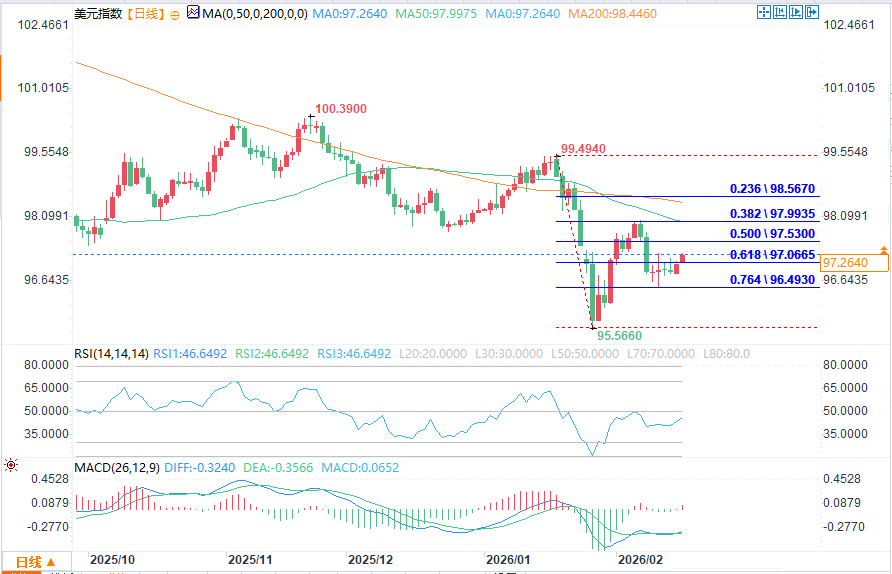
(US Dollar Index Daily Chart Source: FX678)
The foreign exchange market opened calmly this week due to the US President's Day holiday, with traders adopting a wait-and-see attitude, awaiting key data such as the Federal Reserve FOMC meeting minutes and the preliminary US GDP figures. The US dollar generally maintained a stable consolidation trend. As of approximately 8:30 PM on February 17th, the US dollar continued its rebound against most currencies, with the USD/JPY pair trading at 153.14 (a slight decrease of 0.37). The euro and pound sterling weakened slightly against the dollar, echoing the dollar's stable performance.
The US dollar's stability is supported by three factors and a complex interplay of factors: First, oil prices provide support. Iran's military exercises in the Strait of Hormuz have boosted oil prices, and the dollar's short-term undervaluation has further strengthened this support. Furthermore, the probability of a US strike against Iran was close to 40% by the end of March, and an escalation of the situation could further reinforce the dollar's support from oil prices. Second, divergent economic data has contributed to the dollar's rebound. Strong US non-farm payroll data in January (130,000 new jobs, 4.3% unemployment rate) boosted the dollar's rebound, but a decline in CPI (from 2.7% to 2.4%) increased bets on interest rate cuts, creating a balance between the two. Third, safe-haven demand has increased the dollar's safe-haven appeal, with the US stock market's "February chill" and AI-related anxieties enhancing its safe-haven appeal.
On the policy front, the market expects the Federal Reserve to cut interest rates by 65 basis points by the end of 2026 (down from the initial forecast), reflecting acceptance of its decision to "maintain high interest rates for longer." Today's New York manufacturing index and San Francisco Fed President Daly's speech will influence the short-term trend of the US dollar. The direction of the dollar this week remains unclear, and the market may turn to domestic data from G10 countries.
II. Euro consolidates in a narrow range: Supported by positive ZEW data, but downward pressure remains in the short term.
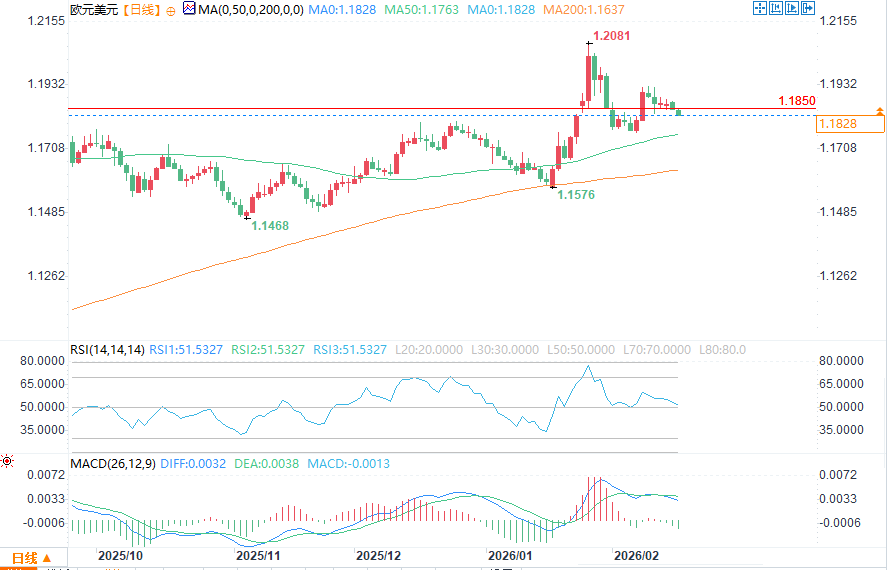
(EUR/USD daily chart source: FX678)
Against the backdrop of a stable US dollar, the euro is currently trading within a narrow range against the dollar, at approximately 8:30 PM on February 17th at 1.1830, down 0.0023 from the previous trading day, with a fluctuation range of only 0.1688%. This narrow sideways movement has persisted for several consecutive trading days, with market caution ahead of key data releases further exacerbating the consolidation. Even the European Central Bank's announcement of its readiness to provide liquidity to other central banks to prevent money market tensions (including increased repurchase operations starting in the third quarter) did not trigger a significant reaction in the euro pair. The core reason remains the market's wait-and-see attitude regarding the Federal Reserve's policy path.
Both ING Group and European Central Bank President Christine Lagarde are optimistic about the euro. ING points out that the ECB's expansion of EUREP repurchase operations, while seen as a means of maintaining financial stability, is actually another step towards a truly "global euro," meaning the euro's use will extend beyond Europe, and its role in trade, reserves, and international debt markets will be strengthened. Furthermore, this may indicate a more lenient stance from the ECB towards a stronger euro. Lagarde believes that the euro's enhanced global status will benefit it, and the current flow of funds from the US to Europe, coupled with the ECB's tendency to accelerate capital rotation through cheap liquidity, is expected to support the euro's medium- to long-term trend.
On the data front, the ZEW survey results released this morning were strong, with the expectations index rising above 60.0 for the first time since mid-2021, which provided direct support for the euro.
However, given that short-term fundamental factors still support a dollar rebound, we remain slightly inclined to believe that the euro/dollar will weaken for the remainder of the week, with the 1.1800 level soon becoming a test point. Meanwhile, the longer the Fed pauses its easing cycle, the wider the interest rate differential between the US and Europe will become. The high attractiveness of US assets will prevent investors from rushing to transfer funds to Europe, thus limiting the euro's gains.
III. Yen's Initial Decline Followed by a Rebound: Economic Data Weighs on Short-Term Performance, Intervention and Central Bank Independence are Key to Rebound
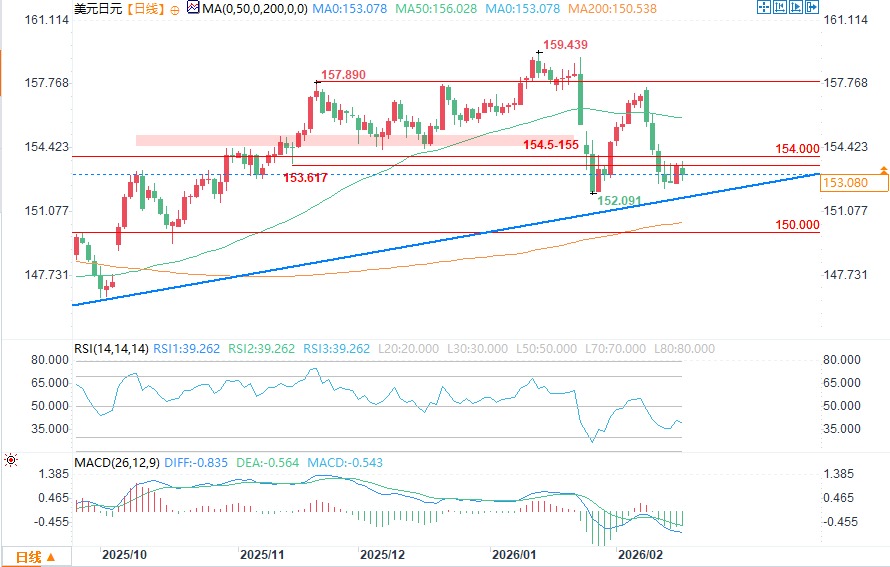
(USD/JPY daily chart source: EasyForex)
The yen's exchange rate exhibited a "decline followed by a rise" pattern, falling on Monday due to the drag from Japan's Q4 2025 GDP data. The data showed a weaker-than-expected economic rebound, with quarter-on-quarter growth of 0.1%, revised down from a previous contraction of 0.7%. Although Japan thus avoided a technical recession, the weak growth not only provided the Japanese Prime Minister with a basis to push for more aggressive fiscal stimulus, but also meant that the Bank of Japan should not rush to raise interest rates further.
From a market pricing perspective, the Japanese overnight index swap (OIS) market indicates that the market is essentially pricing in a 25 basis point rate hike by the Bank of Japan in June, following the conclusion of the spring labor-management negotiations. The yen rebounded on Tuesday, primarily driven by traders' concerns about coordinated US-Japan intervention in the foreign exchange market, leading to a reluctance to hold excessive short positions in the yen. Furthermore, support for the Bank of Japan's independence further benefited the yen—BOJ Governor Kazuo Ueda explicitly stated that Prime Minister Sanae Takaichi had not made any specific demands to restrict the central bank's activities; the two only discussed the economic and financial situation. If the Bank of Japan continues to make independent decisions, political stability will be favorable for USD/JPY short positions. Investors are also continuously assessing whether the Prime Minister will pressure the central bank to halt rate hikes (as rate hikes increase debt repayment costs).
I. The US Dollar Remains Stable: A Triple Interplay of Interest Rate Cut Expectations, Economic Resilience, and Oil Prices
(US Dollar Index Daily Chart Source: FX678)
The foreign exchange market opened calmly this week due to the US President's Day holiday, with traders adopting a wait-and-see attitude, awaiting key data such as the Federal Reserve FOMC meeting minutes and the preliminary US GDP figures. The US dollar generally maintained a stable consolidation trend. As of approximately 8:30 PM on February 17th, the US dollar continued its rebound against most currencies, with the USD/JPY pair trading at 153.14 (a slight decrease of 0.37). The euro and pound sterling weakened slightly against the dollar, echoing the dollar's stable performance.
The US dollar's stability is supported by three factors and a complex interplay of factors: First, oil prices provide support. Iran's military exercises in the Strait of Hormuz have boosted oil prices, and the dollar's short-term undervaluation has further strengthened this support. Furthermore, the probability of a US strike against Iran was close to 40% by the end of March, and an escalation of the situation could further reinforce the dollar's support from oil prices. Second, divergent economic data has contributed to the dollar's rebound. Strong US non-farm payroll data in January (130,000 new jobs, 4.3% unemployment rate) boosted the dollar's rebound, but a decline in CPI (from 2.7% to 2.4%) increased bets on interest rate cuts, creating a balance between the two. Third, safe-haven demand has increased the dollar's safe-haven appeal, with the US stock market's "February chill" and AI-related anxieties enhancing its safe-haven appeal.
On the policy front, the market expects the Federal Reserve to cut interest rates by 65 basis points by the end of 2026 (down from the initial forecast), reflecting acceptance of its decision to "maintain high interest rates for longer." Today's New York manufacturing index and San Francisco Fed President Daly's speech will influence the short-term trend of the US dollar. The direction of the dollar this week remains unclear, and the market may turn to domestic data from G10 countries.
II. Euro consolidates in a narrow range: Supported by positive ZEW data, but downward pressure remains in the short term.
(EUR/USD daily chart source: FX678)
Against the backdrop of a stable US dollar, the euro is currently trading within a narrow range against the dollar, at approximately 8:30 PM on February 17th at 1.1830, down 0.0023 from the previous trading day, with a fluctuation range of only 0.1688%. This narrow sideways movement has persisted for several consecutive trading days, with market caution ahead of key data releases further exacerbating the consolidation. Even the European Central Bank's announcement of its readiness to provide liquidity to other central banks to prevent money market tensions (including increased repurchase operations starting in the third quarter) did not trigger a significant reaction in the euro pair. The core reason remains the market's wait-and-see attitude regarding the Federal Reserve's policy path.
Both ING Group and European Central Bank President Christine Lagarde are optimistic about the euro. ING points out that the ECB's expansion of EUREP repurchase operations, while seen as a means of maintaining financial stability, is actually another step towards a truly "global euro," meaning the euro's use will extend beyond Europe, and its role in trade, reserves, and international debt markets will be strengthened. Furthermore, this may indicate a more lenient stance from the ECB towards a stronger euro. Lagarde believes that the euro's enhanced global status will benefit it, and the current flow of funds from the US to Europe, coupled with the ECB's tendency to accelerate capital rotation through cheap liquidity, is expected to support the euro's medium- to long-term trend.
On the data front, the ZEW survey results released this morning were strong, with the expectations index rising above 60.0 for the first time since mid-2021, which provided direct support for the euro.
However, given that short-term fundamental factors still support a dollar rebound, we remain slightly inclined to believe that the euro/dollar will weaken for the remainder of the week, with the 1.1800 level soon becoming a test point. Meanwhile, the longer the Fed pauses its easing cycle, the wider the interest rate differential between the US and Europe will become. The high attractiveness of US assets will prevent investors from rushing to transfer funds to Europe, thus limiting the euro's gains.
III. Yen's Initial Decline Followed by a Rebound: Economic Data Weighs on Short-Term Performance, Intervention and Central Bank Independence are Key to Rebound
(USD/JPY daily chart source: EasyForex)
The yen's exchange rate exhibited a "decline followed by a rise" pattern, falling on Monday due to the drag from Japan's Q4 2025 GDP data. The data showed a weaker-than-expected economic rebound, with quarter-on-quarter growth of 0.1%, revised down from a previous contraction of 0.7%. Although Japan thus avoided a technical recession, the weak growth not only provided the Japanese Prime Minister with a basis to push for more aggressive fiscal stimulus, but also meant that the Bank of Japan should not rush to raise interest rates further.
From a market pricing perspective, the Japanese overnight index swap (OIS) market indicates that the market is essentially pricing in a 25 basis point rate hike by the Bank of Japan in June, following the conclusion of the spring labor-management negotiations. The yen rebounded on Tuesday, primarily driven by traders' concerns about coordinated US-Japan intervention in the foreign exchange market, leading to a reluctance to hold excessive short positions in the yen. Furthermore, support for the Bank of Japan's independence further benefited the yen—BOJ Governor Kazuo Ueda explicitly stated that Prime Minister Sanae Takaichi had not made any specific demands to restrict the central bank's activities; the two only discussed the economic and financial situation. If the Bank of Japan continues to make independent decisions, political stability will be favorable for USD/JPY short positions. Investors are also continuously assessing whether the Prime Minister will pressure the central bank to halt rate hikes (as rate hikes increase debt repayment costs).
- Risk Warning and Disclaimer
- The market involves risk, and trading may not be suitable for all investors. This article is for reference only and does not constitute personal investment advice, nor does it take into account certain users’ specific investment objectives, financial situation, or other needs. Any investment decisions made based on this information are at your own risk.