Why have gold prices fluctuated so much recently?
2026-02-19 16:41:44
Gold is a precious metal with a limited supply and is resistant to tarnishing and damage. For centuries, global currencies were backed by gold, or even made of gold. This is no longer the case; gold is now considered a reliable and safe investment, its value rarely being completely lost even in the worst financial crises. In recent years, the combination of global geopolitical and financial uncertainties, along with low interest rates, has led to increased demand from institutional investors, driving up gold prices. However, even gold is not immune to today's rapidly changing market sentiment, which reacts extremely quickly to global events. And even in volatile environments, astute traders can still profit.

For those looking to capitalize on gold price volatility, a trustworthy gold and precious metals trader is essential. Physical gold is generally not suitable for short-term traders, making spot trading crucial. Finding Contracts for Difference (CFDs) is the simplest way to participate in trading, and their ultra-fast execution ensures precise trades.
After the outbreak of war between Russia and Ukraine in 2022, gold prices began to rise sharply and have maintained a steady upward trend ever since.
However, its real takeoff came in late 2025, when US President Trump began implementing tariff policies. This move created uncertainty for many investors, prompting them to invest in the safe-haven gold market, thus causing gold prices to rise continuously.
Gold prices surged again in January 2026 after the US military action against Venezuela and the unexpected detention of Venezuelan President Maduro. Subsequently, Trump's initial refusal to rule out military action to acquire Greenland fueled investor panic, further pushing up precious metal prices.
Although the situation subsequently stabilized, escalating geopolitical tensions triggered a buying frenzy among investors seeking to hedge against global or regional crises, causing prices to rise rapidly. However, when the situation calmed down again…
Aside from global geopolitical events, gold prices have consistently outpaced average inflation for some time. This is because the US dollar is the de facto global reserve currency, and its interest rates remain relatively high. When the Federal Reserve maintains relatively high interest rates as it is now, investors should theoretically favor government bonds over gold, since gold offers no interest income.
However, despite this balancing effect, gold demand has remained stable. This means that a rate cut by the Federal Reserve could trigger a rush of investors to buy gold. Therefore, gold prices sometimes surge again whenever there are rumors of a potential Fed rate cut, thus exacerbating market volatility.
Furthermore, central banks typically adjust interest rates based on inflation data, and since US inflation data fluctuates, expectations can change significantly. Historically, gold prices have also been correlated with the strength of the US dollar, which in turn is subject to Federal Reserve policies and interest rates. In short, it's a complex situation with numerous variables, making the global gold market arguably more volatile than ever before.
Given all of the above factors, central banks have been buying gold at a record pace for years. The historic low interest rates of 2021 and 2022 have prompted countries to increase their gold reserves as a hedge against future inflation.
Interestingly, consumer demand is also very strong, especially in Asia, where gold jewelry and other related items are gradually becoming a symbol of status for the middle class.
Despite recent declines in global gold prices, many believe the correction won't last long. The 9% daily drops seen in late January appear to have been corrected, and gold prices are now more stable, though still near historical highs.
For example, central banks of major Asian countries currently hold more gold than at any time in history. While investor speculation may make markets more volatile in the short term, most analysts expect gold and silver prices to reach a new floor in 2025 and are unlikely to fall back to pre-pandemic levels anytime soon.
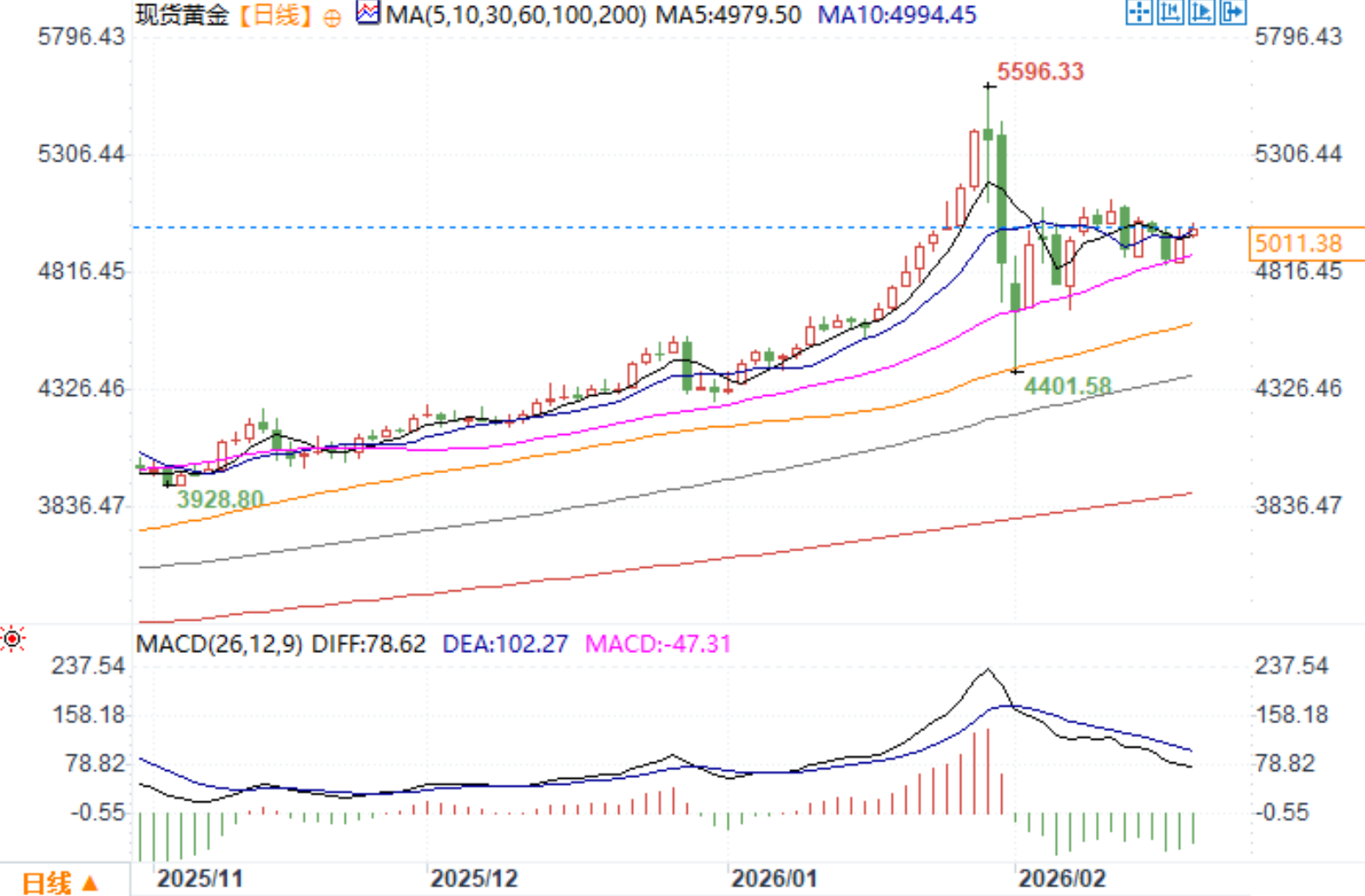
Spot gold daily chart source: EasyForex
At 16:37 Beijing time on February 19, spot gold was trading at $5011.38 per ounce.
Gold is considered a safe-haven asset during times of turmoil.
For those looking to capitalize on gold price volatility, a trustworthy gold and precious metals trader is essential. Physical gold is generally not suitable for short-term traders, making spot trading crucial. Finding Contracts for Difference (CFDs) is the simplest way to participate in trading, and their ultra-fast execution ensures precise trades.
After the outbreak of war between Russia and Ukraine in 2022, gold prices began to rise sharply and have maintained a steady upward trend ever since.
However, its real takeoff came in late 2025, when US President Trump began implementing tariff policies. This move created uncertainty for many investors, prompting them to invest in the safe-haven gold market, thus causing gold prices to rise continuously.
Gold prices surged again in January 2026 after the US military action against Venezuela and the unexpected detention of Venezuelan President Maduro. Subsequently, Trump's initial refusal to rule out military action to acquire Greenland fueled investor panic, further pushing up precious metal prices.
Although the situation subsequently stabilized, escalating geopolitical tensions triggered a buying frenzy among investors seeking to hedge against global or regional crises, causing prices to rise rapidly. However, when the situation calmed down again…
Speculation about interest rate cuts could also push up gold prices.
Aside from global geopolitical events, gold prices have consistently outpaced average inflation for some time. This is because the US dollar is the de facto global reserve currency, and its interest rates remain relatively high. When the Federal Reserve maintains relatively high interest rates as it is now, investors should theoretically favor government bonds over gold, since gold offers no interest income.
However, despite this balancing effect, gold demand has remained stable. This means that a rate cut by the Federal Reserve could trigger a rush of investors to buy gold. Therefore, gold prices sometimes surge again whenever there are rumors of a potential Fed rate cut, thus exacerbating market volatility.
Furthermore, central banks typically adjust interest rates based on inflation data, and since US inflation data fluctuates, expectations can change significantly. Historically, gold prices have also been correlated with the strength of the US dollar, which in turn is subject to Federal Reserve policies and interest rates. In short, it's a complex situation with numerous variables, making the global gold market arguably more volatile than ever before.
Central banks around the world are boosting global demand.
Given all of the above factors, central banks have been buying gold at a record pace for years. The historic low interest rates of 2021 and 2022 have prompted countries to increase their gold reserves as a hedge against future inflation.
Interestingly, consumer demand is also very strong, especially in Asia, where gold jewelry and other related items are gradually becoming a symbol of status for the middle class.
Despite recent declines in global gold prices, many believe the correction won't last long. The 9% daily drops seen in late January appear to have been corrected, and gold prices are now more stable, though still near historical highs.
For example, central banks of major Asian countries currently hold more gold than at any time in history. While investor speculation may make markets more volatile in the short term, most analysts expect gold and silver prices to reach a new floor in 2025 and are unlikely to fall back to pre-pandemic levels anytime soon.
Spot gold daily chart source: EasyForex
At 16:37 Beijing time on February 19, spot gold was trading at $5011.38 per ounce.
- Risk Warning and Disclaimer
- The market involves risk, and trading may not be suitable for all investors. This article is for reference only and does not constitute personal investment advice, nor does it take into account certain users’ specific investment objectives, financial situation, or other needs. Any investment decisions made based on this information are at your own risk.