Trump's new initiative and billions of dollars in spending cannot mask the rifts in the Middle East, reinforcing the safe-haven logic of gold?
2026-02-20 10:49:10
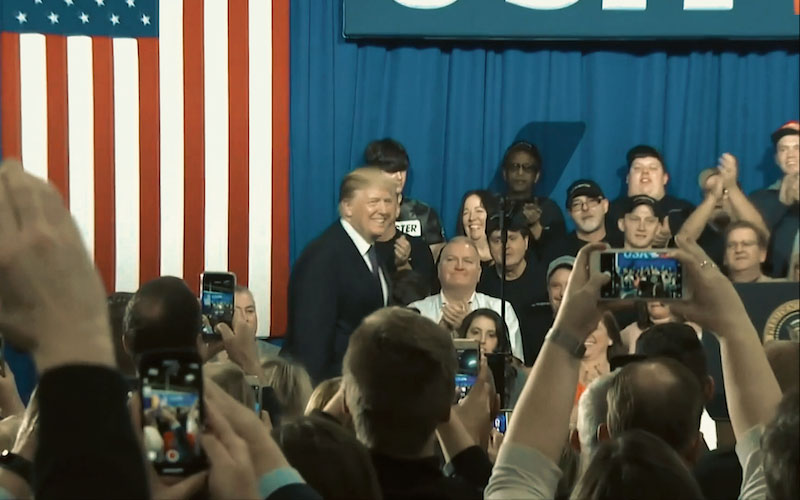
On Thursday (February 19), US President Donald Trump personally chaired the first meeting of the "Board of Peace," which he founded. While the mechanism focuses on the reconstruction of Gaza, its highly personalized design and ambiguous positioning within the UN system have sparked widespread controversy in the international community.
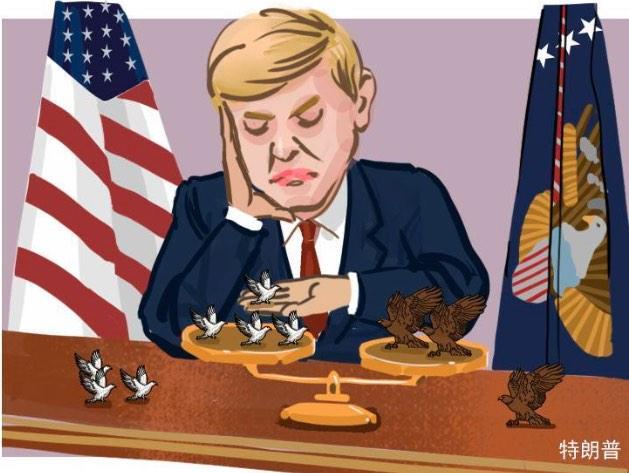
The meeting began with a 47-minute speech by Trump. He called the committee "the most prestigious institution ever established" and announced that the United States would contribute $10 billion over the next 10 years to rebuild Gaza, with the initial $1.25 billion focusing on explosive ordnance removal, temporary housing, security, and medical relief. These funds require congressional approval to proceed.
Trump also emphasized that the committee would "strengthen the United Nations" and "oversee its proper functioning," even using the phrase "virtually overseeing the United Nations." Although the UN Charter does not authorize the establishment of such an external oversight body, this statement is still seen as a strong signal of his personal dominance over multilateral humanitarian mechanisms .
Approximately 24 member countries made specific financial commitments at the meeting, totaling more than $6.5 billion (some media reports indicated it was close to $7 billion). Adding the $10 billion commitment from the United States, the total amount has exceeded $16 billion.
Major donors include :
United Arab Emirates: $1.2 billion
Saudi Arabia: $1 million
FIFA: $75 million (for the Gaza football project)
World Bank President Ajay Banga confirmed that the bank will be responsible for the custody of the funds and their allocation as directed by the committee.
Preliminary Security and Governance Plan: Troops from Five Countries Deployed, 2,000 Personnel Apply for Police Positions
U.S. Major General Jasper Jeffers revealed that at least five countries have pledged to send troops to Gaza to form an international stabilization force. Bulgarian diplomat and Gaza senior representative of the committee, Nikolai Mladenov, stated that 2,000 people have applied to join the newly formed Palestinian police force.
Most of America's traditional allies chose to be absent or send only observers. Of the 27 EU member states, only Hungary and Bulgaria became full members, while France, Germany, Italy, Norway, and others explicitly refused to join. At the meeting, Trump stated that many European countries "wanted to join but were playing tricks," and expressed his welcome to more countries becoming full members.
An anonymous European diplomat noted: "Important countries are unwilling to join a vaguely defined organization permanently led by Trump, which would compete with or replace existing mechanisms. This is why only smaller countries, driven by their own specific interests, have chosen to sign the agreement."
A joint report by the World Bank, the United Nations, and the European Union indicates that a comprehensive reconstruction of Gaza is estimated to require $53 billion. While the current pledged funds are substantial, they are highly dependent on Hamas disarmament, a complete Israeli withdrawal, and a long-term political solution, and remain subject to significant uncertainty.
The sole Palestinian spokesperson, Ali Shas, emphasized prioritizing security, employment, emergency relief, and basic services, and admitted that current conditions are "extremely difficult." Several Palestinian figures criticized the mechanism for lacking substantive Palestinian participation, describing it as a "wedding without a bride."
Despite ongoing controversy, the Peace Commission has moved from concept to reality. The Trump administration has emphasized cooperation rather than confrontation with the United Nations and pledged financial support (the US currently owes approximately $4 billion in dues). However, whether this mechanism can truly bypass traditional diplomatic channels and take root both domestically and internationally remains a key focus for future observation.
Geopolitical risks have not been eliminated, but rather complicated: major powers are collectively observing, the mechanism is vaguely defined, and the preconditions are stringent. This situation of "commitments without consensus" means that the Middle East peace process remains fraught with uncertainty. The geopolitical risk premium has not dissipated because of a single committee; on the contrary, it may persist longer due to the interplay among various parties. As a traditional tool for hedging geopolitical risks, gold's safe-haven demand will be supported by this stalemate.
However, the peace committee can still be seen as a potential catalyst for reducing geopolitical risks in Gaza, which is expected to limit the rise in safe-haven gold prices.
Spot gold traded in a narrow range around $5,000 per ounce during Friday's Asian session.
The road to Gaza's reconstruction is long. The launch of the Peace Commission has injected new funds and momentum into the process, but its success or failure ultimately depends on inclusiveness, transparency, and the achievement of political consensus among all parties.
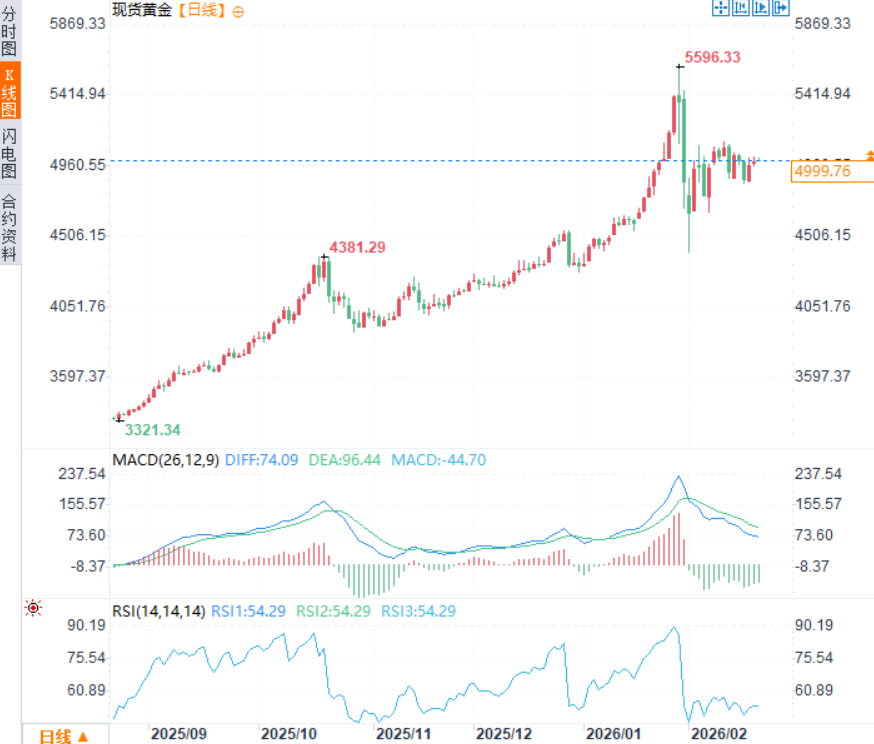
(Spot gold daily chart, source: FX678)
At 10:48 Beijing time, spot gold was trading at $4,996.69 per ounce.
Trump's 47-minute opening remarks: He declared himself chairman for life and pledged $10 billion.
The meeting began with a 47-minute speech by Trump. He called the committee "the most prestigious institution ever established" and announced that the United States would contribute $10 billion over the next 10 years to rebuild Gaza, with the initial $1.25 billion focusing on explosive ordnance removal, temporary housing, security, and medical relief. These funds require congressional approval to proceed.
Trump also emphasized that the committee would "strengthen the United Nations" and "oversee its proper functioning," even using the phrase "virtually overseeing the United Nations." Although the UN Charter does not authorize the establishment of such an external oversight body, this statement is still seen as a strong signal of his personal dominance over multilateral humanitarian mechanisms .
Funding commitments exceed $16 billion: UAE leads, Saudi Arabia participates discreetly.
Approximately 24 member countries made specific financial commitments at the meeting, totaling more than $6.5 billion (some media reports indicated it was close to $7 billion). Adding the $10 billion commitment from the United States, the total amount has exceeded $16 billion.
Major donors include :
United Arab Emirates: $1.2 billion
Saudi Arabia: $1 million
FIFA: $75 million (for the Gaza football project)
World Bank President Ajay Banga confirmed that the bank will be responsible for the custody of the funds and their allocation as directed by the committee.
Preliminary Security and Governance Plan: Troops from Five Countries Deployed, 2,000 Personnel Apply for Police Positions
U.S. Major General Jasper Jeffers revealed that at least five countries have pledged to send troops to Gaza to form an international stabilization force. Bulgarian diplomat and Gaza senior representative of the committee, Nikolai Mladenov, stated that 2,000 people have applied to join the newly formed Palestinian police force.
Major powers are taking a wait-and-see approach: Only Hungary and Bulgaria have officially joined the EU.
Most of America's traditional allies chose to be absent or send only observers. Of the 27 EU member states, only Hungary and Bulgaria became full members, while France, Germany, Italy, Norway, and others explicitly refused to join. At the meeting, Trump stated that many European countries "wanted to join but were playing tricks," and expressed his welcome to more countries becoming full members.
An anonymous European diplomat noted: "Important countries are unwilling to join a vaguely defined organization permanently led by Trump, which would compete with or replace existing mechanisms. This is why only smaller countries, driven by their own specific interests, have chosen to sign the agreement."
The total demand for Gaza's reconstruction is $53 billion, and the committee is just the beginning.
A joint report by the World Bank, the United Nations, and the European Union indicates that a comprehensive reconstruction of Gaza is estimated to require $53 billion. While the current pledged funds are substantial, they are highly dependent on Hamas disarmament, a complete Israeli withdrawal, and a long-term political solution, and remain subject to significant uncertainty.
The Palestinian voice is weak, drawing international scrutiny.
The sole Palestinian spokesperson, Ali Shas, emphasized prioritizing security, employment, emergency relief, and basic services, and admitted that current conditions are "extremely difficult." Several Palestinian figures criticized the mechanism for lacking substantive Palestinian participation, describing it as a "wedding without a bride."
Despite ongoing controversy, the Peace Commission has moved from concept to reality. The Trump administration has emphasized cooperation rather than confrontation with the United Nations and pledged financial support (the US currently owes approximately $4 billion in dues). However, whether this mechanism can truly bypass traditional diplomatic channels and take root both domestically and internationally remains a key focus for future observation.
Analysis of the impact on gold
Geopolitical risks have not been eliminated, but rather complicated: major powers are collectively observing, the mechanism is vaguely defined, and the preconditions are stringent. This situation of "commitments without consensus" means that the Middle East peace process remains fraught with uncertainty. The geopolitical risk premium has not dissipated because of a single committee; on the contrary, it may persist longer due to the interplay among various parties. As a traditional tool for hedging geopolitical risks, gold's safe-haven demand will be supported by this stalemate.
However, the peace committee can still be seen as a potential catalyst for reducing geopolitical risks in Gaza, which is expected to limit the rise in safe-haven gold prices.
Spot gold traded in a narrow range around $5,000 per ounce during Friday's Asian session.
The road to Gaza's reconstruction is long. The launch of the Peace Commission has injected new funds and momentum into the process, but its success or failure ultimately depends on inclusiveness, transparency, and the achievement of political consensus among all parties.
(Spot gold daily chart, source: FX678)
At 10:48 Beijing time, spot gold was trading at $4,996.69 per ounce.
- Risk Warning and Disclaimer
- The market involves risk, and trading may not be suitable for all investors. This article is for reference only and does not constitute personal investment advice, nor does it take into account certain users’ specific investment objectives, financial situation, or other needs. Any investment decisions made based on this information are at your own risk.