Congress can't stop Trump anymore! Obstacles to military action against Iran removed, risk aversion surges overnight?
2026-03-05 09:18:51
On Wednesday (March 4), local time in the United States, the U.S. Senate held a procedural vote on a bipartisan bill limiting the president's war powers. Ultimately, the bill was rejected by a vote of 52 to 47. This means the Senate formally blocked a resolution that would have halted airstrikes against Iran and required congressional authorization for any hostile actions against Iran.
The vote directly reinforces President Trump's autonomy to take military action against Iran amid current tensions in the Middle East, allowing him to continue airstrikes or other limited military operations without additional congressional approval.
This vote directly strengthened market demand for safe-haven gold. During Thursday's Asian trading session, spot gold fluctuated upwards and is currently trading around $5,175 per ounce, with a daily increase of about 0.7%.

The bill, jointly introduced by members of both parties, includes key provisions such as: an immediate cessation of all airstrikes against Iran; any future hostile military action against Iranian territory, facilities, or armed forces must be explicitly authorized by Congress in advance; and the president may not use armed force to launch a new attack on Iran without congressional authorization. The bill aims to tighten the president's power to unilaterally initiate war through legislation.
The proposers emphasized that this move was to prevent the Middle East conflict from escalating into a full-blown war, while also upholding the constitutional right of Congress to declare war.
Article I, Section 8 of the U.S. Constitution explicitly states that only Congress has the power to declare war. However, since World War II, the president has exercised considerable actual power in "limited military operations."
The War Powers Resolution of 1973 attempted to regulate this practice, stipulating that the president may use force without congressional authorization only in the following circumstances: a national emergency arising from an attack on the United States homeland, territory, territory, or armed forces.
The Trump administration currently defines its airstrikes against Iran as "limited self-defense actions," citing potential threats from Iran to U.S. military facilities or allies, thus circumventing congressional authorization requirements. The Senate's rejection further confirms the legitimacy of this executive interpretation.
The vote was markedly partisan: the vast majority of Republican senators supported maintaining the president's freedom of military action, arguing that the current Iranian threat posed an "extraordinary and urgent" national security risk; Democratic senators pushed for the bill's passage, criticizing Trump for "bypassing Congress and unilaterally escalating the conflict."
While some moderate Republicans expressed doubts about indefinite military intervention, they ultimately followed partisan lines and voted against it. Sources familiar with the matter revealed that the Trump team actively lobbied before the vote, emphasizing that "weakening presidential power would weaken America's deterrent capability in the Middle East."
The Senate's rejection cleared domestic legislative hurdles for the Trump administration's military operations in the Middle East. Precision airstrikes against Iranian Revolutionary Guard facilities, proxy forces, and nuclear-related targets are likely to continue in the coming weeks without immediate congressional intervention.
This outcome could exacerbate the risk of Iranian retaliation and also raise further concerns in the international community about US unilateralism. In the long term, the power struggle in Congress over war will continue, and if the conflict escalates into ground operations or a larger-scale war, the pressure on Congress to authorize action will increase significantly.
The Senate's rejection of a bill limiting the president's war powers against Iraq effectively gives the Trump administration the green light for possible military action, directly escalating geopolitical tensions in the Middle East. This uncertainty is highly likely to ignite risk aversion in the market, leading to increased demand for spot gold, a traditional safe-haven asset.
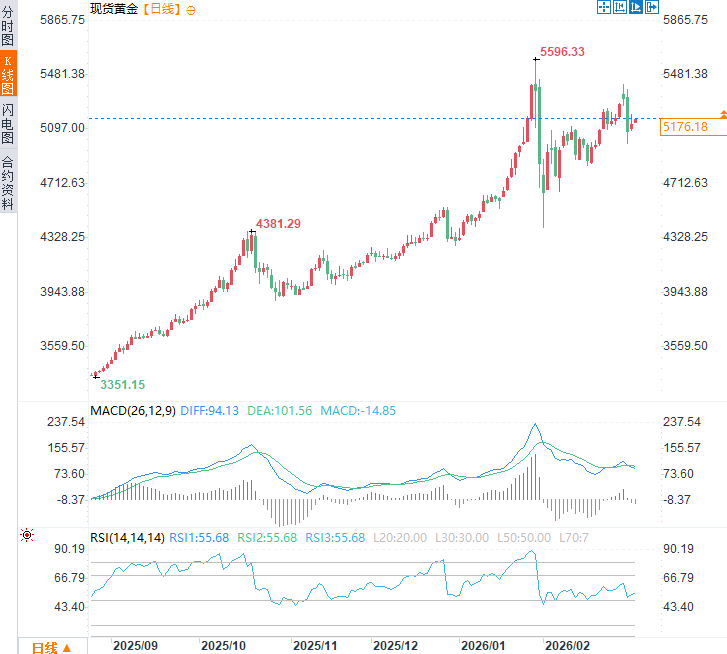
(Spot gold daily chart, source: FX678)
The Senate voted 52-47 to reject a bill limiting military action against Iran, effectively perpetuating the president's dominance in "limited military action." The Trump administration thus maintained its strategic initiative with Iran while highlighting long-standing structural contradictions within the United States regarding the distribution of war power.
The future trajectory of the Middle East depends on the strength of Iran's response, the cooperation of regional allies, and the interconnectedness of oil prices and geopolitical risks. Congress still reserves the possibility of re-intervening in the event of a major escalation.
At 9:18 Beijing time, spot gold was trading at $5,178.71 per ounce.
The vote directly reinforces President Trump's autonomy to take military action against Iran amid current tensions in the Middle East, allowing him to continue airstrikes or other limited military operations without additional congressional approval.
This vote directly strengthened market demand for safe-haven gold. During Thursday's Asian trading session, spot gold fluctuated upwards and is currently trading around $5,175 per ounce, with a daily increase of about 0.7%.
Core content of the bill limiting the US president's war powers in Iraq
The bill, jointly introduced by members of both parties, includes key provisions such as: an immediate cessation of all airstrikes against Iran; any future hostile military action against Iranian territory, facilities, or armed forces must be explicitly authorized by Congress in advance; and the president may not use armed force to launch a new attack on Iran without congressional authorization. The bill aims to tighten the president's power to unilaterally initiate war through legislation.
The proposers emphasized that this move was to prevent the Middle East conflict from escalating into a full-blown war, while also upholding the constitutional right of Congress to declare war.
Background of the U.S. Constitution and the War Powers Act
Article I, Section 8 of the U.S. Constitution explicitly states that only Congress has the power to declare war. However, since World War II, the president has exercised considerable actual power in "limited military operations."
The War Powers Resolution of 1973 attempted to regulate this practice, stipulating that the president may use force without congressional authorization only in the following circumstances: a national emergency arising from an attack on the United States homeland, territory, territory, or armed forces.
The Trump administration currently defines its airstrikes against Iran as "limited self-defense actions," citing potential threats from Iran to U.S. military facilities or allies, thus circumventing congressional authorization requirements. The Senate's rejection further confirms the legitimacy of this executive interpretation.
Analysis of the Divergence in Party Stances and Reasons for Voting
The vote was markedly partisan: the vast majority of Republican senators supported maintaining the president's freedom of military action, arguing that the current Iranian threat posed an "extraordinary and urgent" national security risk; Democratic senators pushed for the bill's passage, criticizing Trump for "bypassing Congress and unilaterally escalating the conflict."
While some moderate Republicans expressed doubts about indefinite military intervention, they ultimately followed partisan lines and voted against it. Sources familiar with the matter revealed that the Trump team actively lobbied before the vote, emphasizing that "weakening presidential power would weaken America's deterrent capability in the Middle East."
Impact on the situation in Iran and Trump's policies
The Senate's rejection cleared domestic legislative hurdles for the Trump administration's military operations in the Middle East. Precision airstrikes against Iranian Revolutionary Guard facilities, proxy forces, and nuclear-related targets are likely to continue in the coming weeks without immediate congressional intervention.
This outcome could exacerbate the risk of Iranian retaliation and also raise further concerns in the international community about US unilateralism. In the long term, the power struggle in Congress over war will continue, and if the conflict escalates into ground operations or a larger-scale war, the pressure on Congress to authorize action will increase significantly.
Impact on gold
The Senate's rejection of a bill limiting the president's war powers against Iraq effectively gives the Trump administration the green light for possible military action, directly escalating geopolitical tensions in the Middle East. This uncertainty is highly likely to ignite risk aversion in the market, leading to increased demand for spot gold, a traditional safe-haven asset.
(Spot gold daily chart, source: FX678)
Editor's Summary
The Senate voted 52-47 to reject a bill limiting military action against Iran, effectively perpetuating the president's dominance in "limited military action." The Trump administration thus maintained its strategic initiative with Iran while highlighting long-standing structural contradictions within the United States regarding the distribution of war power.
The future trajectory of the Middle East depends on the strength of Iran's response, the cooperation of regional allies, and the interconnectedness of oil prices and geopolitical risks. Congress still reserves the possibility of re-intervening in the event of a major escalation.
At 9:18 Beijing time, spot gold was trading at $5,178.71 per ounce.
- Risk Warning and Disclaimer
- The market involves risk, and trading may not be suitable for all investors. This article is for reference only and does not constitute personal investment advice, nor does it take into account certain users’ specific investment objectives, financial situation, or other needs. Any investment decisions made based on this information are at your own risk.