Soaring freight costs, insurance shortages, and skyrocketing oil prices
2026-03-06 16:20:39
Soaring shipping and insurance costs are becoming the core driving force behind rising crude oil prices.
On Friday (March 6), US crude oil futures rebounded sharply after hitting a low, and are currently trading at 81.33, near the recent high.
LNG ship charter rates, tanker charter rates, and marine war risk insurance premiums have all surged simultaneously, with transportation costs rapidly being passed on to crude oil pricing, completely altering the trading logic of the crude oil market.
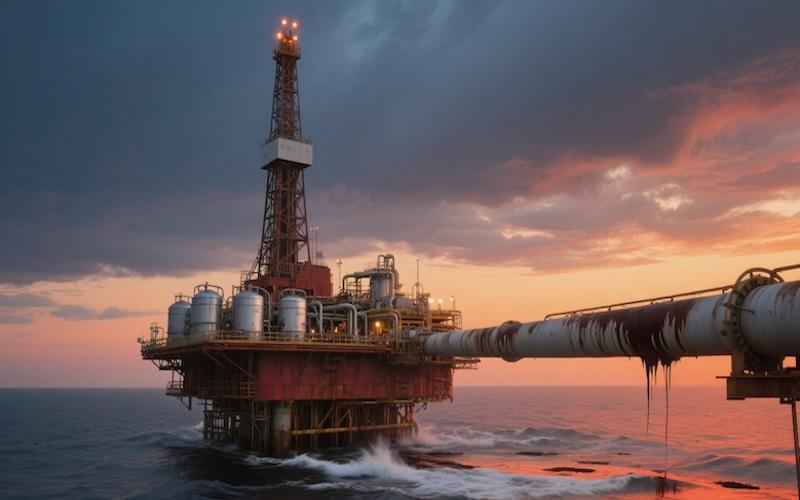
The Strait of Hormuz handles about one-fifth of the world's seaborne oil traffic and nearly 30% of LNG transportation demand. The obstruction of the waterway directly leads to a global shortage of energy shipping capacity.
The daily charter rates for the two core LNG shipping routes from the Gulf of Mexico to Europe and from the Gulf of Mexico to Asia have both surged from approximately $40,000 and $42,000 a week ago to $300,000, an increase of over 600%.
Even with Qatar's emergency deployment of two LNG carriers off the west coast of Africa into the leasing market, it was difficult to alleviate the capacity shortage, fully exposing the vulnerability of the global energy transportation system.
The surge in LNG charter rates quickly spread to the crude oil transportation market, with daily charter rates for Very Large Crude Carriers (VLCCs) also rising to over $280,000, a new high since 2008.
To mitigate risks, a large number of ships are forced to detour around the Cape of Good Hope, extending the journey by 30%-40%, further reducing fleet turnover efficiency and tightening effective transport capacity, exacerbating the already strained transportation market.
As transportation costs soar, maritime war risk premiums have seen a precipitous increase, becoming another source of pressure pushing up crude oil prices.
Before the conflict, the war risk premium rate for ships in the Strait of Hormuz was only 0.25% of the ship's value. After the situation deteriorated, mainstream insurance institutions significantly increased the rate to 0.5%-1%, and some institutions even directly canceled war risk insurance coverage for the relevant waters.
For a supertanker worth $100 million, the insurance premium jumped from $250,000 to nearly $500,000 per trip, with the high insurance cost ultimately being passed on to the final price of crude oil.
The double surge in shipping and insurance costs has directly driven up the cost of crude oil arriving at the port, resulting in a significant premium structure in the crude oil futures curve.
With the Brent crude oil futures contract currently holding steady above $83 per barrel, market concerns about supply shortages have outweighed the short-term inventory buffer effect, and expectations for oil prices to break through $100 per barrel are rapidly rising.
For the crude oil market, transportation and insurance costs have replaced traditional supply and demand data as the core variables for short-term pricing.
As long as the risks to navigation through the Strait of Hormuz remain, the high levels of ship charter rates and insurance premiums will continue to provide rigid support for crude oil prices.
From a technical perspective, WTI crude oil futures have completed a descending wedge breakout, with the measured rise of the descending wedge currently around 89. At the same time, oil prices have also completed a breakout from the trading range, with the measured rise of the breakout around 85. Oil prices are waiting for the 5-day moving average to move upward, with support at the 5-day moving average and around 78 yuan.
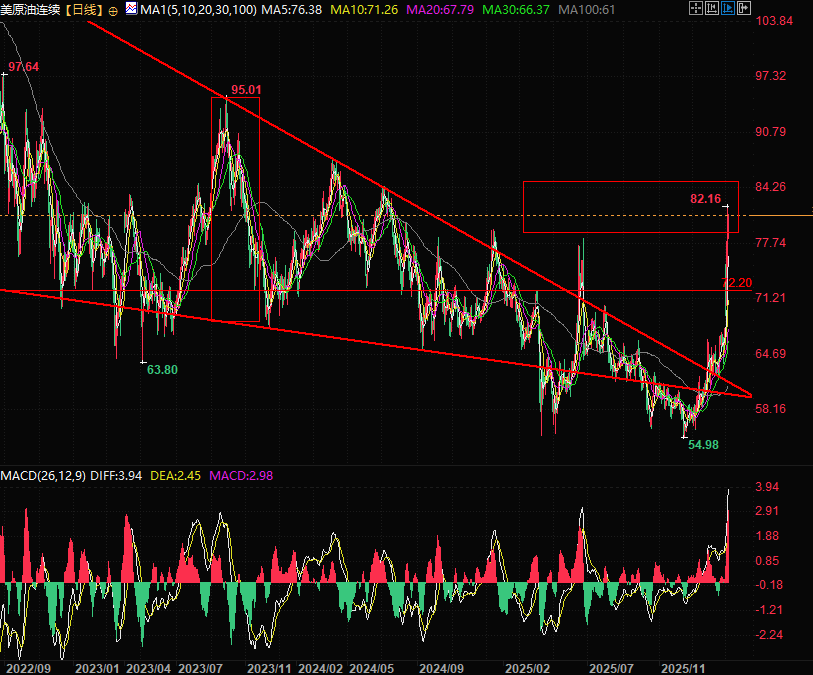
(US crude oil futures daily chart, source: FX678)
At 16:16 Beijing time, US crude oil futures were trading at $81.36 per barrel.
On Friday (March 6), US crude oil futures rebounded sharply after hitting a low, and are currently trading at 81.33, near the recent high.
LNG ship charter rates, tanker charter rates, and marine war risk insurance premiums have all surged simultaneously, with transportation costs rapidly being passed on to crude oil pricing, completely altering the trading logic of the crude oil market.
LNG charter rates on core routes have surged by over 600%, making it difficult to alleviate the capacity shortage.
The Strait of Hormuz handles about one-fifth of the world's seaborne oil traffic and nearly 30% of LNG transportation demand. The obstruction of the waterway directly leads to a global shortage of energy shipping capacity.
The daily charter rates for the two core LNG shipping routes from the Gulf of Mexico to Europe and from the Gulf of Mexico to Asia have both surged from approximately $40,000 and $42,000 a week ago to $300,000, an increase of over 600%.
Even with Qatar's emergency deployment of two LNG carriers off the west coast of Africa into the leasing market, it was difficult to alleviate the capacity shortage, fully exposing the vulnerability of the global energy transportation system.
Tanker freight rates surged simultaneously, and vessel detours exacerbated the capacity shortage.
The surge in LNG charter rates quickly spread to the crude oil transportation market, with daily charter rates for Very Large Crude Carriers (VLCCs) also rising to over $280,000, a new high since 2008.
To mitigate risks, a large number of ships are forced to detour around the Cape of Good Hope, extending the journey by 30%-40%, further reducing fleet turnover efficiency and tightening effective transport capacity, exacerbating the already strained transportation market.
Maritime war risk insurance rates double, with premium costs being passed on to end-user oil prices.
As transportation costs soar, maritime war risk premiums have seen a precipitous increase, becoming another source of pressure pushing up crude oil prices.
Before the conflict, the war risk premium rate for ships in the Strait of Hormuz was only 0.25% of the ship's value. After the situation deteriorated, mainstream insurance institutions significantly increased the rate to 0.5%-1%, and some institutions even directly canceled war risk insurance coverage for the relevant waters.
For a supertanker worth $100 million, the insurance premium jumped from $250,000 to nearly $500,000 per trip, with the high insurance cost ultimately being passed on to the final price of crude oil.
Double costs are pushing up oil prices, with expectations of $100 per barrel rising rapidly.
The double surge in shipping and insurance costs has directly driven up the cost of crude oil arriving at the port, resulting in a significant premium structure in the crude oil futures curve.
With the Brent crude oil futures contract currently holding steady above $83 per barrel, market concerns about supply shortages have outweighed the short-term inventory buffer effect, and expectations for oil prices to break through $100 per barrel are rapidly rising.
Summary and Technical Analysis:
For the crude oil market, transportation and insurance costs have replaced traditional supply and demand data as the core variables for short-term pricing.
As long as the risks to navigation through the Strait of Hormuz remain, the high levels of ship charter rates and insurance premiums will continue to provide rigid support for crude oil prices.
From a technical perspective, WTI crude oil futures have completed a descending wedge breakout, with the measured rise of the descending wedge currently around 89. At the same time, oil prices have also completed a breakout from the trading range, with the measured rise of the breakout around 85. Oil prices are waiting for the 5-day moving average to move upward, with support at the 5-day moving average and around 78 yuan.
(US crude oil futures daily chart, source: FX678)
At 16:16 Beijing time, US crude oil futures were trading at $81.36 per barrel.
- Risk Warning and Disclaimer
- The market involves risk, and trading may not be suitable for all investors. This article is for reference only and does not constitute personal investment advice, nor does it take into account certain users’ specific investment objectives, financial situation, or other needs. Any investment decisions made based on this information are at your own risk.