From redemption restrictions to a global bank run, why are global assets bleeding?
2026-03-16 15:20:23
The U.S. private lending market, once considered a core pillar of the "shadow banking" system, is experiencing unprecedented turmoil.
These shadow banks provide wealth management products to the first tier of wealthy individuals, while tending to concentrate loans on core technology companies.
This $1.8 trillion market is now mired in a triple whammy of redemption pressures, regulatory scrutiny, and technological change. The crisis has spread from non-bank institutions to traditional banking, with Deutsche Bank's $30 billion exposure triggering a stock price crash that serves as a stark illustration of this transmission trend.
The crisis was triggered by credit risks in the technology sector.
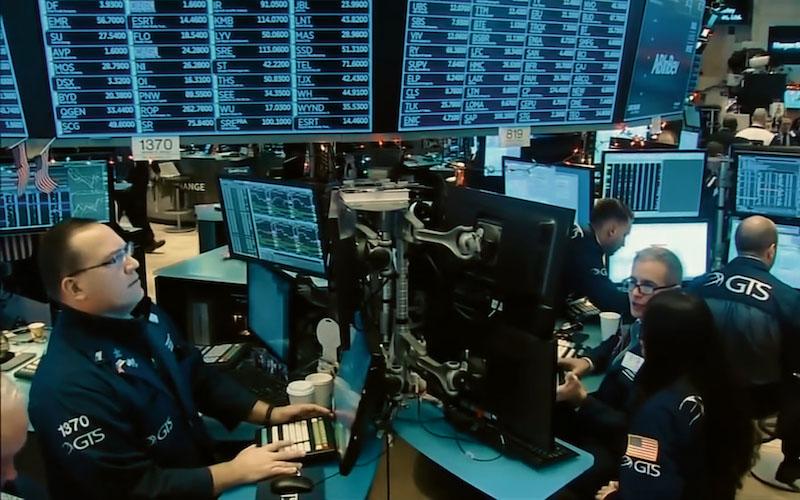
A joint report by Barclays and UBS shows that the private lending industry has extremely high exposure to software and technology companies, with some portfolios containing as much as 55% of such assets.
With the breakthrough development of artificial intelligence technology, the market has raised strong doubts about the survival ability and cash flow stability of traditional software companies, which has directly led to a sharp drop in the prices of related assets, thereby triggering panic redemptions by investors.
The crisis spread in a clear chain reaction: Blue Owl Capital, which manages over $300 billion in assets, was the first to be affected. In order to cope with redemptions, it was forced to sell $140 million in loan assets at a discount, which exposed the truth of the liquidity crunch in the secondary market.
Following closely behind, Blackstone Group's BCRED fund faced massive redemption pressure, and senior partners had to use $150 million of their own funds to fill the gap and try their best to avoid triggering redemption restrictions.
BlackRock's actions became the final straw that broke the camel's back – it announced that it would write down $25 million of its subordinated debt to zero and set a 5% redemption limit for its $26 billion HPS fund, far below the actual redemption rate of 9.3%.
BlackRock's move has triggered industry-wide panic. The well-known financial blog Zerohedge pointed out that this is exactly the kind of operation that Blue Owl and Blackstone have tried to avoid, because it would trigger a vicious cycle of "passive selling - asset devaluation - more redemptions".
As expected, Clifton's $33 billion flagship fund subsequently faced a record 14% redemption requests, forcing the company to cap its first-quarter redemption rate at 7%. In European and American parlance, this became the "coal mine canary" that the market was worried about (in 19th-century coal mining, miners would take canaries with them down into the mine—because canaries are far more sensitive to toxic gases (such as methane and carbon monoxide) than humans, if the gas levels exceeded the limit, the canary would be the first to faint or die, allowing the miners to detect the danger in time and evacuate).
Analysts have drawn parallels between the current situation and the 2022 real estate fund crisis, suggesting that while redemption restrictions may prevent a short-term collapse, capital outflow pressures will remain high in the coming months, and the industry recovery could take years.
What is even more alarming is that the crisis has broken through the boundaries of shadow banking and spread deeply into the traditional banking industry.
Deutsche Bank’s annual report revealed that its private lending exposure has increased to €25.9 billion (approximately US$30 billion), accounting for 5% of its total loans, while its exposure to the technology sector has reached €15.8 billion. This news directly caused the bank’s stock price to plummet by nearly 7% in a single day.
According to Moody's data, by mid-2025, U.S. banks will have extended $1.2 trillion in loans to non-deposit-taking financial institutions, nearly double the amount a decade ago.
The FDIC further disclosed that as of the end of 2025, U.S. banks had $1.4 trillion in outstanding loans to such institutions, and with undrawn loan commitments, the potential risk exposure was as high as $4.2 trillion.
In response to the risks, JPMorgan Chase has taken the lead by lowering the valuation of some private credit fund assets and reducing credit lines.
Several major banks have also launched a comprehensive review of their private lending exposure, covering key indicators such as loan structure and collateral prepayment rates.
Meanwhile, the crisis also affected the mortgage-backed securities (CLO) market. Data from Santander Capital Markets showed that in February 2026, high-yield CLO holdings by private credit funds fell by 4.1%, a stark contrast to the 1% increase in the previous two months, marking a complete reversal in market sentiment.
There is a clear divergence of opinion in the market regarding the nature of the current crisis. Senior figures in the private lending sector believe that the market has overreacted. Stephen L. Spitter, CEO of Cliffwater, pointed out that the annual return on private debt in 2025 will reach 9.33%, with an actual loss rate of 0.70%, which is far below historical levels, and credit losses are not strongly correlated with the current economic environment.
Tom Stark of the Cambridge Society also stated that the default cases such as Tricolor were isolated incidents caused by fraud or unique business models, and not a systemic problem in the industry.
However, opposition is equally strong. JPMorgan Chase CEO Jamie Dimon once jokingly referred to private credit funds as "cockroaches," implying that their risks are hidden and highly contagious. Allianz Group's chief economic advisor, Mohamed El-Erian, warned that the current liquidity crisis is brewing a "typical risk contagion," which could force investors into a passive situation where "high-quality assets are difficult to liquidate and they are forced to sell liquid assets."
As early as April 2024, the IMF called for stronger regulation of private lending, focusing on issues such as leverage, interconnectedness, and risk concentration.
The essence of this crisis is the inevitable result of the disorderly flow of funds into the shadow banking sector under the ultra-low interest rate environment following the 2008 financial crisis. At that time, the tightening of bank capital rules prompted credit demand to shift to non-bank institutions, and private lending attracted a large amount of capital with its high returns, even opening up to retail investors under policy encouragement.
Today, with the global economy cooling down and the interest rate environment changing, problems such as insufficient transparency and lack of regulation in this field have come to a head.
Regardless of how the crisis ultimately unfolds, it has served as a wake-up call for the market: the $1.8 trillion private lending market is now deeply intertwined with the traditional financial system, and its risks are no longer isolated.
Even for top investors, high returns are inevitably accompanied by high risks, especially for unlisted instruments with specific redemption rules, which are not suitable for all "mainstream" investors.
For policymakers and regulators, bridging the regulatory gap between shadow banking and traditional banking, and balancing financing innovation with risk control, has become an urgent issue for maintaining financial stability.
As the market has warned, any sector labeled as "shadow" needs to be treated with the utmost caution.
As previous articles have consistently emphasized, gold prices, which have no recent yield, share similar characteristics with long-term dividend-yielding tech stocks, both being highly sensitive to interest rates. Therefore, the recent adjustment in gold prices has also been affected by the sell-off in the equity market. Once the risks are fully released, gold prices are expected to rebound.
From a technical perspective, gold prices found support at the lower trendline of the upward channel, which is expected to ease the downward trend and potentially lead to a temporary low.
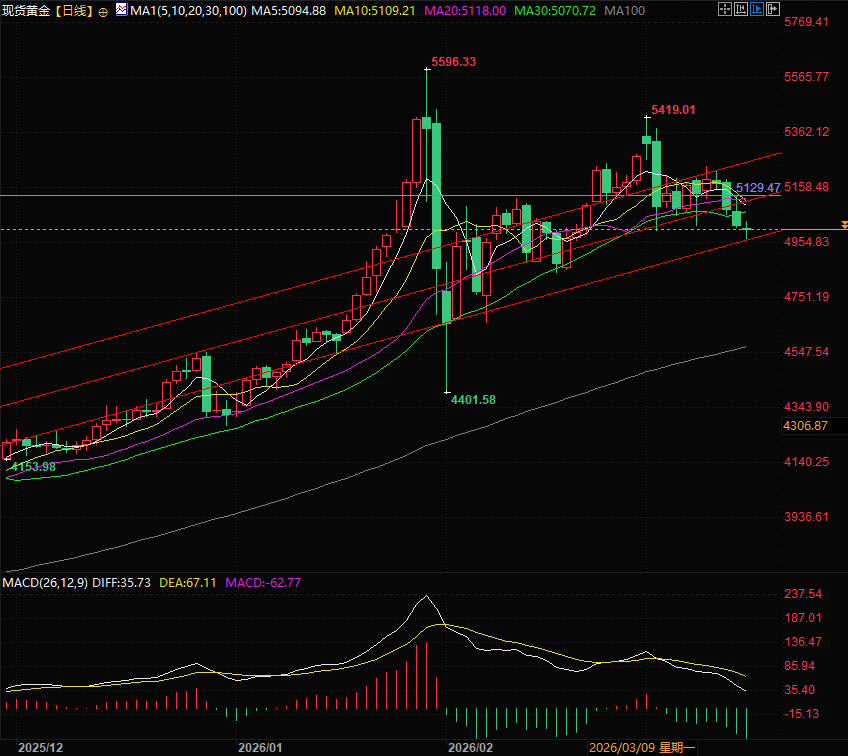
(Spot gold daily chart, source: FX678)
At 15:16 Beijing time, spot gold is currently trading at $5005 per ounce.
These shadow banks provide wealth management products to the first tier of wealthy individuals, while tending to concentrate loans on core technology companies.
This $1.8 trillion market is now mired in a triple whammy of redemption pressures, regulatory scrutiny, and technological change. The crisis has spread from non-bank institutions to traditional banking, with Deutsche Bank's $30 billion exposure triggering a stock price crash that serves as a stark illustration of this transmission trend.
The crisis was triggered by credit risks in the technology sector.
A joint report by Barclays and UBS shows that the private lending industry has extremely high exposure to software and technology companies, with some portfolios containing as much as 55% of such assets.
With the breakthrough development of artificial intelligence technology, the market has raised strong doubts about the survival ability and cash flow stability of traditional software companies, which has directly led to a sharp drop in the prices of related assets, thereby triggering panic redemptions by investors.
Domino effect triggered by redemption wave
The crisis spread in a clear chain reaction: Blue Owl Capital, which manages over $300 billion in assets, was the first to be affected. In order to cope with redemptions, it was forced to sell $140 million in loan assets at a discount, which exposed the truth of the liquidity crunch in the secondary market.
Following closely behind, Blackstone Group's BCRED fund faced massive redemption pressure, and senior partners had to use $150 million of their own funds to fill the gap and try their best to avoid triggering redemption restrictions.
BlackRock's actions became the final straw that broke the camel's back – it announced that it would write down $25 million of its subordinated debt to zero and set a 5% redemption limit for its $26 billion HPS fund, far below the actual redemption rate of 9.3%.
BlackRock's move has triggered industry-wide panic. The well-known financial blog Zerohedge pointed out that this is exactly the kind of operation that Blue Owl and Blackstone have tried to avoid, because it would trigger a vicious cycle of "passive selling - asset devaluation - more redemptions".
As expected, Clifton's $33 billion flagship fund subsequently faced a record 14% redemption requests, forcing the company to cap its first-quarter redemption rate at 7%. In European and American parlance, this became the "coal mine canary" that the market was worried about (in 19th-century coal mining, miners would take canaries with them down into the mine—because canaries are far more sensitive to toxic gases (such as methane and carbon monoxide) than humans, if the gas levels exceeded the limit, the canary would be the first to faint or die, allowing the miners to detect the danger in time and evacuate).
Analysts have drawn parallels between the current situation and the 2022 real estate fund crisis, suggesting that while redemption restrictions may prevent a short-term collapse, capital outflow pressures will remain high in the coming months, and the industry recovery could take years.
Risks are penetrating the traditional banking system.
What is even more alarming is that the crisis has broken through the boundaries of shadow banking and spread deeply into the traditional banking industry.
Deutsche Bank’s annual report revealed that its private lending exposure has increased to €25.9 billion (approximately US$30 billion), accounting for 5% of its total loans, while its exposure to the technology sector has reached €15.8 billion. This news directly caused the bank’s stock price to plummet by nearly 7% in a single day.
According to Moody's data, by mid-2025, U.S. banks will have extended $1.2 trillion in loans to non-deposit-taking financial institutions, nearly double the amount a decade ago.
The FDIC further disclosed that as of the end of 2025, U.S. banks had $1.4 trillion in outstanding loans to such institutions, and with undrawn loan commitments, the potential risk exposure was as high as $4.2 trillion.
In response to the risks, JPMorgan Chase has taken the lead by lowering the valuation of some private credit fund assets and reducing credit lines.
Several major banks have also launched a comprehensive review of their private lending exposure, covering key indicators such as loan structure and collateral prepayment rates.
Meanwhile, the crisis also affected the mortgage-backed securities (CLO) market. Data from Santander Capital Markets showed that in February 2026, high-yield CLO holdings by private credit funds fell by 4.1%, a stark contrast to the 1% increase in the previous two months, marking a complete reversal in market sentiment.
Market Controversy and Warning Significance
There is a clear divergence of opinion in the market regarding the nature of the current crisis. Senior figures in the private lending sector believe that the market has overreacted. Stephen L. Spitter, CEO of Cliffwater, pointed out that the annual return on private debt in 2025 will reach 9.33%, with an actual loss rate of 0.70%, which is far below historical levels, and credit losses are not strongly correlated with the current economic environment.
Tom Stark of the Cambridge Society also stated that the default cases such as Tricolor were isolated incidents caused by fraud or unique business models, and not a systemic problem in the industry.
However, opposition is equally strong. JPMorgan Chase CEO Jamie Dimon once jokingly referred to private credit funds as "cockroaches," implying that their risks are hidden and highly contagious. Allianz Group's chief economic advisor, Mohamed El-Erian, warned that the current liquidity crisis is brewing a "typical risk contagion," which could force investors into a passive situation where "high-quality assets are difficult to liquidate and they are forced to sell liquid assets."
As early as April 2024, the IMF called for stronger regulation of private lending, focusing on issues such as leverage, interconnectedness, and risk concentration.
The essence of this crisis is the inevitable result of the disorderly flow of funds into the shadow banking sector under the ultra-low interest rate environment following the 2008 financial crisis. At that time, the tightening of bank capital rules prompted credit demand to shift to non-bank institutions, and private lending attracted a large amount of capital with its high returns, even opening up to retail investors under policy encouragement.
Summary and Technical Analysis:
Today, with the global economy cooling down and the interest rate environment changing, problems such as insufficient transparency and lack of regulation in this field have come to a head.
Regardless of how the crisis ultimately unfolds, it has served as a wake-up call for the market: the $1.8 trillion private lending market is now deeply intertwined with the traditional financial system, and its risks are no longer isolated.
Even for top investors, high returns are inevitably accompanied by high risks, especially for unlisted instruments with specific redemption rules, which are not suitable for all "mainstream" investors.
For policymakers and regulators, bridging the regulatory gap between shadow banking and traditional banking, and balancing financing innovation with risk control, has become an urgent issue for maintaining financial stability.
As the market has warned, any sector labeled as "shadow" needs to be treated with the utmost caution.
As previous articles have consistently emphasized, gold prices, which have no recent yield, share similar characteristics with long-term dividend-yielding tech stocks, both being highly sensitive to interest rates. Therefore, the recent adjustment in gold prices has also been affected by the sell-off in the equity market. Once the risks are fully released, gold prices are expected to rebound.
From a technical perspective, gold prices found support at the lower trendline of the upward channel, which is expected to ease the downward trend and potentially lead to a temporary low.
(Spot gold daily chart, source: FX678)
At 15:16 Beijing time, spot gold is currently trading at $5005 per ounce.
- Risk Warning and Disclaimer
- The market involves risk, and trading may not be suitable for all investors. This article is for reference only and does not constitute personal investment advice, nor does it take into account certain users’ specific investment objectives, financial situation, or other needs. Any investment decisions made based on this information are at your own risk.