Amidst the ongoing conflict in the Middle East, how can traders cope with the risk of asset devaluation?
2026-03-16 15:44:29
On Monday, March 16th, the market opened with high volatility, and geopolitical risk premiums quickly flooded the energy sector. Escalating tensions in the Middle East caused crude oil prices to surge in early trading, before retreating somewhat as investors digested various news releases. Uncertainty surrounding the right of way in the Strait of Hormuz and the International Energy Agency's statement on strategic reserves became key variables influencing asset pricing. Meanwhile, major central banks around the world held a series of policy meetings this week, with monetary policy paths intertwined with geopolitical risks, creating a complex trading environment.
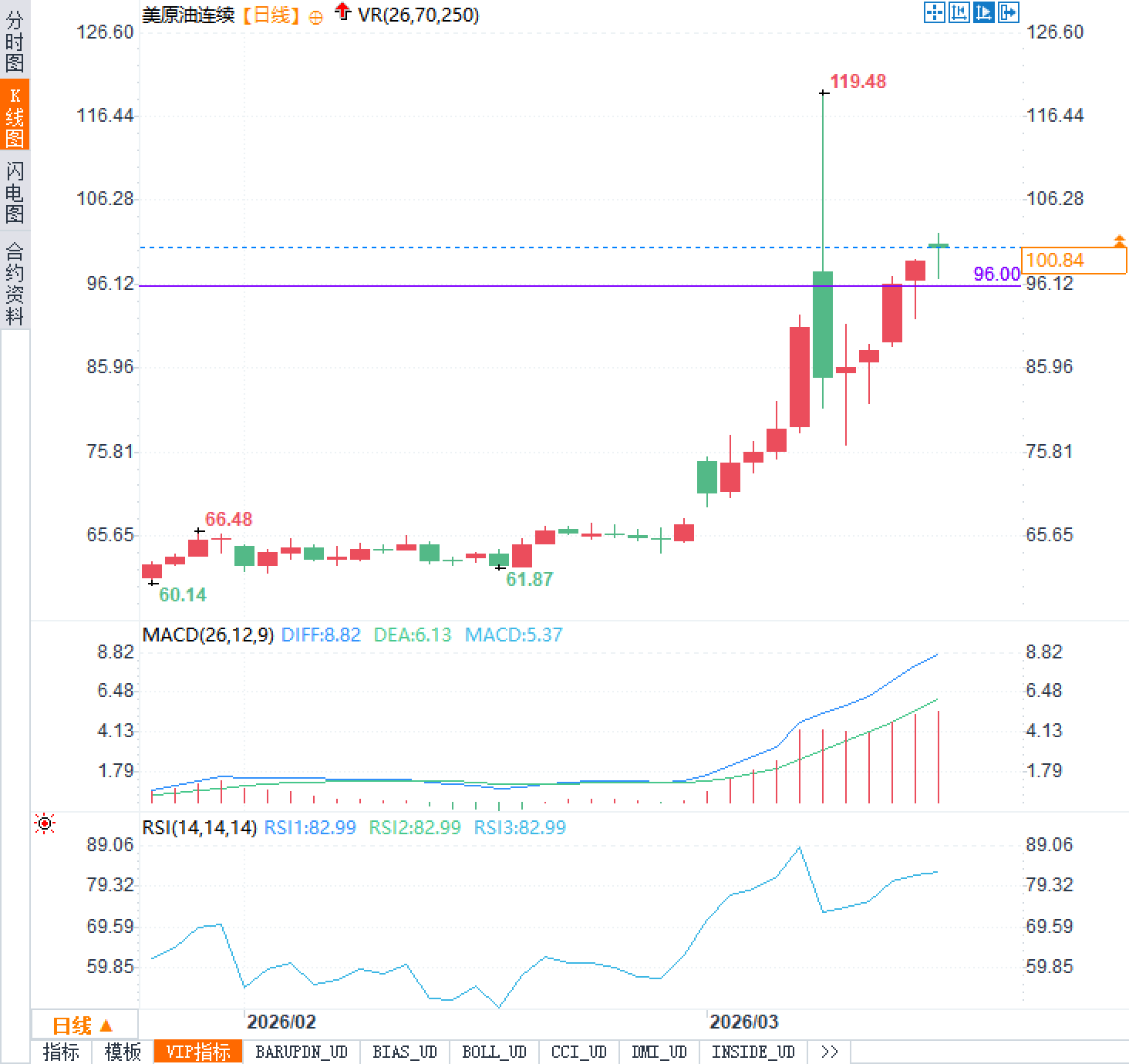
The crude oil market experienced significant volatility at the beginning of the week, with US crude oil prices briefly breaking through the $100 per barrel mark. Brent crude stabilized above $100, while Dubai crude traded above $123 per barrel. This price spread reflects differentiated pricing of regional supply risks. Although the successful passage of two liquefied petroleum gas (LPG) carriers through the Strait provided temporary relief, the bombing of Harge Island indicates that the conflict is far from over. Rising energy prices directly impact production costs, exacerbating global inflation stickiness. While the International Energy Agency has indicated it can release strategic reserves, the market is more concerned about whether actual shipping capacity will be hampered. For traders, the energy premium has become a key indicator of valuation pressure on risky assets; in a high oil price environment, corporate profits face the risk of compression. Furthermore, rising transportation costs will further push up end-product prices, creating a potential wage and price spiral, which poses a greater challenge for central banks in controlling inflation.
Recent US data has prompted a market reassessment of the growth outlook. Fourth-quarter GDP was revised down to 0.7%, significantly lower than the previous quarter's 4.4%. Sales growth was only 0.4%, while price pressures rose to 3.8%. The core personal consumption expenditures price index rose to 3.1% in January, confirming the persistence of inflationary pressures. These data have weakened the basis for expectations of interest rate cuts. The Federal Reserve is expected to keep interest rates unchanged at its meeting this week, maintaining policy independence even under administrative pressure. If geopolitical conflicts continue to push up energy costs, the likelihood of a rate cut this year will further decrease. The two-year Treasury yield rose to its highest level since last August, and the dollar index also hit a new high since November. The expectation of monetary policy tightening and the slowing growth data have fueled stagflation concerns, putting a double burden on equity asset valuations. Market pricing indicates that investors have begun to adjust their timetable for liquidity easing, and changes in the bond yield curve suggest that long-term capital costs may remain high.
This week features a packed global central bank calendar, with major institutions facing a dilemma between inflation and growth. The European Central Bank may need to tighten further to avoid repeating the mistakes of the energy crisis, while the Bank of England faces inflationary pressures amid zero growth data. The Swiss National Bank is expected to keep rates unchanged, with a strong Swiss franc helping to offset import inflation. The Bank of Japan is likely to continue its normalization path due to energy prices and a depreciating yen, while the Reserve Bank of Australia is expected to raise interest rates by 25 basis points. Central Bank Expected action Core considerations Fed Keep unchanged Inflation stickiness European Central Bank Potential tightening Energy inflation Bank of England Keep unchanged Stagnant growth Reserve Bank of Australia Interest rate hike of 25 basis points Inflation risk
Amidst geopolitical uncertainty, tech industry conferences have emerged as one of the few bright spots. Nvidia's developer conference is this week, expected to unveil its latest chip roadmap. Advances in artificial intelligence often boost semiconductor sentiment, providing the market with a growth narrative beyond safe haven. However, if energy costs remain high, costs in the tech hardware supply chain will also rise. The market needs to observe whether funds are willing to flow from defensive sectors to overvalued tech stocks. If the chip roadmap falls short of expectations, the tech sector may experience a correction, exacerbating overall market volatility. While productivity gains from technological innovation are a long-term means of offsetting inflationary pressures, short-term market sentiment remains dominated by macro liquidity.
Energy supply shocks and renewed inflation expectations
The crude oil market experienced significant volatility at the beginning of the week, with US crude oil prices briefly breaking through the $100 per barrel mark. Brent crude stabilized above $100, while Dubai crude traded above $123 per barrel. This price spread reflects differentiated pricing of regional supply risks. Although the successful passage of two liquefied petroleum gas (LPG) carriers through the Strait provided temporary relief, the bombing of Harge Island indicates that the conflict is far from over. Rising energy prices directly impact production costs, exacerbating global inflation stickiness. While the International Energy Agency has indicated it can release strategic reserves, the market is more concerned about whether actual shipping capacity will be hampered. For traders, the energy premium has become a key indicator of valuation pressure on risky assets; in a high oil price environment, corporate profits face the risk of compression. Furthermore, rising transportation costs will further push up end-product prices, creating a potential wage and price spiral, which poses a greater challenge for central banks in controlling inflation.
US Economic Data Revisions and the Federal Reserve's Policy Path
Recent US data has prompted a market reassessment of the growth outlook. Fourth-quarter GDP was revised down to 0.7%, significantly lower than the previous quarter's 4.4%. Sales growth was only 0.4%, while price pressures rose to 3.8%. The core personal consumption expenditures price index rose to 3.1% in January, confirming the persistence of inflationary pressures. These data have weakened the basis for expectations of interest rate cuts. The Federal Reserve is expected to keep interest rates unchanged at its meeting this week, maintaining policy independence even under administrative pressure. If geopolitical conflicts continue to push up energy costs, the likelihood of a rate cut this year will further decrease. The two-year Treasury yield rose to its highest level since last August, and the dollar index also hit a new high since November. The expectation of monetary policy tightening and the slowing growth data have fueled stagflation concerns, putting a double burden on equity asset valuations. Market pricing indicates that investors have begun to adjust their timetable for liquidity easing, and changes in the bond yield curve suggest that long-term capital costs may remain high.
The Divergence of Global Central Bank Monetary Policies
This week features a packed global central bank calendar, with major institutions facing a dilemma between inflation and growth. The European Central Bank may need to tighten further to avoid repeating the mistakes of the energy crisis, while the Bank of England faces inflationary pressures amid zero growth data. The Swiss National Bank is expected to keep rates unchanged, with a strong Swiss franc helping to offset import inflation. The Bank of Japan is likely to continue its normalization path due to energy prices and a depreciating yen, while the Reserve Bank of Australia is expected to raise interest rates by 25 basis points.
Can the technology sector hedge against geopolitical risks?
Amidst geopolitical uncertainty, tech industry conferences have emerged as one of the few bright spots. Nvidia's developer conference is this week, expected to unveil its latest chip roadmap. Advances in artificial intelligence often boost semiconductor sentiment, providing the market with a growth narrative beyond safe haven. However, if energy costs remain high, costs in the tech hardware supply chain will also rise. The market needs to observe whether funds are willing to flow from defensive sectors to overvalued tech stocks. If the chip roadmap falls short of expectations, the tech sector may experience a correction, exacerbating overall market volatility. While productivity gains from technological innovation are a long-term means of offsetting inflationary pressures, short-term market sentiment remains dominated by macro liquidity.
Frequently Asked Questions
Question 1: What specific impact will crude oil prices exceeding $100 have on global inflation?
A: Rising energy costs directly increase transportation and production expenses, leading to stronger stickiness in core inflation data. This forces central banks to maintain high interest rate policies for a longer period, thereby suppressing aggregate demand.
Question 2: Does the downward revision of US GDP data mean that an economic recession is inevitable?
A: The data revision shows a significant slowdown in growth, but it has not yet entered negative growth territory. Currently, it is more indicative of stagflation risk, which needs to be assessed in conjunction with employment data.
Question 3: What are the most pressing risks that global central banks should pay attention to at this week's meetings?
A: We need to pay attention to the wording of central banks’ responses to the second wave of inflation triggered by energy prices. Hawkish statements may exacerbate liquidity tensions and put further pressure on the valuations of risky assets.
- Risk Warning and Disclaimer
- The market involves risk, and trading may not be suitable for all investors. This article is for reference only and does not constitute personal investment advice, nor does it take into account certain users’ specific investment objectives, financial situation, or other needs. Any investment decisions made based on this information are at your own risk.