The US urgently draws a red line, while Iran offers a way out; a reversal in the gold and oil market may be brewing.
2026-03-19 18:57:14
During the Asian and European sessions on March 19, WTI crude oil futures opened higher but then fell. The price surged by as much as 3.5% intraday, with safe-haven buying triggered by geopolitical conflicts briefly pushing up oil prices. However, as signs of easing tensions emerged, the gains gradually narrowed.
The core trigger for this market volatility was Israel's surprise attack on key Iranian energy assets and the subsequent chain reaction. Although it did not cause a substantial supply disruption, it further exacerbated the uncertainty of energy transportation routes in the Middle East.

The incident stemmed from Israel's attack on Iran's South Pars gas field, which is shared with Qatar. Iran retaliated by targeting energy infrastructure in the Gulf region, including missile strikes on Qatar's Ras Lafan port, a top global liquefied natural gas export terminal.
Qatar Energy confirmed that the attack caused extensive damage to the local Pearl gas-to-oil facility and large-scale fires at several liquefied natural gas (LNG) facilities.
However, a key positive development came from Iran: the supply of the Asaluyeh gas plant, the core onshore processing terminal of the South Pars gas field, was unaffected, and there was no substantial supply contraction as the market had feared.
In addition, the Saudi Ministry of Defense disclosed that a drone crashed into the Samir refinery and damage assessment is currently underway, but there have been no reports of supply disruptions so far.
The key turning point in the easing of the situation came from the intervention and statement from the United States.
US President Trump made it clear that the United States had no prior knowledge of Israel's attack on Iranian facilities, and announced that "Israel will no longer take any action against the South Pars gas field," prohibiting Israel from continuing to attack this critical energy facility.
However, Trump also issued a strong warning that if Iran insists on attacking Qatar, the United States will use its unprecedented military force to completely destroy the entire South Pars gas field.
This statement of "prohibiting escalation of conflict and deterring retaliation" temporarily suppressed market concerns about the expansion of geopolitical conflicts, becoming the core reason for the rise and fall of oil prices.
From the market reaction, the price spread structure between Brent and WTI crude oil conveys a key trading signal: the price of Brent crude oil forward contracts rose rapidly, and the increase exceeded that of near-term contracts, reflecting that market expectations for long-term tight supply of crude oil transported from the Middle East are still rising, and the navigation risk in the Strait of Hormuz continues to be priced in.
In contrast, WTI crude oil, although rising slightly in line with Brent, lagged behind and the price spread remained high, indicating that US tanker operators were still in a wait-and-see state. Although the current price spread offered arbitrage opportunities, the uncertainty of the situation in the Middle East made the market hesitant to initiate long-distance transportation that could take up to 20 days, in order to avoid potential shipping risks.
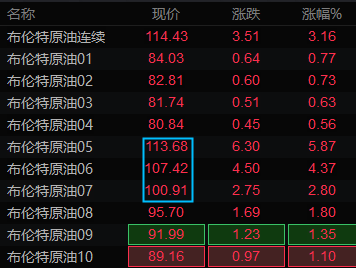
(The Brent crude oil futures spread has narrowed significantly in the past two days)
It is worth noting that medium- and long-term risk factors have not been eliminated.
While Iran stated that "attacking infrastructure would be of no benefit to either side," it still issued a strong warning that any attack on its islands would be met with devastating consequences.
Iranian lawmakers have revealed that parliament is considering passing a bill to impose tolls and taxes on ships attempting to safely pass through the Strait of Hormuz. This is delicate because it represents Iran's willingness to seek a mechanism for Gulf states to continue doing business while the war continues.
If the mechanism is implemented, oil prices are expected to rebound and global inflation is expected to fall, which would cause gold prices to rebound. Currently, gold traders are still closely watching the US 10-year Treasury yield as a benchmark for US interest rates.
Furthermore, the Strait of Hormuz remains paralyzed. Trump has called on other countries to assume responsibility for the security of the waterway, but some countries have refused to respond. Although NATO has stated that it is discussing a reopening plan, progress remains unclear.
The Iranian Islamic Revolutionary Guard Corps has confirmed that a Barbadian-flagged oil tanker has withdrawn from the Strait of Hormuz, indicating that shipping companies' concerns about the safety of the waterway are still escalating.
In summary, although this geopolitical conflict did not cause a substantial disruption to crude oil supply, and the intervention of the United States eased the short-term situation, leading to a rise and fall in oil prices, the uncertainty of Middle Eastern energy transportation routes has not been fundamentally eliminated.
The strength of Brent forward contracts reflects the market's pricing in medium- to long-term supply and transportation risks, while the spread structure between WTI and Brent reveals the current hesitant sentiment in the trading market.
For crude oil and gold traders, it is necessary to continuously monitor the progress of navigation in the Strait of Hormuz, whether the conflict between Iran and Israel will escalate again, and the repair of damaged energy facilities in the Middle East. In the short term, it is necessary to be wary of repeated geopolitical sentiments, while in the medium to long term, it is necessary to focus on the potential risks of rising transportation costs and supply disruptions.
Technical Analysis:
Spot gold has fallen to the lower channel line and the 0.618 level. 4700 is expected to become the price center for the next stage, and there are opportunities to buy in batches below 4700.
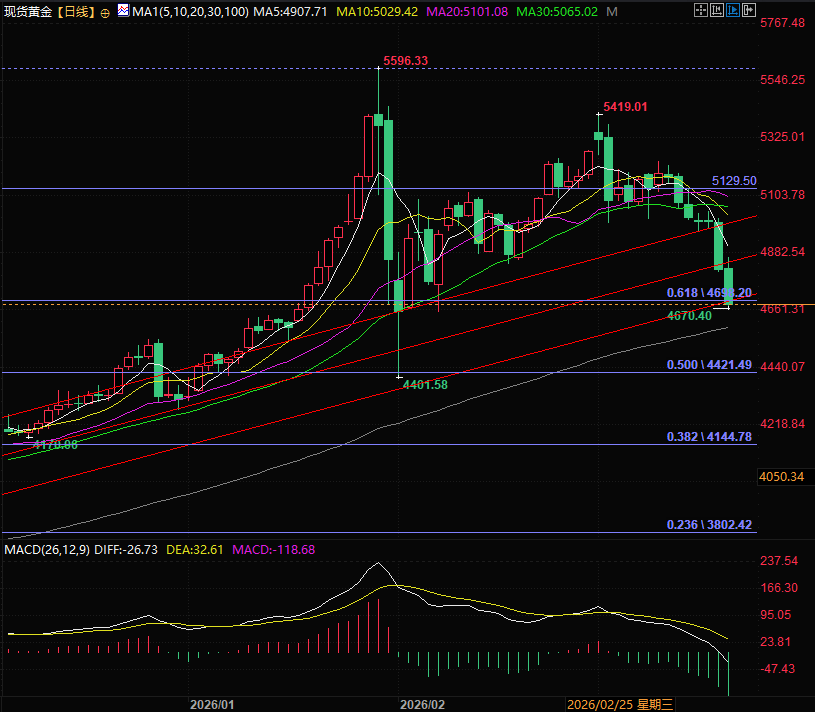
(Spot gold daily chart, source: FX678)
WTI crude oil continues to consolidate around the 5-day moving average and 94.66. 94.66 remains a key price level, and oil prices are expected to continue to fluctuate around this level.
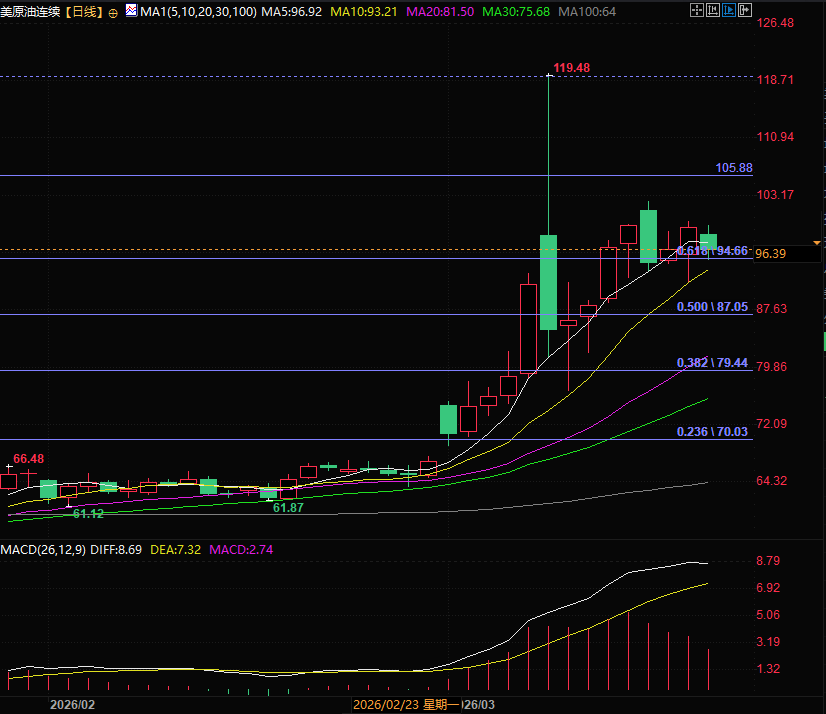
(WTI crude oil futures daily chart, source: EasyForex)
At 18:54 Beijing time, spot gold was trading at $4,678 per ounce, and WTI crude oil futures were trading at $96.42 per barrel.
The core trigger for this market volatility was Israel's surprise attack on key Iranian energy assets and the subsequent chain reaction. Although it did not cause a substantial supply disruption, it further exacerbated the uncertainty of energy transportation routes in the Middle East.
Iran and Israel attacked each other's energy facilities, but Iran may offer the US a way out.
The incident stemmed from Israel's attack on Iran's South Pars gas field, which is shared with Qatar. Iran retaliated by targeting energy infrastructure in the Gulf region, including missile strikes on Qatar's Ras Lafan port, a top global liquefied natural gas export terminal.
Qatar Energy confirmed that the attack caused extensive damage to the local Pearl gas-to-oil facility and large-scale fires at several liquefied natural gas (LNG) facilities.
However, a key positive development came from Iran: the supply of the Asaluyeh gas plant, the core onshore processing terminal of the South Pars gas field, was unaffected, and there was no substantial supply contraction as the market had feared.
In addition, the Saudi Ministry of Defense disclosed that a drone crashed into the Samir refinery and damage assessment is currently underway, but there have been no reports of supply disruptions so far.
Situation eases: US intervenes and draws red lines, prohibiting Israel from further attacks on energy facilities.
The key turning point in the easing of the situation came from the intervention and statement from the United States.
US President Trump made it clear that the United States had no prior knowledge of Israel's attack on Iranian facilities, and announced that "Israel will no longer take any action against the South Pars gas field," prohibiting Israel from continuing to attack this critical energy facility.
However, Trump also issued a strong warning that if Iran insists on attacking Qatar, the United States will use its unprecedented military force to completely destroy the entire South Pars gas field.
This statement of "prohibiting escalation of conflict and deterring retaliation" temporarily suppressed market concerns about the expansion of geopolitical conflicts, becoming the core reason for the rise and fall of oil prices.
Market signals: Brent crude is strong in the forward market, and the WTI spread reflects shipping hesitation.
From the market reaction, the price spread structure between Brent and WTI crude oil conveys a key trading signal: the price of Brent crude oil forward contracts rose rapidly, and the increase exceeded that of near-term contracts, reflecting that market expectations for long-term tight supply of crude oil transported from the Middle East are still rising, and the navigation risk in the Strait of Hormuz continues to be priced in.
In contrast, WTI crude oil, although rising slightly in line with Brent, lagged behind and the price spread remained high, indicating that US tanker operators were still in a wait-and-see state. Although the current price spread offered arbitrage opportunities, the uncertainty of the situation in the Middle East made the market hesitant to initiate long-distance transportation that could take up to 20 days, in order to avoid potential shipping risks.
(The Brent crude oil futures spread has narrowed significantly in the past two days)
Medium- to long-term risks remain: Gold prices are poised for a rebound.
It is worth noting that medium- and long-term risk factors have not been eliminated.
While Iran stated that "attacking infrastructure would be of no benefit to either side," it still issued a strong warning that any attack on its islands would be met with devastating consequences.
Iranian lawmakers have revealed that parliament is considering passing a bill to impose tolls and taxes on ships attempting to safely pass through the Strait of Hormuz. This is delicate because it represents Iran's willingness to seek a mechanism for Gulf states to continue doing business while the war continues.
If the mechanism is implemented, oil prices are expected to rebound and global inflation is expected to fall, which would cause gold prices to rebound. Currently, gold traders are still closely watching the US 10-year Treasury yield as a benchmark for US interest rates.
Furthermore, the Strait of Hormuz remains paralyzed. Trump has called on other countries to assume responsibility for the security of the waterway, but some countries have refused to respond. Although NATO has stated that it is discussing a reopening plan, progress remains unclear.
The Iranian Islamic Revolutionary Guard Corps has confirmed that a Barbadian-flagged oil tanker has withdrawn from the Strait of Hormuz, indicating that shipping companies' concerns about the safety of the waterway are still escalating.
Summary and Technical Analysis:
In summary, although this geopolitical conflict did not cause a substantial disruption to crude oil supply, and the intervention of the United States eased the short-term situation, leading to a rise and fall in oil prices, the uncertainty of Middle Eastern energy transportation routes has not been fundamentally eliminated.
The strength of Brent forward contracts reflects the market's pricing in medium- to long-term supply and transportation risks, while the spread structure between WTI and Brent reveals the current hesitant sentiment in the trading market.
For crude oil and gold traders, it is necessary to continuously monitor the progress of navigation in the Strait of Hormuz, whether the conflict between Iran and Israel will escalate again, and the repair of damaged energy facilities in the Middle East. In the short term, it is necessary to be wary of repeated geopolitical sentiments, while in the medium to long term, it is necessary to focus on the potential risks of rising transportation costs and supply disruptions.
Technical Analysis:
Spot gold has fallen to the lower channel line and the 0.618 level. 4700 is expected to become the price center for the next stage, and there are opportunities to buy in batches below 4700.
(Spot gold daily chart, source: FX678)
WTI crude oil continues to consolidate around the 5-day moving average and 94.66. 94.66 remains a key price level, and oil prices are expected to continue to fluctuate around this level.
(WTI crude oil futures daily chart, source: EasyForex)
At 18:54 Beijing time, spot gold was trading at $4,678 per ounce, and WTI crude oil futures were trading at $96.42 per barrel.
- Risk Warning and Disclaimer
- The market involves risk, and trading may not be suitable for all investors. This article is for reference only and does not constitute personal investment advice, nor does it take into account certain users’ specific investment objectives, financial situation, or other needs. Any investment decisions made based on this information are at your own risk.