Trump says the Strait will reopen "soon," but the market is not buying it: recovery is unlikely within months.
2026-03-25 11:18:45
Despite hopes for a potential agreement between the US and Iran, market participants are hesitant to expect tanker traffic in the Strait of Hormuz to return to normal in the coming weeks. Iran has effectively blocked the strait for four weeks, severely disrupting approximately 20% of global crude oil shipping routes and causing oil prices to fluctuate at high levels.
The number of ships passing through the Strait daily has dropped significantly. IMF PortWatch data shows that before the war, the number of ships passing through the Strait daily exceeded 100, but recently the seven-day moving average has dropped to an extremely low level, with some periods seeing only single digits.
On Wednesday (March 25) during Asian trading hours, US crude oil prices fluctuated downwards, currently trading around $89 per barrel, down about 3.6% from Tuesday's settlement price.
On the Kalshi platform, the probability of traffic in the Strait of Hormuz "returning to normal" (seven-day moving average of more than 60 vessels passing through) is as follows:
Return to normal by April 15: below 25%;
More than 67% of businesses returned to normal by June 1st.
76% of businesses returned to normal by July 1st.
Another Kalshi market data shows that the probability of the seven-day average transit volume exceeding 10 vessels on April 1st is approximately 30%-32%.
On Polymarket, the probability of a return to normalcy by the end of April is 39%, a significant drop from the high of nearly 80% at the beginning of the month. The market's cumulative betting volume has exceeded $1 million.
The Strait of Hormuz is the world's most important energy chokepoint, handling approximately 20% of global crude oil shipments before the war. Iran's response to the US-Israeli military strikes led to the de facto blockade of the strait, drastically reducing tanker traffic to a trickle, triggering the most severe energy supply shock in history.
Currently, most vessels are choosing to detour or remain on the sidelines, insurance costs are soaring, and safety concerns have become a major obstacle. Restoring normal traffic requires a reliable agreement from both sides and the establishment of a long-term navigation safety guarantee mechanism.
US President Donald Trump said on Monday that the Strait of Hormuz could reopen "soon" as part of his plan to suspend strikes on Iranian energy facilities for five days. He proposed that the US and Iran could jointly control the strait and said both sides were "very eager to reach an agreement."
Trump added that if the freedom of navigation issue cannot be resolved through negotiations, the United States will "continue its all-out bombing campaign." His statement briefly boosted risk assets in the market, reflecting optimism about ceasefire progress.
Market forecasts reflect a pessimistic outlook for a short-term recovery. In the long term, a recovery is more likely in June or July, but this still depends on the outcome of diplomatic negotiations.
In the short term (before April 15), the probability of the Strait of Hormuz returning to normal is low, the risk of energy supply disruption remains high, and oil prices and global inflationary pressures will remain high.
If the US-Iran negotiations achieve a breakthrough under the mediation of the mediators, traffic across the Strait may gradually resume in May or June; otherwise, continued blockade will exacerbate the tension in the global supply chain.
Investors should closely monitor Kalshi and Polymarket's live odds changes, Trump's subsequent statements, and IMF PortWatch transit data. Geopolitical risks remain the dominant factor in the current market, and any diplomatic developments could trigger significant volatility.
Market forecasters lack confidence in a short-term recovery in tanker traffic in the Strait of Hormuz. Kalshi estimates the probability before April 15th to be below 25%, while Polymarket estimates it at only 39% before the end of April. Despite Trump's statement that the strait may reopen soon and his proposal for joint control, current traffic volume remains extremely low, and the energy supply shock continues to unfold.
Overall, the time it takes for the Strait to reopen depends heavily on the progress of US-Iran negotiations. In the short term, uncertainty in the global energy market will remain high, while the probability of a medium- to long-term reopening will gradually increase over time.
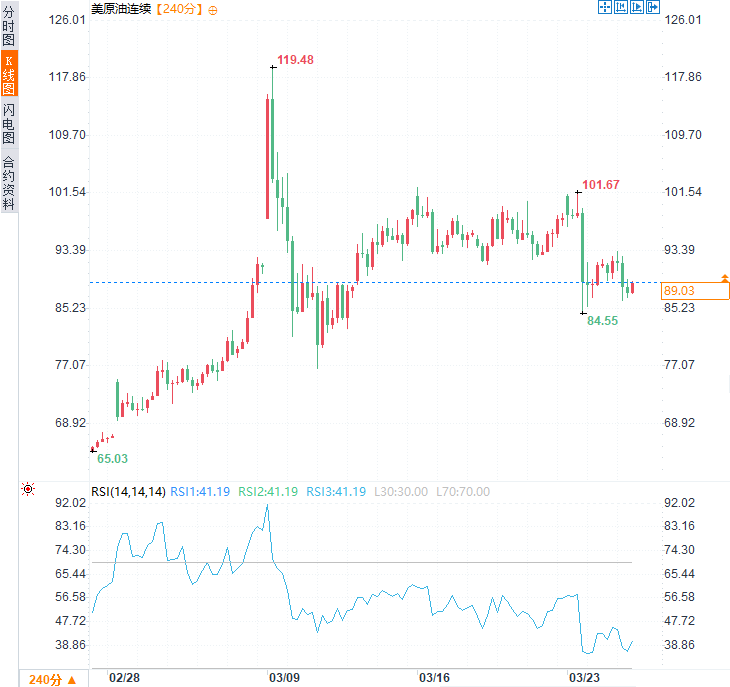
(US crude oil 4-hour chart, source: FX678)
At 11:18 Beijing time, US crude oil futures were trading at $88.41 per barrel.
The number of ships passing through the Strait daily has dropped significantly. IMF PortWatch data shows that before the war, the number of ships passing through the Strait daily exceeded 100, but recently the seven-day moving average has dropped to an extremely low level, with some periods seeing only single digits.
On Wednesday (March 25) during Asian trading hours, US crude oil prices fluctuated downwards, currently trading around $89 per barrel, down about 3.6% from Tuesday's settlement price.
Predicting market betting probabilities
On the Kalshi platform, the probability of traffic in the Strait of Hormuz "returning to normal" (seven-day moving average of more than 60 vessels passing through) is as follows:
Return to normal by April 15: below 25%;
More than 67% of businesses returned to normal by June 1st.
76% of businesses returned to normal by July 1st.
Another Kalshi market data shows that the probability of the seven-day average transit volume exceeding 10 vessels on April 1st is approximately 30%-32%.
On Polymarket, the probability of a return to normalcy by the end of April is 39%, a significant drop from the high of nearly 80% at the beginning of the month. The market's cumulative betting volume has exceeded $1 million.
Strategic significance of the Strait of Hormuz
The Strait of Hormuz is the world's most important energy chokepoint, handling approximately 20% of global crude oil shipments before the war. Iran's response to the US-Israeli military strikes led to the de facto blockade of the strait, drastically reducing tanker traffic to a trickle, triggering the most severe energy supply shock in history.
Currently, most vessels are choosing to detour or remain on the sidelines, insurance costs are soaring, and safety concerns have become a major obstacle. Restoring normal traffic requires a reliable agreement from both sides and the establishment of a long-term navigation safety guarantee mechanism.
Trump's related statements
US President Donald Trump said on Monday that the Strait of Hormuz could reopen "soon" as part of his plan to suspend strikes on Iranian energy facilities for five days. He proposed that the US and Iran could jointly control the strait and said both sides were "very eager to reach an agreement."
Trump added that if the freedom of navigation issue cannot be resolved through negotiations, the United States will "continue its all-out bombing campaign." His statement briefly boosted risk assets in the market, reflecting optimism about ceasefire progress.
Market forecasts reflect a pessimistic outlook for a short-term recovery. In the long term, a recovery is more likely in June or July, but this still depends on the outcome of diplomatic negotiations.
Market Outlook and Risks
In the short term (before April 15), the probability of the Strait of Hormuz returning to normal is low, the risk of energy supply disruption remains high, and oil prices and global inflationary pressures will remain high.
If the US-Iran negotiations achieve a breakthrough under the mediation of the mediators, traffic across the Strait may gradually resume in May or June; otherwise, continued blockade will exacerbate the tension in the global supply chain.
Investors should closely monitor Kalshi and Polymarket's live odds changes, Trump's subsequent statements, and IMF PortWatch transit data. Geopolitical risks remain the dominant factor in the current market, and any diplomatic developments could trigger significant volatility.
Editor's Summary
Market forecasters lack confidence in a short-term recovery in tanker traffic in the Strait of Hormuz. Kalshi estimates the probability before April 15th to be below 25%, while Polymarket estimates it at only 39% before the end of April. Despite Trump's statement that the strait may reopen soon and his proposal for joint control, current traffic volume remains extremely low, and the energy supply shock continues to unfold.
Overall, the time it takes for the Strait to reopen depends heavily on the progress of US-Iran negotiations. In the short term, uncertainty in the global energy market will remain high, while the probability of a medium- to long-term reopening will gradually increase over time.
(US crude oil 4-hour chart, source: FX678)
At 11:18 Beijing time, US crude oil futures were trading at $88.41 per barrel.
- Risk Warning and Disclaimer
- The market involves risk, and trading may not be suitable for all investors. This article is for reference only and does not constitute personal investment advice, nor does it take into account certain users’ specific investment objectives, financial situation, or other needs. Any investment decisions made based on this information are at your own risk.