The Iran war triggers a "strait disruption"! The energy impact far exceeds that of the Russia-Ukraine conflict.
2026-03-27 13:52:42
The current conflict with Iran has had a far greater impact on the oil market than any previous event. The Strait of Hormuz, a vital global oil shipping route, normally handles about 20% of the world's daily oil shipments of 100 million barrels. Currently, tanker traffic through the strait has plummeted to almost zero, disrupting the supply of approximately 10 million barrels or more of oil per day. Although countries like Saudi Arabia have attempted to divert some supplies via pipelines, their capacity to utilize spare capacity is limited.
Unlike previous conflicts, this disruption has effectively brought the Strait of Hormuz to a near standstill, and its impact may last far beyond the end of the conflict. Analysts point out that this is one of the largest disruptions to energy supplies in history, far exceeding the scale of the 1990 Gulf War or the initial stages of the 2022 Russia-Ukraine conflict .
On Friday (March 27) during the Asian session, US crude oil prices fluctuated downwards and are currently trading around $93.80 per barrel, down about 0.7% from the settlement price, but still significantly higher than the level before the outbreak of the US-Iran conflict.

Since the beginning of 2026, global benchmark oil futures prices have surged by approximately 80%. Although news of negotiations triggered a short-term sell-off, recent weeks' drone and missile clashes have driven prices further up, mirroring the trend following the outbreak of the Gulf War in 1990.
In contrast, oil prices were already high before the Russia-Ukraine conflict in 2022, and the anticipated disruptions did not fully materialize. Although oil prices remained in the single digits for several months, the actual supply shock was smaller than it is now. The supply tightening caused by the current Iran war is more persistent, and the market is more sensitive to geopolitical risks.
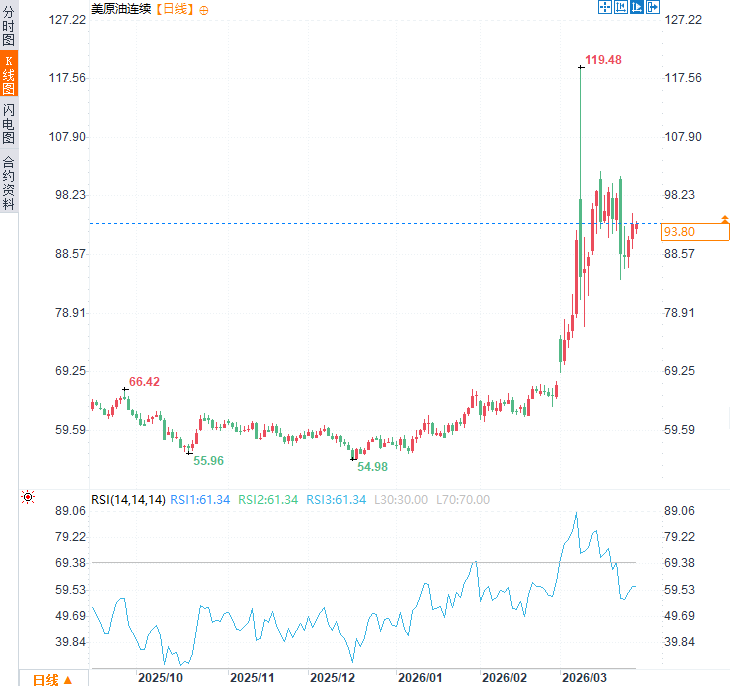
(US crude oil daily chart, source: FX678)
The current market sell-off appears sharp, but its extent is largely consistent with reactions to previous geopolitical shocks. The S&P 500 had already retreated before the war due to concerns about disruption in the artificial intelligence industry, and high valuations further amplified the volatility. Nevertheless, its pullback is still smaller than during the 2022 Russia-Ukraine conflict, when the index ultimately corrected by about 21% in the first half of the year due to rising inflation, damaged corporate profits, and increased borrowing costs.
In this shock, investors are more concerned about the drag on global economic growth caused by the duration of the conflict than about simple supply disruptions.
When this conflict occurred, the outlook for US interest rates was already quite uncertain, and US Treasury yields were already at a high level, subsequently rising further to their highest level since July 2025. Unlike before the 2022 Russia-Ukraine conflict, when the Federal Reserve was in the post-pandemic economic reopening phase and yields were low, this rise in yields reflects the market's dual concerns about persistent inflation and slowing growth.
After Iraq invaded Kuwait in 1990, the yield on 10-year US Treasury bonds rose even faster, as the US was more dependent on energy at the time, and the market reaction was more intense.
The United States has pledged a significant share of the largest-ever release of crude oil reserves, totaling approximately 172 million barrels, to the International Energy Agency's coordinated action. This oil is stored in a network of salt caverns along the Gulf Coast, and its release is slightly smaller than the emergency release authorized by the Biden administration in 2022 during the Russia-Ukraine conflict.
By historical standards, both releases were large-scale operations, demonstrating Washington's more proactive approach to addressing price shocks. The Trump administration sought peace talks with Iran while simultaneously increasing troop deployments and alleviating energy cost pressures by releasing reserves.
What makes this war with Iran unique is the structural and persistent nature of the supply disruptions. The de facto closure of the Strait of Hormuz has impacted not only crude oil but also liquefied natural gas (LNG) transport, leading to an unprecedented tightening of the global energy market. Analysts warn that with each day the conflict continues, the energy shock intensifies, increasing risks to the global economy, stock, and bond markets.
Compared to previous events, this shock is compounded by multiple factors, including a high base interest rate environment, overvalued stock markets, and limited spare capacity in major oil-producing countries, making market recovery more difficult . Data from institutions such as the U.S. Central Command also shows that damage to regional energy facilities has further prolonged the supply recovery cycle.
The impact of the Iran war on the oil market differs from previous conflicts in terms of the depth of supply disruption, the potential duration of the disruption, and its synergistic effects with the macroeconomic environment. While the magnitude of the oil price increase is similar to historical events, the structural tightening caused by the near closure of the Strait of Hormuz and the large-scale release of strategic reserves highlight the unique risks of this event. Ultimately, market trends will depend on the duration of the conflict and the progress of peace talks; investors need to closely monitor signals of energy supply recovery.
At 13:52 Beijing time, US crude oil futures were trading at $93.84 per barrel.
Unlike previous conflicts, this disruption has effectively brought the Strait of Hormuz to a near standstill, and its impact may last far beyond the end of the conflict. Analysts point out that this is one of the largest disruptions to energy supplies in history, far exceeding the scale of the 1990 Gulf War or the initial stages of the 2022 Russia-Ukraine conflict .
On Friday (March 27) during the Asian session, US crude oil prices fluctuated downwards and are currently trading around $93.80 per barrel, down about 0.7% from the settlement price, but still significantly higher than the level before the outbreak of the US-Iran conflict.
Comparison of oil price surges
Since the beginning of 2026, global benchmark oil futures prices have surged by approximately 80%. Although news of negotiations triggered a short-term sell-off, recent weeks' drone and missile clashes have driven prices further up, mirroring the trend following the outbreak of the Gulf War in 1990.
In contrast, oil prices were already high before the Russia-Ukraine conflict in 2022, and the anticipated disruptions did not fully materialize. Although oil prices remained in the single digits for several months, the actual supply shock was smaller than it is now. The supply tightening caused by the current Iran war is more persistent, and the market is more sensitive to geopolitical risks.
(US crude oil daily chart, source: FX678)
Severity of the stock market sell-off
The current market sell-off appears sharp, but its extent is largely consistent with reactions to previous geopolitical shocks. The S&P 500 had already retreated before the war due to concerns about disruption in the artificial intelligence industry, and high valuations further amplified the volatility. Nevertheless, its pullback is still smaller than during the 2022 Russia-Ukraine conflict, when the index ultimately corrected by about 21% in the first half of the year due to rising inflation, damaged corporate profits, and increased borrowing costs.
In this shock, investors are more concerned about the drag on global economic growth caused by the duration of the conflict than about simple supply disruptions.
Divergence in US Treasury yields
When this conflict occurred, the outlook for US interest rates was already quite uncertain, and US Treasury yields were already at a high level, subsequently rising further to their highest level since July 2025. Unlike before the 2022 Russia-Ukraine conflict, when the Federal Reserve was in the post-pandemic economic reopening phase and yields were low, this rise in yields reflects the market's dual concerns about persistent inflation and slowing growth.
After Iraq invaded Kuwait in 1990, the yield on 10-year US Treasury bonds rose even faster, as the US was more dependent on energy at the time, and the market reaction was more intense.
Strategic petroleum reserve release scale
The United States has pledged a significant share of the largest-ever release of crude oil reserves, totaling approximately 172 million barrels, to the International Energy Agency's coordinated action. This oil is stored in a network of salt caverns along the Gulf Coast, and its release is slightly smaller than the emergency release authorized by the Biden administration in 2022 during the Russia-Ukraine conflict.
By historical standards, both releases were large-scale operations, demonstrating Washington's more proactive approach to addressing price shocks. The Trump administration sought peace talks with Iran while simultaneously increasing troop deployments and alleviating energy cost pressures by releasing reserves.
Unique impact on the global economy and markets
What makes this war with Iran unique is the structural and persistent nature of the supply disruptions. The de facto closure of the Strait of Hormuz has impacted not only crude oil but also liquefied natural gas (LNG) transport, leading to an unprecedented tightening of the global energy market. Analysts warn that with each day the conflict continues, the energy shock intensifies, increasing risks to the global economy, stock, and bond markets.
Compared to previous events, this shock is compounded by multiple factors, including a high base interest rate environment, overvalued stock markets, and limited spare capacity in major oil-producing countries, making market recovery more difficult . Data from institutions such as the U.S. Central Command also shows that damage to regional energy facilities has further prolonged the supply recovery cycle.
Editor's Summary
The impact of the Iran war on the oil market differs from previous conflicts in terms of the depth of supply disruption, the potential duration of the disruption, and its synergistic effects with the macroeconomic environment. While the magnitude of the oil price increase is similar to historical events, the structural tightening caused by the near closure of the Strait of Hormuz and the large-scale release of strategic reserves highlight the unique risks of this event. Ultimately, market trends will depend on the duration of the conflict and the progress of peace talks; investors need to closely monitor signals of energy supply recovery.
At 13:52 Beijing time, US crude oil futures were trading at $93.84 per barrel.
- Risk Warning and Disclaimer
- The market involves risk, and trading may not be suitable for all investors. This article is for reference only and does not constitute personal investment advice, nor does it take into account certain users’ specific investment objectives, financial situation, or other needs. Any investment decisions made based on this information are at your own risk.