JPMorgan Chase report: "US energy independence" is an illusion! Refined oil price increases have surpassed those in Europe.
2026-04-07 14:54:35
In his latest report, Michael Samballest, head of markets and investment strategy at JPMorgan Asset and Wealth Management, directly addresses several common misconceptions about the Iran war. He emphasizes that while the United States is a net exporter of certain fuels, this does not mean that the US economy is completely immune to the impact of a sharp rise in global energy prices.
Samballest points out that U.S. fossil fuel independence is not the robust economic firewall that many investors imagine.

Many investors believe that the United States, as a net energy exporter, is largely immune to the energy price shocks caused by a war with Iran. Samballestre explicitly refutes this view: "The notion that the United States is isolated from the market consequences of a closure of the Strait of Hormuz is fundamentally flawed. U.S. fossil fuel independence is not the economic firewall you might imagine."
He emphasized that even though the United States has a high overall energy self-sufficiency rate, rising global energy prices will still be transmitted to the US economy through various channels, including rising refining costs, increased transportation costs, and pressure on consumer spending.
While media attention has focused on supply risks in Europe and Asia, actual data shows that prices for many refined petroleum products, and even crude oil, have risen even more sharply in the United States. Samballestre used actual market price movements as evidence that the energy shock has indeed been transmitted to the US market.
This phenomenon illustrates that the interconnectedness of the global energy market goes far beyond what can be explained by the simple label of "net exporter" .
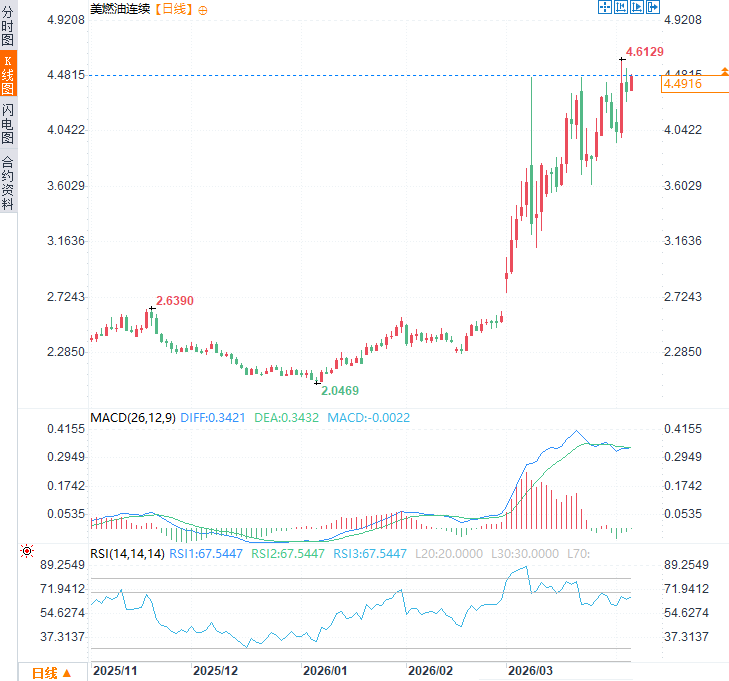
(US fuel oil daily chart, source: FX678)
Trump has repeatedly set deadlines for Iran to immediately reopen the Strait of Hormuz, threatening severe military consequences if it fails to do so. However, Samballest, citing economist Dina Esfandiari, points out that Iran has realized that using the global economy as a "hostage" to demand passage fees is more effective and cheaper than previously thought.
Even if the Strait reopens tomorrow, it will still take time for regional production to return to pre-war levels. Furthermore, the US, Israel, and Gulf states may already have insufficient interceptor missile stocks, and Iran's enhanced drone capabilities further strengthen its asymmetric warfare capabilities.
The U.S. Navy has only four aging minesweepers in active service, all of which are scheduled for retirement, which will weaken its ability to clear the Strait in the future.
While U.S. stocks have seen relatively mild declines so far, Samball warned that a conflict that drags on for more than a few months would have serious consequences for the market and the U.S. economy. Stephanie Link, chief investment strategist at Tower Advisors, also stated that the current relative resilience of U.S. stocks is due to upward revisions in earnings expectations and a stable labor market, but a prolonged conflict would bring even greater problems.
Samballest used Stephen King's novel "Saloemen" as a metaphor for the current situation: interventions that begin with good intentions may end up costing all parties more.
In his latest report, JPMorgan strategist Michael Samballest systematically refuted several major misconceptions in the market regarding the energy impact of the Iran war. The core conclusion is that U.S. fossil fuel independence is far from sufficient to completely insulate against the impact of rising global energy prices, a reality already reflected in the increases in U.S. domestic refined product and crude oil prices.
The reopening of the Strait of Hormuz faces multiple obstacles, with Iran's asymmetric warfare tactics and toll-based strategies demonstrating its resilience. If the conflict drags on, the current relatively mild correction in US stocks may only be temporary, and the US economy and global markets will face greater pressure.
Q: Why is it a misconception that "US energy independence can insulate against shocks"?
A: Although the United States is a net exporter of certain fuels, rising global energy prices will still be transmitted to the US economy through multiple channels, including refining costs, transportation expenses, and consumer spending. JPMorgan strategist Sam Barrett points out that the increase in domestic refined product and crude oil prices in the US is actually greater than in many European and Asian countries, proving that the impact has indeed occurred.
Q: What are the practical difficulties in reopening the Strait of Hormuz?
A: Even if operations resume tomorrow, regional production will still take time to recover. The US, Israel, and Gulf states may be running out of interceptor missile stocks, and the US Navy has only four aging minesweepers left, which are scheduled for retirement. Iran's enhanced drone capabilities make its asymmetric warfare more threatening; these factors collectively increase the complexity of reopening air traffic.
Q: Why is Iran's hostage strategy considered effective?
A: Bloomberg Middle East economists point out that Iran has found it cheaper and easier to manipulate the global economy as a hostage to extort money than previously thought. This strategy has already proven effective in the current conflict and may encourage Iran to maintain a high-pressure stance.
Q: Has the current performance of US stocks fully reflected the risk of war?
A: US stocks have seen relatively mild declines so far, but experts warn that if the conflict drags on for more than a few months, it will have a serious impact on the market and the US economy. The current relative resilience stems mainly from upward revisions to earnings expectations and a stable labor market, but a prolonged energy shock and inflationary pressures could disrupt this balance.
Q: How should investors view the long-term impact of the Iran war on the US economy?
A: Sambac cautions investors against over-reliance on the "energy independence" narrative. High energy prices will continue to squeeze consumers and businesses, limiting the Federal Reserve's policy space. If the conflict persists, the risks of demand destruction and recession will increase significantly, and investors should be wary of the cascading effects on the energy, transportation, and manufacturing sectors.
At 14:53 Beijing time, US fuel oil futures were quoted at $4.5377 per gallon.
Samballest points out that U.S. fossil fuel independence is not the robust economic firewall that many investors imagine.
Misconception 1: U.S. energy independence can completely isolate it from shocks.
Many investors believe that the United States, as a net energy exporter, is largely immune to the energy price shocks caused by a war with Iran. Samballestre explicitly refutes this view: "The notion that the United States is isolated from the market consequences of a closure of the Strait of Hormuz is fundamentally flawed. U.S. fossil fuel independence is not the economic firewall you might imagine."
He emphasized that even though the United States has a high overall energy self-sufficiency rate, rising global energy prices will still be transmitted to the US economy through various channels, including rising refining costs, increased transportation costs, and pressure on consumer spending.
Misconception 2: The price increases of refined oil products and crude oil in the United States are less than those in other regions.
While media attention has focused on supply risks in Europe and Asia, actual data shows that prices for many refined petroleum products, and even crude oil, have risen even more sharply in the United States. Samballestre used actual market price movements as evidence that the energy shock has indeed been transmitted to the US market.
This phenomenon illustrates that the interconnectedness of the global energy market goes far beyond what can be explained by the simple label of "net exporter" .
(US fuel oil daily chart, source: FX678)
Misconception 3: The Strait of Hormuz can be reopened quickly.
Trump has repeatedly set deadlines for Iran to immediately reopen the Strait of Hormuz, threatening severe military consequences if it fails to do so. However, Samballest, citing economist Dina Esfandiari, points out that Iran has realized that using the global economy as a "hostage" to demand passage fees is more effective and cheaper than previously thought.
Even if the Strait reopens tomorrow, it will still take time for regional production to return to pre-war levels. Furthermore, the US, Israel, and Gulf states may already have insufficient interceptor missile stocks, and Iran's enhanced drone capabilities further strengthen its asymmetric warfare capabilities.
The U.S. Navy has only four aging minesweepers in active service, all of which are scheduled for retirement, which will weaken its ability to clear the Strait in the future.
Misconception 4: The US stock market has fully priced in the risk of war.
While U.S. stocks have seen relatively mild declines so far, Samball warned that a conflict that drags on for more than a few months would have serious consequences for the market and the U.S. economy. Stephanie Link, chief investment strategist at Tower Advisors, also stated that the current relative resilience of U.S. stocks is due to upward revisions in earnings expectations and a stable labor market, but a prolonged conflict would bring even greater problems.
Samballest used Stephen King's novel "Saloemen" as a metaphor for the current situation: interventions that begin with good intentions may end up costing all parties more.
Editor's Summary
In his latest report, JPMorgan strategist Michael Samballest systematically refuted several major misconceptions in the market regarding the energy impact of the Iran war. The core conclusion is that U.S. fossil fuel independence is far from sufficient to completely insulate against the impact of rising global energy prices, a reality already reflected in the increases in U.S. domestic refined product and crude oil prices.
The reopening of the Strait of Hormuz faces multiple obstacles, with Iran's asymmetric warfare tactics and toll-based strategies demonstrating its resilience. If the conflict drags on, the current relatively mild correction in US stocks may only be temporary, and the US economy and global markets will face greater pressure.
Frequently Asked Questions
Q: Why is it a misconception that "US energy independence can insulate against shocks"?
A: Although the United States is a net exporter of certain fuels, rising global energy prices will still be transmitted to the US economy through multiple channels, including refining costs, transportation expenses, and consumer spending. JPMorgan strategist Sam Barrett points out that the increase in domestic refined product and crude oil prices in the US is actually greater than in many European and Asian countries, proving that the impact has indeed occurred.
Q: What are the practical difficulties in reopening the Strait of Hormuz?
A: Even if operations resume tomorrow, regional production will still take time to recover. The US, Israel, and Gulf states may be running out of interceptor missile stocks, and the US Navy has only four aging minesweepers left, which are scheduled for retirement. Iran's enhanced drone capabilities make its asymmetric warfare more threatening; these factors collectively increase the complexity of reopening air traffic.
Q: Why is Iran's hostage strategy considered effective?
A: Bloomberg Middle East economists point out that Iran has found it cheaper and easier to manipulate the global economy as a hostage to extort money than previously thought. This strategy has already proven effective in the current conflict and may encourage Iran to maintain a high-pressure stance.
Q: Has the current performance of US stocks fully reflected the risk of war?
A: US stocks have seen relatively mild declines so far, but experts warn that if the conflict drags on for more than a few months, it will have a serious impact on the market and the US economy. The current relative resilience stems mainly from upward revisions to earnings expectations and a stable labor market, but a prolonged energy shock and inflationary pressures could disrupt this balance.
Q: How should investors view the long-term impact of the Iran war on the US economy?
A: Sambac cautions investors against over-reliance on the "energy independence" narrative. High energy prices will continue to squeeze consumers and businesses, limiting the Federal Reserve's policy space. If the conflict persists, the risks of demand destruction and recession will increase significantly, and investors should be wary of the cascading effects on the energy, transportation, and manufacturing sectors.
At 14:53 Beijing time, US fuel oil futures were quoted at $4.5377 per gallon.
- Risk Warning and Disclaimer
- The market involves risk, and trading may not be suitable for all investors. This article is for reference only and does not constitute personal investment advice, nor does it take into account certain users’ specific investment objectives, financial situation, or other needs. Any investment decisions made based on this information are at your own risk.