A two-week ceasefire between the US and Iran is unlikely to stem the inflationary impact; the Eurozone's 2026 growth forecast may be revised downward by 0.6 percentage points.
2026-04-09 13:18:29
According to APP, European Commission Executive Vice-President Dombrovskis warned that despite the two-week ceasefire agreement between the US and Iran, the EU will still suffer from stagflation shocks due to low growth and rising inflation. Given the continued high uncertainty surrounding the consequences of the Middle East conflict, the European Commission is preparing to lower its growth forecast for this year.

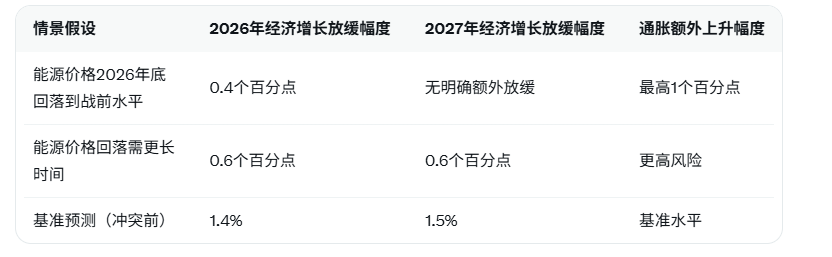
Dombrovskis recently stated, "This is undoubtedly a welcome step towards cooling down and is expected to alleviate the energy crisis." However, he also emphasized that "the economic impact of the war with Iran remains highly uncertain," and that "we are clearly facing a stagflation shock." The European Commission will update its official GDP forecast in May, having previously projected economic growth at 1.4% this year and 1.5% in 2027 before the conflict erupted.
The latest scenario analysis shows that if energy prices fall back to pre-war levels by the end of 2026, economic growth this year could slow by as much as 0.4 percentage points; if the decline takes longer, economic growth could slow by 0.6 percentage points each year. This estimate is highly consistent with the committee's internal assessment at the end of March, reflecting the vulnerability of the EU economy, which is highly dependent on energy imports, to geopolitical risks in the Middle East.
Current market data shows that as of April 9, 2026, Brent crude oil prices hovered around $97 per barrel. Although this has fallen somewhat from the peak of the conflict, it remains in a high range, and the restoration of canal logistics cannot fully offset the cost pressures caused by the previous supply disruptions. As a major net importer of energy globally, the EU is likely to see its overall inflation rise by 0.3-0.5 percentage points for every 10% increase in oil and gas prices, while simultaneously suppressing business investment and household consumption, creating a typical stagflationary combination.
At a deeper level, the core of the stagflation shock lies in the combination of supply-side shocks and insufficient demand resilience. The Middle East conflict has driven up energy costs, directly increasing production and transportation expenses, while the temporary nature of the ceasefire agreement makes it difficult for businesses to quickly regain confidence. Although the EU's labor market remains resilient, high inflation will erode real income, hindering the recovery of consumption; meanwhile, the European Central Bank's monetary policy space is limited, making it significantly more difficult to control inflation while stabilizing growth.
This warning also highlights the fragility of the global energy supply chain. As major manufacturing bases, Asian powers may face indirect pressure on their export competitiveness due to slowing EU demand. However, a sustained low oil price environment could provide a cost buffer for industrial production in these Asian giants. Going forward, key factors to watch include the actual progress of the resumption of navigation in the Strait of Hormuz, OPEC+ supply strategies, and the policy synergy between the Federal Reserve and the European Central Bank.
Editor's Summary : While the short-term ceasefire between the US and Iran has injected some stability into the energy market, the EU's cautious assessment of stagflation risks indicates that the long-term tail effects of the Middle East conflict will continue to test the resilience of the European economy. The May forecast update will be a crucial market indicator, and investors and policymakers need to closely monitor energy prices and geopolitical developments, and proactively plan for risk hedging.
Dombrovskis recently stated, "This is undoubtedly a welcome step towards cooling down and is expected to alleviate the energy crisis." However, he also emphasized that "the economic impact of the war with Iran remains highly uncertain," and that "we are clearly facing a stagflation shock." The European Commission will update its official GDP forecast in May, having previously projected economic growth at 1.4% this year and 1.5% in 2027 before the conflict erupted.
The latest scenario analysis shows that if energy prices fall back to pre-war levels by the end of 2026, economic growth this year could slow by as much as 0.4 percentage points; if the decline takes longer, economic growth could slow by 0.6 percentage points each year. This estimate is highly consistent with the committee's internal assessment at the end of March, reflecting the vulnerability of the EU economy, which is highly dependent on energy imports, to geopolitical risks in the Middle East.
Current market data shows that as of April 9, 2026, Brent crude oil prices hovered around $97 per barrel. Although this has fallen somewhat from the peak of the conflict, it remains in a high range, and the restoration of canal logistics cannot fully offset the cost pressures caused by the previous supply disruptions. As a major net importer of energy globally, the EU is likely to see its overall inflation rise by 0.3-0.5 percentage points for every 10% increase in oil and gas prices, while simultaneously suppressing business investment and household consumption, creating a typical stagflationary combination.
At a deeper level, the core of the stagflation shock lies in the combination of supply-side shocks and insufficient demand resilience. The Middle East conflict has driven up energy costs, directly increasing production and transportation expenses, while the temporary nature of the ceasefire agreement makes it difficult for businesses to quickly regain confidence. Although the EU's labor market remains resilient, high inflation will erode real income, hindering the recovery of consumption; meanwhile, the European Central Bank's monetary policy space is limited, making it significantly more difficult to control inflation while stabilizing growth.
This warning also highlights the fragility of the global energy supply chain. As major manufacturing bases, Asian powers may face indirect pressure on their export competitiveness due to slowing EU demand. However, a sustained low oil price environment could provide a cost buffer for industrial production in these Asian giants. Going forward, key factors to watch include the actual progress of the resumption of navigation in the Strait of Hormuz, OPEC+ supply strategies, and the policy synergy between the Federal Reserve and the European Central Bank.
Editor's Summary : While the short-term ceasefire between the US and Iran has injected some stability into the energy market, the EU's cautious assessment of stagflation risks indicates that the long-term tail effects of the Middle East conflict will continue to test the resilience of the European economy. The May forecast update will be a crucial market indicator, and investors and policymakers need to closely monitor energy prices and geopolitical developments, and proactively plan for risk hedging.
- Risk Warning and Disclaimer
- The market involves risk, and trading may not be suitable for all investors. This article is for reference only and does not constitute personal investment advice, nor does it take into account certain users’ specific investment objectives, financial situation, or other needs. Any investment decisions made based on this information are at your own risk.