The ceasefire eased tensions, but transportation risks remained, causing oil prices to fluctuate slightly.
2026-04-09 16:21:23
International oil prices have entered a recovery phase after experiencing sharp fluctuations. Brent crude oil prices had previously fallen sharply due to the announcement of a two-week ceasefire agreement between the United States and Iran, dropping as much as 14% to around $95, but subsequently stabilized and rebounded to around $97, indicating that although market sentiment has eased somewhat, supply-side risks have not yet been eliminated.
From an event-driven perspective, the ceasefire announcement significantly reduced market risk premiums in the short term. As expectations of de-escalation increased, global stock markets rebounded in unison to near one-month highs, and risk assets generally performed better. However, oil prices did not continue to fall, reflecting lingering market concerns about supply-side issues.
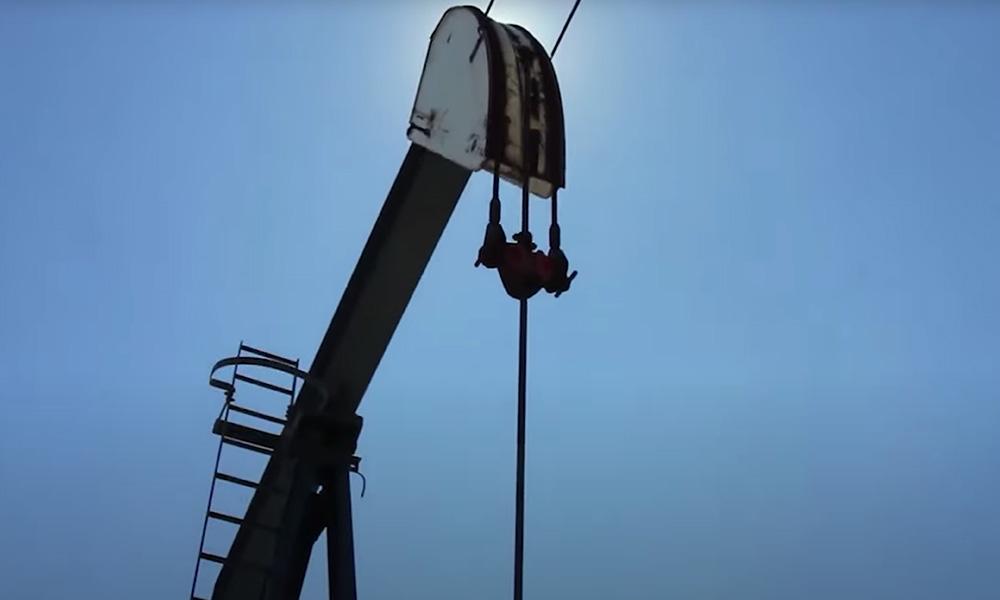
"Global markets breathed a sigh of relief after the ceasefire announcement, but oil prices remain highly sensitive to supply risks in the Middle East."
The market's primary focus remains on the strait's navigation status. This waterway is a vital global energy transport route, and its operational status directly determines the smooth flow of crude oil supplies. Although Iran has indicated it may reopen the waterway later this week, this is contingent on further progress on relevant agreements, leading to market caution regarding a short-term resumption.
"The Strait of Hormuz remains blocked, and the market is awaiting a clear signal that traffic will resume."
From the supply side, although the market had previously worried about severe damage to energy infrastructure, the extent of the damage appears to be relatively manageable. This is one of the key reasons why oil prices have not experienced a sustained and significant increase.
"At present, the damage to energy infrastructure is still within a controllable range."
However, even with limited infrastructure damage, uncertainties in the transportation sector could still have a substantial impact on supply. As long as key shipping routes are not fully restored, market concerns about supply disruptions will be difficult to dispel.
From a market sentiment perspective, investors are currently trending towards calm. Oil prices have gradually stabilized after a period of sharp fluctuations, indicating that the market is shifting from emotion-driven factors to a rational assessment of supply and demand fundamentals. However, at the same time, the market remains highly vigilant, particularly regarding the recovery of transportation.
"The market is closely watching whether the volume of traffic through the strait will rebound in the coming days."
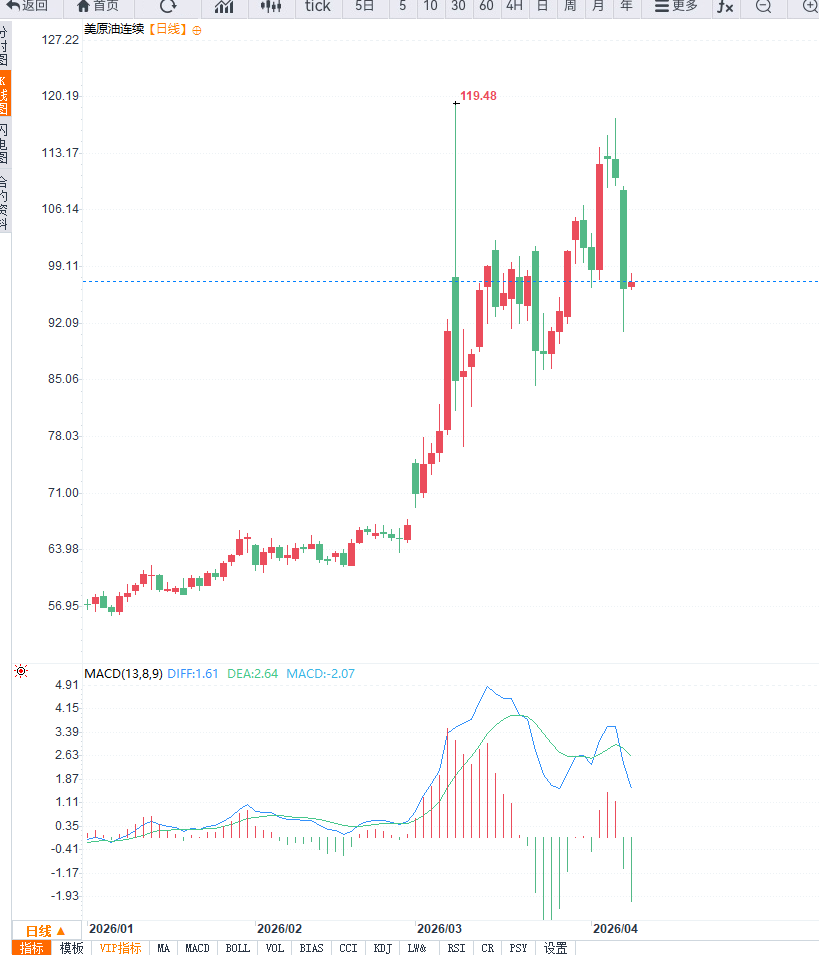
From a technical perspective, the daily chart shows that Brent crude oil prices have rebounded after a sharp decline, but are still generally within a high-level consolidation range. The current level around $95 provides short-term support, representing a previous low area; on the upside, the key resistance level to watch is the $100 psychological and technical resistance level.
In terms of momentum, daily indicators show that the bearish momentum has eased somewhat after its release, but a clear reversal signal has not yet formed. Looking at the 4-hour chart, the price is trading within a rebound channel, but upward momentum is limited. If it fails to break through $100, it may continue to fluctuate within a range.
Editor's Summary:
Current oil price movements exhibit a typical pattern of "risk easing coexisting with supply concerns." The ceasefire announcement has suppressed risk premiums in the short term, but the incomplete reopening of the Strait of Hormuz perpetuates supply uncertainty. With infrastructure damage relatively manageable, market focus has shifted from "whether damage occurred" to "when it will be restored." Future oil price movements will depend on the progress of transportation recovery and further stabilization of the geopolitical situation. Until then, oil prices are likely to maintain a high-level consolidation pattern.
From an event-driven perspective, the ceasefire announcement significantly reduced market risk premiums in the short term. As expectations of de-escalation increased, global stock markets rebounded in unison to near one-month highs, and risk assets generally performed better. However, oil prices did not continue to fall, reflecting lingering market concerns about supply-side issues.
"Global markets breathed a sigh of relief after the ceasefire announcement, but oil prices remain highly sensitive to supply risks in the Middle East."
The market's primary focus remains on the strait's navigation status. This waterway is a vital global energy transport route, and its operational status directly determines the smooth flow of crude oil supplies. Although Iran has indicated it may reopen the waterway later this week, this is contingent on further progress on relevant agreements, leading to market caution regarding a short-term resumption.
"The Strait of Hormuz remains blocked, and the market is awaiting a clear signal that traffic will resume."
From the supply side, although the market had previously worried about severe damage to energy infrastructure, the extent of the damage appears to be relatively manageable. This is one of the key reasons why oil prices have not experienced a sustained and significant increase.
"At present, the damage to energy infrastructure is still within a controllable range."
However, even with limited infrastructure damage, uncertainties in the transportation sector could still have a substantial impact on supply. As long as key shipping routes are not fully restored, market concerns about supply disruptions will be difficult to dispel.
From a market sentiment perspective, investors are currently trending towards calm. Oil prices have gradually stabilized after a period of sharp fluctuations, indicating that the market is shifting from emotion-driven factors to a rational assessment of supply and demand fundamentals. However, at the same time, the market remains highly vigilant, particularly regarding the recovery of transportation.
"The market is closely watching whether the volume of traffic through the strait will rebound in the coming days."
From a technical perspective, the daily chart shows that Brent crude oil prices have rebounded after a sharp decline, but are still generally within a high-level consolidation range. The current level around $95 provides short-term support, representing a previous low area; on the upside, the key resistance level to watch is the $100 psychological and technical resistance level.
In terms of momentum, daily indicators show that the bearish momentum has eased somewhat after its release, but a clear reversal signal has not yet formed. Looking at the 4-hour chart, the price is trading within a rebound channel, but upward momentum is limited. If it fails to break through $100, it may continue to fluctuate within a range.
Editor's Summary:
Current oil price movements exhibit a typical pattern of "risk easing coexisting with supply concerns." The ceasefire announcement has suppressed risk premiums in the short term, but the incomplete reopening of the Strait of Hormuz perpetuates supply uncertainty. With infrastructure damage relatively manageable, market focus has shifted from "whether damage occurred" to "when it will be restored." Future oil price movements will depend on the progress of transportation recovery and further stabilization of the geopolitical situation. Until then, oil prices are likely to maintain a high-level consolidation pattern.
- Risk Warning and Disclaimer
- The market involves risk, and trading may not be suitable for all investors. This article is for reference only and does not constitute personal investment advice, nor does it take into account certain users’ specific investment objectives, financial situation, or other needs. Any investment decisions made based on this information are at your own risk.