The fading of "tail risks" triggered a dollar sell-off, with US-Iran negotiations becoming the next key turning point in the currency market.
2026-04-11 09:20:33
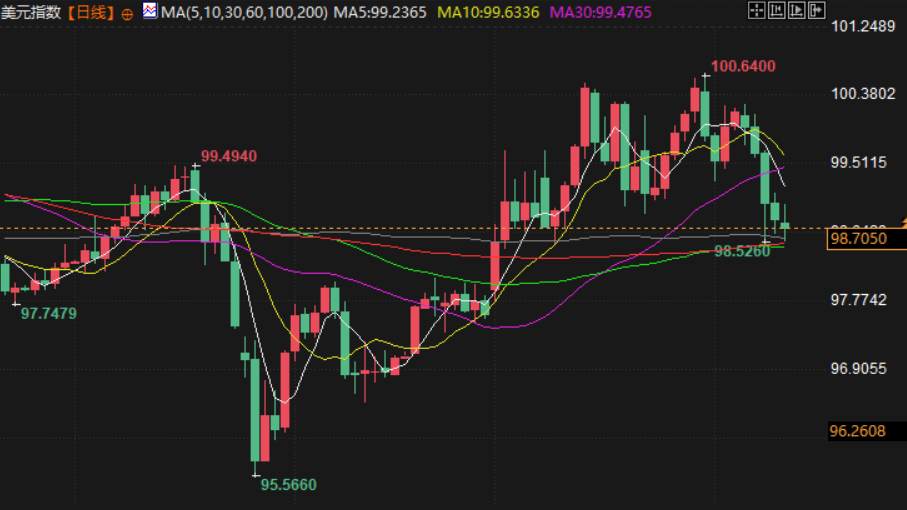
The dollar index fell 1.6% this week, its biggest weekly drop since January, as the US and Iran prepare to hold permanent ceasefire talks in Islamabad, Pakistan, on Saturday. The dollar continued to decline on Friday, falling 0.22%. In March, the dollar had risen strongly as one of the few safe-haven assets, when the situation in Iran caused oil prices to surge, stocks and gold to fall, and inflation concerns pressured the bond market.
However, since the fragile ceasefire agreement reached on Tuesday, markets have begun unwinding wartime safe-haven positions. The euro rose 1.8% against the dollar to $1.173 this week, the pound rose 2% to $1.347, and the risk-sensitive Australian and New Zealand dollars rose nearly 3% against the dollar. This movement clearly indicates that investors are betting that the ceasefire in the Gulf region will last and oil shipments will gradually resume, thus abandoning the previously frantically bought dollars.
Ceasefire agreement and market optimism
Despite the ceasefire agreement being described as "fragile" by all parties and navigation in the Strait of Hormuz remaining severely restricted, overall market sentiment is surprisingly optimistic. Marc Chandler, chief market strategist at Bannockburn Global Forex, noted, "Despite some signs of a breakdown in the ceasefire, the market as a whole seems relatively optimistic."
Data released on Friday showed that U.S. consumer prices rose at their fastest pace in nearly four years in March, mainly driven by oil prices and the impact of tariffs. However, the data was largely in line with expectations and did not shake the core logic of the foreign exchange market.
BNZ senior strategist Jason Wong explained that people bought dollars at the height of the war, but now, with the "tail risk of a very bad outcome clearly diminishing," they are starting to sell dollars. This sentiment-driven reversal in positioning is the direct driver of the dollar's decline. However, analysts also warn that the ceasefire remains fragile, and market sentiment could quickly reverse if weekend negotiations fail to make progress.
Negotiation prospects and tail risk reversal
The direct US-Iran talks scheduled for Saturday in Islamabad have become a key variable in the currency market. Wong stated, "A positive outcome from the talks will be detrimental to the dollar. If by next Monday the talks are not progressing well and ships remain scarce… the situation could quickly reverse." Currently, market pricing implies a higher probability of some form of agreement, thus putting downward pressure on the dollar. However, Iran has threatened a "devastating strike" against US and Israeli targets if an agreement in its interests is not reached. This creates significant uncertainty regarding the outcome of the talks.
Analysts generally believe that the market is currently overly optimistic, and any news of a breakdown in negotiations would trigger a violent rebound in the US dollar. Furthermore, shipping through the Strait of Hormuz has not yet resumed, and the global daily transport of approximately 20 million barrels of oil remains disrupted—a stark contrast to the optimistic expectations in the currency market.
The yen was the weakest performer, facing a dilemma between the risk of stagflation and interest rate hikes in Japan.
Among major currencies, the yen was the weakest performer. The yen fell to 159.255 against the dollar on Friday, recovering only slightly from its lows, and was sold off against other currencies. The yen has been pressured by Japan's low interest rates in recent years and has recently become vulnerable to soaring oil prices due to its heavy reliance on Middle Eastern fuel imports—high oil prices worsen the trade balance and diminish the yen's attractiveness.
Commerzbank predicts that the dollar will fall to 145 against the yen by December (meaning the yen will appreciate), but the yen will remain under pressure in the short term.
The Bank of Japan is facing unprecedented difficulties. Data shows that Japan's corporate price index rose 2.6% year-on-year in March, higher than the expected 2.4% and significantly faster than the previous value of 2.1%. The import price index, denominated in yen, surged 7.9% year-on-year. The war with Iran has effectively blocked the Strait of Hormuz, pushing up oil prices and strengthening the safe-haven dollar against the yen, which has exacerbated Japan's imported inflation while dragging down corporate profits and economic growth that is highly dependent on fuel imports.
Bank of Japan Deputy Governor Ryozo Himino told parliament that Japan has not yet fallen into stagflation because the inflation rate is hovering around the 2% target and economic growth is above potential. However, he warned: "If the conflict in the Middle East continues, dragging down economic growth and pushing up inflation, it will present us with a dilemma and a thorny problem."
The market expects a roughly 60% probability of a rate hike by the Bank of Japan at its April 27-28 meeting; however, consumer confidence has declined for the first time in three months, indicating that soaring fuel costs are impacting the fragile recovery. The Bank of Japan must walk a tightrope between controlling inflation and avoiding stifling growth.
Expectations of a European Central Bank interest rate hike supported the euro.
The euro rose 1.8% against the dollar this week, supported not only by a weaker dollar but also by the continued rise in expectations of a European Central Bank (ECB) interest rate hike. The market has already fully priced in the ECB's expectation of two 25-basis-point rate hikes by the ECB in 2026. ECB Governing Council member Winsch explicitly stated that if the war with Iran continues, the ECB may need to raise interest rates, and he did not rule out taking action as early as April 30th.
Francesco Pesole of ING points out that market expectations of a European Central Bank (ECB) rate hike could boost the euro's performance, with the market still anticipating a 58-basis-point increase by the end of the year, even as oil prices fall. He states that without a permanent ceasefire and continued uncertainty surrounding oil supply, the ECB is unlikely to rush into easing policy. This divergence in monetary policy—expectations of the Federal Reserve holding rates steady or even cutting them, versus expectations of a rate hike by the ECB—provides additional momentum for the euro.
However, since the fragile ceasefire agreement reached on Tuesday, markets have begun unwinding wartime safe-haven positions. The euro rose 1.8% against the dollar to $1.173 this week, the pound rose 2% to $1.347, and the risk-sensitive Australian and New Zealand dollars rose nearly 3% against the dollar. This movement clearly indicates that investors are betting that the ceasefire in the Gulf region will last and oil shipments will gradually resume, thus abandoning the previously frantically bought dollars.
Ceasefire agreement and market optimism
Despite the ceasefire agreement being described as "fragile" by all parties and navigation in the Strait of Hormuz remaining severely restricted, overall market sentiment is surprisingly optimistic. Marc Chandler, chief market strategist at Bannockburn Global Forex, noted, "Despite some signs of a breakdown in the ceasefire, the market as a whole seems relatively optimistic."
Data released on Friday showed that U.S. consumer prices rose at their fastest pace in nearly four years in March, mainly driven by oil prices and the impact of tariffs. However, the data was largely in line with expectations and did not shake the core logic of the foreign exchange market.
BNZ senior strategist Jason Wong explained that people bought dollars at the height of the war, but now, with the "tail risk of a very bad outcome clearly diminishing," they are starting to sell dollars. This sentiment-driven reversal in positioning is the direct driver of the dollar's decline. However, analysts also warn that the ceasefire remains fragile, and market sentiment could quickly reverse if weekend negotiations fail to make progress.
Negotiation prospects and tail risk reversal
The direct US-Iran talks scheduled for Saturday in Islamabad have become a key variable in the currency market. Wong stated, "A positive outcome from the talks will be detrimental to the dollar. If by next Monday the talks are not progressing well and ships remain scarce… the situation could quickly reverse." Currently, market pricing implies a higher probability of some form of agreement, thus putting downward pressure on the dollar. However, Iran has threatened a "devastating strike" against US and Israeli targets if an agreement in its interests is not reached. This creates significant uncertainty regarding the outcome of the talks.
Analysts generally believe that the market is currently overly optimistic, and any news of a breakdown in negotiations would trigger a violent rebound in the US dollar. Furthermore, shipping through the Strait of Hormuz has not yet resumed, and the global daily transport of approximately 20 million barrels of oil remains disrupted—a stark contrast to the optimistic expectations in the currency market.
The yen was the weakest performer, facing a dilemma between the risk of stagflation and interest rate hikes in Japan.
Among major currencies, the yen was the weakest performer. The yen fell to 159.255 against the dollar on Friday, recovering only slightly from its lows, and was sold off against other currencies. The yen has been pressured by Japan's low interest rates in recent years and has recently become vulnerable to soaring oil prices due to its heavy reliance on Middle Eastern fuel imports—high oil prices worsen the trade balance and diminish the yen's attractiveness.
Commerzbank predicts that the dollar will fall to 145 against the yen by December (meaning the yen will appreciate), but the yen will remain under pressure in the short term.
The Bank of Japan is facing unprecedented difficulties. Data shows that Japan's corporate price index rose 2.6% year-on-year in March, higher than the expected 2.4% and significantly faster than the previous value of 2.1%. The import price index, denominated in yen, surged 7.9% year-on-year. The war with Iran has effectively blocked the Strait of Hormuz, pushing up oil prices and strengthening the safe-haven dollar against the yen, which has exacerbated Japan's imported inflation while dragging down corporate profits and economic growth that is highly dependent on fuel imports.
Bank of Japan Deputy Governor Ryozo Himino told parliament that Japan has not yet fallen into stagflation because the inflation rate is hovering around the 2% target and economic growth is above potential. However, he warned: "If the conflict in the Middle East continues, dragging down economic growth and pushing up inflation, it will present us with a dilemma and a thorny problem."
The market expects a roughly 60% probability of a rate hike by the Bank of Japan at its April 27-28 meeting; however, consumer confidence has declined for the first time in three months, indicating that soaring fuel costs are impacting the fragile recovery. The Bank of Japan must walk a tightrope between controlling inflation and avoiding stifling growth.
Expectations of a European Central Bank interest rate hike supported the euro.
The euro rose 1.8% against the dollar this week, supported not only by a weaker dollar but also by the continued rise in expectations of a European Central Bank (ECB) interest rate hike. The market has already fully priced in the ECB's expectation of two 25-basis-point rate hikes by the ECB in 2026. ECB Governing Council member Winsch explicitly stated that if the war with Iran continues, the ECB may need to raise interest rates, and he did not rule out taking action as early as April 30th.
Francesco Pesole of ING points out that market expectations of a European Central Bank (ECB) rate hike could boost the euro's performance, with the market still anticipating a 58-basis-point increase by the end of the year, even as oil prices fall. He states that without a permanent ceasefire and continued uncertainty surrounding oil supply, the ECB is unlikely to rush into easing policy. This divergence in monetary policy—expectations of the Federal Reserve holding rates steady or even cutting them, versus expectations of a rate hike by the ECB—provides additional momentum for the euro.
- Risk Warning and Disclaimer
- The market involves risk, and trading may not be suitable for all investors. This article is for reference only and does not constitute personal investment advice, nor does it take into account certain users’ specific investment objectives, financial situation, or other needs. Any investment decisions made based on this information are at your own risk.