Negotiations broke down, but unexpected buying opportunities emerged, leading to a rare simultaneous rise in gold and oil prices. The reasons behind this are analyzed below.
2026-04-13 18:53:24
On Monday (April 13), during the Asian and European sessions, global risk assets, including spot gold, opened lower and oil prices opened significantly higher due to the failure to reach an agreement in weekend negotiations and information that the United States might block Iran's access to the sea. However, a surprising turn of events occurred: oil prices continued to maintain their high levels, while gold rebounded unilaterally. Currently, spot gold is maintaining its rebound trend and trading at 4700, down 0.8%, forming a false positive candlestick pattern of opening lower and rebounding. Meanwhile, international oil prices remain at a high level of around 8%.
The US-Iran talks in Islamabad failed to reach a substantive agreement, and the two sides remain sharply divided on core issues.
Iran has disclosed that the US made three demands in principle: equal sharing of revenue and management benefits from the Strait of Hormuz, removal of all 60% enriched uranium, and deprivation of Iran's uranium enrichment rights for the next 20 years. All of these demands were firmly rejected by Iran.
Furthermore, no consensus was reached on six major issues, including terminating uranium enrichment activities, dismantling nuclear facilities, unfreezing funds, and canceling strait passage fees, highlighting the complexity of the negotiations.
Currently, Iran appears to be in a more proactive position than expected, indicating that it has a lot of bargaining chips at its disposal, and the expectation of continued negotiations has not diminished.

Despite the breakdown in negotiations, there is still room for de-escalation in the region.
US Vice President Vance hinted that the US proposal could still serve as a basis for negotiations, while the Iranian Foreign Ministry emphasized that "diplomacy never ends." Experts judged that both sides were willing to continue negotiations, and the two-week ceasefire consensus theoretically remained valid. Subsequent "small agreements" such as partial ceasefires and freezing some sanctions may pave the way for formal negotiations.
The Iranian ambassador to Pakistan also stated that the talks were the beginning of a coherent process and laid the foundation for further diplomatic progress.
Zhang Yidong, a well-known domestic analyst, offered an important perspective on the situation: "There's no need to dwell on the outcome of the US-Iran negotiations; what's more important than the outcome is this ceasefire."
He pointed out that the ceasefire itself shows that all parties have the desire to withdraw and "lick their wounds." Even if the situation fluctuates afterward, as long as it does not deteriorate significantly, the capital market will gradually get used to it.
In his view, the failure of the negotiations was expected, but the probability of a full-scale escalation of the war was extremely low. "Fighting while negotiating" was the more likely path of development—it was not likely that the negotiations would break down and lead to a full-scale conflict. The de-escalation of the situation was still the most probable event.
It is worth noting that U.S. military actions are subject to both legal constraints and domestic strategic demands.
Under the War Powers Act, the president can bypass Congress to initiate military action within 60 days, providing short-term legal support for the Trump administration's tough stance. However, the 60-day period expires at the end of April. Furthermore, as mentioned in previous articles, the core idea of relocating American manufacturing to the domestic market requires high oil prices and a suitable level of inflation, which determines that the US is unwilling to get involved in a large-scale war that depletes its national strength.
For the United States, the key is to find a balance between inflation and high oil prices, and to prevent soaring energy prices from disrupting the process of manufacturing reshoring.
Trump's announcement of sending more minesweepers to the Strait of Hormuz and conducting minesweeping operations in conjunction with the UK and other countries sends a pragmatic signal: the minesweeping operation directly benefits navigation safety in the strait, and Iran is unlikely to attack minesweeping vessels with humanitarian intent, thus preventing the situation from spiraling out of control.
The US demand for "equal distribution of benefits" in the Strait of Hormuz further exposes its core contradiction: it is neither able to control the Strait of Hormuz alone, nor is it extremely worried about rising oil prices, but rather it is trying to gain practical benefits through bargaining while avoiding escalation of the situation that could drag down its domestic strategy.
The breakdown of US-Iran negotiations did not trigger an irrational surge in oil prices; instead, it perpetuated the core narrative that "pre-war levels are difficult to return to," stemming from the fact that the shipping capacity constraints in the Strait of Hormuz are unlikely to ease in the short term.
Although the mine-clearing operation is a positive sign for navigation, Iran maintains clear control over the strait, opening it only to non-military vessels that comply with specific regulations. Military vessels approaching the strait will be considered a violation of the ceasefire agreement and will be met with a strong response.
Under this control, navigation efficiency in the Taiwan Strait is unlikely to return to pre-conflict levels, and uncertainty in the global energy supply chain persists.
First, the fact that diplomatic channels were not completely closed and the expectation of "fighting while negotiating" cooled risk aversion and reduced the probability of the situation escalating into a full-scale conflict.
Secondly, the 60-day timeframe for US military action creates constraints, coupled with the US's restrained attitude towards large-scale war, limiting the window of opportunity for geopolitical risks.
Finally, Zhang Yidong's emphasis on the "priority of safety pricing" logic is still effective—the current international order is in a period of restructuring and turmoil, and the safety attribute remains a core consideration in asset allocation, which provides long-term valuation support for gold. Meanwhile, the marginal easing of the short-term strengthening trend of the US dollar index has further reduced the valuation pressure on gold.
Multiple factors combined to drive the gold market, after digesting short-term negative factors, shifted to an optimistic expectation of "easing tensions + time constraints," leading to a volatile rebound in prices.
For crude oil, the progress of the recovery of shipping capacity in the Strait of Hormuz, the strength of Iran's enforcement of navigation rules, and whether the United States will use its 60-day military authority to expand the blockade will be the core variables affecting oil prices, and the high-level narrative is likely to continue.
For gold, the progress of diplomatic negotiations, the stability of the ceasefire agreement, the trend of the US dollar index, and the persistence of the "safe-haven pricing priority" logic will determine the switching of its safe-haven attributes and valuation logic. In the short term, it may maintain a volatile but slightly upward trend.
The interaction between geopolitical risks and market pricing continues, and investors need to pay close attention to the diplomatic developments and military actions of the US and Iran, while also being wary of potential turning points such as the approaching deadline of the War Powers Act and the resumption of negotiations.
Based on Zhang Yidong's assessment, under the backdrop of "fighting while negotiating" and "prioritizing safe pricing," investors should focus on the geopolitical premium opportunities in crude oil and the long-term safe-haven value of gold, seeking differentiated investment opportunities amidst uncertainty.
Technical Analysis: Another phenomenon has emerged in the spot gold technical picture, namely a rebound after a gap-down break below key support. If the rebound fails to continue and rise above 4721 or even 4750, there is a risk of further decline after the rebound from the support level.
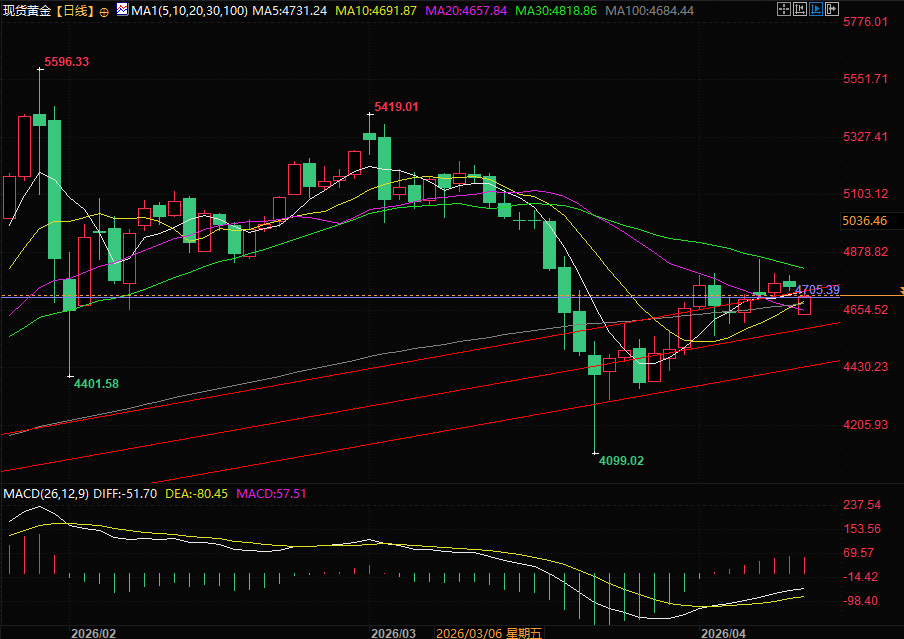
(Spot gold daily chart, source: EasyForex subsidiary)
WTI crude oil gapped up above a key level and is currently consolidating between two important levels. These two key levels and the potential rebound were highlighted in last week's article.
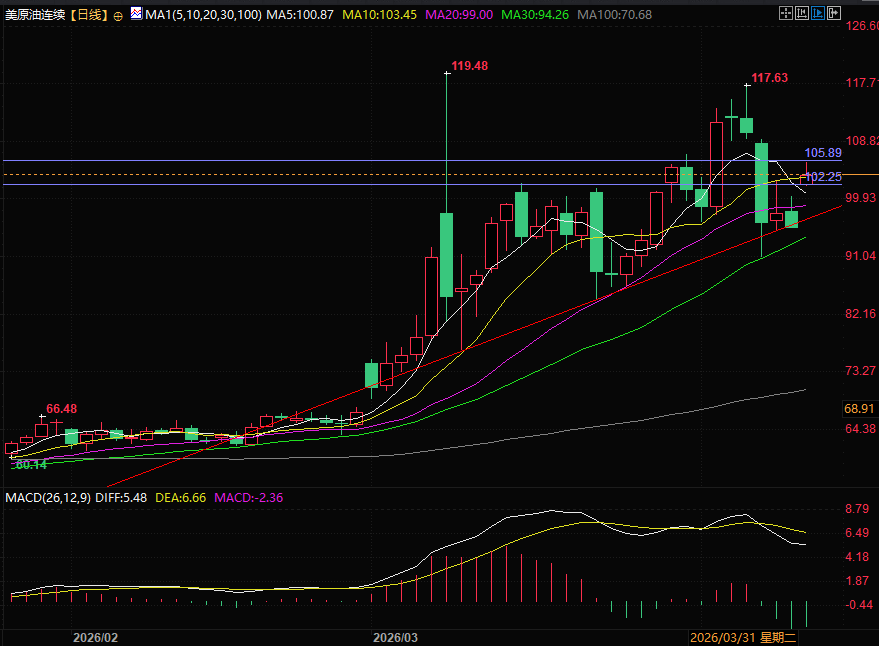
(WTI crude oil futures daily chart, source: EasyForex)
At 18:51 Beijing time, spot gold was trading at $4,722 per ounce, and WTI crude oil futures were trading at $103.99 per barrel.
The US-Iran talks in Islamabad failed to reach a substantive agreement, and the two sides remain sharply divided on core issues.
Iran has disclosed that the US made three demands in principle: equal sharing of revenue and management benefits from the Strait of Hormuz, removal of all 60% enriched uranium, and deprivation of Iran's uranium enrichment rights for the next 20 years. All of these demands were firmly rejected by Iran.
Furthermore, no consensus was reached on six major issues, including terminating uranium enrichment activities, dismantling nuclear facilities, unfreezing funds, and canceling strait passage fees, highlighting the complexity of the negotiations.
Currently, Iran appears to be in a more proactive position than expected, indicating that it has a lot of bargaining chips at its disposal, and the expectation of continued negotiations has not diminished.
Diplomatic Turning Point: Ceasefire Preservation and Small Agreements Pave the Way, Negotiation Window Remains Open
Despite the breakdown in negotiations, there is still room for de-escalation in the region.
US Vice President Vance hinted that the US proposal could still serve as a basis for negotiations, while the Iranian Foreign Ministry emphasized that "diplomacy never ends." Experts judged that both sides were willing to continue negotiations, and the two-week ceasefire consensus theoretically remained valid. Subsequent "small agreements" such as partial ceasefires and freezing some sanctions may pave the way for formal negotiations.
The Iranian ambassador to Pakistan also stated that the talks were the beginning of a coherent process and laid the foundation for further diplomatic progress.
Key assessment: Ceasefire is the priority; fighting while negotiating is the most likely outcome.
Zhang Yidong, a well-known domestic analyst, offered an important perspective on the situation: "There's no need to dwell on the outcome of the US-Iran negotiations; what's more important than the outcome is this ceasefire."
He pointed out that the ceasefire itself shows that all parties have the desire to withdraw and "lick their wounds." Even if the situation fluctuates afterward, as long as it does not deteriorate significantly, the capital market will gradually get used to it.
In his view, the failure of the negotiations was expected, but the probability of a full-scale escalation of the war was extremely low. "Fighting while negotiating" was the more likely path of development—it was not likely that the negotiations would break down and lead to a full-scale conflict. The de-escalation of the situation was still the most probable event.
Military and legal balance: A pragmatic choice under the constraints of 60-day authority and domestic interests.
It is worth noting that U.S. military actions are subject to both legal constraints and domestic strategic demands.
Under the War Powers Act, the president can bypass Congress to initiate military action within 60 days, providing short-term legal support for the Trump administration's tough stance. However, the 60-day period expires at the end of April. Furthermore, as mentioned in previous articles, the core idea of relocating American manufacturing to the domestic market requires high oil prices and a suitable level of inflation, which determines that the US is unwilling to get involved in a large-scale war that depletes its national strength.
For the United States, the key is to find a balance between inflation and high oil prices, and to prevent soaring energy prices from disrupting the process of manufacturing reshoring.
Trump's announcement of sending more minesweepers to the Strait of Hormuz and conducting minesweeping operations in conjunction with the UK and other countries sends a pragmatic signal: the minesweeping operation directly benefits navigation safety in the strait, and Iran is unlikely to attack minesweeping vessels with humanitarian intent, thus preventing the situation from spiraling out of control.
The US demand for "equal distribution of benefits" in the Strait of Hormuz further exposes its core contradiction: it is neither able to control the Strait of Hormuz alone, nor is it extremely worried about rising oil prices, but rather it is trying to gain practical benefits through bargaining while avoiding escalation of the situation that could drag down its domestic strategy.
Crude Oil Market: Shipping Capacity Bottlenecks Remain Unresolved, Oil Prices Remain High
The breakdown of US-Iran negotiations did not trigger an irrational surge in oil prices; instead, it perpetuated the core narrative that "pre-war levels are difficult to return to," stemming from the fact that the shipping capacity constraints in the Strait of Hormuz are unlikely to ease in the short term.
Although the mine-clearing operation is a positive sign for navigation, Iran maintains clear control over the strait, opening it only to non-military vessels that comply with specific regulations. Military vessels approaching the strait will be considered a violation of the ceasefire agreement and will be met with a strong response.
Under this control, navigation efficiency in the Taiwan Strait is unlikely to return to pre-conflict levels, and uncertainty in the global energy supply chain persists.
Gold Market: After all the negative news was priced in, optimism led the rebound.
First, the fact that diplomatic channels were not completely closed and the expectation of "fighting while negotiating" cooled risk aversion and reduced the probability of the situation escalating into a full-scale conflict.
Secondly, the 60-day timeframe for US military action creates constraints, coupled with the US's restrained attitude towards large-scale war, limiting the window of opportunity for geopolitical risks.
Finally, Zhang Yidong's emphasis on the "priority of safety pricing" logic is still effective—the current international order is in a period of restructuring and turmoil, and the safety attribute remains a core consideration in asset allocation, which provides long-term valuation support for gold. Meanwhile, the marginal easing of the short-term strengthening trend of the US dollar index has further reduced the valuation pressure on gold.
Multiple factors combined to drive the gold market, after digesting short-term negative factors, shifted to an optimistic expectation of "easing tensions + time constraints," leading to a volatile rebound in prices.
Conclusion: Geopolitical games are not over; the market is focused on future variables.
For crude oil, the progress of the recovery of shipping capacity in the Strait of Hormuz, the strength of Iran's enforcement of navigation rules, and whether the United States will use its 60-day military authority to expand the blockade will be the core variables affecting oil prices, and the high-level narrative is likely to continue.
For gold, the progress of diplomatic negotiations, the stability of the ceasefire agreement, the trend of the US dollar index, and the persistence of the "safe-haven pricing priority" logic will determine the switching of its safe-haven attributes and valuation logic. In the short term, it may maintain a volatile but slightly upward trend.
The interaction between geopolitical risks and market pricing continues, and investors need to pay close attention to the diplomatic developments and military actions of the US and Iran, while also being wary of potential turning points such as the approaching deadline of the War Powers Act and the resumption of negotiations.
Based on Zhang Yidong's assessment, under the backdrop of "fighting while negotiating" and "prioritizing safe pricing," investors should focus on the geopolitical premium opportunities in crude oil and the long-term safe-haven value of gold, seeking differentiated investment opportunities amidst uncertainty.
Technical Analysis: Another phenomenon has emerged in the spot gold technical picture, namely a rebound after a gap-down break below key support. If the rebound fails to continue and rise above 4721 or even 4750, there is a risk of further decline after the rebound from the support level.
(Spot gold daily chart, source: EasyForex subsidiary)
WTI crude oil gapped up above a key level and is currently consolidating between two important levels. These two key levels and the potential rebound were highlighted in last week's article.
(WTI crude oil futures daily chart, source: EasyForex)
At 18:51 Beijing time, spot gold was trading at $4,722 per ounce, and WTI crude oil futures were trading at $103.99 per barrel.
- Risk Warning and Disclaimer
- The market involves risk, and trading may not be suitable for all investors. This article is for reference only and does not constitute personal investment advice, nor does it take into account certain users’ specific investment objectives, financial situation, or other needs. Any investment decisions made based on this information are at your own risk.