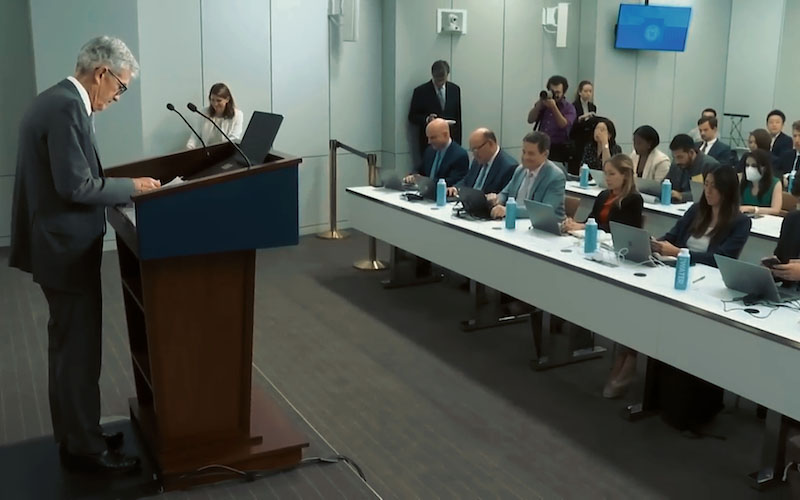
The Federal Reserve kept interest rates unchanged, with the vote ending in an 8-4 split, the largest since 1992.
2026-04-30 02:49:52
On Wednesday (April 29) local time, the Federal Open Market Committee (FOMC) of the Federal Reserve announced that it would maintain the target range for the federal funds rate at 3.50%-3.75%, marking the third consecutive meeting without moving the rate, which was entirely in line with market expectations. This meeting will most likely be the last core policy statement of current Chairman Jerome Powell's term, which will officially end on May 15.

Significance and Interpretation of the 8-4 Voting Result
The vote at this meeting was 8 to 4, the largest split in the Federal Reserve’s decision-making since October 6, 1992, highlighting the tension and deep divisions within the Fed over high inflationary pressures, geopolitical risks, rising global energy prices, and Trump’s demands for interest rate cuts.
Governor Stephen Miran again voted against an immediate 25-basis-point rate cut. This is a position he has maintained at every meeting since being transferred from his position as a senior economic advisor in the Trump administration to the Federal Reserve. The other three members—Cleveland Fed President Beth Hammack, Minneapolis Fed President Neel Kashkari, and Dallas Fed President Lorie Logan—while supporting maintaining the current interest rate level, strongly opposed retaining wording in the policy statement that hinted at further easing in the future. They argued that phrases such as "when considering the extent and timing of further adjustments to the target range for the federal funds rate" still conveyed an inappropriately dovish bias.
Analyst Anstey points out that we seem to be in a new territory, requiring more time to understand the current situation. Regarding the interest rate decision itself, the only dissenting voice was Milan, who wanted a 0.25 percentage point cut. The other three members, Hammark, Kashkari, and Logan, believed that keeping rates unchanged today was appropriate. Interestingly, these three dissenting members essentially interpreted this statement as leaning towards easing. Because, literally, it is clearly neutral: the Committee will adjust the stance of monetary policy as needed, in case of risks that could hinder the achievement of the Committee's objectives. The "objectives" are, of course, maintaining price stability and achieving full employment. But in the view of these three, this statement primarily refers to the employment-related mandate. This reflects that the Fed's trade-off between its dual mandates is becoming increasingly subtle and complex.
The statement significantly intensified concerns about inflation compared to previous statements: inflation "remains high," partly due to "recent increases in global energy prices" (previously described as "slightly high"); "developments in the Middle East create a high degree of uncertainty for the economic outlook"; job growth "remains generally sluggish," with the unemployment rate remaining largely unchanged in recent months, while the economy continues to expand at a "solid pace." These statements were clearly influenced by the conflict in Iran and the fact that global oil prices have remained above $100 per barrel.
Financial market reactions and changes in interest rate expectations
Following the announcement of the resolution, financial markets reacted relatively restrainedly but generally leaned towards a hawkish stance. U.S. Treasury yields rose significantly, particularly short-term yields. The two-year Treasury yield rose 7.8 basis points to 3.92%, its highest level since March 27. Long-term Treasury prices rose, while short-term Treasury prices fell. Wall Street stocks remained in a downward trend.
Futures market pricing indicates that the likelihood of the Federal Reserve cutting interest rates before the end of this year is extremely low, while the probability of a rate hike before April 2027 has risen to about 25%, higher than the approximately 20% before the Fed made its decision.
The US dollar index strengthened significantly following the Federal Reserve's hawkish statement. This stronger dollar, coupled with rising US Treasury yields, exerted significant downward pressure on precious metals. Gold prices fell by approximately 1%-3%, and silver prices also experienced a noticeable decline. Although geopolitical uncertainty created some safe-haven demand, a strong dollar and high yields continued to dominate market trends, making it difficult for precious metals to maintain their strength.
Background of the leadership transition at the Federal Reserve
This highly divided vote, occurring at a crucial moment in the transition of leadership at the Federal Reserve, carries significant symbolic meaning. Earlier on Wednesday, the Republican-controlled Senate Banking Committee voted 13-11 along party lines to approve President Trump's nominee, Kevin Warsh, as the next Federal Reserve Chairman. The Senate is expected to formally confirm his appointment next month. Trump has stated that he expects his chosen successor, Jerome Powell, to implement interest rate cuts. Warsh is considered relatively more inclined towards pro-growth and accommodative policies, but the four dissenting votes in this meeting clearly indicate that he will face significant resistance within the committee if he takes office and pushes for rate cuts.
The End of the Powell Era and Market Outlook
This new statement is likely to be the last one issued under Powell's leadership. Nick Timiraos, a self-proclaimed "Federal Reserve mouthpiece," points out that the four dissenting votes may confirm Warsh's comments during last week's confirmation hearing about a "chaotic meeting" and "internal strife."
Analysts point out that with the new chairman largely confirmed, Powell's forward-looking policy guidance in his final press conference as chairman will be quite limited. He is more likely to adopt a reflective tone—acknowledging the overall resilience of the economy, but recognizing that inflation is still some distance from the 2% target.
With peace talks between Iran and the United States stalled and the long-term closure of the Strait of Hormuz appearing to have become the new normal, the Federal Reserve's resolve to maintain interest rates has further strengthened. In the current environment—with high oil prices, the lingering shadow of the Middle East situation, and Trump's talks with Russian President Putin on Ukraine and Iran—the Fed's decision to keep interest rates unchanged and strengthen its inflationary rhetoric is seen as a prudent and pragmatic one. It avoids a potential inflationary rebound that could be triggered by premature easing, while also allowing room for observation and adjustment in light of the upcoming leadership transition.
Overall, the 8-4 vote and hawkish dissent highlight the complexity of the Federal Reserve's decision-making process: the threshold for rate cuts has risen significantly in the short term, while the long-term policy path will heavily depend on how new Chairman Warsh can unite the deeply divided committee, as well as the actual evolution of geopolitical situations and energy prices. Investors need to continue to closely monitor inflation data, oil price trends, and policy moves following the formal handover of leadership.
Significance and Interpretation of the 8-4 Voting Result
The vote at this meeting was 8 to 4, the largest split in the Federal Reserve’s decision-making since October 6, 1992, highlighting the tension and deep divisions within the Fed over high inflationary pressures, geopolitical risks, rising global energy prices, and Trump’s demands for interest rate cuts.
Governor Stephen Miran again voted against an immediate 25-basis-point rate cut. This is a position he has maintained at every meeting since being transferred from his position as a senior economic advisor in the Trump administration to the Federal Reserve. The other three members—Cleveland Fed President Beth Hammack, Minneapolis Fed President Neel Kashkari, and Dallas Fed President Lorie Logan—while supporting maintaining the current interest rate level, strongly opposed retaining wording in the policy statement that hinted at further easing in the future. They argued that phrases such as "when considering the extent and timing of further adjustments to the target range for the federal funds rate" still conveyed an inappropriately dovish bias.
Analyst Anstey points out that we seem to be in a new territory, requiring more time to understand the current situation. Regarding the interest rate decision itself, the only dissenting voice was Milan, who wanted a 0.25 percentage point cut. The other three members, Hammark, Kashkari, and Logan, believed that keeping rates unchanged today was appropriate. Interestingly, these three dissenting members essentially interpreted this statement as leaning towards easing. Because, literally, it is clearly neutral: the Committee will adjust the stance of monetary policy as needed, in case of risks that could hinder the achievement of the Committee's objectives. The "objectives" are, of course, maintaining price stability and achieving full employment. But in the view of these three, this statement primarily refers to the employment-related mandate. This reflects that the Fed's trade-off between its dual mandates is becoming increasingly subtle and complex.
The statement significantly intensified concerns about inflation compared to previous statements: inflation "remains high," partly due to "recent increases in global energy prices" (previously described as "slightly high"); "developments in the Middle East create a high degree of uncertainty for the economic outlook"; job growth "remains generally sluggish," with the unemployment rate remaining largely unchanged in recent months, while the economy continues to expand at a "solid pace." These statements were clearly influenced by the conflict in Iran and the fact that global oil prices have remained above $100 per barrel.
Financial market reactions and changes in interest rate expectations
Following the announcement of the resolution, financial markets reacted relatively restrainedly but generally leaned towards a hawkish stance. U.S. Treasury yields rose significantly, particularly short-term yields. The two-year Treasury yield rose 7.8 basis points to 3.92%, its highest level since March 27. Long-term Treasury prices rose, while short-term Treasury prices fell. Wall Street stocks remained in a downward trend.
Futures market pricing indicates that the likelihood of the Federal Reserve cutting interest rates before the end of this year is extremely low, while the probability of a rate hike before April 2027 has risen to about 25%, higher than the approximately 20% before the Fed made its decision.
The US dollar index strengthened significantly following the Federal Reserve's hawkish statement. This stronger dollar, coupled with rising US Treasury yields, exerted significant downward pressure on precious metals. Gold prices fell by approximately 1%-3%, and silver prices also experienced a noticeable decline. Although geopolitical uncertainty created some safe-haven demand, a strong dollar and high yields continued to dominate market trends, making it difficult for precious metals to maintain their strength.
Background of the leadership transition at the Federal Reserve
This highly divided vote, occurring at a crucial moment in the transition of leadership at the Federal Reserve, carries significant symbolic meaning. Earlier on Wednesday, the Republican-controlled Senate Banking Committee voted 13-11 along party lines to approve President Trump's nominee, Kevin Warsh, as the next Federal Reserve Chairman. The Senate is expected to formally confirm his appointment next month. Trump has stated that he expects his chosen successor, Jerome Powell, to implement interest rate cuts. Warsh is considered relatively more inclined towards pro-growth and accommodative policies, but the four dissenting votes in this meeting clearly indicate that he will face significant resistance within the committee if he takes office and pushes for rate cuts.
The End of the Powell Era and Market Outlook
This new statement is likely to be the last one issued under Powell's leadership. Nick Timiraos, a self-proclaimed "Federal Reserve mouthpiece," points out that the four dissenting votes may confirm Warsh's comments during last week's confirmation hearing about a "chaotic meeting" and "internal strife."
Analysts point out that with the new chairman largely confirmed, Powell's forward-looking policy guidance in his final press conference as chairman will be quite limited. He is more likely to adopt a reflective tone—acknowledging the overall resilience of the economy, but recognizing that inflation is still some distance from the 2% target.
With peace talks between Iran and the United States stalled and the long-term closure of the Strait of Hormuz appearing to have become the new normal, the Federal Reserve's resolve to maintain interest rates has further strengthened. In the current environment—with high oil prices, the lingering shadow of the Middle East situation, and Trump's talks with Russian President Putin on Ukraine and Iran—the Fed's decision to keep interest rates unchanged and strengthen its inflationary rhetoric is seen as a prudent and pragmatic one. It avoids a potential inflationary rebound that could be triggered by premature easing, while also allowing room for observation and adjustment in light of the upcoming leadership transition.
Overall, the 8-4 vote and hawkish dissent highlight the complexity of the Federal Reserve's decision-making process: the threshold for rate cuts has risen significantly in the short term, while the long-term policy path will heavily depend on how new Chairman Warsh can unite the deeply divided committee, as well as the actual evolution of geopolitical situations and energy prices. Investors need to continue to closely monitor inflation data, oil price trends, and policy moves following the formal handover of leadership.
- Risk Warning and Disclaimer
- The market involves risk, and trading may not be suitable for all investors. This article is for reference only and does not constitute personal investment advice, nor does it take into account certain users’ specific investment objectives, financial situation, or other needs. Any investment decisions made based on this information are at your own risk.