Goodbye, Chairman Powell
2026-04-30 03:47:56
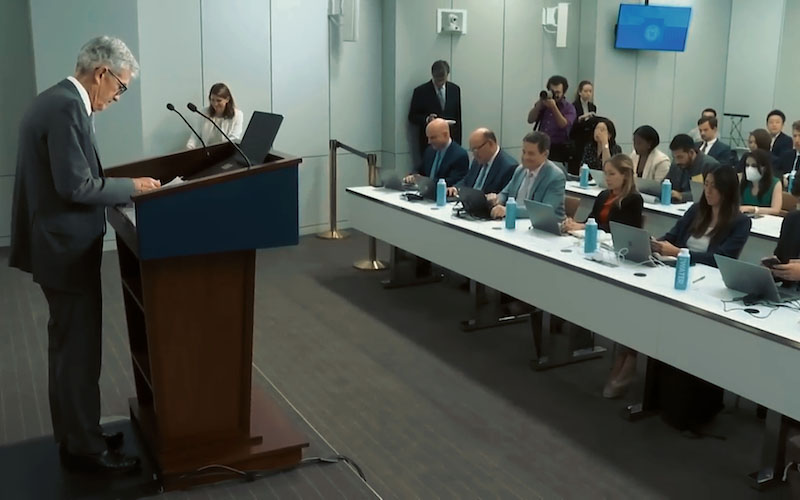
On Wednesday (April 29), following the Federal Reserve's FOMC meeting, Jerome Powell held what was likely his final press conference as Fed Chairman. The Fed decided to keep the benchmark federal funds rate unchanged at 3.5%-3.75%, a result that the market had fully anticipated—interest rate futures pricing indicated that the FOMC would almost certainly maintain this rate range for the third consecutive week. In his remarks, Powell emphasized the uncertainty caused by global conflicts, maintaining his characteristically cautious and data-dependent tone, and congratulated and expressed confidence in his incoming successor, Kevin Warsh.
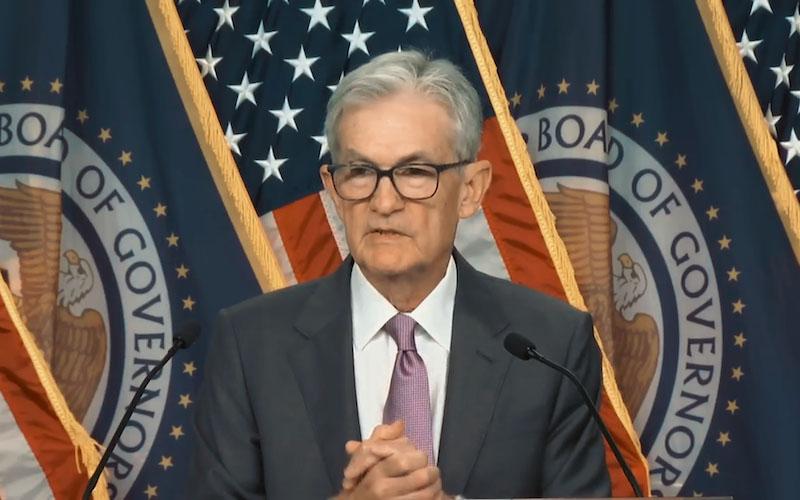
He explicitly stated that after his term as Federal Reserve Chairman expires on May 15, he will continue to serve as a member of the Federal Reserve Board of Governors, with his term extending to January 2028. He also pledged to maintain a "low profile" after stepping down as chairman. At the end of the press conference, he briefly reviewed his eight-year term, stating his hope to hand over a "well-functioning" economy to his successor. This may be the last time the public sees this "unconventional" chairman calmly answering reporters' questions. Bank of America economist Aditya Bhave had previously predicted that Powell's remarks at this farewell press conference might be slightly hawkish, conveying the core message that "the Fed will remain firmly in a wait-and-see mode, and current monetary policy is in a favorable position."
As his eight-year term (2018-2026) draws to a close, Powell leaves behind a complex and controversial legacy: he demonstrated decisiveness during the crisis, yet also made mistakes in handling inflation; he is praised as a defender of the Fed's independence, yet also heavily criticized for policy missteps. Historically, among the six chairmen since the US Congress established the Fed's "dual mandate" in 1977, Powell's performance is strikingly contrasting—his average unemployment rate was the lowest of all his chairmen, but his average inflation rate was the third highest.
Powell's resume: From Wall Street lawyer to Federal Reserve chairman
Jerome Hayden "Jay" Powell, born February 4, 1953, in Washington, D.C., is not a formally trained economist—a fact often cited, but one that has shaped his pragmatic, consensus-oriented style. He graduated from Princeton University (Bachelor of Science in Political Science, 1975) and Georgetown University School of Law (JD., 1979; former editor of the Georgetown Law Journal). He initially worked as a lawyer before moving to investment banking. He worked in financing and M&A at Dillon, Read & Co., and later as a partner at the Carlyle Group, leading the industrials group. In 2005, he founded his own small private equity firm, Severn Capital Partners, and also briefly ventured into sustainable energy investments.
In public service, from 1990 to 1993, he served in the Treasury Department under the George H.W. Bush administration, holding positions such as Assistant Secretary for Financial Institutions and Under Secretary for Domestic Finance, responsible for monetary policy and Treasury market management. From 2010 to 2012, he was a visiting scholar at the Bipartisan Policy Center, focusing on fiscal issues. In 2012, President Obama nominated him to the Federal Reserve Board of Governors; in 2018, President Trump nominated him to succeed Janet Yellen as Chair of the Federal Reserve, and he was re-elected by Biden in 2022. His term will end on May 15, 2026, but his term as a governor can be extended to January 2028. Powell is a typical "outsider" chairman: lacking a strong academic background, he built consensus within the Federal Reserve through his Wall Street experience and crisis management skills.
The tumultuous relationship with Trump: from appointment to public confrontation
Powell's relationship with Trump has been dramatic—he was promoted by Trump, yet repeatedly became a target of his attacks. In late 2017, Trump nominated Powell as chairman, partly because of his dovish image and relatively open stance on low interest rates. Initially, their relationship was amicable, but it quickly deteriorated due to the Federal Reserve's interest rate hikes. Trump repeatedly criticized Powell publicly as "too slow" or "too stupid," even threatening to fire him, claiming he was hindering economic growth. This pressure reached its peak during Trump's first term, but failed to shake Powell's insistence on the Fed's independence.
Following Trump's re-election in 2024-2025, tensions reignited. Trump nominated Kevin Warsh to succeed him and launched attacks on Powell and his colleagues, including attempts to remove certain governors from their posts and the Justice Department's investigation into the Federal Reserve headquarters renovation project during Powell's tenure (which Powell called politically motivated). Notably, U.S. Attorney for the District of Columbia, Jeanne Piro, has concluded the investigation and transferred it to the Federal Reserve Inspector General's office, a move that politically paved the way for Warsh's confirmation. Powell responded discreetly, adhering to the principle of "data dependence" and repeatedly declining to comment directly on political issues. In his final press conferences, he reiterated that the Fed's independence was crucial for effectively controlling inflation.
This "book-clamp" feud—which began with Trump's nomination and ended on the eve of Trump's second term—became the most striking political footnote to Powell's tenure. He was seen by many observers as a staunch defender of the Federal Reserve's independence, upholding the institution's institutional dignity under pressure, although this also exacerbated the personal antagonism between the two. David Wilcox, an economist at the Peterson Institute for International Economics, expressed hope that Powell would remain on the board, believing it would prevent Trump from gaining more vacant positions on the Fed's board and avoid the board taking radical measures to undermine the institution's traditional structure.
Major issues handled during his tenure: pandemic relief and the battle against inflation.
Powell's eight-year term coincided with multiple crises, with the greatest challenges stemming from two major events:
1. COVID-19 Pandemic Response (2020)
Following the outbreak of the pandemic, the Federal Reserve, under Powell's leadership, acted swiftly: lowering the federal funds rate to near zero, launching massive asset purchases (QE), and introducing multiple emergency credit facilities to support businesses and local governments. This was seen as a bold and necessary intervention that helped avert a more severe economic collapse and financial crisis. Powell emphasized that the Fed would respond "with all tools, strongly, proactively, and aggressively" until the economy recovered. Many analysts believe that this rapid response avoided consequences reminiscent of the Great Depression of the 1930s, but it also sowed the seeds for subsequent inflation.
2. 2021-2023: Surge in Inflation and Tightening Policies
In 2021, supply chain disruptions, fiscal stimulus, and a rebound in demand caused inflation to surge to a 40-year high, reaching 4.7% based on the CPI. Initially, Powell and the Federal Reserve described inflation as "temporary," a statement that later became one of their biggest points of contention. Starting in 2022, the Fed took a sharp turn: aggressively raising interest rates (peaking at 5.25%-5.50%, the highest level in 23 years) and beginning to shrink its balance sheet. Inflation gradually declined from its 2022 high of 8.0%, falling to 4.12% in 2023 and further to 2.95% in 2024. By 2025-2026, inflation was close to the 2% target, but global conflicts (such as the situation in the Middle East) and Trump's tariffs still brought uncertainty.
In addition, his tenure included adjustments to the average inflation targeting (FAIT) framework and responses to bank stress events (such as the Silicon Valley Bank collapse in 2023). In the Silicon Valley Bank failure, the Federal Reserve announced a new term funding program for banks on March 12, 2023, providing loans to eligible savings institutions for up to one year. The U.S. Treasury also allocated $25 billion from the Exchange Stabilization Fund to support depositors and prevent further turmoil in the financial system. Overall, the economy achieved a "soft landing" with a decline in inflation, avoiding a severe recession, but at the cost of higher borrowing costs for households and businesses.
Evaluations are highly polarized: both praise and criticism exist.
Many praised him for defending the Federal Reserve's independence and for his decisiveness during the pandemic. The Paul Volcker Alliance and other organizations awarded him the Public Integrity Award, calling him a "model of public service integrity." Founded in 2013 by former Federal Reserve Chairman Paul Volcker, the alliance aims to address the challenges of effective public policy implementation and rebuild public trust in the government. Some left-wing or employment-focused economists (such as some CEPR analyses) believe that his serious approach to the "maximum employment" goal helped achieve strong wage growth and a low unemployment rate—although hiring slowed in 2025 due to trade policy uncertainty, and the unemployment rate rose slightly, it remained at 4.3% as of March, a relatively low level by historical standards—without triggering runaway inflation. Reuters and other commentators noted that despite some missteps, his overall policy maintained economic resilience under multiple shocks, and his greatest legacy may be being "the defender of the defenders of the Federal Reserve."
Conservatives and some Wall Street analysts criticized Powell's early misjudgments of inflation and his "temporary" statements that led to policy lags and exacerbated price pressures. John Ryding, chief economist at Brean Capital, stated that Powell's performance, judging from inflation data, was not good. Former St. Louis Fed President James Bullard and others considered his legacy a "mixture"—a strong response to the pandemic, but weaknesses in inflation control. Some hawkish economists pointed out that the average inflation targeting framework was implemented asymmetrically in practice, amplifying inflation risks. Trump supporters accused him of hindering economic growth, and Trump himself repeatedly pressured Powell for the Fed's refusal to cut interest rates quickly.
Overall, the market and academia view Powell as a "pragmatist" rather than an ideology-driven figure, whose data-dependent style provides stability in uncertain environments, but communication failures and delayed policy shifts are his main weaknesses.
Final Verdict: A Practical Defender in Times of Crisis
As Chairman of the Federal Reserve, Jerome Powell was not the most outstanding monetary policy theorist, but he was a pragmatist who kept the institution running amidst extreme uncertainty. His tenure was defined by two main themes: first, crisis response capabilities—demonstrating flexibility and determination in the pandemic relief efforts; and second, the defense of the Fed's independence—under political pressure, he quietly but firmly upheld the tradition that central banks should not succumb to short-term politics.
He helped the U.S. economy weather the darkest period of the pandemic, preventing a deeper collapse; he successfully brought high inflation back to the target range, achieving a relatively "soft landing." However, the "temporary" misjudgment of inflation, policy lag, and the resulting rise in the cost of living have become indelible stains on his tenure—measured by the PCE price index, the average inflation rate during his tenure was 3%, higher than the Fed's 2% target, and also higher than the inflation levels when Yellen, Bernanke, and Greenspan were in charge of the Fed.
Politically, he proved, as a "non-economist," that leading the Federal Reserve requires more judgment, communication skills, and resilience than pure academic qualifications. Goodbye, Chairman Powell. History's final judgment on him may depend on whether his successor can maintain stability amidst tariffs, conflicts, and the impact of new technologies, and whether the future economy continues to benefit from the seeds of resilience he sowed. In an increasingly politicized era, his greatest legacy may be that the Federal Reserve can still exist as an independent and professional voice, rather than an appendage of any administration.
He explicitly stated that after his term as Federal Reserve Chairman expires on May 15, he will continue to serve as a member of the Federal Reserve Board of Governors, with his term extending to January 2028. He also pledged to maintain a "low profile" after stepping down as chairman. At the end of the press conference, he briefly reviewed his eight-year term, stating his hope to hand over a "well-functioning" economy to his successor. This may be the last time the public sees this "unconventional" chairman calmly answering reporters' questions. Bank of America economist Aditya Bhave had previously predicted that Powell's remarks at this farewell press conference might be slightly hawkish, conveying the core message that "the Fed will remain firmly in a wait-and-see mode, and current monetary policy is in a favorable position."
As his eight-year term (2018-2026) draws to a close, Powell leaves behind a complex and controversial legacy: he demonstrated decisiveness during the crisis, yet also made mistakes in handling inflation; he is praised as a defender of the Fed's independence, yet also heavily criticized for policy missteps. Historically, among the six chairmen since the US Congress established the Fed's "dual mandate" in 1977, Powell's performance is strikingly contrasting—his average unemployment rate was the lowest of all his chairmen, but his average inflation rate was the third highest.
Powell's resume: From Wall Street lawyer to Federal Reserve chairman
Jerome Hayden "Jay" Powell, born February 4, 1953, in Washington, D.C., is not a formally trained economist—a fact often cited, but one that has shaped his pragmatic, consensus-oriented style. He graduated from Princeton University (Bachelor of Science in Political Science, 1975) and Georgetown University School of Law (JD., 1979; former editor of the Georgetown Law Journal). He initially worked as a lawyer before moving to investment banking. He worked in financing and M&A at Dillon, Read & Co., and later as a partner at the Carlyle Group, leading the industrials group. In 2005, he founded his own small private equity firm, Severn Capital Partners, and also briefly ventured into sustainable energy investments.
In public service, from 1990 to 1993, he served in the Treasury Department under the George H.W. Bush administration, holding positions such as Assistant Secretary for Financial Institutions and Under Secretary for Domestic Finance, responsible for monetary policy and Treasury market management. From 2010 to 2012, he was a visiting scholar at the Bipartisan Policy Center, focusing on fiscal issues. In 2012, President Obama nominated him to the Federal Reserve Board of Governors; in 2018, President Trump nominated him to succeed Janet Yellen as Chair of the Federal Reserve, and he was re-elected by Biden in 2022. His term will end on May 15, 2026, but his term as a governor can be extended to January 2028. Powell is a typical "outsider" chairman: lacking a strong academic background, he built consensus within the Federal Reserve through his Wall Street experience and crisis management skills.
The tumultuous relationship with Trump: from appointment to public confrontation
Powell's relationship with Trump has been dramatic—he was promoted by Trump, yet repeatedly became a target of his attacks. In late 2017, Trump nominated Powell as chairman, partly because of his dovish image and relatively open stance on low interest rates. Initially, their relationship was amicable, but it quickly deteriorated due to the Federal Reserve's interest rate hikes. Trump repeatedly criticized Powell publicly as "too slow" or "too stupid," even threatening to fire him, claiming he was hindering economic growth. This pressure reached its peak during Trump's first term, but failed to shake Powell's insistence on the Fed's independence.
Following Trump's re-election in 2024-2025, tensions reignited. Trump nominated Kevin Warsh to succeed him and launched attacks on Powell and his colleagues, including attempts to remove certain governors from their posts and the Justice Department's investigation into the Federal Reserve headquarters renovation project during Powell's tenure (which Powell called politically motivated). Notably, U.S. Attorney for the District of Columbia, Jeanne Piro, has concluded the investigation and transferred it to the Federal Reserve Inspector General's office, a move that politically paved the way for Warsh's confirmation. Powell responded discreetly, adhering to the principle of "data dependence" and repeatedly declining to comment directly on political issues. In his final press conferences, he reiterated that the Fed's independence was crucial for effectively controlling inflation.
This "book-clamp" feud—which began with Trump's nomination and ended on the eve of Trump's second term—became the most striking political footnote to Powell's tenure. He was seen by many observers as a staunch defender of the Federal Reserve's independence, upholding the institution's institutional dignity under pressure, although this also exacerbated the personal antagonism between the two. David Wilcox, an economist at the Peterson Institute for International Economics, expressed hope that Powell would remain on the board, believing it would prevent Trump from gaining more vacant positions on the Fed's board and avoid the board taking radical measures to undermine the institution's traditional structure.
Major issues handled during his tenure: pandemic relief and the battle against inflation.
Powell's eight-year term coincided with multiple crises, with the greatest challenges stemming from two major events:
1. COVID-19 Pandemic Response (2020)
Following the outbreak of the pandemic, the Federal Reserve, under Powell's leadership, acted swiftly: lowering the federal funds rate to near zero, launching massive asset purchases (QE), and introducing multiple emergency credit facilities to support businesses and local governments. This was seen as a bold and necessary intervention that helped avert a more severe economic collapse and financial crisis. Powell emphasized that the Fed would respond "with all tools, strongly, proactively, and aggressively" until the economy recovered. Many analysts believe that this rapid response avoided consequences reminiscent of the Great Depression of the 1930s, but it also sowed the seeds for subsequent inflation.
2. 2021-2023: Surge in Inflation and Tightening Policies
In 2021, supply chain disruptions, fiscal stimulus, and a rebound in demand caused inflation to surge to a 40-year high, reaching 4.7% based on the CPI. Initially, Powell and the Federal Reserve described inflation as "temporary," a statement that later became one of their biggest points of contention. Starting in 2022, the Fed took a sharp turn: aggressively raising interest rates (peaking at 5.25%-5.50%, the highest level in 23 years) and beginning to shrink its balance sheet. Inflation gradually declined from its 2022 high of 8.0%, falling to 4.12% in 2023 and further to 2.95% in 2024. By 2025-2026, inflation was close to the 2% target, but global conflicts (such as the situation in the Middle East) and Trump's tariffs still brought uncertainty.
In addition, his tenure included adjustments to the average inflation targeting (FAIT) framework and responses to bank stress events (such as the Silicon Valley Bank collapse in 2023). In the Silicon Valley Bank failure, the Federal Reserve announced a new term funding program for banks on March 12, 2023, providing loans to eligible savings institutions for up to one year. The U.S. Treasury also allocated $25 billion from the Exchange Stabilization Fund to support depositors and prevent further turmoil in the financial system. Overall, the economy achieved a "soft landing" with a decline in inflation, avoiding a severe recession, but at the cost of higher borrowing costs for households and businesses.
Evaluations are highly polarized: both praise and criticism exist.
Many praised him for defending the Federal Reserve's independence and for his decisiveness during the pandemic. The Paul Volcker Alliance and other organizations awarded him the Public Integrity Award, calling him a "model of public service integrity." Founded in 2013 by former Federal Reserve Chairman Paul Volcker, the alliance aims to address the challenges of effective public policy implementation and rebuild public trust in the government. Some left-wing or employment-focused economists (such as some CEPR analyses) believe that his serious approach to the "maximum employment" goal helped achieve strong wage growth and a low unemployment rate—although hiring slowed in 2025 due to trade policy uncertainty, and the unemployment rate rose slightly, it remained at 4.3% as of March, a relatively low level by historical standards—without triggering runaway inflation. Reuters and other commentators noted that despite some missteps, his overall policy maintained economic resilience under multiple shocks, and his greatest legacy may be being "the defender of the defenders of the Federal Reserve."
Conservatives and some Wall Street analysts criticized Powell's early misjudgments of inflation and his "temporary" statements that led to policy lags and exacerbated price pressures. John Ryding, chief economist at Brean Capital, stated that Powell's performance, judging from inflation data, was not good. Former St. Louis Fed President James Bullard and others considered his legacy a "mixture"—a strong response to the pandemic, but weaknesses in inflation control. Some hawkish economists pointed out that the average inflation targeting framework was implemented asymmetrically in practice, amplifying inflation risks. Trump supporters accused him of hindering economic growth, and Trump himself repeatedly pressured Powell for the Fed's refusal to cut interest rates quickly.
Overall, the market and academia view Powell as a "pragmatist" rather than an ideology-driven figure, whose data-dependent style provides stability in uncertain environments, but communication failures and delayed policy shifts are his main weaknesses.
Final Verdict: A Practical Defender in Times of Crisis
As Chairman of the Federal Reserve, Jerome Powell was not the most outstanding monetary policy theorist, but he was a pragmatist who kept the institution running amidst extreme uncertainty. His tenure was defined by two main themes: first, crisis response capabilities—demonstrating flexibility and determination in the pandemic relief efforts; and second, the defense of the Fed's independence—under political pressure, he quietly but firmly upheld the tradition that central banks should not succumb to short-term politics.
He helped the U.S. economy weather the darkest period of the pandemic, preventing a deeper collapse; he successfully brought high inflation back to the target range, achieving a relatively "soft landing." However, the "temporary" misjudgment of inflation, policy lag, and the resulting rise in the cost of living have become indelible stains on his tenure—measured by the PCE price index, the average inflation rate during his tenure was 3%, higher than the Fed's 2% target, and also higher than the inflation levels when Yellen, Bernanke, and Greenspan were in charge of the Fed.
Politically, he proved, as a "non-economist," that leading the Federal Reserve requires more judgment, communication skills, and resilience than pure academic qualifications. Goodbye, Chairman Powell. History's final judgment on him may depend on whether his successor can maintain stability amidst tariffs, conflicts, and the impact of new technologies, and whether the future economy continues to benefit from the seeds of resilience he sowed. In an increasingly politicized era, his greatest legacy may be that the Federal Reserve can still exist as an independent and professional voice, rather than an appendage of any administration.
- Risk Warning and Disclaimer
- The market involves risk, and trading may not be suitable for all investors. This article is for reference only and does not constitute personal investment advice, nor does it take into account certain users’ specific investment objectives, financial situation, or other needs. Any investment decisions made based on this information are at your own risk.