The US dollar has fallen below 98! Are gold bulls making a comeback?
2026-05-08 19:11:13
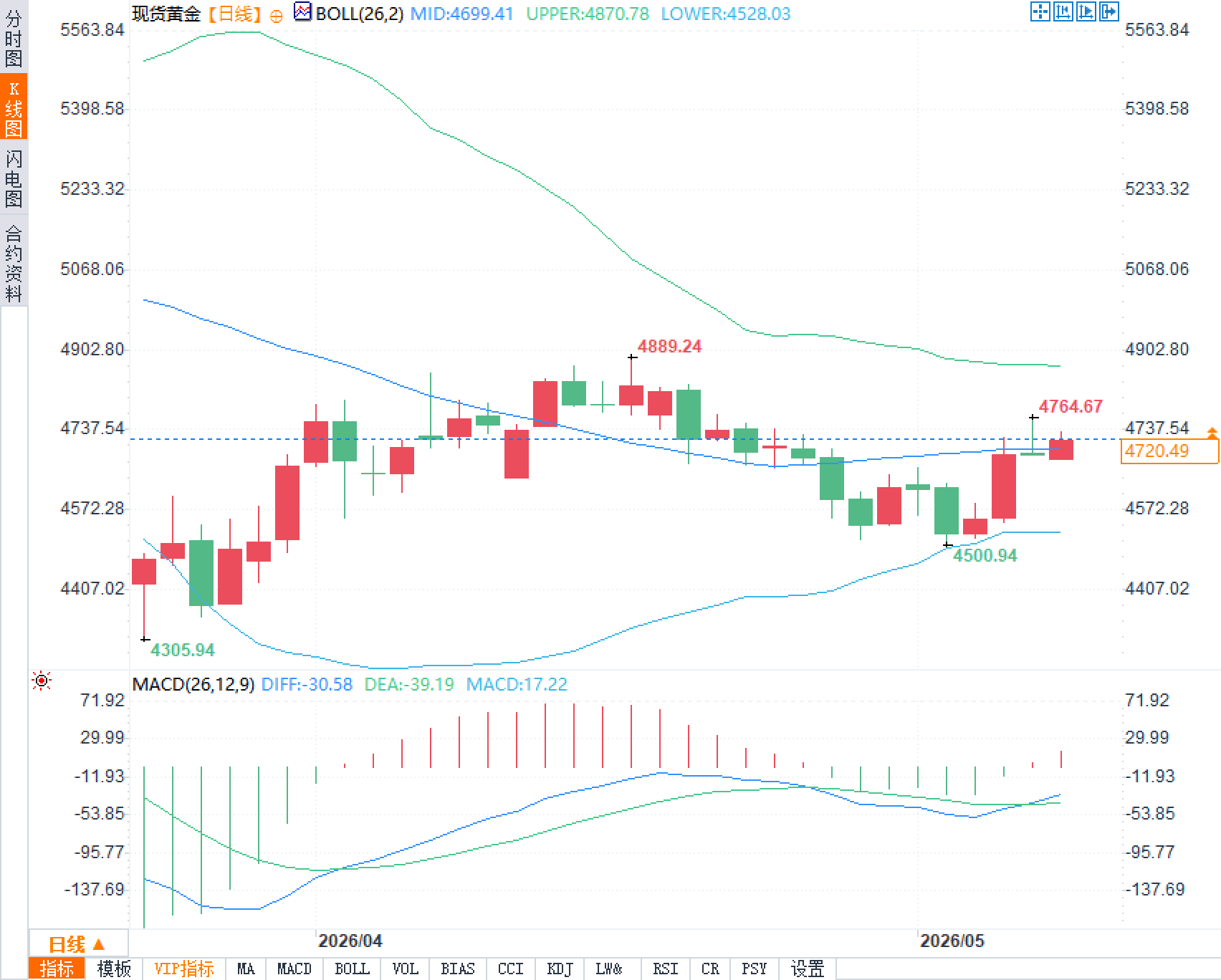
On Friday, May 8th, spot gold prices rose slightly to around $4720, with a cumulative weekly gain on track to exceed 2%. The market is weighing the prospects of a potential peace agreement between the US and Iran, an optimistic expectation that eases concerns about high inflation potentially keeping interest rates high. The US dollar index retreated slightly to around 98, and the 10-year US Treasury yield also declined, providing additional support for gold prices. Despite lingering tensions in the Middle East, traders have already priced in progress on the peace process, and coupled with upcoming US employment data, short-term market volatility is expected to remain high.
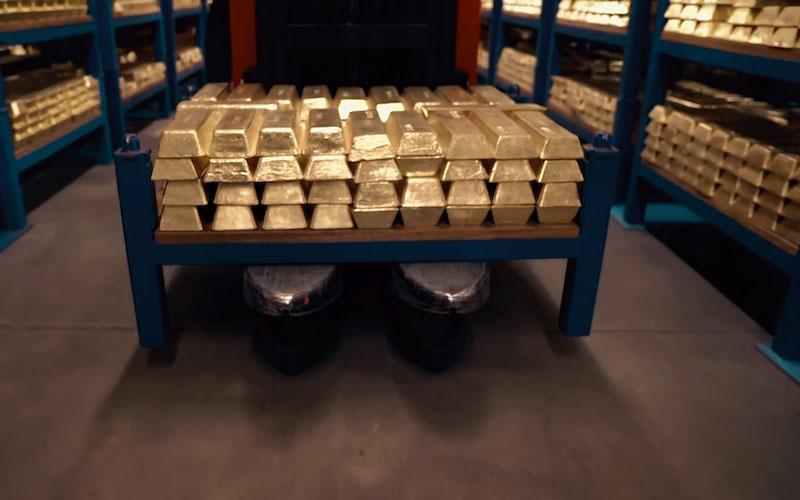
Spot gold is currently up about 0.7%, trading around $4,720 per ounce, with a cumulative weekly gain of about 2.3%, the largest weekly increase since March 30. US gold futures are also strengthening.
Analysts point out that the market has already priced in the possibility of a US-Iran peace agreement. Although the agreement has not yet been formally signed or implemented, it has already instilled confidence in the precious metals market. Recent clashes between the US and Iran near the Strait of Hormuz represent the most serious test since the one-month ceasefire, but both sides have stated their unwillingness to escalate the situation, with Iran claiming that the area has returned to normal. This development has alleviated concerns about the potential for a sustained price shock stemming from the war.
Gold has fallen more than 10% since the conflict erupted at the end of February, mainly due to high oil prices pushing up inflation expectations and disrupting interest rate paths. Crude oil prices fell about 6% this week, reflecting the market's pricing in a peace prospect, which in turn provided some breathing room for gold. Traders are watching whether geopolitical events will recur; if peace signals continue to strengthen, gold's short-term recovery momentum is expected to continue, but structural safe-haven buying will still be constrained by the interest rate environment.
Market focus has shifted to the upcoming US April non-farm payrolls report. March saw an increase of 178,000 jobs, far exceeding expectations. April's figure is projected at 62,000. Slower job growth may reinforce the Federal Reserve's concerns about an economic slowdown, but resilient wage data will continue to limit the scope for significant interest rate cuts.
The decline in the US dollar and US Treasury yields directly benefits gold, a non-interest-bearing asset. Some analysts believe the structural bull market in precious metals remains intact, but a repeat of the rapid surge seen at the beginning of the year is not expected. Traders are focusing on assessing the extent to which employment data corrects expectations for the Fed's June and subsequent meetings: weaker data and a downward revision of interest rate expectations will further support gold prices; conversely, strong data may temporarily suppress the rebound.
The following is a comparison of key recent data:
As a non-yielding asset, gold faces holding cost pressures in a high-interest-rate environment, but geopolitical uncertainties and global central bank gold purchases provide long-term support. The current decline in oil prices has alleviated some stagflation concerns, helping gold to attract allocation-oriented funds again.
The recent Middle East geopolitical events initially boosted oil prices and inflation expectations, suppressing gold prices, but may subsequently turn into support as expectations stabilize. The market has already partially priced in this scenario, with structurally long positions still dominating, but position adjustments must closely follow the release of macroeconomic data. Some analysts believe that bullish momentum in precious metals is likely to recover, but the pace will be more moderate.
Easing geopolitical factors drive short-term recovery in gold prices.
Spot gold is currently up about 0.7%, trading around $4,720 per ounce, with a cumulative weekly gain of about 2.3%, the largest weekly increase since March 30. US gold futures are also strengthening.
Analysts point out that the market has already priced in the possibility of a US-Iran peace agreement. Although the agreement has not yet been formally signed or implemented, it has already instilled confidence in the precious metals market. Recent clashes between the US and Iran near the Strait of Hormuz represent the most serious test since the one-month ceasefire, but both sides have stated their unwillingness to escalate the situation, with Iran claiming that the area has returned to normal. This development has alleviated concerns about the potential for a sustained price shock stemming from the war.
Gold has fallen more than 10% since the conflict erupted at the end of February, mainly due to high oil prices pushing up inflation expectations and disrupting interest rate paths. Crude oil prices fell about 6% this week, reflecting the market's pricing in a peace prospect, which in turn provided some breathing room for gold. Traders are watching whether geopolitical events will recur; if peace signals continue to strengthen, gold's short-term recovery momentum is expected to continue, but structural safe-haven buying will still be constrained by the interest rate environment.
The impact of the Federal Reserve's monetary policy path and employment data
Market focus has shifted to the upcoming US April non-farm payrolls report. March saw an increase of 178,000 jobs, far exceeding expectations. April's figure is projected at 62,000. Slower job growth may reinforce the Federal Reserve's concerns about an economic slowdown, but resilient wage data will continue to limit the scope for significant interest rate cuts.
The decline in the US dollar and US Treasury yields directly benefits gold, a non-interest-bearing asset. Some analysts believe the structural bull market in precious metals remains intact, but a repeat of the rapid surge seen at the beginning of the year is not expected. Traders are focusing on assessing the extent to which employment data corrects expectations for the Fed's June and subsequent meetings: weaker data and a downward revision of interest rate expectations will further support gold prices; conversely, strong data may temporarily suppress the rebound.
The following is a comparison of key recent data:
| index | March actual | April forecast | Impact Analysis |
|---|---|---|---|
| Non-farm payrolls (in ten thousands) | 17.8 | 6.2 | Slowdown is good for gold prices |
| unemployment rate(%) | 4.3 | 4.3 | Stable observation |
| Average hourly wage year-on-year (%) | 3.5 | 3.8 | Upward pressure on interest rates |
Analysis of Gold Supply and Demand Structure and Long-Term Trend
As a non-yielding asset, gold faces holding cost pressures in a high-interest-rate environment, but geopolitical uncertainties and global central bank gold purchases provide long-term support. The current decline in oil prices has alleviated some stagflation concerns, helping gold to attract allocation-oriented funds again.
The recent Middle East geopolitical events initially boosted oil prices and inflation expectations, suppressing gold prices, but may subsequently turn into support as expectations stabilize. The market has already partially priced in this scenario, with structurally long positions still dominating, but position adjustments must closely follow the release of macroeconomic data. Some analysts believe that bullish momentum in precious metals is likely to recover, but the pace will be more moderate.
Frequently Asked Questions
Question 1: Why did the easing of tensions between the US and Iran actually support gold prices?
A: Although gold is a traditional safe-haven asset, the surge in oil prices accompanying the initial conflict exacerbated inflation concerns, pushing up interest rate expectations and increasing the opportunity cost of holding gold. This time, the market priced in a peace agreement in advance, and the decline in oil prices eased inflationary pressures. The dollar and yields weakened simultaneously, collectively releasing room for gold valuation recovery. This pricing logic of "bad news is good news" is quite common among traders.
Question 2: What is the transmission mechanism of non-farm payroll data to gold?
A: Employment data directly influences the Federal Reserve's assessment of the interest rate path. Weaker-than-expected data may suggest an economic slowdown, potentially increasing expectations of interest rate cuts, which would be beneficial for gold; conversely, stronger-than-expected data would reinforce tightening expectations and suppress gold prices. Current expectations are for 62,000 new jobs, a significant slowdown from 178,000 in March, and traders are adjusting their probability distributions regarding the Fed's policy accordingly.
Question 3: Does a structural bull market mean that gold will quickly return to new highs?
A: Analysts believe the long-term trend remains upward, but the short-term pace will slow. After a rapid rise at the beginning of the year, the market is entering a digestion phase. Easing geopolitical tensions provide a window for recovery, but the interest rate environment and position adjustments will limit the gains.
- Risk Warning and Disclaimer
- The market involves risk, and trading may not be suitable for all investors. This article is for reference only and does not constitute personal investment advice, nor does it take into account certain users’ specific investment objectives, financial situation, or other needs. Any investment decisions made based on this information are at your own risk.