Iran's war isolates Kuwait: 2 million barrels of oil production halted, how long can its $1 trillion wealth sustain it?
2026-05-20 15:05:40
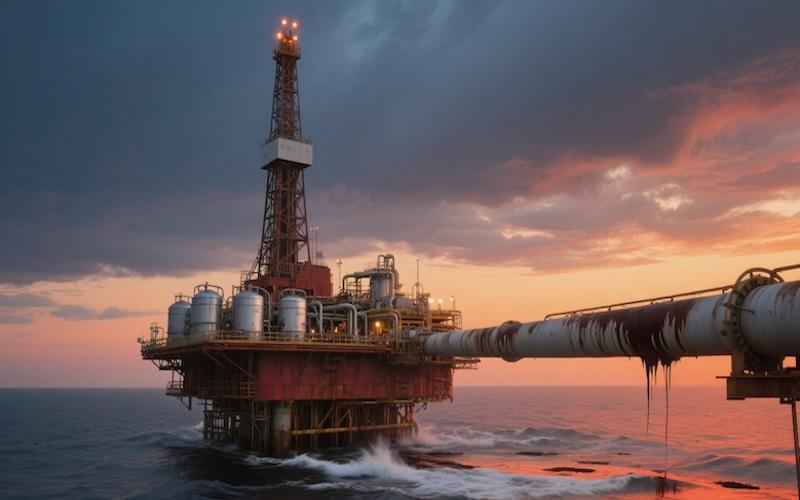
Amid the escalating conflict with Iran, Kuwait, a small oil-rich micro-nation on the Persian Gulf coast, is facing unprecedented isolation. The closure of the Strait of Hormuz has forced the interruption of nearly 2 million barrels of crude oil exports per day, reducing global oil supply by about 2% and cutting off Kuwait's main source of revenue. Latest data shows that by April 2026, Kuwaiti crude oil production had plummeted to approximately 560,000-600,000 barrels per day, with zero exports—the first time this has occurred since the end of the Gulf War.
Thirty-five years ago, the Iraqi invasion turned Kuwait's oil fields into flames. Today, hundreds of Iranian drones and missiles have severely damaged local oil infrastructure, and U.S. diplomats and thousands of troops have evacuated following attacks on U.S. military bases. The Kuwait City skyline bears the marks of war, with the National Oil Company headquarters suffering a cruise missile attack and subsequent fire in April. Public sector attendance is limited to 50%, schools continue remote learning, public gatherings have not yet resumed, and while the airport recently reopened, flight volumes are far below normal.
As one of the hardest-hit Gulf states, Kuwait's 5 million residents rely almost entirely on trucks to transport daily necessities from Saudi Arabia, at costs six times higher than sea freight. The government's price freeze has further squeezed corporate profits. The S&P Global Purchasing Managers' Index shows that market confidence in Kuwait has fallen to its lowest point since the COVID-19 pandemic began.
Nawaf S. Al-Sabah, Vice Chairman and CEO of Kuwait Petroleum Co., said: "No one expected that safe passage through the Strait of Hormuz would be disrupted for so long."
With its sovereign wealth fund of $1.072 trillion (as of May 2026), Kuwait could theoretically provide a full range of welfare benefits from birth to death for approximately 1.5 million citizens, and support the basic needs of more than 3 million foreign residents, even without oil revenue for many years.
However, the current crisis has highlighted and accelerated long-standing structural problems. Since the Iraqi invasion in 1990, Kuwait has spent billions of dollars rebuilding, but its economic diversification has lagged behind, frequent parliamentary disputes have hindered reforms, and investors remain cautious. Official data shows that in 2024, Dubai attracted over $14 billion in foreign direct investment, while Kuwait attracted only about $725 million; Dubai Airport handled over 95 million passengers, while Kuwait's numbered less than 15 million.
Business leader Faisal Al-Mutawa called on the government to deregulate and follow the example of countries like Saudi Arabia in promoting visionary projects, such as building a railway line around the Gulf. He pointed out that the current reliance on truck transport has already overburdened import operations.
Geographically, Kuwait is triangular, sandwiched between Iraq, Saudi Arabia, and the Gulf. After the closure of the Strait of Hormuz, Kuwait became a landlocked country. Officials are concerned about further deterioration of the situation: they recently summoned the Iranian ambassador to protest paramilitary infiltration and remain vigilant against drone attacks from supported militias originating in Iraq. Residents of border agricultural areas have abandoned grazing their livestock northwards and are turning towards Saudi Arabia.
Nevertheless, officials emphasized the value of a prudent strategy. Abdulaziz AlMarzooq, Minister of State for Economic Affairs and Investment, stated that reserves are sufficient for the long term, and the suspension of exports can be seen as "insurance premiums," a mere fleeting moment in the grand scheme of history. The current focus is on maintaining and resilient infrastructure, rather than rushing to achieve high efficiency.
Kuwait Petroleum Corporation (KPD) chief Nawaf Al-Sabah views the damaged headquarters as "a symbol of the oil industry and Kuwait"—one that is both unyielding and resilient. Officials in the country believe that learning from past crises and proceeding cautiously is the right choice.
Editor's Summary
Kuwait has demonstrated strong economic resilience thanks to its massive sovereign wealth fund, but the long-term closure of the Strait of Hormuz has exposed its oil dependence, geopolitical vulnerability, and lagging reforms. Compared to its neighbors, Kuwait lags significantly in attracting investment and developing thriving infrastructure. Its ability to reshape its competitiveness through diversification will determine its position in the regional landscape, and the current crisis serves as a wake-up call for the entire Gulf region: sustainable peace and wealth must be built on a more resilient economic structure.
Q1: Why has Kuwait been more severely affected than other Gulf countries in this conflict with Iran?
A: Kuwait's geographical location is unique, situated on the unfavorable side of the Strait of Hormuz. The closure of the strait completely disrupts its oil exports, making it a de facto "landlocked country." Simultaneously, its oil infrastructure has been directly attacked by Iranian drones and missiles, damage to US bases has led to the withdrawal of foreign troops, and its supply chain relies heavily on land transportation. These combined factors have caused its economy and social life to suffer far more than its neighbors.
Q2: What is the size of Kuwait's sovereign wealth fund, and how long can it sustain operations?
A: As of May 2026, the Kuwait Investment Authority managed funds totaling $1.072 trillion. As one of the world's oldest sovereign wealth funds, it can provide long-term welfare guarantees for 1.5 million Kuwaiti citizens. Even if oil revenues are interrupted for more than a decade, the existing welfare system can theoretically still be maintained, but actual expenditures need to take into account inflation, population growth, and maintenance costs.
Q3: What impact will the disruption of Kuwaiti oil exports have on the global crude oil market?
A: Kuwait normally exports nearly 2 million barrels per day, accounting for about 2% of global supply. Disruptions reduce supply, push up oil prices, and force global buyers to seek alternative sources. In the long term, this may accelerate discussions on energy transition, but in the short term, it exacerbates market volatility, particularly impacting Asian countries that rely on Middle Eastern crude oil.
Q4: Why is Kuwait's economic diversification progressing slowly?
A: Abundant oil resources have diminished the sense of urgency for reform, parliamentary political disputes have hindered policy implementation, and the lingering vulnerability from the 1990 war has made investors cautious. Compared to the dynamism of places like Dubai, Kuwait lags significantly behind in attracting foreign investment (only $725 million in 2024) and airport passenger volume, with aging infrastructure being a prominent issue.
Q5: What measures might Kuwait take to revive its economy in the future?
A: Officials emphasized maintaining infrastructure and observing the situation, while the business community called for deregulation, promoting connectivity projects such as railways, and emulating diversification initiatives from neighboring countries. In the short term, reliance on reserves as a buffer is necessary; in the medium to long term, issues of parliamentary efficiency and investment attractiveness need to be addressed to avoid falling further behind in regional competition.
Thirty-five years ago, the Iraqi invasion turned Kuwait's oil fields into flames. Today, hundreds of Iranian drones and missiles have severely damaged local oil infrastructure, and U.S. diplomats and thousands of troops have evacuated following attacks on U.S. military bases. The Kuwait City skyline bears the marks of war, with the National Oil Company headquarters suffering a cruise missile attack and subsequent fire in April. Public sector attendance is limited to 50%, schools continue remote learning, public gatherings have not yet resumed, and while the airport recently reopened, flight volumes are far below normal.
As one of the hardest-hit Gulf states, Kuwait's 5 million residents rely almost entirely on trucks to transport daily necessities from Saudi Arabia, at costs six times higher than sea freight. The government's price freeze has further squeezed corporate profits. The S&P Global Purchasing Managers' Index shows that market confidence in Kuwait has fallen to its lowest point since the COVID-19 pandemic began.
Nawaf S. Al-Sabah, Vice Chairman and CEO of Kuwait Petroleum Co., said: "No one expected that safe passage through the Strait of Hormuz would be disrupted for so long."
Sovereign wealth funds valued at over $1 trillion provide a buffer
With its sovereign wealth fund of $1.072 trillion (as of May 2026), Kuwait could theoretically provide a full range of welfare benefits from birth to death for approximately 1.5 million citizens, and support the basic needs of more than 3 million foreign residents, even without oil revenue for many years.
However, the current crisis has highlighted and accelerated long-standing structural problems. Since the Iraqi invasion in 1990, Kuwait has spent billions of dollars rebuilding, but its economic diversification has lagged behind, frequent parliamentary disputes have hindered reforms, and investors remain cautious. Official data shows that in 2024, Dubai attracted over $14 billion in foreign direct investment, while Kuwait attracted only about $725 million; Dubai Airport handled over 95 million passengers, while Kuwait's numbered less than 15 million.
Business leader Faisal Al-Mutawa called on the government to deregulate and follow the example of countries like Saudi Arabia in promoting visionary projects, such as building a railway line around the Gulf. He pointed out that the current reliance on truck transport has already overburdened import operations.
Geographical location becomes its biggest weakness
Geographically, Kuwait is triangular, sandwiched between Iraq, Saudi Arabia, and the Gulf. After the closure of the Strait of Hormuz, Kuwait became a landlocked country. Officials are concerned about further deterioration of the situation: they recently summoned the Iranian ambassador to protest paramilitary infiltration and remain vigilant against drone attacks from supported militias originating in Iraq. Residents of border agricultural areas have abandoned grazing their livestock northwards and are turning towards Saudi Arabia.
Nevertheless, officials emphasized the value of a prudent strategy. Abdulaziz AlMarzooq, Minister of State for Economic Affairs and Investment, stated that reserves are sufficient for the long term, and the suspension of exports can be seen as "insurance premiums," a mere fleeting moment in the grand scheme of history. The current focus is on maintaining and resilient infrastructure, rather than rushing to achieve high efficiency.
Kuwait Petroleum Corporation (KPD) chief Nawaf Al-Sabah views the damaged headquarters as "a symbol of the oil industry and Kuwait"—one that is both unyielding and resilient. Officials in the country believe that learning from past crises and proceeding cautiously is the right choice.
Editor's Summary
Kuwait has demonstrated strong economic resilience thanks to its massive sovereign wealth fund, but the long-term closure of the Strait of Hormuz has exposed its oil dependence, geopolitical vulnerability, and lagging reforms. Compared to its neighbors, Kuwait lags significantly in attracting investment and developing thriving infrastructure. Its ability to reshape its competitiveness through diversification will determine its position in the regional landscape, and the current crisis serves as a wake-up call for the entire Gulf region: sustainable peace and wealth must be built on a more resilient economic structure.
Frequently Asked Questions
Q1: Why has Kuwait been more severely affected than other Gulf countries in this conflict with Iran?
A: Kuwait's geographical location is unique, situated on the unfavorable side of the Strait of Hormuz. The closure of the strait completely disrupts its oil exports, making it a de facto "landlocked country." Simultaneously, its oil infrastructure has been directly attacked by Iranian drones and missiles, damage to US bases has led to the withdrawal of foreign troops, and its supply chain relies heavily on land transportation. These combined factors have caused its economy and social life to suffer far more than its neighbors.
Q2: What is the size of Kuwait's sovereign wealth fund, and how long can it sustain operations?
A: As of May 2026, the Kuwait Investment Authority managed funds totaling $1.072 trillion. As one of the world's oldest sovereign wealth funds, it can provide long-term welfare guarantees for 1.5 million Kuwaiti citizens. Even if oil revenues are interrupted for more than a decade, the existing welfare system can theoretically still be maintained, but actual expenditures need to take into account inflation, population growth, and maintenance costs.
Q3: What impact will the disruption of Kuwaiti oil exports have on the global crude oil market?
A: Kuwait normally exports nearly 2 million barrels per day, accounting for about 2% of global supply. Disruptions reduce supply, push up oil prices, and force global buyers to seek alternative sources. In the long term, this may accelerate discussions on energy transition, but in the short term, it exacerbates market volatility, particularly impacting Asian countries that rely on Middle Eastern crude oil.
Q4: Why is Kuwait's economic diversification progressing slowly?
A: Abundant oil resources have diminished the sense of urgency for reform, parliamentary political disputes have hindered policy implementation, and the lingering vulnerability from the 1990 war has made investors cautious. Compared to the dynamism of places like Dubai, Kuwait lags significantly behind in attracting foreign investment (only $725 million in 2024) and airport passenger volume, with aging infrastructure being a prominent issue.
Q5: What measures might Kuwait take to revive its economy in the future?
A: Officials emphasized maintaining infrastructure and observing the situation, while the business community called for deregulation, promoting connectivity projects such as railways, and emulating diversification initiatives from neighboring countries. In the short term, reliance on reserves as a buffer is necessary; in the medium to long term, issues of parliamentary efficiency and investment attractiveness need to be addressed to avoid falling further behind in regional competition.
- Risk Warning and Disclaimer
- The market involves risk, and trading may not be suitable for all investors. This article is for reference only and does not constitute personal investment advice, nor does it take into account certain users’ specific investment objectives, financial situation, or other needs. Any investment decisions made based on this information are at your own risk.