The European Central Bank warned that risks in the Strait of Hormuz could push up inflation, and the euro remained strong against the dollar around 1.1640.
2026-05-25 16:09:38
The euro traded with a slightly bullish bias against the dollar during Monday's European session, hovering around 1.1640. The euro remained relatively strong overall as market risk sentiment continued to improve and European Central Bank officials reiterated their inflation warnings.

Yannis Stournaras, a member of the European Central Bank's Governing Council and Governor of the Bank of Greece, stated that the situation in the Strait of Hormuz could have a deeper impact on global inflation. He pointed out that the Strait of Hormuz handles nearly 20% of the world's energy supply and transportation; if transportation remains restricted, rising energy prices could be further passed on to wages and the prices of goods and services.
Stournaras emphasized that the European Central Bank needs to ensure inflation returns to its medium-term target of 2%. The market remains highly focused on the situation in the Middle East. Although some progress has been made in negotiations between the US and Iran, uncertainty remains regarding the resumption of shipping through the Strait of Hormuz.
Previously, the market anticipated that the US and Iran might be close to reaching an agreement, including restoring shipping through the Strait of Hormuz and alleviating energy supply risks. This expectation significantly improved market risk appetite and weakened demand for the US dollar as a safe haven. However, European Central Bank officials are concerned that even if geopolitical tensions gradually ease, the earlier rise in energy prices could still create a "second round of inflation" for the Eurozone economy.
The so-called "second-round inflation effect" mainly refers to the fact that rising energy prices not only increase business costs but may also lead to wage increases and a sustained rise in service prices, thus creating longer-term inflationary pressures. The European Central Bank's biggest concern right now is that rising energy prices will transform from a short-term shock into long-term structural inflation.
Recently, several European Central Bank (ECB) officials in the Eurozone have begun to signal a more hawkish stance. The market believes that the probability of the ECB maintaining high interest rates or even raising them further is increasing. Although the ECB kept interest rates unchanged at its April meeting, internal discussions had already begun regarding potential future rate hikes. With increased volatility in energy prices and renewed inflation risks, the market is readjusting its expectations for the ECB's future policy path.
Meanwhile, due to progress in US-Iran negotiations, demand for the US dollar as a safe haven has cooled significantly. The US dollar index has recently fallen back to around 99.00, further supporting the euro's rise against the dollar. The market believes that if the US and Iran ultimately reach an agreement and normal shipping resumes in the Strait of Hormuz, international oil prices may fall further, which would reduce global safe-haven demand and weaken the dollar's performance.
However, US inflation remains high, and the Federal Reserve is expected to maintain a hawkish stance in the short term. The market currently anticipates further rate hikes by the Fed this year. While the dollar has seen a short-term pullback, the high-interest-rate environment in the US continues to limit further rapid appreciation of the euro against the dollar.
Furthermore, the risk of a slowdown in Eurozone economic growth remains. High interest rates and high energy costs continue to suppress European manufacturing and consumer demand, meaning the European Central Bank's future policy space will still face certain limitations.
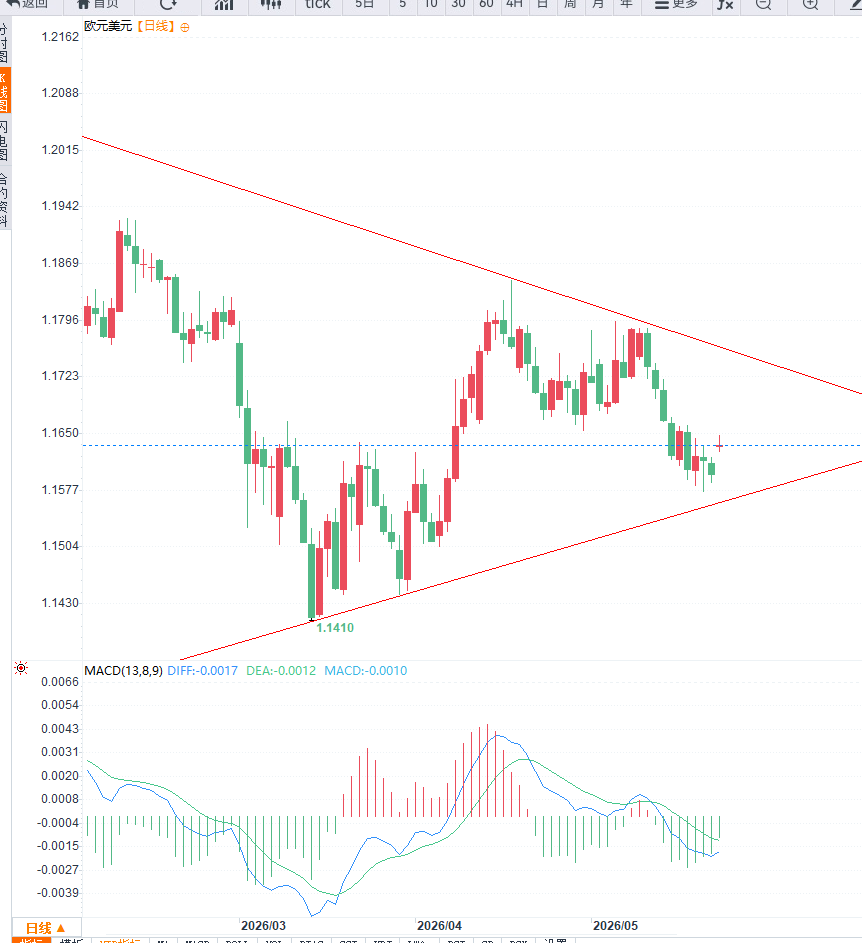
From a technical perspective, the EUR/USD daily chart maintains an overall bullish bias. The pair recently regained its footing above the 1.1600 level, indicating that bullish sentiment remains dominant in the market. Key resistance on the daily chart lies in the 1.1680-1.1700 area; a break above this area could lead to a further test of the 1.1750 level. On the downside, 1.1600 has become a significant short-term support level, with further support around 1.1550. Looking at the daily indicators, the MACD remains above the zero line, suggesting a continued bullish medium-term trend. The RSI indicator is hovering around 55, reflecting a slightly bullish overall market momentum.
However, if US economic data continues to be strong and expectations of a renewed hawkish policy stance from the Federal Reserve are reinforced, the dollar could regain support. Furthermore, a renewed deterioration in the Middle East situation could also drive renewed demand for the dollar as a safe haven.
Overall, the current euro/dollar exchange rate is mainly influenced by hawkish expectations from the European Central Bank, a decline in the dollar index, and changes in global risk sentiment. Short-term market sentiment is generally bullish on the euro, but future movements will depend on the situation in the Middle East, energy prices, and policy changes by the European and American central banks.
Editor's Summary : The euro is currently in a rebound phase against the US dollar, driven by both "ECB inflation concerns" and "a decline in safe-haven demand for the dollar." Shipping risks in the Strait of Hormuz have raised concerns at the ECB about long-term inflationary pressures, also increasing market expectations that the ECB will maintain high interest rates in the future. However, the high-interest-rate environment in the US and the risk of a global economic slowdown still limit the euro's potential for further significant gains. Going forward, the market will continue to focus on the situation in the Middle East, the policies of the US and European central banks, and fluctuations in international energy prices.
Yannis Stournaras, a member of the European Central Bank's Governing Council and Governor of the Bank of Greece, stated that the situation in the Strait of Hormuz could have a deeper impact on global inflation. He pointed out that the Strait of Hormuz handles nearly 20% of the world's energy supply and transportation; if transportation remains restricted, rising energy prices could be further passed on to wages and the prices of goods and services.
Stournaras emphasized that the European Central Bank needs to ensure inflation returns to its medium-term target of 2%. The market remains highly focused on the situation in the Middle East. Although some progress has been made in negotiations between the US and Iran, uncertainty remains regarding the resumption of shipping through the Strait of Hormuz.
Previously, the market anticipated that the US and Iran might be close to reaching an agreement, including restoring shipping through the Strait of Hormuz and alleviating energy supply risks. This expectation significantly improved market risk appetite and weakened demand for the US dollar as a safe haven. However, European Central Bank officials are concerned that even if geopolitical tensions gradually ease, the earlier rise in energy prices could still create a "second round of inflation" for the Eurozone economy.
The so-called "second-round inflation effect" mainly refers to the fact that rising energy prices not only increase business costs but may also lead to wage increases and a sustained rise in service prices, thus creating longer-term inflationary pressures. The European Central Bank's biggest concern right now is that rising energy prices will transform from a short-term shock into long-term structural inflation.
Recently, several European Central Bank (ECB) officials in the Eurozone have begun to signal a more hawkish stance. The market believes that the probability of the ECB maintaining high interest rates or even raising them further is increasing. Although the ECB kept interest rates unchanged at its April meeting, internal discussions had already begun regarding potential future rate hikes. With increased volatility in energy prices and renewed inflation risks, the market is readjusting its expectations for the ECB's future policy path.
Meanwhile, due to progress in US-Iran negotiations, demand for the US dollar as a safe haven has cooled significantly. The US dollar index has recently fallen back to around 99.00, further supporting the euro's rise against the dollar. The market believes that if the US and Iran ultimately reach an agreement and normal shipping resumes in the Strait of Hormuz, international oil prices may fall further, which would reduce global safe-haven demand and weaken the dollar's performance.
However, US inflation remains high, and the Federal Reserve is expected to maintain a hawkish stance in the short term. The market currently anticipates further rate hikes by the Fed this year. While the dollar has seen a short-term pullback, the high-interest-rate environment in the US continues to limit further rapid appreciation of the euro against the dollar.
Furthermore, the risk of a slowdown in Eurozone economic growth remains. High interest rates and high energy costs continue to suppress European manufacturing and consumer demand, meaning the European Central Bank's future policy space will still face certain limitations.
From a technical perspective, the EUR/USD daily chart maintains an overall bullish bias. The pair recently regained its footing above the 1.1600 level, indicating that bullish sentiment remains dominant in the market. Key resistance on the daily chart lies in the 1.1680-1.1700 area; a break above this area could lead to a further test of the 1.1750 level. On the downside, 1.1600 has become a significant short-term support level, with further support around 1.1550. Looking at the daily indicators, the MACD remains above the zero line, suggesting a continued bullish medium-term trend. The RSI indicator is hovering around 55, reflecting a slightly bullish overall market momentum.
However, if US economic data continues to be strong and expectations of a renewed hawkish policy stance from the Federal Reserve are reinforced, the dollar could regain support. Furthermore, a renewed deterioration in the Middle East situation could also drive renewed demand for the dollar as a safe haven.
Overall, the current euro/dollar exchange rate is mainly influenced by hawkish expectations from the European Central Bank, a decline in the dollar index, and changes in global risk sentiment. Short-term market sentiment is generally bullish on the euro, but future movements will depend on the situation in the Middle East, energy prices, and policy changes by the European and American central banks.
Editor's Summary : The euro is currently in a rebound phase against the US dollar, driven by both "ECB inflation concerns" and "a decline in safe-haven demand for the dollar." Shipping risks in the Strait of Hormuz have raised concerns at the ECB about long-term inflationary pressures, also increasing market expectations that the ECB will maintain high interest rates in the future. However, the high-interest-rate environment in the US and the risk of a global economic slowdown still limit the euro's potential for further significant gains. Going forward, the market will continue to focus on the situation in the Middle East, the policies of the US and European central banks, and fluctuations in international energy prices.
- Risk Warning and Disclaimer
- The market involves risk, and trading may not be suitable for all investors. This article is for reference only and does not constitute personal investment advice, nor does it take into account certain users’ specific investment objectives, financial situation, or other needs. Any investment decisions made based on this information are at your own risk.