Hawkish signals from the Federal Reserve, coupled with escalating risks in the Strait of Hormuz, are putting further upward pressure on the US dollar and US Treasury yields.
2026-05-26 15:48:13
Recently, global financial markets have seen a significant shift in their expectations regarding the Federal Reserve's monetary policy path. John Willis and David Tan, directors at BNY Mellon, stated that the latest Fed meeting minutes and officials' speeches indicate that US interest rates face a higher "two-way risk," meaning that there is not only the possibility of future rate cuts but also the risk of a renewed rate hike.
As a result, the agency has cancelled its previous forecast of two rate cuts in 2026 and believes that if oil shipments through the Strait of Hormuz cannot return to normal before this summer, the Federal Reserve may maintain the current interest rate level. The minutes of the Federal Open Market Committee (FOMC) meeting in May, previously released by the Fed, were seen by the market as significantly hawkish. The minutes showed that members were more concerned about inflation risks than the market had previously expected.
Analysts pointed out that the internal discussions at this meeting were more cautious than the market had originally thought, especially regarding inflation and energy price risks, indicating that the Federal Reserve has begun to reassess the possibility of long-term runaway inflation.
Meanwhile, recent remarks by Federal Reserve Governor Christopher Waller further reinforced hawkish market expectations. Waller had previously been a key figure supporting accommodative monetary policy due to concerns about a slowing job market. However, in a public speech last week, Waller stated that U.S. interest rates could "rise or fall equally" in the future, and specifically emphasized the risk that short-term inflation expectations could spread to long-term inflation.
This statement was interpreted by the market as indicating a significant increase in internal discussions within the Federal Reserve regarding a potential return to interest rate hikes. The core factors driving the market to reassess the Fed's policy path recently have primarily stemmed from the situation in the Middle East and the risk of rising international oil prices.
Currently, negotiations between the United States and Iran regarding security in the Strait of Hormuz remain highly uncertain. While both sides are still working towards a ceasefire framework, markets are concerned that if normal shipping through the Strait of Hormuz cannot be restored, global energy supplies could continue to be impacted. The Strait of Hormuz handles approximately 20% of global seaborne crude oil transport, so any disruption to shipping could quickly drive up international oil prices.
International oil prices have rebounded significantly recently, with WTI crude oil rising back to around $90 . Market concerns are growing that high oil prices could reignite US inflation and force the Federal Reserve to maintain high interest rates for an extended period. BNY Mellon points out that if Persian Gulf oil shipments return to normal, market expectations for interest rate cuts may resurface; however, given the current unresolved energy supply risks, the Federal Reserve is more likely to maintain a wait-and-see approach.
The institution also believes that the upcoming U.S. Personal Consumption Expenditures Price Index (PCE) data this week may further indicate that U.S. consumer prices are rising at a renewed pace. As one of the core inflation indicators most closely watched by the Federal Reserve, the PCE data will directly influence market judgments on future monetary policy.
If PCE data shows that US inflation continues to rise, the market may further strengthen expectations of "long-term high interest rates," thereby pushing the dollar index and US Treasury yields higher. Recently, US economic data has generally remained resilient, particularly the job market and consumer spending, which provides room for the Federal Reserve to maintain a hawkish stance.
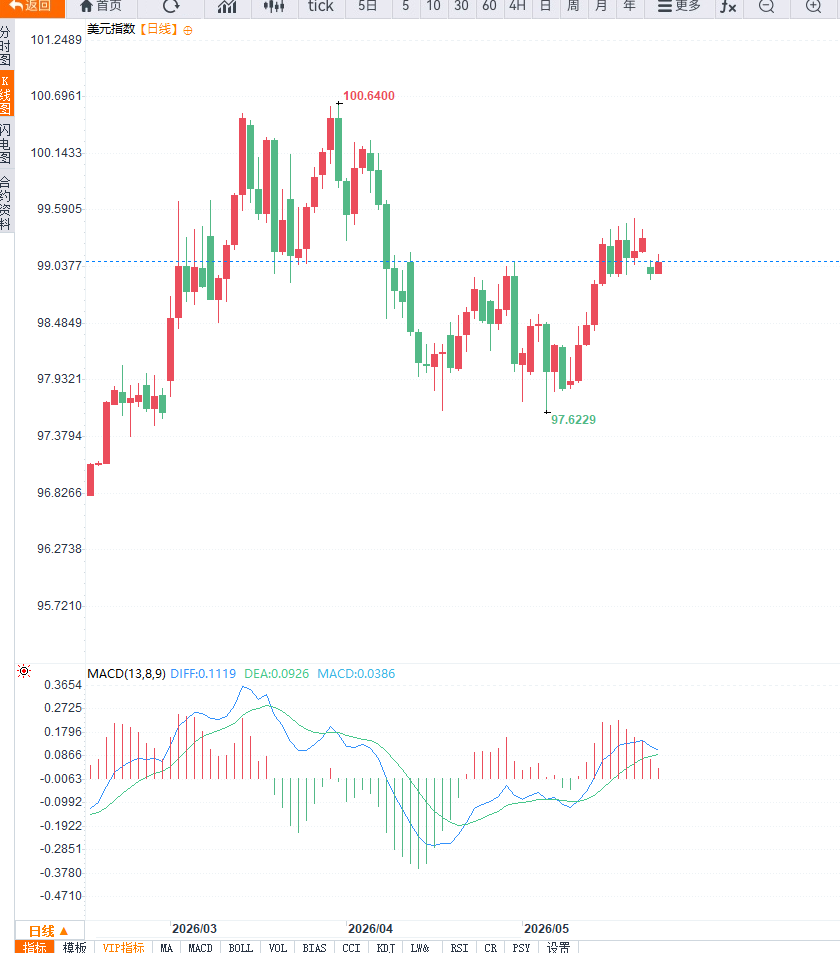
Market data shows that investors have begun to significantly reduce their bets on future interest rate cuts. US Treasury yields have remained high recently, and the US dollar index has regained its footing above the 99 level.
From the daily chart, the US dollar index rebounded after finding support around 97.80 , and the overall trend has now shifted back to a bullish structure. The MACD indicator is gradually returning to near the zero line, indicating that bearish momentum is weakening. The key resistance levels are currently at 99.50 and 100.20 ; a break above 100 could open up further upside potential.
Overall, the market is currently reassessing the risks associated with the "high oil prices - high inflation - high interest rates" chain, while the situation in the Strait of Hormuz has become a key variable affecting global financial markets.
Editor's Summary : The latest view from Bank of New York Mellon indicates that market optimism regarding future Federal Reserve interest rate cuts is cooling significantly. Energy supply risks stemming from the Middle East situation have caused international oil prices to rise again, further reinforcing market concerns about renewed inflation in the United States. Against this backdrop, the Federal Reserve may maintain high interest rates for a longer period, or even reconsider the possibility of rate hikes. Future market movements will heavily depend on the situation in the Strait of Hormuz, changes in international oil prices, and the performance of US PCE inflation data. Investors should be wary of the risk of further increases in global market volatility.
As a result, the agency has cancelled its previous forecast of two rate cuts in 2026 and believes that if oil shipments through the Strait of Hormuz cannot return to normal before this summer, the Federal Reserve may maintain the current interest rate level. The minutes of the Federal Open Market Committee (FOMC) meeting in May, previously released by the Fed, were seen by the market as significantly hawkish. The minutes showed that members were more concerned about inflation risks than the market had previously expected.
Analysts pointed out that the internal discussions at this meeting were more cautious than the market had originally thought, especially regarding inflation and energy price risks, indicating that the Federal Reserve has begun to reassess the possibility of long-term runaway inflation.
Meanwhile, recent remarks by Federal Reserve Governor Christopher Waller further reinforced hawkish market expectations. Waller had previously been a key figure supporting accommodative monetary policy due to concerns about a slowing job market. However, in a public speech last week, Waller stated that U.S. interest rates could "rise or fall equally" in the future, and specifically emphasized the risk that short-term inflation expectations could spread to long-term inflation.
This statement was interpreted by the market as indicating a significant increase in internal discussions within the Federal Reserve regarding a potential return to interest rate hikes. The core factors driving the market to reassess the Fed's policy path recently have primarily stemmed from the situation in the Middle East and the risk of rising international oil prices.
Currently, negotiations between the United States and Iran regarding security in the Strait of Hormuz remain highly uncertain. While both sides are still working towards a ceasefire framework, markets are concerned that if normal shipping through the Strait of Hormuz cannot be restored, global energy supplies could continue to be impacted. The Strait of Hormuz handles approximately 20% of global seaborne crude oil transport, so any disruption to shipping could quickly drive up international oil prices.
International oil prices have rebounded significantly recently, with WTI crude oil rising back to around $90 . Market concerns are growing that high oil prices could reignite US inflation and force the Federal Reserve to maintain high interest rates for an extended period. BNY Mellon points out that if Persian Gulf oil shipments return to normal, market expectations for interest rate cuts may resurface; however, given the current unresolved energy supply risks, the Federal Reserve is more likely to maintain a wait-and-see approach.
The institution also believes that the upcoming U.S. Personal Consumption Expenditures Price Index (PCE) data this week may further indicate that U.S. consumer prices are rising at a renewed pace. As one of the core inflation indicators most closely watched by the Federal Reserve, the PCE data will directly influence market judgments on future monetary policy.
If PCE data shows that US inflation continues to rise, the market may further strengthen expectations of "long-term high interest rates," thereby pushing the dollar index and US Treasury yields higher. Recently, US economic data has generally remained resilient, particularly the job market and consumer spending, which provides room for the Federal Reserve to maintain a hawkish stance.
Market data shows that investors have begun to significantly reduce their bets on future interest rate cuts. US Treasury yields have remained high recently, and the US dollar index has regained its footing above the 99 level.
From the daily chart, the US dollar index rebounded after finding support around 97.80 , and the overall trend has now shifted back to a bullish structure. The MACD indicator is gradually returning to near the zero line, indicating that bearish momentum is weakening. The key resistance levels are currently at 99.50 and 100.20 ; a break above 100 could open up further upside potential.
Overall, the market is currently reassessing the risks associated with the "high oil prices - high inflation - high interest rates" chain, while the situation in the Strait of Hormuz has become a key variable affecting global financial markets.
Editor's Summary : The latest view from Bank of New York Mellon indicates that market optimism regarding future Federal Reserve interest rate cuts is cooling significantly. Energy supply risks stemming from the Middle East situation have caused international oil prices to rise again, further reinforcing market concerns about renewed inflation in the United States. Against this backdrop, the Federal Reserve may maintain high interest rates for a longer period, or even reconsider the possibility of rate hikes. Future market movements will heavily depend on the situation in the Strait of Hormuz, changes in international oil prices, and the performance of US PCE inflation data. Investors should be wary of the risk of further increases in global market volatility.
- Risk Warning and Disclaimer
- The market involves risk, and trading may not be suitable for all investors. This article is for reference only and does not constitute personal investment advice, nor does it take into account certain users’ specific investment objectives, financial situation, or other needs. Any investment decisions made based on this information are at your own risk.