Gold Trading Alert: Recurring Middle East conflicts and renewed expectations of a Fed rate hike could lead to a sharp drop in gold prices.
2026-05-27 07:09:26
The global gold market experienced a significant pullback on Tuesday (May 26). Spot gold fell sharply by 1.38% to $4,507.39 per ounce, having earlier dipped to $4,482.66 per ounce. This was a result of rising expectations of a Federal Reserve interest rate hike and renewed geopolitical tensions in the Middle East, both forces exerting downward pressure on gold as a traditional safe-haven asset. In early Asian trading on Wednesday (May 27), spot gold traded in a narrow range, currently hovering around $4,510 per ounce.
The U.S. "defensive strike" against targets near the Strait of Hormuz in southern Iran instantly shattered market optimism over the weekend that a ceasefire agreement was imminent. Iran swiftly responded, stating that the move was a serious violation of the ceasefire and reserving the right to retaliate. Meanwhile, the Supreme Leader's tough stance further exacerbated market concerns about a protracted conflict.
The Strait of Hormuz, a vital waterway for approximately one-fifth of global oil and liquefied natural gas trade, has seen its shipping prospects once again clouded. Brent crude futures subsequently rebounded sharply by over 3.5%, briefly approaching the $100 per barrel mark. US crude also rose in tandem. This rapid increase in energy prices has directly fueled global inflation expectations. Businesses are passing on higher fuel and transportation costs to consumers, further straining supply chains already burdened by three months of ongoing conflict.
Against this backdrop, gold's role as an inflation hedge should have been supported, but in reality, it has been suppressed by another, more powerful force—namely, expectations regarding monetary policy.
The US bond market is clearly signaling that the Federal Reserve's next move is likely to be a rate hike, rather than the rate cut previously expected by the market. New Fed Chairman Warsh was just sworn in last Friday, and market bets on monetary policy tightening have quickly intensified. Currently, traders expect the Fed to raise rates by 25 basis points in December.
Jim Wikoff, an analyst at the New York Gold Exchange, bluntly stated that this assessment by the bond market directly negatively impacted gold. In a high-interest-rate environment, the opportunity cost of holding gold, which does not generate returns, has increased significantly, leading investors to favor higher-yielding bonds or cash assets. As a result, the US dollar index strengthened slightly to 99.15; while safe-haven demand rebounded, it flowed more towards the dollar than gold.
UBS went even further, lowering its year-end gold price target by $400 to $5,500, citing the continued risks posed by rising yields and a stronger dollar.
Besides macroeconomic factors, the technical outlook for the gold market is also bearish. Vikoff points out that short-term chart signals triggered some technical selling, with investors taking profits near key resistance levels, further amplifying the price decline.
The market is currently closely watching the upcoming U.S. Personal Consumption Expenditures (PCE) price index, to be released this week. This core inflation indicator will provide the latest guidance on the Federal Reserve's policy path. If the PCE data again shows persistent inflationary pressures, the pressure on gold could intensify further.
Meanwhile, domestic economic data in the United States also sent mixed signals. The consumer confidence index fell slightly to 93.1 in May, while concerns about insufficient job opportunities rose to their highest level since 2021. Consumers frequently cited the impact of oil and gas prices and war-related inflation in their feedback, with low-income families particularly affected by gasoline prices rising by more than 50% compared to pre-war levels.
Despite the stock market continuing to reach new highs driven by artificial intelligence concepts, with both the S&P 500 and Nasdaq closing higher, the consumer sector dragged down the Dow Jones Industrial Average, causing a slight decline. This coexistence of economic resilience and inflation concerns has made the Federal Reserve more cautious in its interest rate decisions, indirectly limiting the safe-haven premium of gold.
In summary, the gold market is currently under pressure from both interest rate hike expectations and geopolitical conflicts. In the short term, a stronger dollar, a high-interest-rate environment, and technical selling are all exerting significant downward pressure, with considerable resistance above $4,500. However, the complexity and uncertainty of the Middle East situation still provide potential support for gold. As long as the resumption of shipping in the Strait of Hormuz continues to be hampered, the risks to oil prices and inflation will be difficult to completely dissipate, which will provide an opportunity for a rebound in gold in the medium term.
Investors should closely monitor this week's US economic data and the latest developments in US-Iran negotiations. Any substantial breakthrough in the ceasefire agreement could temporarily alleviate inflation concerns, while a renewed stalemate in negotiations could reignite safe-haven buying of gold.
Overall, gold is currently facing a classic "policy vs. geopolitics" game. Until the direction of the Federal Reserve's monetary policy becomes clear, market volatility is likely to remain high. For long-term investors, the current pullback may be an important window to observe gold's resilience in the new high-interest-rate environment, rather than the start of a trend reversal.
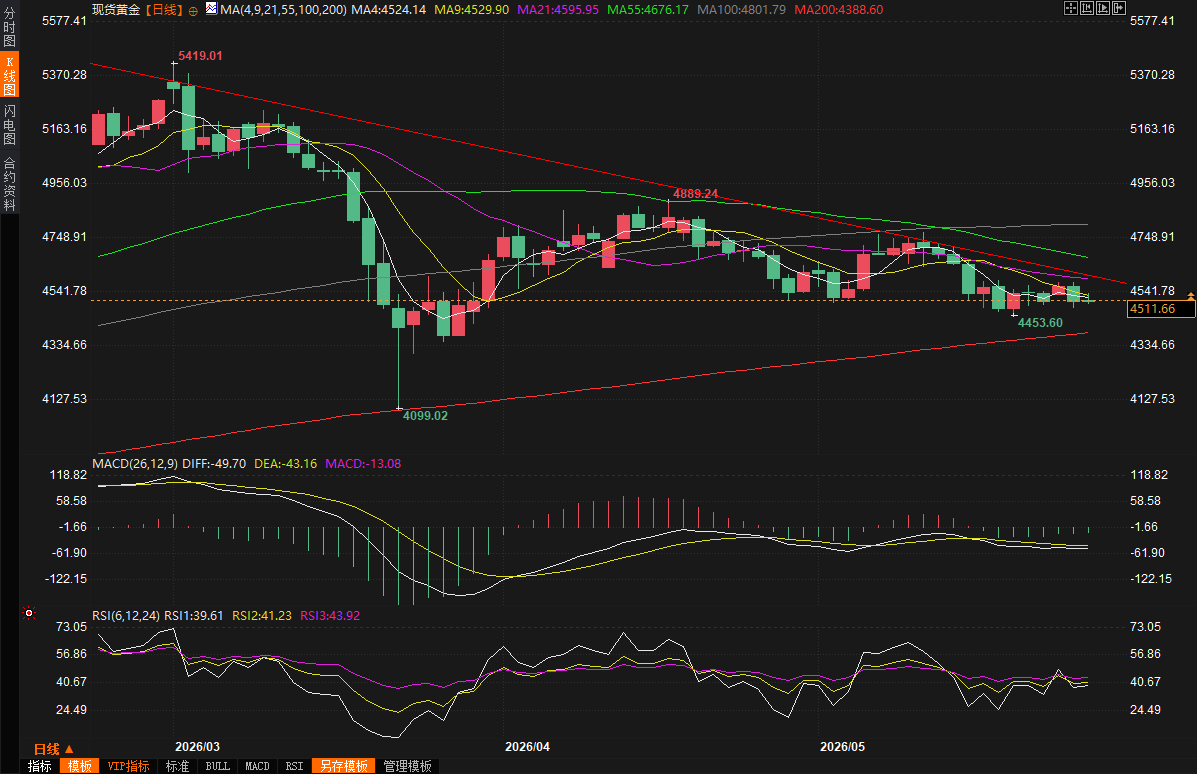
(Spot gold daily chart, source: FX678)
At 07:05 Beijing time, spot gold was trading at $4,510.95 per ounce.
The ongoing conflict in the Middle East has reignited inflation concerns as oil prices surge.
The U.S. "defensive strike" against targets near the Strait of Hormuz in southern Iran instantly shattered market optimism over the weekend that a ceasefire agreement was imminent. Iran swiftly responded, stating that the move was a serious violation of the ceasefire and reserving the right to retaliate. Meanwhile, the Supreme Leader's tough stance further exacerbated market concerns about a protracted conflict.
The Strait of Hormuz, a vital waterway for approximately one-fifth of global oil and liquefied natural gas trade, has seen its shipping prospects once again clouded. Brent crude futures subsequently rebounded sharply by over 3.5%, briefly approaching the $100 per barrel mark. US crude also rose in tandem. This rapid increase in energy prices has directly fueled global inflation expectations. Businesses are passing on higher fuel and transportation costs to consumers, further straining supply chains already burdened by three months of ongoing conflict.
Against this backdrop, gold's role as an inflation hedge should have been supported, but in reality, it has been suppressed by another, more powerful force—namely, expectations regarding monetary policy.
The shadow of Fed rate hikes looms: High interest rate environment suppresses non-interest-bearing gold.
The US bond market is clearly signaling that the Federal Reserve's next move is likely to be a rate hike, rather than the rate cut previously expected by the market. New Fed Chairman Warsh was just sworn in last Friday, and market bets on monetary policy tightening have quickly intensified. Currently, traders expect the Fed to raise rates by 25 basis points in December.
Jim Wikoff, an analyst at the New York Gold Exchange, bluntly stated that this assessment by the bond market directly negatively impacted gold. In a high-interest-rate environment, the opportunity cost of holding gold, which does not generate returns, has increased significantly, leading investors to favor higher-yielding bonds or cash assets. As a result, the US dollar index strengthened slightly to 99.15; while safe-haven demand rebounded, it flowed more towards the dollar than gold.
UBS went even further, lowering its year-end gold price target by $400 to $5,500, citing the continued risks posed by rising yields and a stronger dollar.
Technical and fundamental factors converge: Significant short-term selling pressure.
Besides macroeconomic factors, the technical outlook for the gold market is also bearish. Vikoff points out that short-term chart signals triggered some technical selling, with investors taking profits near key resistance levels, further amplifying the price decline.
The market is currently closely watching the upcoming U.S. Personal Consumption Expenditures (PCE) price index, to be released this week. This core inflation indicator will provide the latest guidance on the Federal Reserve's policy path. If the PCE data again shows persistent inflationary pressures, the pressure on gold could intensify further.
US Domestic Economic Signals: Declining Consumer Confidence Adds Complexity
Meanwhile, domestic economic data in the United States also sent mixed signals. The consumer confidence index fell slightly to 93.1 in May, while concerns about insufficient job opportunities rose to their highest level since 2021. Consumers frequently cited the impact of oil and gas prices and war-related inflation in their feedback, with low-income families particularly affected by gasoline prices rising by more than 50% compared to pre-war levels.
Despite the stock market continuing to reach new highs driven by artificial intelligence concepts, with both the S&P 500 and Nasdaq closing higher, the consumer sector dragged down the Dow Jones Industrial Average, causing a slight decline. This coexistence of economic resilience and inflation concerns has made the Federal Reserve more cautious in its interest rate decisions, indirectly limiting the safe-haven premium of gold.
Gold Outlook: Short-term pressure but long-term logic remains unchanged
In summary, the gold market is currently under pressure from both interest rate hike expectations and geopolitical conflicts. In the short term, a stronger dollar, a high-interest-rate environment, and technical selling are all exerting significant downward pressure, with considerable resistance above $4,500. However, the complexity and uncertainty of the Middle East situation still provide potential support for gold. As long as the resumption of shipping in the Strait of Hormuz continues to be hampered, the risks to oil prices and inflation will be difficult to completely dissipate, which will provide an opportunity for a rebound in gold in the medium term.
Investors should closely monitor this week's US economic data and the latest developments in US-Iran negotiations. Any substantial breakthrough in the ceasefire agreement could temporarily alleviate inflation concerns, while a renewed stalemate in negotiations could reignite safe-haven buying of gold.
Overall, gold is currently facing a classic "policy vs. geopolitics" game. Until the direction of the Federal Reserve's monetary policy becomes clear, market volatility is likely to remain high. For long-term investors, the current pullback may be an important window to observe gold's resilience in the new high-interest-rate environment, rather than the start of a trend reversal.
(Spot gold daily chart, source: FX678)
At 07:05 Beijing time, spot gold was trading at $4,510.95 per ounce.
- Risk Warning and Disclaimer
- The market involves risk, and trading may not be suitable for all investors. This article is for reference only and does not constitute personal investment advice, nor does it take into account certain users’ specific investment objectives, financial situation, or other needs. Any investment decisions made based on this information are at your own risk.