Crude oil trading alert: After a slight rebound, oil prices have fallen back again and are likely to remain volatile in the short term.
2026-05-27 09:25:10
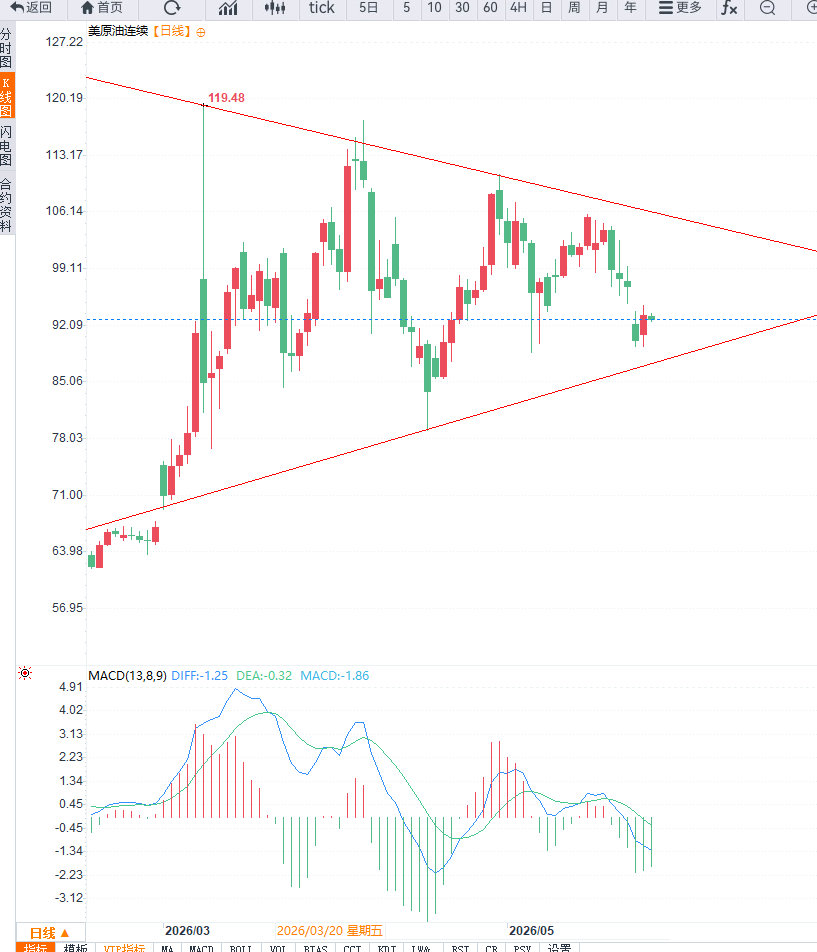
International oil prices retreated during Asian trading hours on Wednesday, with WTI crude falling to around $92.80 per barrel after a series of gains, as some long positions were liquidated. Oil prices had previously surged by more than 3% on escalating tensions in the Middle East and concerns about supply disruptions. However, news of a potential interim peace agreement between the US and Iran eased market risk appetite, and some traders began to reassess the future outlook for crude oil supply.

The United States and Iran are currently pushing for a provisional memorandum of understanding, with the core objective of suspending a wider conflict and restoring normal shipping in the Strait of Hormuz. The market believes that if the two sides can ultimately reach a preliminary agreement, global energy transportation pressures may ease temporarily, thus alleviating the previous surge in oil prices caused by geopolitical tensions. However, market concerns have not completely disappeared. The US military confirmed that it conducted a "self-defense" military strike in southern Iran, while the Iranian Revolutionary Guard stated that it targeted US warplanes and drones suspected of entering Iranian airspace. Subsequently, the Iranian Foreign Ministry condemned the US airstrikes, calling them a "serious violation" of the current fragile ceasefire agreement.
The Strait of Hormuz handles approximately 20% of global seaborne crude oil transport. Therefore, even a slight escalation of the situation could quickly impact the stability of the global energy supply chain. The biggest concern in the market right now is that if the conflict escalates further, Iran might restrict some shipping activities in the Strait of Hormuz, thereby driving up global transportation costs and energy prices.
Meanwhile, Gulf states such as Saudi Arabia, Qatar, and the UAE are actively promoting a diplomatic solution. The market generally believes that these regional countries do not want the situation to escalate further, as any expansion of military conflict could impact the entire Middle East's energy infrastructure and affect the stability of global oil exports.
U.S. Secretary of State Marco Rubio stated that a final agreement could still take several days to be reached. Currently, significant differences remain between the two sides on key issues such as the release of frozen assets, safeguards for passage through the Strait of Hormuz, and the Iranian nuclear issue. The market believes that even with short-term signs of diplomatic easing, truly and comprehensively resolving the core contradictions will remain extremely difficult.
From a global market perspective, the previous surge in oil prices has begun to fuel concerns about global inflation. Investors worry that if international crude oil prices remain high, inflation in the US and major European economies may face renewed upward pressure, thereby influencing the future interest rate cut paths of major central banks.
The market anticipates that high oil prices may lead the Federal Reserve to maintain high interest rates for an extended period. This has resulted in a sustained strength in the US dollar index, a simultaneous rise in US Treasury yields, and increased volatility in global risk assets. Some funds are flowing back into safe-haven assets, while global stock markets are showing divergent trends.
From a technical perspective, the WTI crude oil daily chart maintains a clear bullish structure, with prices continuing to trade above the 50-day and 100-day moving averages, indicating that the medium-term uptrend remains intact. The MACD indicator remains in positive territory, and the two lines continue to diverge upwards, suggesting that medium-term buying power still dominates the market. The RSI indicator is near 70, indicating that oil prices have entered a relatively strong phase, but also implying a short-term technical correction is possible. Initial resistance is seen around $93.50; a decisive break above this level could lead to further testing of the $95 and even $97 areas. Key support levels are located around $89.80 and $87.50.
The 4-hour chart shows that the short-term upward momentum of WTI crude oil has begun to slow, with some technical indicators showing signs of overbought conditions. The MACD histogram is narrowing, indicating that short-term upward momentum is weakening. Meanwhile, the RSI indicator has retreated from the overbought zone, suggesting the market may enter a period of high-level consolidation in the short term. If the US-Iran negotiations continue to release positive signals, oil prices may further retrace to the $90 level. However, if the situation in the Middle East escalates again, or if shipping risks in the Strait of Hormuz increase, oil prices could rebound rapidly.
The market is currently focused on the progress of ongoing diplomatic negotiations between the US and Iran, shipping conditions in the Strait of Hormuz, and changes in US crude oil inventory data. Furthermore, the Federal Reserve's latest statements regarding inflation risks may also influence the dollar's trajectory and the future direction of international crude oil prices.
Editor's Summary : Current international oil price trends are no longer solely influenced by supply and demand fundamentals; changes in the Middle East situation are once again becoming a crucial factor dominating the market. Although there are signs of a temporary easing of diplomatic tensions between the US and Iran, significant differences remain on core issues such as nuclear issues, shipping safety, and asset freezes. This means that future market volatility may remain high. From a market perspective, the strategic importance of the Strait of Hormuz means that any military risk could rapidly push up global energy prices and further impact global inflation and interest rate expectations. In the short term, oil prices may maintain a high-level fluctuation pattern. Investors need to pay close attention to whether geopolitical risks escalate further and the ability of major global economies to withstand rising energy prices. In the long term, if the situation in the Middle East remains unstable, the global energy market may re-enter a high-volatility cycle, and the high oil price environment may increase pressure on global economic growth and have a lasting impact on the future path of global monetary policy.
The United States and Iran are currently pushing for a provisional memorandum of understanding, with the core objective of suspending a wider conflict and restoring normal shipping in the Strait of Hormuz. The market believes that if the two sides can ultimately reach a preliminary agreement, global energy transportation pressures may ease temporarily, thus alleviating the previous surge in oil prices caused by geopolitical tensions. However, market concerns have not completely disappeared. The US military confirmed that it conducted a "self-defense" military strike in southern Iran, while the Iranian Revolutionary Guard stated that it targeted US warplanes and drones suspected of entering Iranian airspace. Subsequently, the Iranian Foreign Ministry condemned the US airstrikes, calling them a "serious violation" of the current fragile ceasefire agreement.
The Strait of Hormuz handles approximately 20% of global seaborne crude oil transport. Therefore, even a slight escalation of the situation could quickly impact the stability of the global energy supply chain. The biggest concern in the market right now is that if the conflict escalates further, Iran might restrict some shipping activities in the Strait of Hormuz, thereby driving up global transportation costs and energy prices.
Meanwhile, Gulf states such as Saudi Arabia, Qatar, and the UAE are actively promoting a diplomatic solution. The market generally believes that these regional countries do not want the situation to escalate further, as any expansion of military conflict could impact the entire Middle East's energy infrastructure and affect the stability of global oil exports.
U.S. Secretary of State Marco Rubio stated that a final agreement could still take several days to be reached. Currently, significant differences remain between the two sides on key issues such as the release of frozen assets, safeguards for passage through the Strait of Hormuz, and the Iranian nuclear issue. The market believes that even with short-term signs of diplomatic easing, truly and comprehensively resolving the core contradictions will remain extremely difficult.
From a global market perspective, the previous surge in oil prices has begun to fuel concerns about global inflation. Investors worry that if international crude oil prices remain high, inflation in the US and major European economies may face renewed upward pressure, thereby influencing the future interest rate cut paths of major central banks.
The market anticipates that high oil prices may lead the Federal Reserve to maintain high interest rates for an extended period. This has resulted in a sustained strength in the US dollar index, a simultaneous rise in US Treasury yields, and increased volatility in global risk assets. Some funds are flowing back into safe-haven assets, while global stock markets are showing divergent trends.
From a technical perspective, the WTI crude oil daily chart maintains a clear bullish structure, with prices continuing to trade above the 50-day and 100-day moving averages, indicating that the medium-term uptrend remains intact. The MACD indicator remains in positive territory, and the two lines continue to diverge upwards, suggesting that medium-term buying power still dominates the market. The RSI indicator is near 70, indicating that oil prices have entered a relatively strong phase, but also implying a short-term technical correction is possible. Initial resistance is seen around $93.50; a decisive break above this level could lead to further testing of the $95 and even $97 areas. Key support levels are located around $89.80 and $87.50.
The 4-hour chart shows that the short-term upward momentum of WTI crude oil has begun to slow, with some technical indicators showing signs of overbought conditions. The MACD histogram is narrowing, indicating that short-term upward momentum is weakening. Meanwhile, the RSI indicator has retreated from the overbought zone, suggesting the market may enter a period of high-level consolidation in the short term. If the US-Iran negotiations continue to release positive signals, oil prices may further retrace to the $90 level. However, if the situation in the Middle East escalates again, or if shipping risks in the Strait of Hormuz increase, oil prices could rebound rapidly.
The market is currently focused on the progress of ongoing diplomatic negotiations between the US and Iran, shipping conditions in the Strait of Hormuz, and changes in US crude oil inventory data. Furthermore, the Federal Reserve's latest statements regarding inflation risks may also influence the dollar's trajectory and the future direction of international crude oil prices.
Editor's Summary : Current international oil price trends are no longer solely influenced by supply and demand fundamentals; changes in the Middle East situation are once again becoming a crucial factor dominating the market. Although there are signs of a temporary easing of diplomatic tensions between the US and Iran, significant differences remain on core issues such as nuclear issues, shipping safety, and asset freezes. This means that future market volatility may remain high. From a market perspective, the strategic importance of the Strait of Hormuz means that any military risk could rapidly push up global energy prices and further impact global inflation and interest rate expectations. In the short term, oil prices may maintain a high-level fluctuation pattern. Investors need to pay close attention to whether geopolitical risks escalate further and the ability of major global economies to withstand rising energy prices. In the long term, if the situation in the Middle East remains unstable, the global energy market may re-enter a high-volatility cycle, and the high oil price environment may increase pressure on global economic growth and have a lasting impact on the future path of global monetary policy.
- Risk Warning and Disclaimer
- The market involves risk, and trading may not be suitable for all investors. This article is for reference only and does not constitute personal investment advice, nor does it take into account certain users’ specific investment objectives, financial situation, or other needs. Any investment decisions made based on this information are at your own risk.