Gold prices continued to decline amid heightened uncertainty surrounding US-Iran negotiations and the approaching PCE data release.
2026-05-28 09:59:22
Gold prices (XAU/USD) remained range-bound during Thursday's Asian trading session, trading around $4420. Amid significant uncertainty surrounding peace negotiations between the US and Iran, market risk aversion remained cautious, pushing gold prices to higher levels. However, with investors largely awaiting the release of the US core PCE price index later in the day, overall market sentiment leaned towards a wait-and-see approach.

US President Trump said on Wednesday that he would not rush into a deal with Iran, emphasizing that Iran's attempts to "buy time" would not work. Trump also stated that the Strait of Hormuz would be "open to everyone" and that the US would "monitor security in the region," adding that these points were part of the negotiations with Iran. Markets interpret this as meaning the US may maintain a strong military presence in the Middle East in the future, thus increasing geopolitical uncertainty.
Meanwhile, US Secretary of State Marco Rubio released a relatively moderate signal. He stated that the US would give negotiations with Iran the "maximum chance of success," and noted that some progress had been made. However, Rubio also emphasized that the US retains other options should a diplomatic solution fail. Market analysts believe that US-Iran relations remain highly sensitive, and any new military developments or diplomatic changes could quickly impact the performance of global safe-haven assets.
The Strait of Hormuz has once again become a focus of market attention. This strait handles approximately 20% of global seaborne crude oil transport, and a deterioration in regional security could disrupt the global energy supply chain. Since rising energy prices typically drive up global inflation, market concerns are growing that Middle East risks could further influence the monetary policy paths of major central banks worldwide. Against this backdrop, gold, as a traditional safe-haven asset, continues to attract some capital.
However, gold's upward momentum is currently being suppressed by expectations of US interest rates. The market is closely watching the upcoming US PCE inflation data. The market expects the US April PCE price index to rise to 3.8% year-on-year, higher than the previous 3.5%; the core PCE year-on-year rate is expected to rise to 3.3%, slightly higher than the previous 3.2%. If the data continues to show strong US inflation stickiness, it could further strengthen market expectations that the Federal Reserve will maintain high interest rates or even continue to raise rates.
Since gold itself does not generate interest income, the opportunity cost of holding gold increases when US real interest rates rise. Therefore, gold typically faces pressure in a high-interest-rate environment. The recent high yields on US Treasury bonds have also put downward pressure on gold prices. From a global market perspective, the gold market is currently in a phase of interplay between "safe-haven demand" and "high-interest-rate pressure." On the one hand, continued geopolitical risks in the Middle East support demand for gold; on the other hand, persistently high US inflation raises concerns that the Federal Reserve's monetary policy may maintain a hawkish stance for an extended period.
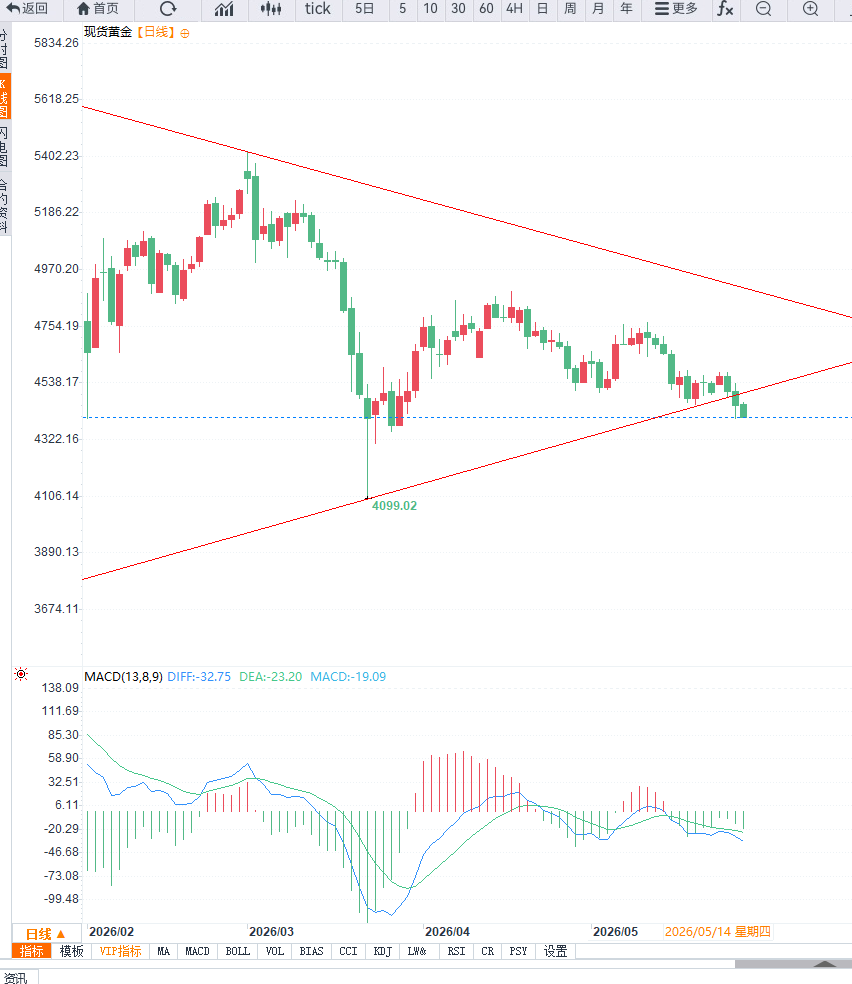
From a daily chart perspective, gold maintains its overall medium- to long-term bullish structure. The price is currently trading steadily above $4400, indicating that the bullish trend has not been significantly broken. While the MACD indicator has slowed somewhat from its highs, it remains above the zero line, showing that the medium- to long-term upward trend persists. Key resistance levels are currently at $4480 and the psychological level of $4500. If geopolitical tensions escalate further, gold may retest its historical highs. Key support levels are around $4400 and $4380.
The 4-hour chart shows that gold has entered a short-term consolidation phase at high levels. The RSI indicator is currently fluctuating around 50, indicating that the short-term market direction is unclear. The Bollinger Bands are starting to narrow, suggesting that the market may be awaiting PCE data as a catalyst for a new direction. If inflation data is higher than market expectations, the US dollar and US Treasury yields may strengthen further, and gold may face a phase of correction; conversely, if the data is lower than expected, it may push the market to re-bet on the Fed's interest rate cut expectations, thereby driving gold to rise further.
Furthermore, the recent resilience of the US dollar index is also a significant factor limiting gold's continued upward momentum. Typically, a stronger dollar reduces the appeal of gold to non-dollar holders. However, given the ongoing risks in the Middle East, some safe-haven buying continues to flow into the precious metals market.
Investors are currently closely watching two key variables: whether the US PCE data will further reinforce hawkish expectations from the Federal Reserve, and whether US-Iran negotiations can continue. If the situation in the Middle East suddenly deteriorates, gold may quickly receive new safe-haven buying; however, if diplomatic negotiations make substantial progress while US inflation remains high, gold may face significant short-term volatility.
Editor's Summary : The current gold market is experiencing a dual impact of geopolitical risk aversion and interest rate suppression. Uncertainty surrounding US-Iran negotiations and risks in the Strait of Hormuz continue to support gold's high levels, but higher-than-expected US inflation limits further unilateral gains. In the short term, PCE data may be a crucial turning point for gold's next phase. If US inflation continues to rise, the Federal Reserve may maintain high interest rates for longer than market expectations, putting pressure on gold; however, if the situation in the Middle East escalates, gold's safe-haven appeal may regain dominance in market sentiment. Future volatility in the gold market is expected to remain high, and investors should pay close attention to US economic data, Federal Reserve policy expectations, and developments in the Middle East.
US President Trump said on Wednesday that he would not rush into a deal with Iran, emphasizing that Iran's attempts to "buy time" would not work. Trump also stated that the Strait of Hormuz would be "open to everyone" and that the US would "monitor security in the region," adding that these points were part of the negotiations with Iran. Markets interpret this as meaning the US may maintain a strong military presence in the Middle East in the future, thus increasing geopolitical uncertainty.
Meanwhile, US Secretary of State Marco Rubio released a relatively moderate signal. He stated that the US would give negotiations with Iran the "maximum chance of success," and noted that some progress had been made. However, Rubio also emphasized that the US retains other options should a diplomatic solution fail. Market analysts believe that US-Iran relations remain highly sensitive, and any new military developments or diplomatic changes could quickly impact the performance of global safe-haven assets.
The Strait of Hormuz has once again become a focus of market attention. This strait handles approximately 20% of global seaborne crude oil transport, and a deterioration in regional security could disrupt the global energy supply chain. Since rising energy prices typically drive up global inflation, market concerns are growing that Middle East risks could further influence the monetary policy paths of major central banks worldwide. Against this backdrop, gold, as a traditional safe-haven asset, continues to attract some capital.
However, gold's upward momentum is currently being suppressed by expectations of US interest rates. The market is closely watching the upcoming US PCE inflation data. The market expects the US April PCE price index to rise to 3.8% year-on-year, higher than the previous 3.5%; the core PCE year-on-year rate is expected to rise to 3.3%, slightly higher than the previous 3.2%. If the data continues to show strong US inflation stickiness, it could further strengthen market expectations that the Federal Reserve will maintain high interest rates or even continue to raise rates.
Since gold itself does not generate interest income, the opportunity cost of holding gold increases when US real interest rates rise. Therefore, gold typically faces pressure in a high-interest-rate environment. The recent high yields on US Treasury bonds have also put downward pressure on gold prices. From a global market perspective, the gold market is currently in a phase of interplay between "safe-haven demand" and "high-interest-rate pressure." On the one hand, continued geopolitical risks in the Middle East support demand for gold; on the other hand, persistently high US inflation raises concerns that the Federal Reserve's monetary policy may maintain a hawkish stance for an extended period.
From a daily chart perspective, gold maintains its overall medium- to long-term bullish structure. The price is currently trading steadily above $4400, indicating that the bullish trend has not been significantly broken. While the MACD indicator has slowed somewhat from its highs, it remains above the zero line, showing that the medium- to long-term upward trend persists. Key resistance levels are currently at $4480 and the psychological level of $4500. If geopolitical tensions escalate further, gold may retest its historical highs. Key support levels are around $4400 and $4380.
The 4-hour chart shows that gold has entered a short-term consolidation phase at high levels. The RSI indicator is currently fluctuating around 50, indicating that the short-term market direction is unclear. The Bollinger Bands are starting to narrow, suggesting that the market may be awaiting PCE data as a catalyst for a new direction. If inflation data is higher than market expectations, the US dollar and US Treasury yields may strengthen further, and gold may face a phase of correction; conversely, if the data is lower than expected, it may push the market to re-bet on the Fed's interest rate cut expectations, thereby driving gold to rise further.
Furthermore, the recent resilience of the US dollar index is also a significant factor limiting gold's continued upward momentum. Typically, a stronger dollar reduces the appeal of gold to non-dollar holders. However, given the ongoing risks in the Middle East, some safe-haven buying continues to flow into the precious metals market.
Investors are currently closely watching two key variables: whether the US PCE data will further reinforce hawkish expectations from the Federal Reserve, and whether US-Iran negotiations can continue. If the situation in the Middle East suddenly deteriorates, gold may quickly receive new safe-haven buying; however, if diplomatic negotiations make substantial progress while US inflation remains high, gold may face significant short-term volatility.
Editor's Summary : The current gold market is experiencing a dual impact of geopolitical risk aversion and interest rate suppression. Uncertainty surrounding US-Iran negotiations and risks in the Strait of Hormuz continue to support gold's high levels, but higher-than-expected US inflation limits further unilateral gains. In the short term, PCE data may be a crucial turning point for gold's next phase. If US inflation continues to rise, the Federal Reserve may maintain high interest rates for longer than market expectations, putting pressure on gold; however, if the situation in the Middle East escalates, gold's safe-haven appeal may regain dominance in market sentiment. Future volatility in the gold market is expected to remain high, and investors should pay close attention to US economic data, Federal Reserve policy expectations, and developments in the Middle East.
- Risk Warning and Disclaimer
- The market involves risk, and trading may not be suitable for all investors. This article is for reference only and does not constitute personal investment advice, nor does it take into account certain users’ specific investment objectives, financial situation, or other needs. Any investment decisions made based on this information are at your own risk.