













Hawkish expectations from the Federal Reserve are supporting the dollar to remain at high levels.
2026-05-28 14:31:51
The US dollar index (DXY) strengthened significantly during Thursday's Asian trading session, rising approximately 0.25% to around 99.50. As the military conflict between the US and Iran escalates further, risk aversion in global financial markets is rapidly increasing, driving funds back into dollar assets.
Iran retaliated against the U.S. military operation near Bandar Abbas airport. The Islamic Revolutionary Guard Corps (IRGC) stated it had attacked a U.S. military base and warned that it would respond "more decisively" if the U.S. continued its military actions. This followed a so-called "defensive strike" by U.S. Central Command against Iranian vessels on Wednesday. Iran subsequently vowed retaliation, and market optimism regarding a full-blown escalation of the Middle East conflict has cooled significantly as the military clashes continue. Investors are concerned that the security of shipping in the Strait of Hormuz could be affected, further impacting the global energy supply chain.
The Strait of Hormuz handles approximately 20% of global seaborne crude oil transport, so escalating risks in the Middle East have rapidly pushed up international oil prices. WTI crude oil has climbed back above $89, and energy market volatility has increased significantly. Analysts believe that if the Middle East conflict continues to escalate, international oil prices could further increase global inflationary pressures. Against this backdrop, the market is beginning to reassess the Federal Reserve's future monetary policy path. As rising energy prices could lead to a resurgence of overall inflation in the United States, investors are significantly increasing their bets that the Fed will maintain high interest rates or even continue to raise rates this year.
According to data from the CME Group's FedWatch tool, the market currently estimates a 43.1% probability that the Federal Reserve will maintain current interest rates this year, while the remaining traders are betting on at least one more rate hike. This contrasts sharply with pre-war market expectations of two rate cuts this year. Market analysts believe that the US economy remains relatively resilient, but the Middle East conflict, which has driven up energy prices, may disrupt the downward trend in US inflation. This means the Fed may need to maintain higher interest rates for a longer period to prevent inflation expectations from spiraling out of control again.
Meanwhile, the US dollar index strengthened across the board. Looking at major currencies, the dollar saw the most significant gains against the Australian dollar, while also maintaining strength against the euro, pound sterling, and New Zealand dollar. Following a clear decline in market risk appetite, funds accelerated their flow into safe-haven assets such as the US dollar. Risk-sensitive currencies like the Australian and New Zealand dollars saw the largest declines, reflecting growing concerns about global economic growth and the outlook for risky assets. The euro, on the other hand, was also under pressure, dragged down by rising energy prices and concerns about the Eurozone's economic outlook.
Market focus has now shifted to the US April PCE price index data to be released later tonight. The market expects the annualized US PCE inflation rate to rise to 3.8%, higher than the previous 3.5%. Since the PCE is one of the Federal Reserve's most closely watched inflation indicators, this data could directly influence market expectations regarding the future path of interest rates. If the PCE data continues to exceed market expectations, the dollar index may receive further support, and US Treasury yields may continue to rise. Conversely, if the inflation data shows a slowdown, it could alleviate market concerns about further interest rate hikes.
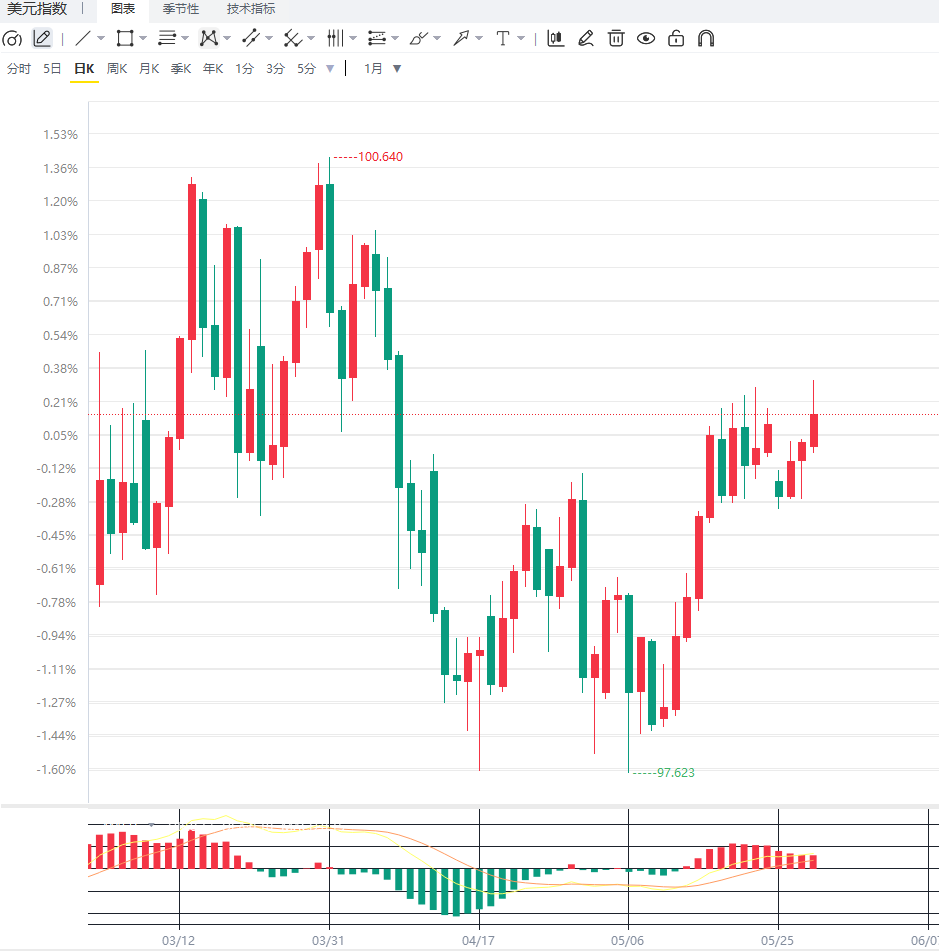
From a daily chart perspective, the US dollar index has recently returned to its upward channel and successfully broken through the key resistance area of 99.20. The MACD indicator has formed a golden cross again, indicating that the medium- to long-term bullish momentum is strengthening. Currently, the important resistance levels are at the psychological level of 100.00 and the 100.60 area. If the risks in the Middle East continue to escalate, the US dollar index may strengthen further.
The 4-hour chart shows a significant increase in short-term buying pressure on the US dollar index. The RSI indicator has risen above 60, indicating a bullish short-term trend. The moving average system has reformed its bullish alignment, further improving the technical structure. However, given the market's consecutive days of gains, a weaker-than-expected PCE data could lead to a short-term technical pullback for the dollar, with key support levels to watch at 99.00 and 98.60.
In addition, the trend of US Treasury yields is also worth noting. The recent sustained high yield on 10-year US Treasury bonds reflects not only the market's repricing of high interest rate expectations but also further enhances the attractiveness of dollar assets. Overall, the dollar market is currently in a phase driven by both "safe-haven demand" and "rising inflation expectations," and the escalation of the US-Iran conflict and US PCE data will be the core factors determining the dollar's next stage of development.
Editor's Summary : The current rise in the US dollar index is primarily driven by two factors: firstly, the escalating tensions in the Middle East have fueled global demand for safe-haven assets; and secondly, rising energy prices are prompting the market to re-price the Federal Reserve's policy path. With Iran officially launching retaliatory actions, global market risk sentiment has deteriorated significantly, and the US dollar, as the global reserve currency, has regained favor with investors. Simultaneously, the rebound in international oil prices is reinforcing market concerns about a resurgence of inflation. If US PCE data continues to exceed expectations, the Federal Reserve may extend its high interest rate policy, and the US dollar index still has room to rise further. However, market volatility has increased significantly, and investors should pay close attention to the evolving US-Iran situation, the risks in the Strait of Hormuz, and changes in US economic data. If the situation eases, the US dollar may face some profit-taking pressure in the short term.
Iran retaliated against the U.S. military operation near Bandar Abbas airport. The Islamic Revolutionary Guard Corps (IRGC) stated it had attacked a U.S. military base and warned that it would respond "more decisively" if the U.S. continued its military actions. This followed a so-called "defensive strike" by U.S. Central Command against Iranian vessels on Wednesday. Iran subsequently vowed retaliation, and market optimism regarding a full-blown escalation of the Middle East conflict has cooled significantly as the military clashes continue. Investors are concerned that the security of shipping in the Strait of Hormuz could be affected, further impacting the global energy supply chain.
The Strait of Hormuz handles approximately 20% of global seaborne crude oil transport, so escalating risks in the Middle East have rapidly pushed up international oil prices. WTI crude oil has climbed back above $89, and energy market volatility has increased significantly. Analysts believe that if the Middle East conflict continues to escalate, international oil prices could further increase global inflationary pressures. Against this backdrop, the market is beginning to reassess the Federal Reserve's future monetary policy path. As rising energy prices could lead to a resurgence of overall inflation in the United States, investors are significantly increasing their bets that the Fed will maintain high interest rates or even continue to raise rates this year.
According to data from the CME Group's FedWatch tool, the market currently estimates a 43.1% probability that the Federal Reserve will maintain current interest rates this year, while the remaining traders are betting on at least one more rate hike. This contrasts sharply with pre-war market expectations of two rate cuts this year. Market analysts believe that the US economy remains relatively resilient, but the Middle East conflict, which has driven up energy prices, may disrupt the downward trend in US inflation. This means the Fed may need to maintain higher interest rates for a longer period to prevent inflation expectations from spiraling out of control again.
Meanwhile, the US dollar index strengthened across the board. Looking at major currencies, the dollar saw the most significant gains against the Australian dollar, while also maintaining strength against the euro, pound sterling, and New Zealand dollar. Following a clear decline in market risk appetite, funds accelerated their flow into safe-haven assets such as the US dollar. Risk-sensitive currencies like the Australian and New Zealand dollars saw the largest declines, reflecting growing concerns about global economic growth and the outlook for risky assets. The euro, on the other hand, was also under pressure, dragged down by rising energy prices and concerns about the Eurozone's economic outlook.
Market focus has now shifted to the US April PCE price index data to be released later tonight. The market expects the annualized US PCE inflation rate to rise to 3.8%, higher than the previous 3.5%. Since the PCE is one of the Federal Reserve's most closely watched inflation indicators, this data could directly influence market expectations regarding the future path of interest rates. If the PCE data continues to exceed market expectations, the dollar index may receive further support, and US Treasury yields may continue to rise. Conversely, if the inflation data shows a slowdown, it could alleviate market concerns about further interest rate hikes.
From a daily chart perspective, the US dollar index has recently returned to its upward channel and successfully broken through the key resistance area of 99.20. The MACD indicator has formed a golden cross again, indicating that the medium- to long-term bullish momentum is strengthening. Currently, the important resistance levels are at the psychological level of 100.00 and the 100.60 area. If the risks in the Middle East continue to escalate, the US dollar index may strengthen further.
The 4-hour chart shows a significant increase in short-term buying pressure on the US dollar index. The RSI indicator has risen above 60, indicating a bullish short-term trend. The moving average system has reformed its bullish alignment, further improving the technical structure. However, given the market's consecutive days of gains, a weaker-than-expected PCE data could lead to a short-term technical pullback for the dollar, with key support levels to watch at 99.00 and 98.60.
In addition, the trend of US Treasury yields is also worth noting. The recent sustained high yield on 10-year US Treasury bonds reflects not only the market's repricing of high interest rate expectations but also further enhances the attractiveness of dollar assets. Overall, the dollar market is currently in a phase driven by both "safe-haven demand" and "rising inflation expectations," and the escalation of the US-Iran conflict and US PCE data will be the core factors determining the dollar's next stage of development.
Editor's Summary : The current rise in the US dollar index is primarily driven by two factors: firstly, the escalating tensions in the Middle East have fueled global demand for safe-haven assets; and secondly, rising energy prices are prompting the market to re-price the Federal Reserve's policy path. With Iran officially launching retaliatory actions, global market risk sentiment has deteriorated significantly, and the US dollar, as the global reserve currency, has regained favor with investors. Simultaneously, the rebound in international oil prices is reinforcing market concerns about a resurgence of inflation. If US PCE data continues to exceed expectations, the Federal Reserve may extend its high interest rate policy, and the US dollar index still has room to rise further. However, market volatility has increased significantly, and investors should pay close attention to the evolving US-Iran situation, the risks in the Strait of Hormuz, and changes in US economic data. If the situation eases, the US dollar may face some profit-taking pressure in the short term.
- Risk Warning and Disclaimer
- The market involves risk, and trading may not be suitable for all investors. This article is for reference only and does not constitute personal investment advice, nor does it take into account certain users’ specific investment objectives, financial situation, or other needs. Any investment decisions made based on this information are at your own risk.

