Crude oil trading alert: Supply concerns ease, oil prices break below the consolidation range, is the bears on the way?
2026-05-29 09:44:26
WTI crude oil prices continued their decline in Asian trading on Friday, fluctuating around $87.20 per barrel, marking the third consecutive day of losses. Market risk sentiment improved significantly, mainly due to news that the US and Iran might reach a 60-day ceasefire extension agreement, which reduced concerns about global energy supply disruptions. In particular, signs of easing shipping risks in the Strait of Hormuz led to a continued erosion of previously high oil risk premiums.

The United States and Iran have held preliminary discussions on a 60-day extension of the ceasefire. Iran may clear mines from the Strait of Hormuz within 30 days, thereby restoring normal shipping order in the area. The market believes this means a key bottleneck in global energy transport may be restored to stable operation. The Strait of Hormuz handles approximately 20% of global seaborne crude oil transport and is also a vital channel for energy exports from major Middle Eastern oil-producing countries; therefore, any changes in the situation can quickly impact international oil prices.
However, significant uncertainties remain regarding the agreement. US President Trump has not yet formally approved its contents, and US Vice President Vance has stated that whether a comprehensive agreement can be reached and when it will be implemented remain highly uncertain. Market analysts believe that although short-term tensions have eased somewhat, core issues such as the Iranian nuclear issue, sanctions de-escalation arrangements, and long-term control of the Strait of Hormuz remain complex, meaning that geopolitical risks in the Middle East have not truly disappeared.
As market concerns about the risk of escalating conflict in the Middle East subsided, the large safe-haven premium that had accumulated in the oil market quickly receded. WTI crude oil has fallen by nearly 15% this month, indicating that funds are gradually withdrawing from long positions previously driven by geopolitical conflicts. At the same time, some investment institutions have begun to reassess the outlook for oil demand against the backdrop of a global economic slowdown, particularly the weak manufacturing activity in Europe and the United States and the slowdown in global transportation demand growth, which has also weakened market confidence in the sustainability of high oil prices.
Furthermore, the latest data released by the U.S. Energy Information Administration (EIA) shows that U.S. commercial crude oil inventories fell by 3.3 million barrels as of last week, marking the sixth consecutive week of declines, but falling short of the market's previous forecast of a 4.1 million barrel drop. Following the release of the inventory data, the market generally believes that while U.S. summer fuel demand remains resilient, overall demand growth has not reached the previously highly optimistic levels. The smaller-than-expected inventory decline further weakened the short-term rebound momentum in oil prices.
From a global market perspective, the continued pullback in oil prices has alleviated imported inflationary pressures faced by some major economies. Recently, the US dollar index has remained relatively strong, and US Treasury yields have remained high, putting overall pressure on commodities, including crude oil. Some traders believe that if the situation in the Middle East further eases, the Federal Reserve may extend the period of high interest rates, as falling energy prices will reduce inflationary pressures and thus lower market bets on rapid rate cuts.
From a technical perspective, the daily chart for WTI crude oil has shown clear signs of weakening. After previously surging, oil prices failed to hold above $90 and subsequently declined, forming a short-term pullback structure. Currently, the daily MACD indicator shows signs of a death cross, and the RSI indicator has fallen back to around 50, indicating a significant weakening of bullish momentum. If WTI continues to fall below the $87 level, the market may further test the $85-$84 area, while short-term resistance lies around $88.80 and $90.
From a 4-hour chart perspective, oil prices have formed a continuous downward channel structure, with short-term moving averages gradually diverging downwards, indicating that bears are dominating the market. The MACD histogram continues to expand, suggesting that short-term selling pressure remains. However, given the rapid decline in oil prices in the short term, a technical rebound is still possible if the situation in the Middle East resurfaces. Currently, the market is focusing on whether the support level around $87 can hold. A break below this level could trigger further accelerated exits of algorithmic selling.
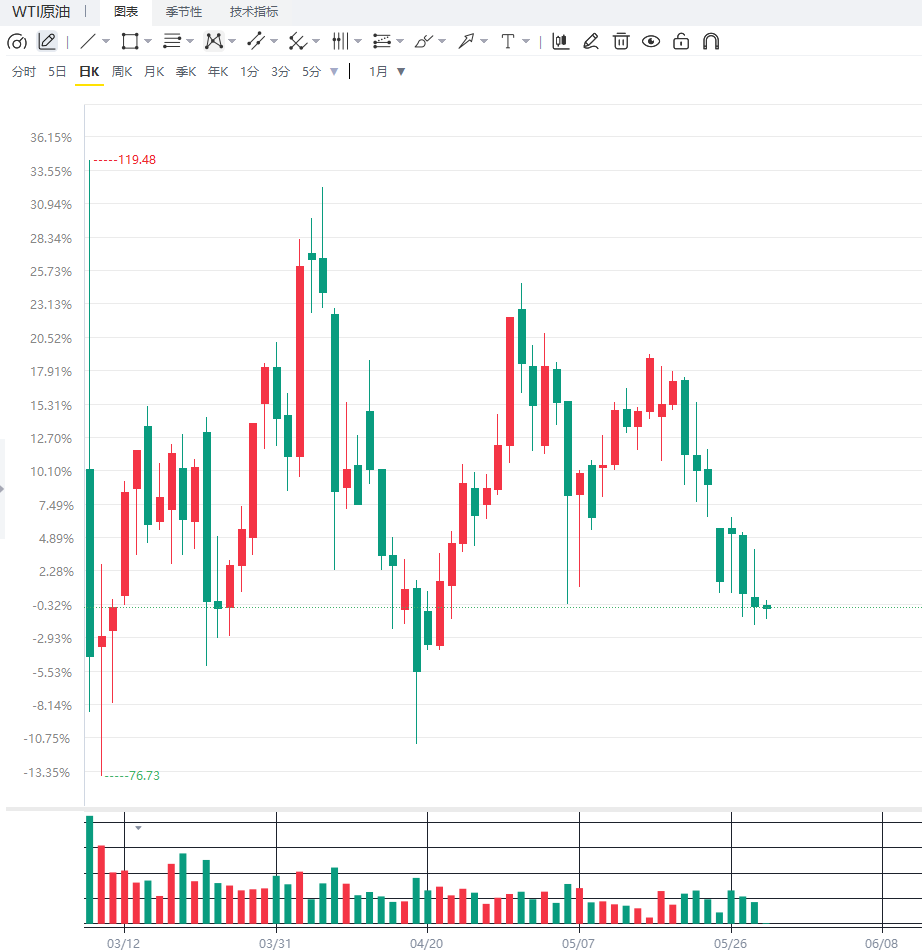
Overall, the international crude oil market is gradually shifting from being driven by extreme geopolitical risks to reassessing the global supply and demand balance. Although the temporary easing of risks in the Strait of Hormuz has significantly cooled market sentiment, the situation in the Middle East remains highly uncertain, and oil price volatility may continue to remain high in the future.
Editor's Summary : The recent sharp decline in international oil prices essentially reflects the market's repricing of Middle East supply risks. With positive signals from the US-Iran ceasefire extension negotiations, the previously feared risk of disruption to shipping through the Strait of Hormuz has temporarily eased, leading to a rapid decline in significant geopolitical safe-haven premiums. However, from a longer-term perspective, the core contradictions in the Middle East situation have not been truly resolved. Issues such as the nuclear program, sanctions arrangements, and the regional security landscape may continue to disrupt the energy market. Meanwhile, the smaller-than-expected decline in US inventories also indicates limited recovery in global demand. Against the backdrop of slowing global economic growth, a strong US dollar, and a persistently high-interest-rate environment from major central banks, the crude oil market still faces some short-term adjustment pressure. The market will focus on the evolution of the Middle East situation, changes in US summer demand, and subsequent OPEC+ production policies, as these factors will determine the direction of oil prices in the next stage.
The United States and Iran have held preliminary discussions on a 60-day extension of the ceasefire. Iran may clear mines from the Strait of Hormuz within 30 days, thereby restoring normal shipping order in the area. The market believes this means a key bottleneck in global energy transport may be restored to stable operation. The Strait of Hormuz handles approximately 20% of global seaborne crude oil transport and is also a vital channel for energy exports from major Middle Eastern oil-producing countries; therefore, any changes in the situation can quickly impact international oil prices.
However, significant uncertainties remain regarding the agreement. US President Trump has not yet formally approved its contents, and US Vice President Vance has stated that whether a comprehensive agreement can be reached and when it will be implemented remain highly uncertain. Market analysts believe that although short-term tensions have eased somewhat, core issues such as the Iranian nuclear issue, sanctions de-escalation arrangements, and long-term control of the Strait of Hormuz remain complex, meaning that geopolitical risks in the Middle East have not truly disappeared.
As market concerns about the risk of escalating conflict in the Middle East subsided, the large safe-haven premium that had accumulated in the oil market quickly receded. WTI crude oil has fallen by nearly 15% this month, indicating that funds are gradually withdrawing from long positions previously driven by geopolitical conflicts. At the same time, some investment institutions have begun to reassess the outlook for oil demand against the backdrop of a global economic slowdown, particularly the weak manufacturing activity in Europe and the United States and the slowdown in global transportation demand growth, which has also weakened market confidence in the sustainability of high oil prices.
Furthermore, the latest data released by the U.S. Energy Information Administration (EIA) shows that U.S. commercial crude oil inventories fell by 3.3 million barrels as of last week, marking the sixth consecutive week of declines, but falling short of the market's previous forecast of a 4.1 million barrel drop. Following the release of the inventory data, the market generally believes that while U.S. summer fuel demand remains resilient, overall demand growth has not reached the previously highly optimistic levels. The smaller-than-expected inventory decline further weakened the short-term rebound momentum in oil prices.
From a global market perspective, the continued pullback in oil prices has alleviated imported inflationary pressures faced by some major economies. Recently, the US dollar index has remained relatively strong, and US Treasury yields have remained high, putting overall pressure on commodities, including crude oil. Some traders believe that if the situation in the Middle East further eases, the Federal Reserve may extend the period of high interest rates, as falling energy prices will reduce inflationary pressures and thus lower market bets on rapid rate cuts.
From a technical perspective, the daily chart for WTI crude oil has shown clear signs of weakening. After previously surging, oil prices failed to hold above $90 and subsequently declined, forming a short-term pullback structure. Currently, the daily MACD indicator shows signs of a death cross, and the RSI indicator has fallen back to around 50, indicating a significant weakening of bullish momentum. If WTI continues to fall below the $87 level, the market may further test the $85-$84 area, while short-term resistance lies around $88.80 and $90.
From a 4-hour chart perspective, oil prices have formed a continuous downward channel structure, with short-term moving averages gradually diverging downwards, indicating that bears are dominating the market. The MACD histogram continues to expand, suggesting that short-term selling pressure remains. However, given the rapid decline in oil prices in the short term, a technical rebound is still possible if the situation in the Middle East resurfaces. Currently, the market is focusing on whether the support level around $87 can hold. A break below this level could trigger further accelerated exits of algorithmic selling.
Overall, the international crude oil market is gradually shifting from being driven by extreme geopolitical risks to reassessing the global supply and demand balance. Although the temporary easing of risks in the Strait of Hormuz has significantly cooled market sentiment, the situation in the Middle East remains highly uncertain, and oil price volatility may continue to remain high in the future.
Editor's Summary : The recent sharp decline in international oil prices essentially reflects the market's repricing of Middle East supply risks. With positive signals from the US-Iran ceasefire extension negotiations, the previously feared risk of disruption to shipping through the Strait of Hormuz has temporarily eased, leading to a rapid decline in significant geopolitical safe-haven premiums. However, from a longer-term perspective, the core contradictions in the Middle East situation have not been truly resolved. Issues such as the nuclear program, sanctions arrangements, and the regional security landscape may continue to disrupt the energy market. Meanwhile, the smaller-than-expected decline in US inventories also indicates limited recovery in global demand. Against the backdrop of slowing global economic growth, a strong US dollar, and a persistently high-interest-rate environment from major central banks, the crude oil market still faces some short-term adjustment pressure. The market will focus on the evolution of the Middle East situation, changes in US summer demand, and subsequent OPEC+ production policies, as these factors will determine the direction of oil prices in the next stage.
- Risk Warning and Disclaimer
- The market involves risk, and trading may not be suitable for all investors. This article is for reference only and does not constitute personal investment advice, nor does it take into account certain users’ specific investment objectives, financial situation, or other needs. Any investment decisions made based on this information are at your own risk.