Short-term gold price correction does not change the long-term bull market, presenting a good opportunity to invest in the mining sector.
2026-05-29 10:59:54
The gold market experienced a significant correction, with gold prices briefly falling below the $4,500 per ounce mark and testing the long-term key support level of the 200-day moving average. Short-term pessimism spread in the market, and spot gold touched a low of $4,366.52 on Thursday (May 28) before closing at $4,495.59.
However, experienced fund managers point out that this round of decline is only a temporary adjustment, and the core logic of the long-term bull market for gold remains unshaken. Coupled with the weakening of the US dollar's credit, continued central bank gold purchases, and a low real interest rate environment, the medium- to long-term upside potential for gold prices remains ample. Meanwhile, the fundamentals of the gold mining sector are showing resilience, and the investment value of high-quality gold stocks continues to stand out.
The resurgence of global inflation risks and the market's advance pricing in the possibility of a Federal Reserve rate hike this year have become the core factors driving down gold prices.

As a non-interest-bearing asset, gold's opportunity cost of holding it has increased due to rising interest rate expectations, triggering short-term selling and pushing prices down to test long-term technical support levels. This has established a short-term market consolidation pattern. However, this technical correction has not damaged gold's long-term trend structure, and fundamental support remains solid.
Tom Winmill, portfolio manager at Midas Discovery Fund, said that the short-term weakness in gold should not be over-interpreted. The core fundamental factors driving the gold bull market remain solid, with global central banks continuing to increase their gold holdings and the accumulation of structural risks in the global economy continuing to support gold prices.
According to Wenmir, given the current gold price level, there are no major negative factors that could reverse the long-term bull market for gold. This current correction is actually expected to provide momentum for gold prices, potentially initiating a new round of upward movement. The continued decline in the credibility of the US dollar as the global reserve currency is the core driving force supporting the long-term upward trend of gold prices.
He added that the instrumental use of the US dollar, coupled with the ongoing global de-dollarization process, makes this long-term trend difficult to reverse. As the dollar's reserve currency status continues to weaken, its exchange rate will face long-term pressure. Meanwhile, central banks will continue to increase their gold holdings to hedge against the risks of dollar assets, providing a solid floor for gold prices. At the same time, high global inflation and slowing economic growth will create a stagflation environment conducive to rising gold prices.
Regarding monetary policy, Wimmill believes that while central banks maintain their anti-inflation stance, they will not adopt overly aggressive tightening policies to avoid triggering a deep economic recession, and global real interest rates will remain low. This low real interest rate environment will significantly reduce the opportunity cost of holding gold, continuously supporting the upward trend of gold prices.
Short-term fluctuations in gold prices have raised concerns about the profit prospects of gold mining companies, but Wimmill believes that the market's pessimistic expectations are significantly exaggerated.
Rising energy prices and inflation have indeed brought some operational pressure, but the overall operating strength of the mining industry is currently far superior to that of previous gold bull market cycles. Most leading mining companies have already established new energy systems, effectively hedging against the risk of rising fuel costs, and the impact of energy price fluctuations on underground mining operations is relatively limited.
The gold mining sector is currently showing strong overall performance, with free cash flow reaching a new high in recent years and corporate balance sheets continuing to improve.
Even though rising taxes, labor, and financing costs, as well as declining ore grades, may slightly compress profit margins, the industry's overall revenue still has growth potential, demonstrating strong fundamental resilience. The current industry landscape favors well-managed, strictly controlled leading companies, while the advantages of purely speculative small-cap stocks are gradually diminishing.
Wimmill cautioned investors that with the recovery in gold prices, many small and medium-sized mining companies with weak fundamentals may take the opportunity to speculate and drive up their stock prices. Investors should be wary of the risks and prioritize high-quality production companies with sound balance sheets, stable cash flow, and mature management systems. He highly praised Agnic Eagle Mining's development model, commending its strict control over capital expenditures, stable dividends, and long-term strategy, which enabled it to continuously reduce costs while maintaining ample cash flow.
The cooling of the industry's M&A frenzy also reflects the upgrading of the sector's structure. Rising gold prices have increased the value of existing mineral reserves, and leading companies have sufficient resource reserves to support mining for decades, eliminating the need for aggressive M&A expansion. The industry's valuation trough has passed, and the market has entered a phase of stock selection differentiation. High-quality mining companies with sustainable profitability will continue to outperform.
In conclusion, the short-term pullback in gold prices is a normal technical correction. Long-term positive factors such as sticky inflation, geopolitical risks, de-dollarization, and central bank gold purchases have not subsided, and the long-term bull market for gold continues.
The gold mining sector has solid fundamentals and outstanding resilience. Although there may be short-term market sentiment fluctuations, investment opportunities in high-quality stocks are becoming apparent. Investors can abandon short-term panic and focus on long-term investment opportunities in high-quality mining companies.
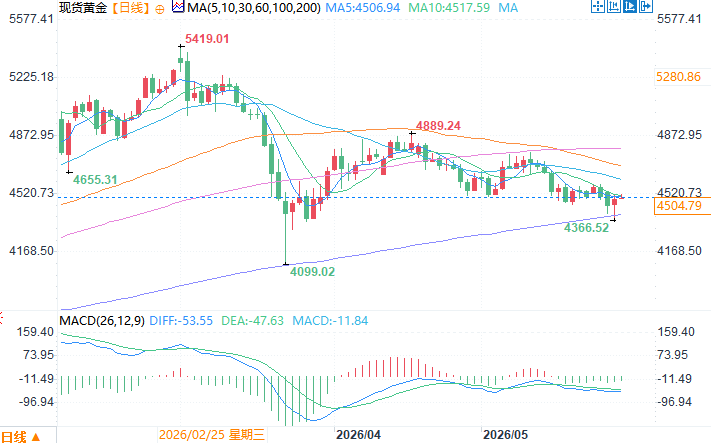
Spot gold daily chart source: EasyForex
At 10:59 AM Beijing time on May 29, spot gold was trading at $4502.79 per ounce.
However, experienced fund managers point out that this round of decline is only a temporary adjustment, and the core logic of the long-term bull market for gold remains unshaken. Coupled with the weakening of the US dollar's credit, continued central bank gold purchases, and a low real interest rate environment, the medium- to long-term upside potential for gold prices remains ample. Meanwhile, the fundamentals of the gold mining sector are showing resilience, and the investment value of high-quality gold stocks continues to stand out.
Gold prices are under short-term pressure as interest rate hike expectations weigh on market trends.
The resurgence of global inflation risks and the market's advance pricing in the possibility of a Federal Reserve rate hike this year have become the core factors driving down gold prices.
As a non-interest-bearing asset, gold's opportunity cost of holding it has increased due to rising interest rate expectations, triggering short-term selling and pushing prices down to test long-term technical support levels. This has established a short-term market consolidation pattern. However, this technical correction has not damaged gold's long-term trend structure, and fundamental support remains solid.
Tom Winmill, portfolio manager at Midas Discovery Fund, said that the short-term weakness in gold should not be over-interpreted. The core fundamental factors driving the gold bull market remain solid, with global central banks continuing to increase their gold holdings and the accumulation of structural risks in the global economy continuing to support gold prices.
The core logic remains sound, and the long-term bull market for gold has not ended.
According to Wenmir, given the current gold price level, there are no major negative factors that could reverse the long-term bull market for gold. This current correction is actually expected to provide momentum for gold prices, potentially initiating a new round of upward movement. The continued decline in the credibility of the US dollar as the global reserve currency is the core driving force supporting the long-term upward trend of gold prices.
He added that the instrumental use of the US dollar, coupled with the ongoing global de-dollarization process, makes this long-term trend difficult to reverse. As the dollar's reserve currency status continues to weaken, its exchange rate will face long-term pressure. Meanwhile, central banks will continue to increase their gold holdings to hedge against the risks of dollar assets, providing a solid floor for gold prices. At the same time, high global inflation and slowing economic growth will create a stagflation environment conducive to rising gold prices.
Regarding monetary policy, Wimmill believes that while central banks maintain their anti-inflation stance, they will not adopt overly aggressive tightening policies to avoid triggering a deep economic recession, and global real interest rates will remain low. This low real interest rate environment will significantly reduce the opportunity cost of holding gold, continuously supporting the upward trend of gold prices.
The mining sector has shown resilience, while market concerns have been excessively amplified.
Short-term fluctuations in gold prices have raised concerns about the profit prospects of gold mining companies, but Wimmill believes that the market's pessimistic expectations are significantly exaggerated.
Rising energy prices and inflation have indeed brought some operational pressure, but the overall operating strength of the mining industry is currently far superior to that of previous gold bull market cycles. Most leading mining companies have already established new energy systems, effectively hedging against the risk of rising fuel costs, and the impact of energy price fluctuations on underground mining operations is relatively limited.
The gold mining sector is currently showing strong overall performance, with free cash flow reaching a new high in recent years and corporate balance sheets continuing to improve.
Even though rising taxes, labor, and financing costs, as well as declining ore grades, may slightly compress profit margins, the industry's overall revenue still has growth potential, demonstrating strong fundamental resilience. The current industry landscape favors well-managed, strictly controlled leading companies, while the advantages of purely speculative small-cap stocks are gradually diminishing.
Rational investment strategy in the mining sector; high-quality mining companies possess long-term value.
Wimmill cautioned investors that with the recovery in gold prices, many small and medium-sized mining companies with weak fundamentals may take the opportunity to speculate and drive up their stock prices. Investors should be wary of the risks and prioritize high-quality production companies with sound balance sheets, stable cash flow, and mature management systems. He highly praised Agnic Eagle Mining's development model, commending its strict control over capital expenditures, stable dividends, and long-term strategy, which enabled it to continuously reduce costs while maintaining ample cash flow.
The cooling of the industry's M&A frenzy also reflects the upgrading of the sector's structure. Rising gold prices have increased the value of existing mineral reserves, and leading companies have sufficient resource reserves to support mining for decades, eliminating the need for aggressive M&A expansion. The industry's valuation trough has passed, and the market has entered a phase of stock selection differentiation. High-quality mining companies with sustainable profitability will continue to outperform.
Summarize
In conclusion, the short-term pullback in gold prices is a normal technical correction. Long-term positive factors such as sticky inflation, geopolitical risks, de-dollarization, and central bank gold purchases have not subsided, and the long-term bull market for gold continues.
The gold mining sector has solid fundamentals and outstanding resilience. Although there may be short-term market sentiment fluctuations, investment opportunities in high-quality stocks are becoming apparent. Investors can abandon short-term panic and focus on long-term investment opportunities in high-quality mining companies.
Spot gold daily chart source: EasyForex
At 10:59 AM Beijing time on May 29, spot gold was trading at $4502.79 per ounce.
- Risk Warning and Disclaimer
- The market involves risk, and trading may not be suitable for all investors. This article is for reference only and does not constitute personal investment advice, nor does it take into account certain users’ specific investment objectives, financial situation, or other needs. Any investment decisions made based on this information are at your own risk.