Gold has returned above $4,500 and is expected to remain range-bound in the short term.
2026-05-29 11:21:08
Spot gold (XAU/USD) rebounded modestly in Asian trading on Friday, rising back to around $4,500 after hitting a near two-month low in the previous session. Market concerns about further deterioration in the Middle East eased temporarily, and news of a possible ceasefire extension agreement between the US and Iran stabilized market sentiment, driving a technical recovery in gold after a period of decline.

The United States and Iran have reached a preliminary agreement to extend the ceasefire for 60 days and plan to hold further negotiations on the Iranian nuclear issue. Markets believe this means the months-long Middle East conflict may be gradually approaching a de-escalation phase, thereby reducing global market concerns about energy supply disruptions and regional security risks.
However, the relevant agreement has not yet been finalized. US President Trump has not formally approved the relevant clauses, and both sides have repeatedly released positive signals but ultimately postponed the implementation of the agreement. Market analysts believe that although short-term risk sentiment has eased, the situation in the Middle East remains highly uncertain, especially on core issues such as nuclear issues, regional military deployments, and sanctions arrangements, where both sides still face complex negotiations.
It's worth noting that this rebound in gold prices wasn't entirely driven by traditional safe-haven demand, but rather stemmed to a greater extent from a readjustment of market expectations regarding the Federal Reserve's policies. Data released by the U.S. Bureau of Economic Analysis (BEA) on Thursday showed that the U.S. Personal Consumption Expenditures (PCE) price index rose 3.8% year-on-year in April, higher than the previous reading of 3.5%, and in line with market expectations. Meanwhile, the core PCE, excluding food and energy prices, rose 3.3% year-on-year, slightly higher than the previous reading of 3.2%.
Although inflation data remained high overall, investor concerns about further significant interest rate hikes by the Federal Reserve eased somewhat as the data did not significantly exceed market expectations. The market had previously worried that the PCE data might signal stronger inflation, but the final result met expectations, alleviating some of the selling pressure in the gold market.
Furthermore, monthly data shows that the US PCE rose 0.4% month-on-month in April, while the core PCE rose 0.2% month-on-month, indicating that US inflation remains somewhat sticky but has not yet spiraled out of control. Some analysts believe this may mean that the Federal Reserve is more inclined to maintain high interest rates for a longer period rather than immediately tightening policy significantly.
The gold market is currently influenced by multiple factors. On the one hand, the easing of tensions in the Middle East has reduced extreme safe-haven demand; on the other hand, US inflation data, which did not exceed expectations, has provided some breathing room for gold. The market is currently in a phase of repeated tug-of-war between "high interest rate pressure" and "restoration of safe-haven demand."
Looking at global asset performance, the recent sharp decline in international oil prices has further reduced market concerns about imported inflation. WTI crude oil has fallen by nearly 15% this month, meaning that the energy risk premium previously driven by the Middle East situation is rapidly fading. This change has alleviated some of the inflationary pressure on gold, but at the same time, it has also weakened gold's short-term appeal as an inflation hedge.
The US dollar index is currently fluctuating at high levels, and the yield on 10-year US Treasury bonds remains relatively high, putting some downward pressure on gold, a non-yielding asset. Generally, rising US Treasury yields increase the opportunity cost of holding gold, while a stronger dollar weakens demand for gold from non-dollar investors. Therefore, even if gold prices rebound in the short term, their upside potential remains limited.
From a technical perspective, the daily chart for gold remains weak. After breaking through key support levels of $4600 and $4550, bearish momentum has clearly strengthened. Although gold has now regained the $4500 level, it remains in a phase of correction. The daily MACD indicator continues to be below the zero line, and the RSI indicator is hovering around 45, indicating that the medium-term market momentum remains bearish. If gold fails to effectively recover the $4550 area, it may retest the $4480 or even $4450 support levels.
From a 4-hour chart perspective, gold has shown signs of a technical oversold rebound in the short term. The MACD histogram is gradually narrowing, and short-term moving averages are beginning to flatten, indicating that bearish pressure has eased. However, the price is still trading below the major moving averages, suggesting that the market has not yet truly broken out of its consolidation phase. If gold prices can break through the $4525-$4535 area again, it may open up further upside potential; conversely, if the US dollar continues to strengthen, gold may come under renewed pressure and fall back.
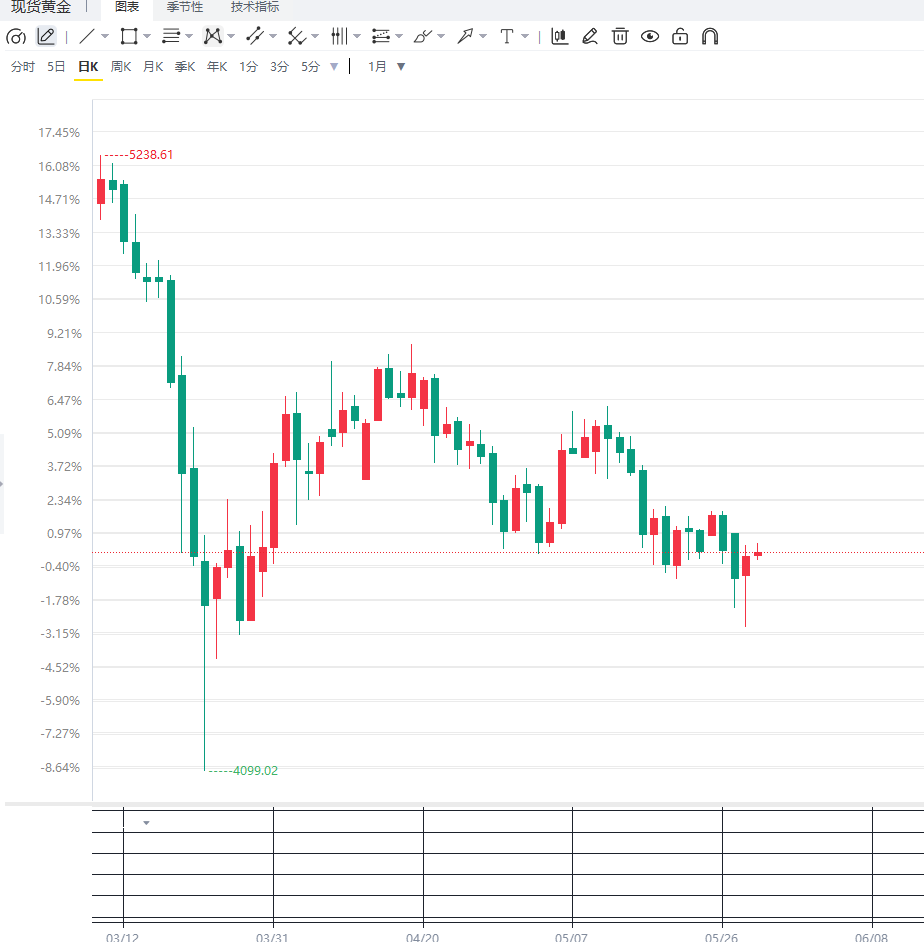
Overall, the gold market is currently reassessing the balance between Middle East geopolitical risks and the Federal Reserve's policy path. In the short term, a recovery in safe-haven demand has provided support for gold prices, but the high-interest-rate environment and a strong dollar continue to limit the medium- to long-term upside potential for gold.
Editor's Summary : The recent gold market has experienced significantly increased volatility, primarily due to evolving market expectations regarding Middle East risks, Federal Reserve policy, and US inflation trends. While positive signals emerged from the US-Iran ceasefire extension negotiations, easing market risk aversion, gold still retains some safe-haven buying support as the agreement has not yet been formally implemented. Meanwhile, although US PCE data remained high, it did not exceed market expectations, reducing investor concerns about further aggressive tightening by the Federal Reserve. However, with the US dollar and US Treasury yields remaining strong, gold is still in a phase of high-level consolidation and technical adjustment. Going forward, the market will focus on US employment data, speeches by Federal Reserve officials, and developments in the Middle East, as these factors may determine whether gold can retest historical highs in the next phase.
The United States and Iran have reached a preliminary agreement to extend the ceasefire for 60 days and plan to hold further negotiations on the Iranian nuclear issue. Markets believe this means the months-long Middle East conflict may be gradually approaching a de-escalation phase, thereby reducing global market concerns about energy supply disruptions and regional security risks.
However, the relevant agreement has not yet been finalized. US President Trump has not formally approved the relevant clauses, and both sides have repeatedly released positive signals but ultimately postponed the implementation of the agreement. Market analysts believe that although short-term risk sentiment has eased, the situation in the Middle East remains highly uncertain, especially on core issues such as nuclear issues, regional military deployments, and sanctions arrangements, where both sides still face complex negotiations.
It's worth noting that this rebound in gold prices wasn't entirely driven by traditional safe-haven demand, but rather stemmed to a greater extent from a readjustment of market expectations regarding the Federal Reserve's policies. Data released by the U.S. Bureau of Economic Analysis (BEA) on Thursday showed that the U.S. Personal Consumption Expenditures (PCE) price index rose 3.8% year-on-year in April, higher than the previous reading of 3.5%, and in line with market expectations. Meanwhile, the core PCE, excluding food and energy prices, rose 3.3% year-on-year, slightly higher than the previous reading of 3.2%.
Although inflation data remained high overall, investor concerns about further significant interest rate hikes by the Federal Reserve eased somewhat as the data did not significantly exceed market expectations. The market had previously worried that the PCE data might signal stronger inflation, but the final result met expectations, alleviating some of the selling pressure in the gold market.
Furthermore, monthly data shows that the US PCE rose 0.4% month-on-month in April, while the core PCE rose 0.2% month-on-month, indicating that US inflation remains somewhat sticky but has not yet spiraled out of control. Some analysts believe this may mean that the Federal Reserve is more inclined to maintain high interest rates for a longer period rather than immediately tightening policy significantly.
The gold market is currently influenced by multiple factors. On the one hand, the easing of tensions in the Middle East has reduced extreme safe-haven demand; on the other hand, US inflation data, which did not exceed expectations, has provided some breathing room for gold. The market is currently in a phase of repeated tug-of-war between "high interest rate pressure" and "restoration of safe-haven demand."
Looking at global asset performance, the recent sharp decline in international oil prices has further reduced market concerns about imported inflation. WTI crude oil has fallen by nearly 15% this month, meaning that the energy risk premium previously driven by the Middle East situation is rapidly fading. This change has alleviated some of the inflationary pressure on gold, but at the same time, it has also weakened gold's short-term appeal as an inflation hedge.
The US dollar index is currently fluctuating at high levels, and the yield on 10-year US Treasury bonds remains relatively high, putting some downward pressure on gold, a non-yielding asset. Generally, rising US Treasury yields increase the opportunity cost of holding gold, while a stronger dollar weakens demand for gold from non-dollar investors. Therefore, even if gold prices rebound in the short term, their upside potential remains limited.
From a technical perspective, the daily chart for gold remains weak. After breaking through key support levels of $4600 and $4550, bearish momentum has clearly strengthened. Although gold has now regained the $4500 level, it remains in a phase of correction. The daily MACD indicator continues to be below the zero line, and the RSI indicator is hovering around 45, indicating that the medium-term market momentum remains bearish. If gold fails to effectively recover the $4550 area, it may retest the $4480 or even $4450 support levels.
From a 4-hour chart perspective, gold has shown signs of a technical oversold rebound in the short term. The MACD histogram is gradually narrowing, and short-term moving averages are beginning to flatten, indicating that bearish pressure has eased. However, the price is still trading below the major moving averages, suggesting that the market has not yet truly broken out of its consolidation phase. If gold prices can break through the $4525-$4535 area again, it may open up further upside potential; conversely, if the US dollar continues to strengthen, gold may come under renewed pressure and fall back.
Overall, the gold market is currently reassessing the balance between Middle East geopolitical risks and the Federal Reserve's policy path. In the short term, a recovery in safe-haven demand has provided support for gold prices, but the high-interest-rate environment and a strong dollar continue to limit the medium- to long-term upside potential for gold.
Editor's Summary : The recent gold market has experienced significantly increased volatility, primarily due to evolving market expectations regarding Middle East risks, Federal Reserve policy, and US inflation trends. While positive signals emerged from the US-Iran ceasefire extension negotiations, easing market risk aversion, gold still retains some safe-haven buying support as the agreement has not yet been formally implemented. Meanwhile, although US PCE data remained high, it did not exceed market expectations, reducing investor concerns about further aggressive tightening by the Federal Reserve. However, with the US dollar and US Treasury yields remaining strong, gold is still in a phase of high-level consolidation and technical adjustment. Going forward, the market will focus on US employment data, speeches by Federal Reserve officials, and developments in the Middle East, as these factors may determine whether gold can retest historical highs in the next phase.
- Risk Warning and Disclaimer
- The market involves risk, and trading may not be suitable for all investors. This article is for reference only and does not constitute personal investment advice, nor does it take into account certain users’ specific investment objectives, financial situation, or other needs. Any investment decisions made based on this information are at your own risk.